
When the RBI crypto ban overturned, the Reserve Bank of India’s 2018 restriction on banks serving crypto businesses was struck down by India’s Supreme Court. Also known as the RBI crypto banking ban, this decision didn’t legalize crypto—but it removed the biggest roadblock to growth in India’s digital asset market. Before this, banks refused to process crypto deposits or withdrawals, forcing traders into risky peer-to-peer deals or offshore platforms. After the ruling, exchanges like WazirX, CoinDCX, and ZebPay could finally operate with real bank accounts again. But here’s the catch: the government didn’t step in to create clear rules. So while banks could help, taxes didn’t change—and they got worse.
The no loss offset rule in India, a tax policy that forces traders to pay tax on every profit, even if they lost money elsewhere in the same year. Also known as crypto loss non-deductibility, this rule makes active trading a financial trap. If you made ₹50,000 profit on one trade and lost ₹70,000 on ten others, you still owe tax on the ₹50,000. Add 1% TDS on every trade, and your net gains vanish fast. This isn’t just unfair—it’s designed to discourage trading, not support it. Meanwhile, Indian crypto taxation, a system that treats crypto as a taxable asset with no capital loss carryforwards. Also known as crypto income tax India, it treats every trade like a separate income event, ignoring how markets actually work. These policies were introduced right after the RBI ban was overturned, as if the government wanted to let crypto exist—but only if it hurt the people using it.
What you’ll find below isn’t just news about policy changes. It’s a real look at how traders are adapting. You’ll see how people are using underground exchanges in Cambodia to bypass local restrictions, how platforms like Bitso serve Latin American traders with similar pain points, and why tokens like xMOON and BURNS are rising not because they’re valuable—but because they’re the only options left for those locked out of mainstream markets. You’ll also find deep dives into how exchanges detect VPNs, why stablecoins like FRXUSD are gaining trust in uncertain regions, and how NFTs and DeFi tools are being used in places where banks won’t help. This isn’t about hype. It’s about survival, strategy, and what happens when regulation chases innovation instead of guiding it.
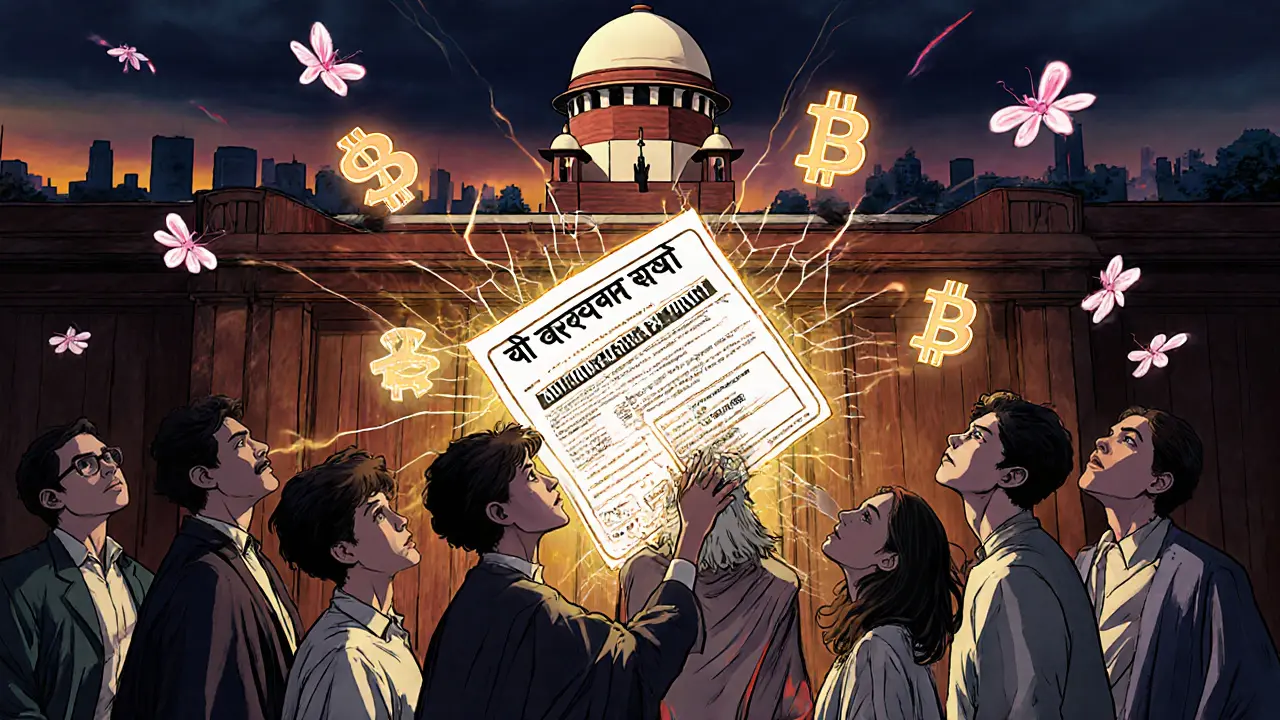
The Supreme Court of India overturned the RBI's crypto ban in 2020, making trading legal. But with a 30% tax, no clear laws, and government inaction, crypto in India remains risky and uncertain.
Learn More