
Crypto Tax Calculator for India
Calculate your tax liability on cryptocurrency transactions in India based on the current tax structure. The Indian government imposes a flat 30% tax on crypto profits plus a 1% Tax Deducted at Source (TDS) on all transactions.
Note: India imposes one of the world's highest crypto tax rates. The 30% tax on profits plus 1% TDS (Tax Deducted at Source) means your effective tax rate can exceed 31% - significantly higher than most major economies.
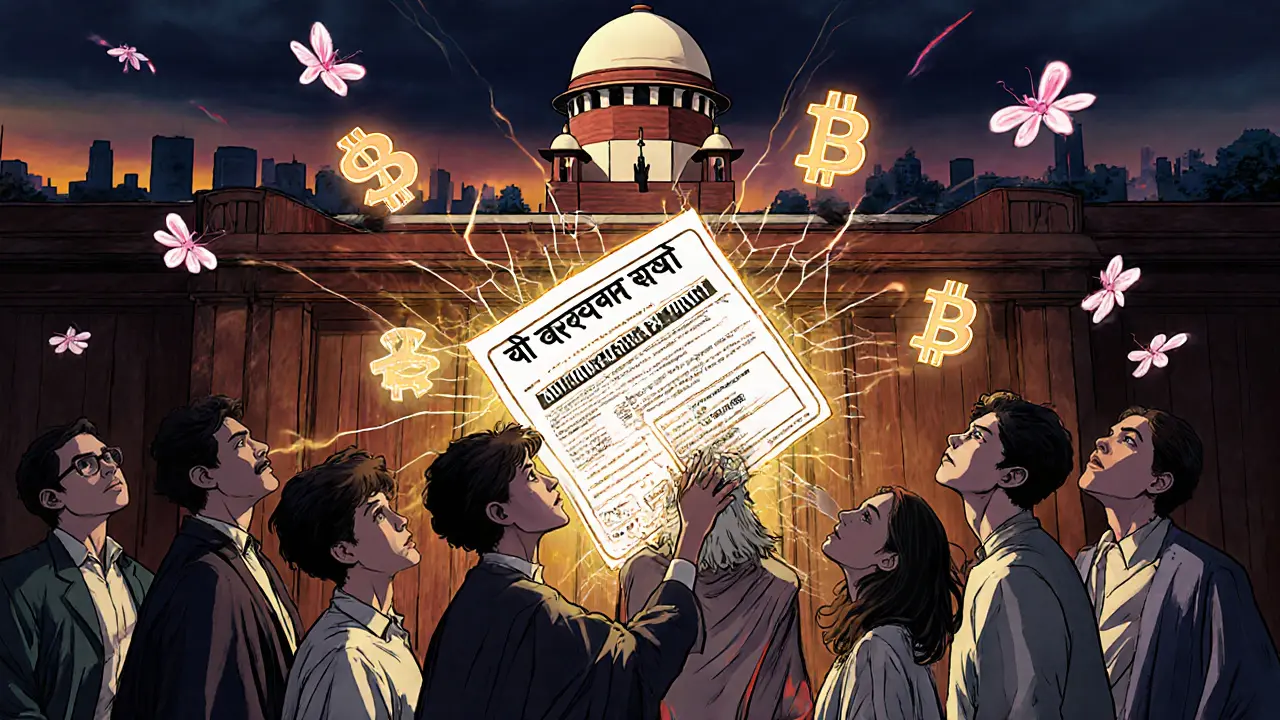
Before March 2020, if you tried to buy Bitcoin in India, your bank could block your transaction. Not because it was illegal - but because the Reserve Bank of India told banks they couldn’t touch anything related to cryptocurrency. That changed forever when the Supreme Court of India struck down the ban. It wasn’t just a legal win. It was a recognition that people have the right to trade digital assets, even if the government doesn’t fully understand them yet.
What the Supreme Court Actually Did
The court didn’t legalize cryptocurrency. It didn’t create rules. It didn’t say Bitcoin is money. What it did was simpler and more powerful: it said the RBI’s 2018 ban was unconstitutional. The central bank had ordered all banks and financial institutions to cut off services to crypto exchanges - no deposits, no withdrawals, no trading accounts. That effectively shut down the entire industry overnight. Thousands of Indian crypto users lost access to their money. Exchanges like WazirX and CoinDCX were forced to pause operations. The Supreme Court called this move disproportionate. There was no law banning crypto. No evidence of systemic financial harm. Just fear. And the court ruled that fear isn’t enough to strip people of their right to conduct business. The judgment made it legal again for banks to work with crypto companies. Trading resumed. New users flooded in. Within months, user growth on major exchanges jumped by 300% to 400%.Why This Was a Landmark
Most countries handle crypto through legislation - laws passed by Parliament. The U.S. uses agency enforcement. The EU passed MiCA. India? The Supreme Court stepped in because the government refused to act. That’s rare. It’s the judiciary saying: “You can’t just ban something because you don’t like it.” This decision didn’t come from a technical analysis of blockchain. It came from constitutional law. The court applied the principle of proportionality: if a government action harms a large group of people, it must have a strong, specific reason. The RBI had none. The court saw crypto as a financial tool, not a threat - at least not one that justified a total shutdown.What’s Still Not Legal
Just because trading is allowed doesn’t mean crypto is regulated. India still has no clear law defining what cryptocurrency is. Is it property? A commodity? Currency? The government has no answer. That creates chaos. Exchanges follow RBI guidelines, but those are vague. Tax rules are harsh. And no one knows how to handle DeFi, NFTs, or cross-border transfers legally. The biggest issue? Taxes. India charges a flat 30% on every profit from crypto trades - no deductions, no losses offset. Plus, there’s a 1% tax deducted at source (TDS) on every single transaction, even if you’re just swapping one coin for another. That’s higher than any other major economy. For someone trading $1,000 a week, that’s $10 gone before they even see a profit. Many traders say it’s designed to discourage activity, not regulate it.
How People Are Adapting
Indian crypto users aren’t waiting for clarity. They’re adapting. Most serious traders now use accounting software to track every trade, calculate gains, and file taxes manually. Some hire chartered accountants who specialize in crypto - a niche service that barely existed five years ago. KYC is now standard on all exchanges. You need your ID, address proof, and PAN card to trade. But the gray areas are growing. What if you earn crypto from a DeFi protocol? Do you pay tax when you stake it? When you withdraw? What if you use a peer-to-peer app like LocalBitcoins? The tax department hasn’t said. The Supreme Court hasn’t said. The government hasn’t said. So people guess. And guess wrong. Many end up facing audits or penalties.What the Government Is Doing (or Not Doing)
The government has been silent since 2021. The Cryptocurrency and Regulation of Official Digital Currency Bill was introduced that year. It proposed banning private cryptocurrencies and launching a digital rupee. Nothing happened. No vote. No debate. No update. In October 2025, the Supreme Court called out the government directly. During a hearing on a crypto fraud case, Justices Surya Kant and N. Kotiswar Singh said the state was turning a “blind eye” to a growing financial sector. They warned that unregulated crypto could become a tool for money laundering - comparing it to Hawala, the informal underground banking system. But they also said outright bans are outdated. The message was clear: regulate, don’t ignore.
Where India Stands Today
India has an estimated 15 to 20 million crypto users - among the highest in the world. The market is worth over $6 billion. But it’s not growing like it could. Startups that once dreamed of building blockchain products in India are moving to Dubai, Singapore, or Portugal. Why? Because those places have clear rules. Investors know what’s allowed. Tax rates are lower. Legal risk is minimal. India’s strength? A massive, tech-savvy population. Its weakness? A government afraid to make decisions. The Supreme Court gave the country breathing room. But without legislation, that room is shrinking. Every new tax rule, every audit, every bank freeze adds pressure. People are trading. But they’re not innovating.What’s Next?
The next big moment will come when Parliament finally acts. Until then, the Supreme Court remains the only protector of crypto rights in India. The court has made it clear: you can trade. You can own. You can transfer. But you’re on your own when it comes to taxes, compliance, and legal risk. Experts say the government has two choices: either create a balanced framework - like the EU’s MiCA - or accept that crypto will keep growing in the shadows. The court won’t wait forever. If the government doesn’t act, the court might be forced to step in again. And next time, it might not be about banking access. It could be about whether crypto is legal property. Or whether the 30% tax violates constitutional rights. For now, the message is simple: trading crypto in India is legal. But it’s not safe. It’s not simple. And it’s not without risk. The Supreme Court opened the door. Now, the government has to decide whether to walk through it - or leave everyone standing in the cold.Is cryptocurrency legal in India after the Supreme Court ruling?
Yes, trading and owning cryptocurrency is legal in India. The Supreme Court’s 2020 ruling struck down the Reserve Bank of India’s ban on banks serving crypto businesses. That means you can buy, sell, and hold digital assets. However, there is still no specific law defining crypto as legal tender or property. The government has not passed any legislation to regulate it, leaving the legal status in a gray zone.
What are the tax rules for crypto in India?
India imposes a flat 30% tax on all profits from cryptocurrency trades, regardless of how long you held the asset. There are no deductions for losses. In addition, a 1% Tax Deducted at Source (TDS) applies to every transaction above a certain threshold - even when you swap one coin for another. This makes India one of the most heavily taxed crypto markets in the world. You must report all gains in your annual income tax return using Form ITR-2.
Can banks still block crypto transactions?
No. After the Supreme Court’s 2020 ruling, banks are no longer allowed to refuse services to crypto exchanges or users. They can’t block deposits or withdrawals related to cryptocurrency. However, some banks still apply vague “risk-based” policies that slow down or delay transfers. Users report occasional holds on accounts, but these are not legal under the court’s decision and can be challenged.
What happens if I don’t pay crypto taxes in India?
If you don’t report crypto gains or pay the 30% tax, you risk an income tax audit. The Indian tax department now receives transaction data from exchanges and can cross-check your returns. Penalties can include fines of up to 200% of the unpaid tax, interest charges, and in extreme cases, prosecution for tax evasion. The 1% TDS is automatically deducted, so that part is harder to avoid - but undeclared profits are a major red flag.
Is mining cryptocurrency legal in India?
Mining is not explicitly banned, but it’s legally unregulated. There are no rules about electricity usage, equipment import, or reporting mining income. However, any profits from mining are subject to the 30% tax. Many miners operate quietly, but they face risks like power cutoffs or legal challenges if authorities decide to treat mining as an unlicensed business activity. There is no official guidance, so miners operate in a legal gray zone.
Will the Supreme Court ban crypto in the future?
Almost certainly not. The court has already rejected a total ban as unconstitutional. In 2025, justices explicitly said banning crypto would be unwise given global financial trends. Instead, the court is pushing the government to create regulation. The judicial stance is clear: regulate, don’t ban. Any future ban would require new legislation - and the Supreme Court would likely strike it down again.
Why are Indian crypto startups leaving the country?
High taxes, regulatory uncertainty, and lack of legal clarity make it risky to build crypto businesses in India. Startups face difficulty raising capital, opening bank accounts, or attracting international partners. Countries like Singapore, Switzerland, and the UAE offer clear licensing, lower taxes, and investor protection. Many Indian founders have relocated their operations there to access global markets and avoid constant legal risk.
Can I use DeFi or NFTs in India legally?
There is no official answer. The Supreme Court’s ruling only addressed traditional crypto trading. DeFi protocols, NFT marketplaces, and smart contracts exist in a legal gray area. You can use them, but there are no rules on how to report income, who is liable if a protocol fails, or whether they’re considered financial instruments. Tax authorities treat any gains as taxable, but no guidance exists on how to calculate or document those gains. Use them at your own risk.
16 Responses
This ruling was a win for personal freedom, plain and simple. People were just trying to invest, and the RBI acted like crypto was the devil’s spreadsheet. The court saw through the fear-mongering. Honestly? It’s about time someone in power realized that banning innovation doesn’t make it disappear-it just pushes it underground.
And now? We’ve got millions of Indians trading crypto like it’s normal. Which, honestly, it should be. The government’s silence is the real scandal here. Not the tech.
I’m proud of the Indian judiciary for this one. They didn’t need to understand blockchain to understand justice.
It’s wild how the Supreme Court stepped in where the government refused to. That’s not just legal-it’s philosophical. The court didn’t say crypto is good. It said the state can’t just ban something because it’s unfamiliar. That’s a huge deal for any democracy.
India’s got the people, the tech talent, the ambition. All it’s missing is leadership. And honestly? That’s more dangerous than any scam coin.
Ban crypto? Who cares. India dont need your digital play money. We have real problems like hunger and corruption. Why waste time on this western fad? The court is out of touch. Let the banks block it again. We dont need your crypto chaos
If you’re trading crypto in India, please please PLEASE use accounting software. Seriously. I’ve seen so many people get audited because they thought ‘I’ll just report the big gains’-and then the 1% TDS on every swap flags everything.
Try Koinly or CoinTracker. They auto-import from WazirX, CoinDCX, etc. And if you’re staking or earning from DeFi? Keep screenshots of every transaction. Even if the tax department doesn’t know how to handle it yet-you need proof.
You’re not breaking the law. You’re just navigating a gray zone. And being organized is your best shield.
Let’s be real. This isn’t about freedom-it’s about globalist elites pushing crypto to destabilize national currencies. The Supreme Court was manipulated. The RBI knew what they were doing. Crypto is a Ponzi scheme dressed up as innovation.
And now? India’s financial system is flooded with untraceable digital cash. Next thing you know, terrorists are funding operations through NFTs. This is how nations fall. Slowly. Quietly. While people cheer ‘financial freedom’.
They’ll regret this ruling when the next major crypto crash takes down banks. And don’t think they won’t come after YOU when they need to blame someone.
So the court said no to the ban. But the tax is still 30% + 1% TDS. That’s not regulation. That’s punishment. Why not just say crypto is illegal and be done with it?
Bro. The Supreme Court just gave us permission to gamble with digital Monopoly money while the government laughs all the way to the bank with 30% of our losses 😅
Meanwhile, my cousin in Dubai just bought a villa with ETH. We’re over here calculating taxes on a 200% gain from a meme coin swap. I’m not mad. I’m just… disappointed. 🥲
The court did the right thing. Banks shouldnt block transactions. But the tax rules are insane. Maybe one day the government will catch up. For now we just keep trading and hope for the best
Okay but let’s be honest-this whole thing is a trap. The government wants you to trade so they can tax you. The Supreme Court didn’t save you. They just made the tax collection more efficient. And now you’re all like ‘YAY FREEDOM’ while your bank account gets drained by 30% every time you make a profit.
And don’t even get me started on the 1% TDS on every swap. That’s not regulation. That’s financial harassment.
They’re not letting you win. They’re letting you pay. And you’re clapping.
Also I think the RBI is secretly running all the exchanges. Just saying.
Let’s not romanticize this. The Supreme Court didn’t ‘protect freedom’-they made a procedural error. There was no evidence of harm? Really? What about the 12,000+ fraud cases reported in 2019? What about the money laundering via P2P apps? The court ignored the data. They got emotionally swayed by tech bros with fancy whitepapers.
And now? You’ve got unregulated DeFi protocols, anonymous wallets, and tax evasion on a national scale. And you call this a win?
It’s not freedom. It’s anarchy with a blockchain logo.
Look, I’ve been watching this play out for years. The Supreme Court didn’t legalize crypto. They just stopped the government from crushing it with a sledgehammer. That’s not a victory for crypto-it’s a victory for basic constitutional rights.
People have the right to take risks. To invest. To experiment. Even if it’s weird. Even if it’s volatile. Even if the government doesn’t understand it.
India’s problem isn’t crypto. It’s the fear of change. The court saw that. The government still hasn’t.
So yeah, the taxes are insane. The rules are messy. But at least you can trade. That’s more than most countries can say.
Now, if only the government would stop pretending this is a problem to solve-and start treating it like an opportunity to build.
Let’s break this down like a financial forensic audit. The 30% tax on crypto gains? It’s not just punitive-it’s structurally designed to make small traders exit the market. That’s not regulation. That’s economic engineering.
Combine that with the 1% TDS on every single transaction-yes, even when you swap BTC for ETH-and you’ve got a system that actively discourages liquidity. You’re not taxing profits-you’re taxing movement.
And the worst part? The government gets this data directly from exchanges via API. So they’re not guessing. They’re watching. Every trade. Every wallet. Every transfer.
Meanwhile, DeFi users? They’re operating in a legal vacuum. No rules. No guidance. No protection. But the tax department still wants their cut. So they audit. They penalize. They scare people into silence.
And the startups? They’re not leaving because they’re scared of innovation. They’re leaving because India is the only major economy that taxes innovation like it’s a crime.
This isn’t a crypto problem. It’s a governance failure. And the Supreme Court’s ruling just exposed it. Loudly.
Big Pharma and the RBI are in cahoots. Crypto is a weapon to replace the dollar. The Supreme Court ruling? A distraction. They want you to think you’re free while they quietly prepare the digital rupee to track every cent you spend.
And don’t you dare think the 1% TDS is about revenue. It’s surveillance. Every swap is logged. Every wallet is tagged. The government’s building a financial surveillance state and calling it ‘tax compliance’.
They’re using crypto to control you. The court didn’t save you. They just handed you a shiny new leash.
And the ‘300% growth’? That’s not adoption. That’s desperation. People are trading because they’ve got no other options. The stock market’s rigged. The job market’s dead. Crypto’s the only thing left that feels real.
But it’s all a trap. You think you’re winning? You’re just feeding the machine.
I appreciate the court’s decision. But I worry about the people who don’t know how to navigate this. The elderly. The low-income. The ones who get scammed by ‘crypto gurus’ on WhatsApp.
There’s no safety net. No education. Just a law that says ‘you can trade’-and a tax code that says ‘pay up or get audited’.
Freedom without support isn’t freedom. It’s abandonment.
India is being sold out. The Supreme Court is a puppet of Wall Street. Crypto is a Western financial weapon to destabilize the rupee and undermine Indian sovereignty. The RBI knew this. The court ignored it. Now our youth are gambling their futures on meme coins while the government collects taxes like a tax collector from a dystopian novel.
Why not just ban it? Why let foreign tech corporations turn our people into financial lab rats?
And don’t give me that ‘freedom’ nonsense. Freedom doesn’t come with a 30% tax and a 1% transaction fee. That’s exploitation with a blockchain logo.
So the court said you can trade. Cool. But the government’s acting like it’s a schoolyard bully who just gave you permission to play-but then takes 30% of your candy every time you win.
And the TDS? Bro, it’s like charging a fee every time you breathe. You swap BTC for DOGE? 1% gone. Swap back? Another 1%. You didn’t even cash out. You just… moved it.
Meanwhile, people in Singapore are building DeFi protocols with real legal clarity. Here? We’re doing tax math on a napkin while hoping the audit gods are feeling generous.
It’s not illegal. But it’s definitely not friendly. And honestly? That’s worse than a ban. At least a ban tells you where you stand.