
When the naira depreciation, the steady loss of value of Nigeria’s national currency against major global currencies like the US dollar. Also known as naira devaluation, it means your naira buys less every month—whether you’re paying for fuel, groceries, or data. This isn’t just a local problem. It’s a trigger for real financial behavior changes across Africa, especially in crypto and cross-border investing.
As the naira loses ground, more Nigerians turn to stablecoins like Frax USD (FRXUSD), a stablecoin backed by tokenized U.S. Treasury bonds that avoids traditional banking risks to protect savings. Others use decentralized exchanges like Uniswap, a leading decentralized crypto exchange that lets users swap tokens without a bank or middleman to buy Bitcoin or Ethereum directly. These aren’t speculative hobbies—they’re survival tools. When your salary drops in purchasing power every week, crypto isn’t an option. It’s a necessity.
The ripple effects reach beyond personal wallets. Nigerian entrepreneurs are building businesses that accept crypto payments to bypass broken forex systems. Investors are watching global markets more closely, looking at ETFs and stocks that offer real value instead of local assets that keep losing ground. Even crypto airdrops like the MCRT Wizard's Rainfall, a token distribution tied to a gaming project that gave out millions in tokens to active players became more attractive—not because they promised riches, but because they offered an alternative store of value when the naira couldn’t be trusted.
What you’ll find here isn’t just news about exchange rates. It’s a collection of real stories, tools, and warnings from people who’ve lived through this. From scams disguised as high-yield naira investments to legitimate crypto platforms that actually work in Nigeria, this page shows you what’s real, what’s risky, and what’s worth your time. You’ll see how low-liquidity tokens like EtherPOS or DUKE COIN look tempting when the naira keeps falling—but often end up worthless. You’ll learn why some people ditch local banks entirely and why others are quietly shifting their savings into tokenized treasuries or Bitcoin. This isn’t theory. It’s what’s happening right now.
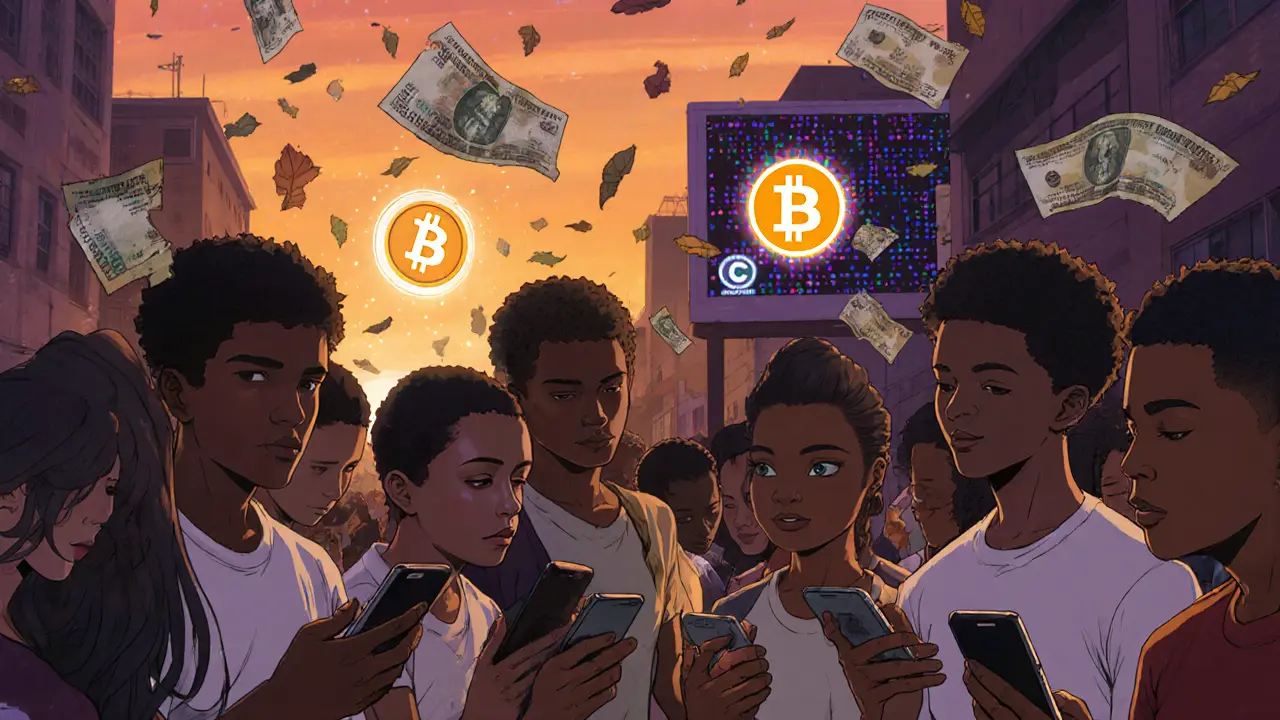
Nigerian crypto trading has surged to $59 billion in a year, with over 22 million users bypassing the unstable naira. Inflation, bank restrictions, and capital controls are pushing citizens toward digital assets - weakening the currency and reshaping the economy.
Learn More