

You might think that "Crypto Valley" in Zug is a lawless playground where you can do whatever you want with digital assets. The reality is quite different. Zug isn't a regulatory void; it’s a highly structured environment designed to make compliance easier, not impossible. If you are planning to launch a project, trade tokens, or simply hold assets there, understanding the actual restrictions is crucial. You won't find bans on innovation, but you will find strict expectations for transparency and security.
As of May 2026, the landscape has shifted again. The automatic exchange of information (AEOI) is rolling out, and the Distributed Ledger Technology (DLT) Act is fully mature. This guide cuts through the hype to explain exactly what you can and cannot do under Swiss federal and cantonal laws.
The Core Philosophy: Same Risks, Same Rules
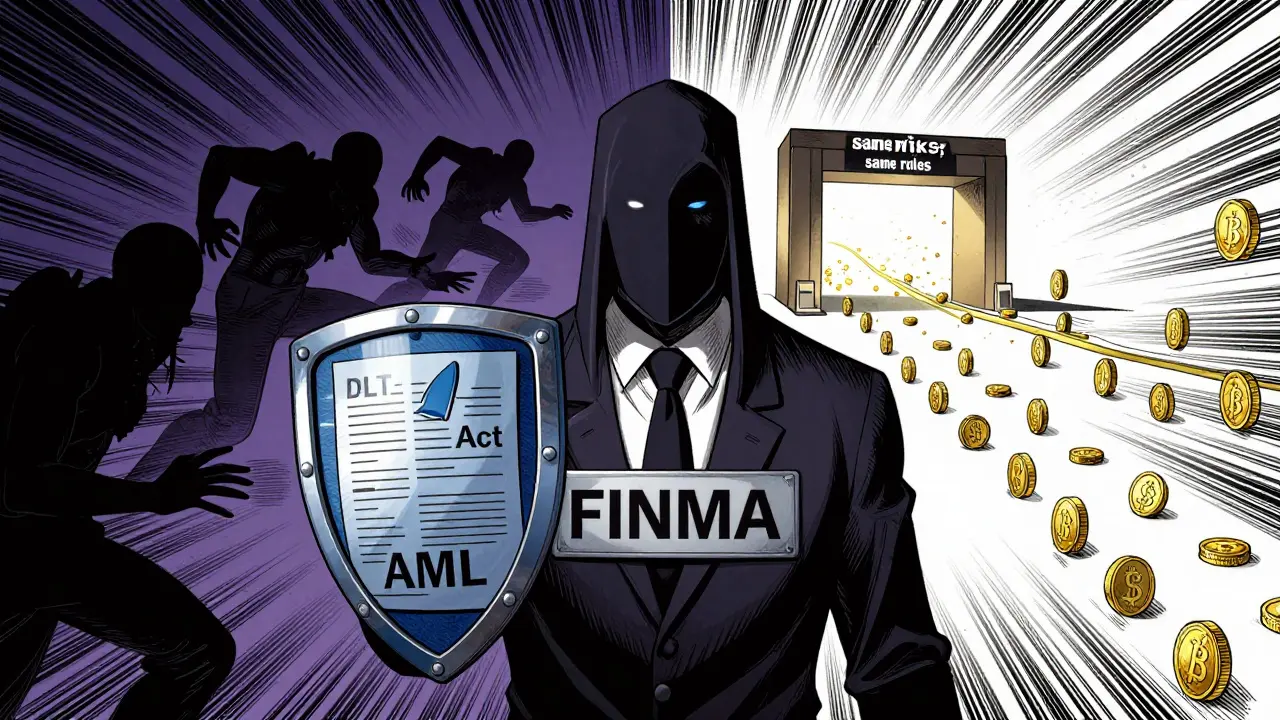
To understand why Zug feels so friendly, you first need to look at who is actually making the rules. While Zug provides the local infrastructure and culture, the legal heavy lifting comes from the federal level, specifically the Financial Market Supervisory Authority (FINMA). FINMA doesn't create separate, confusing laws just for crypto. Instead, they apply the principle of "same risks, same rules."
This means if your token acts like a stock, it gets regulated like a stock. If it acts like a currency, it follows payment regulations. This approach eliminates the ambiguity that plagues other jurisdictions. You don't have to guess which bucket your project falls into; FINMA provides clear guidelines based on the economic function of the asset. For most businesses, this reduces legal uncertainty significantly. You know exactly what licenses you need before you spend a dime on development.
However, this clarity comes with a cost: strict oversight. There is no such thing as an unregulated crypto business in Zug if you are offering services to the public. Every entity must comply with Anti-Money Laundering (AML) laws. Ignoring these requirements isn't a minor oversight; it leads to immediate shutdowns and potential criminal charges. The restriction here isn't on technology, but on opacity.
The DLT Act and New Trading Venues
A major pillar of the current framework is the Distributed Ledger Technology Act (DLT Act), which became effective in August 2021. This law created a specific legal category for tokenized assets and established the rules for trading them. It allows companies to issue tokens that represent real-world assets, like real estate or shares, directly on a blockchain.
In March 2025, this framework saw its biggest test when BX Digital received the first-ever DLT trading venue license from FINMA. This was a watershed moment. It proved that traditional financial infrastructure could legally integrate with blockchain technology. BX Digital can now facilitate multilateral trading of DLT securities, providing liquidity that previously only existed in less regulated offshore markets.
For developers and entrepreneurs, this means you can build platforms that connect directly to these licensed venues. But there is a catch. To operate a trading platform, you must meet rigorous technical and security standards. The restriction here is high barrier to entry for operators, but it creates a safer environment for users. You cannot just spin up a decentralized exchange (DEX) interface without considering whether you trigger licensing obligations under the Banking Act or Collective Investment Schemes Act.
Tax Realities: No Gains Tax, But Wealth Tax Applies
One of the biggest misconceptions about Zug is that it offers zero taxes on crypto. That is partially true, but with significant caveats. Individual investors in Switzerland generally pay no capital gains tax on cryptocurrency transactions. If you buy Bitcoin today and sell it for a profit next year, that profit is tax-free, provided you are not classified as a professional trader.
However, "private investor" status has limits. If your trading volume is excessive or if you engage in mining and staking, those activities are considered income-generating. Mining rewards and staking yields are subject to standard income tax rates. Furthermore, all cryptocurrency holdings count toward your total net worth. Switzerland imposes an annual wealth tax. So, while you don't pay tax on the *profit* from selling, you do pay a small percentage annually on the *value* of what you hold.
For businesses, the picture is clearer. Corporate profits from crypto activities are taxed at the cantonal and federal levels, similar to any other business revenue. Zug often offers competitive corporate tax rates compared to other cantons, but it is not a tax haven. The restriction here is full transparency. You must declare your holdings accurately to the Swiss Federal Tax Administration (SFTA).
The End of Secrecy: Automatic Exchange of Information (AEOI)
If you thought Switzerland's banking secrecy applied to crypto, you are operating on outdated information. In June 2025, the Federal Council approved the automatic exchange of crypto asset information (AEOI). Starting in January 2026, with data exchanges beginning in 2027, Switzerland will share crypto account details with 74 partner countries.
This is perhaps the most significant restriction for non-resident investors. The era of using Swiss crypto accounts to hide assets from foreign tax authorities is over. Financial institutions and crypto service providers in Zug must report holdings to the Swiss government, which then shares that data internationally. This aligns Switzerland with global standards set by the OECD.
For legitimate businesses and residents, this change brings credibility. It signals that Zug is a serious financial center, not a loophole. For those looking to evade taxes, it closes the door completely. The restriction is absolute: full reporting compliance is mandatory for any custodial service provider.
| Regulatory Area | Change/Update | Impact on Users |
|---|---|---|
| Trading Infrastructure | BX Digital receives first DLT license (March 2025) | Legalizes institutional-grade token trading; higher compliance bar for new exchanges. |
| Tax Transparency | AEOI implementation begins Jan 2026 | Crypto holdings reported to 74 countries; end of cross-border tax evasion via crypto. |
| Stablecoins | FNMA substance-over-form approach | Stablecoins treated as banks or funds; requires full banking licenses. |
| Municipal Adoption | Bitcoin/Ether accepted for taxes (up to CHF 100k) | Easier to use crypto for local obligations; sets precedent for wider adoption. |
Stablecoins and Banking Licenses
Creating a stablecoin in Zug is not as simple as coding a smart contract. FINMA applies a "substance-over-form" analysis. If your token promises to maintain a peg to a fiat currency like the USD or CHF, it is likely viewed as a bank deposit or a collective investment scheme.
This means issuers of stablecoins must obtain licenses under the Swiss Banking Act or the Collective Investment Schemes Act. These are expensive, time-consuming processes that require significant capital reserves and robust risk management systems. You cannot launch a retail-facing stablecoin in Zug without going through this rigorous approval process.
While this restricts the number of players, it protects consumers. After the collapse of several unbacked stablecoins globally, this strict stance ensures that any stablecoin operating in Crypto Valley has audited reserves and legal backing. For projects relying on stablecoins for payments, you must partner with licensed issuers like Tether (which has collaborated with Lugano) or other compliant entities.

Municipal Integration: More Than Just Hype
Zug’s reputation isn't just built on paper regulations; it's built on practical usage. Since 2016, the city has accepted Bitcoin and Ether for tax payments up to CHF 100,000 per year. This isn't a symbolic gesture; it's a functioning system integrated with municipal finance departments.
This integration extends beyond Zug. The Swiss Federal Railways (SBB) allows Bitcoin purchases for train tickets at over 1,000 machines nationwide. Lugano has gone even further, exploring the use of Bitcoin, USDT, and local tokens for city transactions. These initiatives show that the regulatory framework supports real-world utility.
For businesses, this means you can design products that interact with government services. However, you must ensure your payment processors are compliant with AML checks. The restriction here is on anonymity. You cannot send anonymous crypto to the city hall; every transaction is traceable and verified.
Who Is Zug For? And Who Should Stay Away?
Zug is ideal for:
- Institutional Investors: Those seeking regulated access to tokenized assets via DLT venues.
- Compliant Startups: Projects willing to undergo KYC/AML procedures to gain market credibility.
- Long-Term Holders: Individuals who benefit from no capital gains tax and want legal certainty.
Zug is NOT suitable for:
- Tax Evaders: With AEOI starting in 2026, hiding assets is no longer possible.
- Anonymity-Focused Projects: Strict AML laws mean no privacy coins or unverified wallets for commercial use.
- Unlicensed Exchanges: Operating a trading platform without a FINMA license is illegal.
Is it legal to mine Bitcoin in Zug?
Yes, mining is legal. However, the electricity costs and environmental regulations in Switzerland are strict. More importantly, any revenue generated from mining is subject to income tax. You must declare your mining income to the tax authorities.
Do I need a visa to start a crypto business in Zug?
If you are from outside the EU/EFTA, yes. You will need a work permit and a residence visa. Starting a company can help secure a self-employment visa, but you must prove sufficient capital and a viable business plan. The regulatory environment does not bypass immigration laws.
Can I use DeFi protocols in Zug?
You can use decentralized protocols as an individual user. However, if you provide services related to DeFi (like lending platforms or yield aggregators) to the public, you may trigger licensing requirements. FINMA is currently clarifying the boundaries for pure DeFi, but caution is advised.
What happens if I fail AML compliance?
Failure to comply with Anti-Money Laundering laws can result in heavy fines, revocation of licenses, and criminal prosecution. Banks and payment processors will also cut off ties with non-compliant entities, effectively shutting down your business operations.
Does the AEOI affect private wallets?
The AEOI primarily targets custodial services (exchanges, wallets provided by companies). If you hold assets in a non-custodial wallet that no third party controls, it is harder to track automatically. However, you are still legally required to declare these assets in your annual tax return. Failure to do so is tax fraud.
16 Responses
I really appreciate how clear this breakdown is regarding the DLT Act. It’s so easy to get lost in the jargon, but knowing that FINMA applies 'same risks, same rules' makes a lot of sense for someone trying to navigate compliance without hiring an army of lawyers.
Oh, please. Zug isn't some utopia for the enlightened few. It's just another bureaucratic maze dressed up in blockchain chic. The pretension of calling it 'Crypto Valley' when it's strictly regulated by federal standards is laughable. If you think you're getting away with anything interesting there, you're delusional.
so basically if you want to play nice you follow the rules and if you dont well good luck with the jail time lol
the part about stablecoins needing banking licenses is huge though like really huge because everyone thought they could just code their way out of financial regulation but nope substance over form means you are a bank if you act like one
It’s interesting to see how the landscape has shifted since I first looked into Swiss crypto regulations a few years back. The AEOI implementation seems like a game changer for transparency, even if it does close the door on those looking for secrecy.
You need to understand that the distinction between private investor and professional trader is not just semantics it is the difference between paying zero tax and paying full income tax plus wealth tax. If you are staking or mining you are generating income period. Do not assume your holdings are invisible just because they are on a blockchain.
Man, reading about BX Digital getting that license feels like watching history happen in slow motion. It’s wild to think that traditional finance and blockchain are finally shaking hands in a legal framework. I guess the wild west days are officially over, replaced by something that actually works for institutions. 🚀💼
I totally get why people might feel frustrated with the strict oversight, but from where I’m sitting, it sounds like a much safer environment for long-term projects. Knowing exactly what licenses you need before spending money on development is a huge relief compared to the ambiguity in other jurisdictions.
Listen up folks, if you are thinking about launching a DeFi platform in Zug you better have your KYC and AML procedures locked down tight. FINMA is not playing around and neither should you. You can use decentralized protocols as a user sure but if you are providing services to the public you are triggering licensing requirements. Don’t be stupid and ignore the rules because you will get shut down fast.
This is super helpful info! 🌟 I’ve been curious about how the wealth tax applies to crypto holdings specifically. It’s reassuring to know that while capital gains are tax-free for private investors, the annual wealth tax is still on the table. Just something to factor into the overall cost of holding assets there. Thanks for clarifying! 💎📈
The philosophical shift here is quite profound. We are moving from an era of technological libertarianism to one of integrated regulatory maturity. It forces us to ask whether true innovation requires freedom from regulation or if it thrives within clear boundaries. Zug seems to argue for the latter.
I have to say that the whole situation with the automatic exchange of information starting in 2026 is really going to change the dynamic for international investors who were hoping to keep things under the radar. It is definitely a move towards greater global cooperation and transparency which is generally a good thing for the legitimacy of the entire crypto industry even if it feels restrictive at first glance.
pretty straightforward stuff really. i always thought switzerland was all about secrecy but looks like that ship has sailed especially with the new AEOI rules. good to know that if you are doing business there you just need to be honest and compliant.
Let’s be real here, the article glosses over the sheer complexity of obtaining a banking license for a stablecoin. It’s not just 'expensive and time-consuming,' it’s practically impossible for any startup without massive VC backing. This effectively creates a monopoly for established players like Tether and kills any chance for innovative, community-driven stablecoin models to emerge in Zug.
The implementation of the Distributed Ledger Technology Act represents a sovereign assertion of regulatory control over digital assets which must be respected by all entities operating within the jurisdiction. To suggest otherwise is to misunderstand the fundamental nature of state authority and the necessity of standardized compliance frameworks in maintaining economic stability and national security interests.
wake up people if you are hiding assets in zug you are done for. the AEOI is coming and it is bringing everything to light. stop pretending you can evade taxes with crypto it is over. get your paperwork in order or face the music.
i cant believe anyone thinks this is easy. you have to declare everything. every single token. and if you forget one guess what? fraud charges. it is exhausting just thinking about keeping up with the reporting requirements. why do we make our lives so complicated with these digital assets when we could just stick to cash?