

Imagine turning your spare internet bandwidth into passive income. That is the promise of Wicrypt, a decentralized network that lets you share your WiFi and earn cryptocurrency. If you have heard the ticker symbol WNT and wondered what it actually does, you are not alone. It sits in a niche corner of the crypto world called Decentralized Physical Infrastructure Networks (DePIN). Instead of just trading numbers on a screen, Wicrypt tries to solve a real-world problem: expensive or unavailable internet access.
This guide breaks down how Wicrypt works, what hardware you need, and whether it is a viable side hustle or an investment in 2026. We will look at the technology behind the scenes, the risks involved, and where this project stands today.
How Wicrypt Works: The Micro-ISP Model
Traditional Internet Service Providers (ISPs) like Comcast or BT hold monopolies in many areas. They set the prices, control the speed, and keep all the profits. Wicrypt flips this model on its head. It allows regular people to become "micro-ISPs." Here is the simple logic:
- You buy a device: You purchase a specialized hotspot unit from Wicrypt.
- You connect it: Plug it into your existing home or business internet connection.
- You share data: Neighbors or travelers connect to your WiFi via the Wicrypt app.
- You get paid: Every time someone uses your bandwidth, they pay in WNT tokens, which go directly to your wallet.
The system handles billing automatically. The user pays for exactly what they use, and you receive the reward minus any platform fees. This creates a peer-to-peer market for internet access. In places with poor infrastructure, like rural parts of Nigeria or Southeast Asia, this can be a lifeline. For users in developed countries, it is mostly about monetizing unused bandwidth.
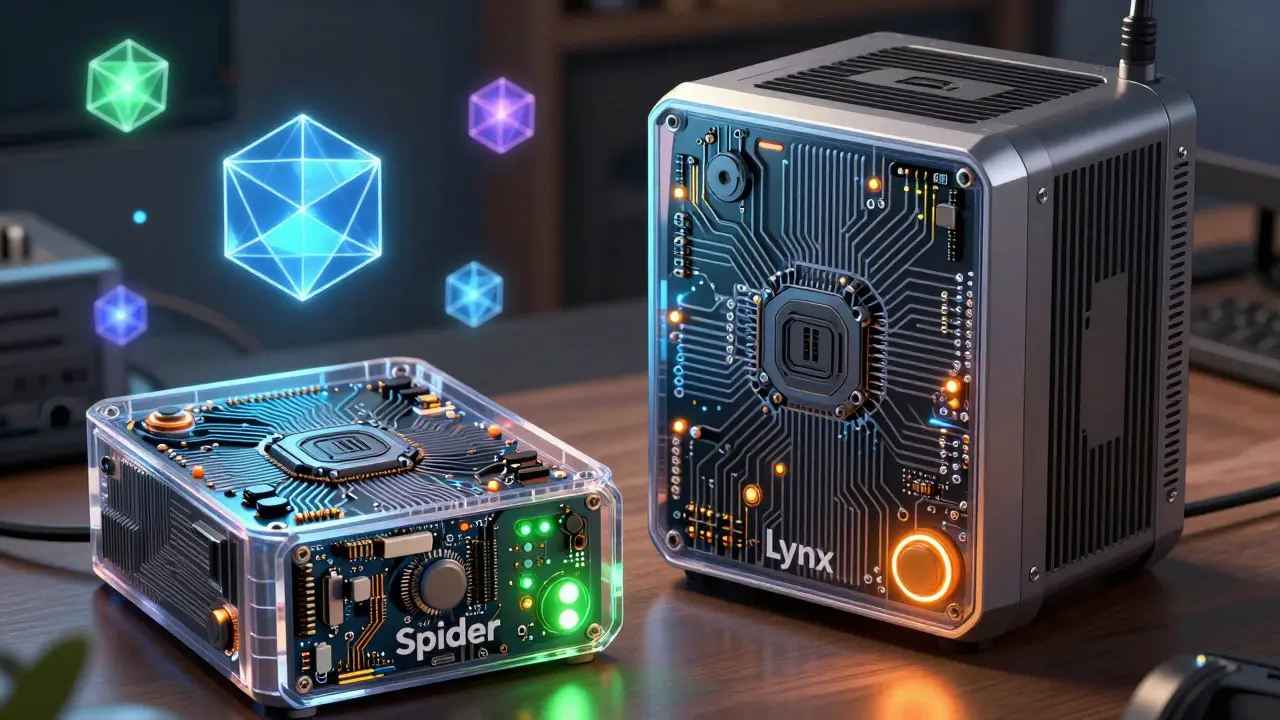
The Hardware: Lynx and Spider Devices
You cannot run Wicrypt software on your laptop or phone alone. The network relies on dedicated hardware to ensure security and reliability. There are two main devices you should know about:
| Device Name | Primary Use Case | Key Feature | Connectivity |
|---|---|---|---|
| The Spider | Home/Small Business | Compact, easy setup | Dual SIM support |
| The Lynx | Enterprise/City WiFi | High capacity (500+ users) | Long-range coverage |
Both devices run on WicryptOS, a proprietary firmware that manages connections and encrypts data. A key feature is dual-SIM functionality. If your primary ISP goes down, the device can switch to a backup cellular connection automatically. This ensures that your "shop" stays open even if your landline fails. The hardware acts as a bridge between your local network and the blockchain, handling the complex task of measuring data usage and triggering payments without draining your battery or slowing down your personal browsing.
Understanding the WNT Token and Blockchain Migration
The lifeblood of the network is the WNT token. When you share WiFi, you earn WNT. When others buy data from you, they spend WNT. But where does this token live? This is crucial for anyone looking to trade or withdraw their earnings.
In December 2024, Wicrypt made a significant move. They migrated the WNT token from the Polygon blockchain to Arbitrum One. Why does this matter? Polygon was popular for low fees, but Arbitrum One offers higher throughput and better integration with Ethereum’s ecosystem. For you, the user, this means faster transactions and potentially lower gas fees when you swap your WNT for other cryptocurrencies like USDT or ETH. The migration was handled through exchanges like MEXC, ensuring a smooth transition for holders.
As of mid-2026, WNT is considered a micro-cap cryptocurrency. Its market capitalization hovers around $300,000 to $350,000. This makes it highly volatile. Unlike Bitcoin or Ethereum, you won’t find WNT on every major exchange. Liquidity is concentrated on platforms like MEXC and BitMart. If you plan to sell large amounts of WNT quickly, you might face slippage-meaning the price drops slightly because there aren't enough buyers at that exact moment.
Earning Potential: Is It Worth It?
Let’s talk money. How much can you actually make running a Wicrypt hotspot? The answer depends entirely on location and demand. In dense urban areas with high tourist traffic or underserved communities, earnings can be decent. In quiet suburbs, they might be negligible.
User reports from Nigeria, one of Wicrypt’s strongest markets, suggest average earnings of $1.50 to $3.00 per day after electricity costs. Over a month, that adds up to roughly $45-$90. However, you must factor in the initial cost of the hardware. If a Spider device costs $100, it takes two to three months to break even. After that, it is pure profit, provided the device doesn’t break and the internet stays stable.
There is also a "network effect" at play. The more people who join Wicrypt, the more valuable the network becomes. Early adopters benefit from lower competition for users. As the network grows, individual earnings might decrease unless the overall demand for cheap WiFi grows faster than the supply of hotspots.
Risks and Challenges to Consider
No crypto project is without risk. Before buying hardware or tokens, consider these downsides:
- Hardware Dependency: You are locked into specific devices. If Wicrypt stops supporting older models, your investment becomes e-waste. Unlike mining Bitcoin with ASICs that retain some resale value, niche IoT hardware often has low secondary market value.
- Regulatory Uncertainty: Sharing internet commercially can violate terms of service with your current ISP. Some providers explicitly forbid reselling bandwidth. You could face throttling or account suspension.
- Token Volatility: Your earnings are in WNT. If the price of WNT drops by 50%, your daily income drops by 50%. You are exposed to both crypto market swings and network adoption rates.
- Liquidity Issues: With a small market cap, moving large sums of WNT into fiat currency (like USD or EUR) can be difficult. You may need to convert to USDT first, adding steps and potential fees.

Wicrypt vs. Other DePIN Projects
Wicrypt isn’t the only player in the DePIN space. It competes with projects like Helium and DIMO, but the focus is different. Helium focuses on cellular and IoT coverage using LoRaWAN technology. Wicrypt focuses strictly on WiFi sharing. This makes Wicrypt more accessible for home users since everyone already has WiFi routers, whereas Helium requires specialized long-range antennas.
Compared to traditional WiFi sharing apps like Fon, Wicrypt offers cryptocurrency rewards instead of credits. This appeals to crypto-native users but adds complexity for mainstream consumers. The barrier to entry is higher because you need to understand wallets, private keys, and blockchain networks. However, the potential upside is also higher if the token appreciates significantly.
Future Outlook: Where Is Wicrypt Heading?
The roadmap for Wicrypt includes expanding its "City WiFi" solution to support over 1,000 simultaneous users per node by mid-2025. This targets municipal governments and large enterprises rather than just homeowners. The Enugu State Government in Nigeria has already piloted this model to provide community internet and create jobs. If similar deals happen in other developing regions, the utility of WNT could increase dramatically.
Additionally, the integration with Arbitrum One opens doors for DeFi applications. Imagine staking your WNT tokens to earn yield while providing liquidity for the network. While not currently active, such features are common in mature DePIN ecosystems. Keep an eye on official announcements regarding governance. WNT holders have voting rights over network upgrades, giving the community a say in the project’s direction.
Is Wicrypt a scam?
Wicrypt is not a scam; it is a legitimate DePIN project with working hardware and a functional blockchain protocol. However, it is a high-risk investment due to its micro-cap status and limited liquidity. Always do your own research before investing money.
Which blockchain is WNT on now?
As of late 2024, the WNT token operates on the Arbitrum One blockchain. It previously lived on Polygon but migrated to improve transaction speeds and reduce costs.
Can I use my existing router with Wicrypt?
No, you generally need to purchase dedicated Wicrypt hardware like the Spider or Lynx devices. These units contain the necessary firmware and security modules to handle encrypted data sharing and automatic billing.
How do I cash out my WNT earnings?
You can transfer your WNT tokens to a supported exchange like MEXC or BitMart. From there, you can trade them for stablecoins like USDT or major cryptocurrencies like BTC, which you can then withdraw to a bank account or card.
Is it legal to share my internet via Wicrypt?
Legality varies by country. In some places, it is fully legal. In others, it may violate your ISP's Terms of Service. Check local telecommunications laws and your ISP contract before setting up a hotspot.