

You’ve probably seen the name Kuma Inu (KUMA) pop up in crypto chats or on price trackers. It’s a meme coin built on the Ethereum blockchain that started as a community-driven experiment but has faced significant hurdles since its launch.
If you are wondering whether this token is worth your attention, you need to look past the cute branding. The reality of Kuma Inu involves complex tokenomics, extremely low liquidity, and a history of dramatic price drops. This guide breaks down what KUMA actually is, how it works, and why you should proceed with caution if you are considering buying it.
The Origins and Identity of Kuma Inu
Kuma Inu launched in May 2021, right in the middle of the massive meme coin boom that saw tokens like Shiba Inu explode in value. Like many projects from that era, KUMA was designed to be decentralized and owned by its community. The initial distribution model was ambitious, aiming to prevent centralization by allocating large portions of the supply to specific addresses and exchanges.
One of the most controversial aspects of its launch was the allocation of 50% of the total supply to the wallet of Vitalik Buterin, the co-founder of Ethereum. This move caused immediate concern among investors who feared centralized control. To address this, the project team rebranded and sent those tokens to a "dead address," effectively removing them from circulation. While this demonstrated a commitment to decentralization, it also highlighted the early instability of the project's governance structure.
Today, Kuma Inu identifies as more than just a joke token. It aims to be a decentralized finance (DeFi) platform with governance mechanisms. However, the gap between its stated goals and its actual market performance remains wide.
Tokenomics: How KUMA Works
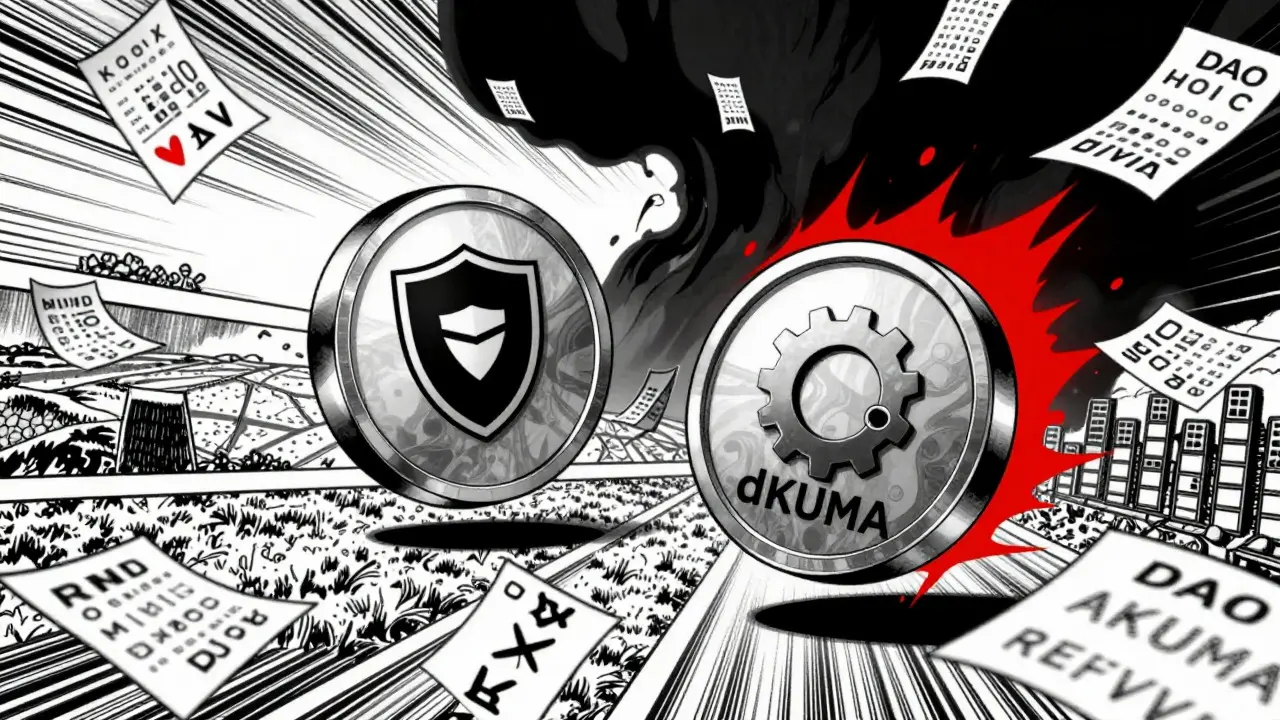
Understanding the tokenomics of any cryptocurrency is crucial before investing. Kuma Inu operates with two primary tokens: KUMA and dKUMA. These serve different functions within the ecosystem.
- KUMA: This is the governance token. Holders can stake KUMA to gain voting rights in the Kuma DAO (decentralized autonomous organization). Your voting power is proportional to the amount you stake. This allows the community to vote on marketing strategies, development priorities, and fund allocations.
- dKUMA: This is the utility token for the Kuma DEX (decentralized exchange). It serves as the operational fuel for the protocol, facilitating trades and yield farming activities.
The total supply of KUMA is capped at 1 quadrillion tokens. According to recent data, the circulating supply is approximately 397 billion tokens, which represents about 40% of the maximum supply. The remaining tokens are either locked, burned, or allocated to future ecosystem development.
The project also features the Kuma Breeder, a yield farming protocol that allows users to farm dKUMA tokens. This mechanism is designed to incentivize holding KUMA by providing passive income opportunities. However, the effectiveness of these yields depends heavily on the overall health and trading volume of the platform.
Market Performance and Liquidity Challenges
When evaluating Kuma Inu, the numbers tell a stark story. As of mid-2026, KUMA has experienced a severe decline in value. Its all-time high was reached in November 2021 at approximately $0.00005. Since then, the price has dropped by over 99%, hovering around fractions of a cent.
| Metric | Value / Status |
|---|---|
| All-Time High (ATH) | $0.00005 (Nov 2021) |
| Current Price Range | $0.000000001 - $0.00008 (Highly Variable) |
| 24-Hour Volume | $12 - $86,000 (Inconsistent Data) |
| Market Cap | $534K - $1.05M USD |
| Holder Count | ~23,230 Addresses |
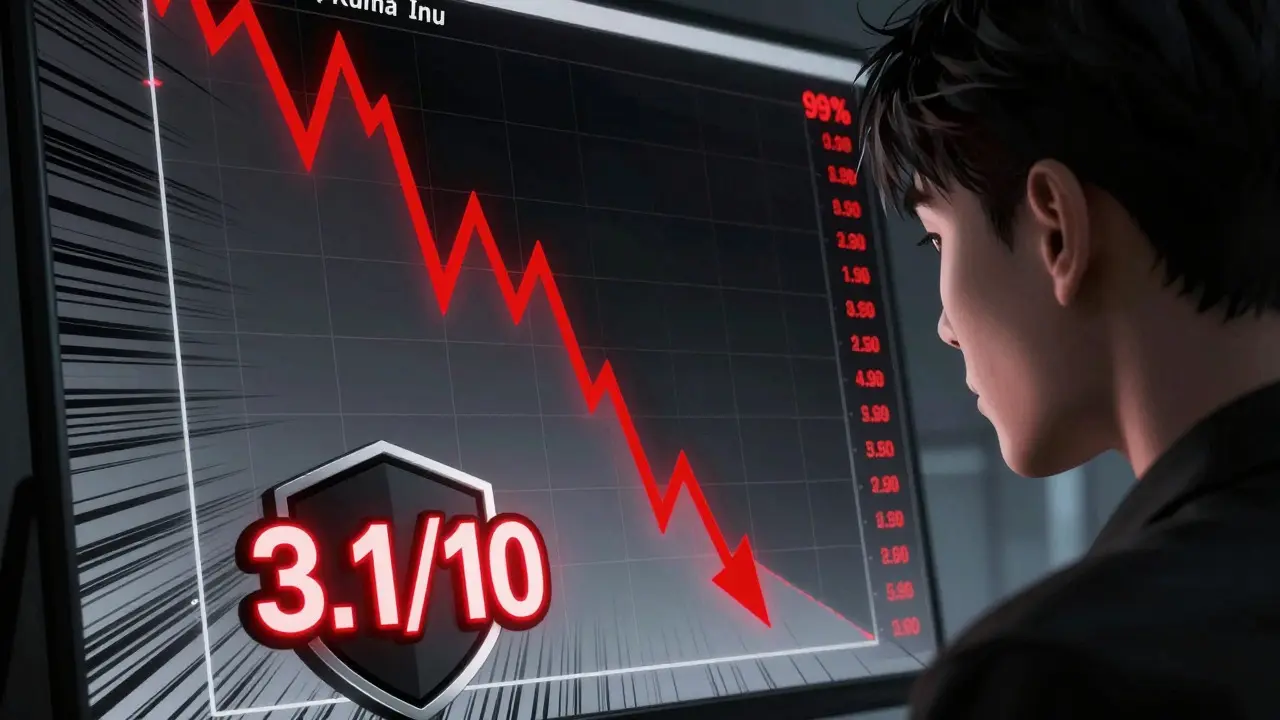
| Security Rating (CertiK) | 3.1 / 10 |
The most concerning aspect of KUMA’s current state is its liquidity. Trading volumes are extremely low, often dipping into single-digit dollars on some platforms. This means that if you buy KUMA, selling it later could be difficult without significantly impacting the price. The discrepancy in reported prices across major aggregators like CoinMarketCap, CoinGecko, and Crypto.com further illustrates the fragmented nature of its trading pairs.
Security and Governance Risks
Security is paramount in the world of DeFi. Kuma Inu uses a multi-signature wallet system (3-of-5) for managing treasury funds, which is a standard security practice. However, independent audits paint a worrying picture. CertiK, a leading blockchain security firm, gave Kuma Inu a rating of only 3.1 out of 10. This low score suggests potential vulnerabilities in the smart contract code or governance structures.
While the project claims to be fully decentralized, the transition to true community control via the Kuma Vessel Vault is still evolving. Until the DAO is fully operational and transparent, there remains a risk of centralized decision-making behind the scenes. For a retail investor, this lack of transparency adds another layer of uncertainty.
How to Buy and Trade KUMA
If you decide to proceed despite the risks, here is how you can acquire KUMA tokens. Since it is an ERC-20 token on Ethereum, you will need a compatible wallet.
- Set Up a Wallet: Download a non-custodial wallet like MetaMask or Trust Wallet. Ensure you have enough ETH to pay for gas fees when interacting with the Ethereum network.
- Acquire ETH: Buy Ethereum from a reputable centralized exchange like Coinbase or Binance.
- Connect to a DEX: Use a decentralized exchange like Uniswap. Connect your wallet to the platform.
- Swap for KUMA: Paste the official KUMA contract address (
0x48c276e8d03813224bb1e55f953adB6d02FD3E02) into the swap interface. Double-check this address to avoid scam tokens. - Execute the Trade: Set your slippage tolerance appropriately due to low liquidity, then confirm the transaction.
Note that some major exchanges like Crypto.com may list the token for tracking purposes but do not allow direct trading. Always verify the availability on the specific platform you are using.
Is Kuma Inu a Good Investment?
Let’s be honest: Kuma Inu is a high-risk asset. It belongs to the meme coin category, which is driven largely by social sentiment rather than fundamental utility. While the project has attempted to build DeFi infrastructure like yield farming and governance tools, the market response has been lukewarm.
The 99% drop from its all-time high, combined with low trading volume and a poor security rating, makes it a speculative bet at best. If you are looking for stable returns or robust technological innovation, there are likely better options in the Ethereum ecosystem. However, if you enjoy the thrill of high-volatility assets and believe in the long-term vision of community-owned meme coins, KUMA might fit a tiny portion of a diversified portfolio.
Always remember: never invest more than you can afford to lose. In the world of meme coins, zero is always a possible outcome.
What is the main purpose of the KUMA token?
The KUMA token serves primarily as a governance token for the Kuma DAO. Holders can stake their tokens to vote on project decisions, such as marketing strategies and development priorities. It also acts as a store of value within the Kuma Inu ecosystem.
Is Kuma Inu safe to invest in?
Investing in Kuma Inu carries significant risks. It has a low security rating from CertiK (3.1/10), extremely low liquidity, and a history of massive price declines. It is considered a highly speculative asset suitable only for risk-tolerant investors.
Where can I buy KUMA tokens?
You can buy KUMA on decentralized exchanges (DEXs) like Uniswap. You will need an Ethereum-compatible wallet (like MetaMask) and ETH to pay for gas fees. Some centralized exchanges may list it for tracking but not necessarily for direct trading.
What happened to Vitalik Buterin's share of KUMA?
Initially, 50% of the KUMA supply was allocated to Vitalik Buterin's wallet. Due to concerns about centralization, the project team sent these tokens to a dead address, effectively burning them and removing them from circulation to ensure a fairer distribution.
What is the difference between KUMA and dKUMA?
KUMA is the governance token used for voting in the DAO. dKUMA is the utility token used for operations within the Kuma DEX, such as trading and yield farming. They serve distinct roles within the ecosystem.
17 Responses
the liquidity depth is practically non-existent which means slippage will eat your entire position before you even hit the confirm button on uniswap. smart contract audits are a joke when certik gives it a 3.1 out of 10 rating indicating fundamental vulnerabilities in the codebase structure. the allocation to vitalik was clearly a marketing stunt to create false legitimacy while the team likely dumped their bags during the initial hype cycle. most meme coins from 2021 are dead weight and this one is no exception despite the rebranding attempts. the dao governance is theoretical at best since active participation requires holding significant amounts of a depreciating asset. yield farming rewards are just inflationary mechanisms designed to keep degens locked in until the rug pull happens. nobody talks about the gas fees required to swap these micro-cap tokens which often exceed the value of the trade itself. the market cap volatility suggests manipulation by whale wallets controlling the majority of the circulating supply. technical analysis is useless here because there is no organic volume to support any trend lines or resistance levels. the project roadmap has been silent for months indicating developer abandonment or lack of resources. investors should treat this as a gambling ticket rather than an investment vehicle with any semblance of utility. the tokenomics model relies on new buyers entering the system to pay off early adopters which is a classic ponzi structure. security risks are amplified by the multi-sig wallet setup which can be compromised if social engineering attacks target the signers. decentralization is a buzzword used here to mask the reality of centralized control over treasury funds. the difference between kuma and dkuma adds unnecessary complexity without adding tangible value to the user experience. trading pairs are fragmented across dexes making price discovery nearly impossible for retail traders. always verify the contract address manually because scam tokens with similar names are rampant on etherscan.
ugh 😩 another coin that looks like a bear but acts like a snake 🐍
it is fascinating how we project our hopes onto digital assets that have no intrinsic value beyond collective belief. the narrative of community ownership is a beautiful ideal yet it clashes harshly with the predatory nature of speculative markets. perhaps the true lesson here is not about the token itself but about human psychology and our desire for quick validation. we seek patterns in chaos and find meaning in randomness hoping that this time the story will end differently. the cute branding serves as a psychological anchor making us feel safe while the underlying mechanics remain cold and indifferent. maybe we should view these projects as modern folklore stories that evolve based on who tells them next. the decline in price reflects a shift in cultural attention away from this particular mascot toward newer shiny objects. there is a certain poetic tragedy in watching a community disperse as the financial incentives evaporate into thin air. we must ask ourselves what drives us to participate in these ecosystems beyond mere profit seeking motives. is it the thrill of possibility or the fear of missing out on the next big movement? the answer likely lies somewhere in the complex interplay of hope and desperation that defines modern crypto culture. let us observe this phenomenon with curiosity rather than judgment understanding its place in the broader tapestry of digital history. the silence of the developers speaks volumes about the transient nature of online communities built solely on speculation. we are all characters in this unfolding drama playing roles assigned by market forces beyond our control. embracing uncertainty might be the only rational response to such volatile environments where logic takes a backseat to emotion. the journey of kuma inu mirrors the lifecycle of many internet trends rising rapidly and fading just as quickly. ultimately the value we derive may come from the shared experience rather than the financial outcome of our investments. let us learn from this chapter and approach future ventures with greater discernment and philosophical detachment.
hey guys look on the bright side at least we learned something about blockchain technology through trial and error! every failure is a stepping stone to success so don't give up on the dream of decentralized finance. the community spirit is still alive even if the charts are looking a bit gloomy right now. remember that innovation takes time and patience is a virtue especially in the crypto space. let's keep supporting each other and sharing knowledge regardless of the market conditions. positivity attracts abundance so let's spread some good vibes instead of focusing on the negatives. who knows maybe this bear will wake up and roar again someday! stay strong friends and keep learning from every experience along the way.
i just sit back and watch the circus unfold with popcorn in hand 🍿 honestly it's entertaining seeing people defend a coin with zero utility like it's the second coming of bitcoin. the colors on the logo are nice i'll give them that but substance seems to be lacking entirely. it's like watching a soap opera except the characters are losing money instead of finding love. pretty wild stuff really.
you see the matrix is trying to hide the truth behind these low ratings because the elites want to keep you poor and confused. the real power lies in understanding the hidden frequencies of the blockchain which mainstream analysts refuse to acknowledge. we must break free from the illusion of scarcity created by the central banks and embrace the infinite potential of peer-to-peer networks. the government doesn't want you to know that kuma inu could be the key to unlocking global financial freedom if only we had the courage to believe. stop listening to the fake news media and start trusting your inner intuition about where the energy flows. the vibrations of this token are shifting and those who are awake will recognize the signs before it's too late. join the revolution before they shut down the servers forever.
It is evident that the prevailing narrative surrounding Kuma Inu is constructed upon a foundation of deceit and manipulation orchestrated by shadowy figures within the industry. The purported decentralization is merely a facade designed to lull unsuspecting investors into a false sense of security while the core developers siphon funds through obscure channels. One must question the integrity of any project that relies on such dubious tactics to maintain relevance in an increasingly transparent marketplace. The correlation between the price drops and specific announcements suggests coordinated dumping activities aimed at suppressing competition and consolidating power among a select few insiders. Furthermore, the lack of rigorous independent verification processes exposes the inherent fragility of the ecosystem and invites further exploitation by malicious actors. It is imperative that regulatory bodies intervene to protect the public interest and dismantle these fraudulent operations before more capital is lost irretrievably. Until then, skepticism remains the only rational stance against such overt deception.
One might ponder whether the essence of value in cryptocurrency resides in the code itself or in the collective consciousness of its holders. If the former, then Kuma Inu appears structurally sound yet functionally obsolete due to its inability to adapt to evolving market demands. If the latter, then the current sentiment indicates a profound disillusionment with the promises made during its inception. This dichotomy presents an interesting case study in the sociology of digital economies where perception often outweighs reality. The transition from a meme-driven asset to a proposed DeFi platform highlights the tension between entertainment and utility in modern finance. Perhaps the true metric of success is not price appreciation but the longevity of community engagement despite adverse conditions. We must consider the ethical implications of investing in projects that prioritize branding over substantive development. Does the aesthetic appeal of a bear mascot justify the financial risks undertaken by individual participants? These questions remain unanswered as the market continues to test the resilience of such ventures. Ultimately, the fate of Kuma Inu may serve as a cautionary tale for future endeavors seeking to bridge the gap between art and commerce.
well obviously anyone with half a brain cell knows this is a trap :P why do people keep falling for these obvious scams? it's almost insulting to suggest otherwise. the data is right there staring you in the face if you bother to look past the hype. typical crowd behavior really.
the moral decay of society is reflected in our willingness to gamble life savings on cartoon animals. we have lost sight of hard work and honest labor replacing it with get rich quick schemes promoted by influencers. this coin represents everything wrong with modern capitalism where speculation trumps production. the elite laugh at us while we fight over scraps of worthless tokens. we need to return to traditional values and reject this digital degeneracy. simple living is the key to happiness not chasing phantom profits in a rigged game. wake up sheeple before it's too late.
honey u really think this is gonna moon?? cause im not feeling it tbh the vibes are totally off and ur gonna get hurt if u go in there blindfolded. listen to me girl/guy/they whatever u need to hear this. its better to be safe than sorry ok? dont say i didnt warn u when u lose it all. xoxo
i understand the excitement but please take a deep breath and look at the facts objectively. it is heartbreaking to see people put their trust in projects that haven't delivered on their basic promises. let's support each other by sharing accurate information rather than spreading false hope. empathy is crucial in this space because everyone makes mistakes including the developers. let's focus on building a healthier community mindset where transparency is valued over hype. together we can navigate these turbulent waters with grace and dignity. your peace of mind is worth more than any potential gain from a risky asset. take care of yourselves first and foremost.
Let us approach this situation with clarity and precision recognizing both the opportunities and pitfalls inherent in the current landscape. The data presented in the article provides a comprehensive overview of the technical and economic factors influencing Kuma Inu's performance. By analyzing the tokenomics and security ratings we can make informed decisions rather than emotional reactions. It is important to acknowledge the efforts made by the team to improve governance structures despite the challenges faced. Constructive criticism should be balanced with recognition of progress however incremental it may seem. Let us engage in thoughtful dialogue that fosters understanding and promotes responsible investing practices. Together we can elevate the discourse surrounding niche cryptocurrencies and contribute to a more mature market environment.
morality dictates that we avoid greed and stick to proven assets like gold or land. philosophy teaches us that impermanence is the only constant so why cling to fleeting digital fads? formal education would tell you this is risky informal wisdom says run far away. the tone should be serious because money matters are not a joke. respect yourself enough to invest wisely.
the algorithmic inefficiencies in the kuma dex protocol reveal a profound misunderstanding of market microstructure dynamics by the development team. liquidity provision mechanisms are suboptimal leading to excessive slippage and arbitrage opportunities for sophisticated bots operating at millisecond speeds. the governance model suffers from voter apathy resulting in oligarchic control by a small subset of large holders who dictate policy outcomes. smart contract vulnerabilities identified by certik point to inadequate testing procedures and lack of professional auditing standards. the yield farming incentives are misaligned creating negative sum games where total value destroyed exceeds value created. macroeconomic headwinds further exacerbate the downward pressure on the token price as risk appetite diminishes globally. quantitative easing policies benefit established players leaving small cap meme coins vulnerable to capital flight. technical indicators suggest continued downtrend with no visible support levels capable of halting the bleeding. fundamental analysis yields null results given the absence of revenue streams or user growth metrics. the project exists in a vacuum disconnected from real world economic activity rendering it irrelevant to serious investors. exit liquidity is scarce ensuring that late entrants become bag holders for early speculators. the entire ecosystem is built on sand destined to collapse under its own weight.
let's keep the conversation respectful and open minded. everyone has different perspectives on risk tolerance and investment strategies. listening to others helps us grow and learn from diverse experiences. the informal nature of reddit allows for candid discussions which is valuable. formal analysis complements intuitive feelings providing a holistic view. balance is key in life and in crypto. let's support each other with kindness and understanding. thanks for sharing your thoughts.
yo guys check this out!!! i think kuma is gonna pump soon cuz bears are strong rn!! dont miss out on the gains!!!! buy high sell low wait no thats wrong lol anyway lets gooo!!! 🚀🚀🚀