

You clicked on this because you saw Atomic Meta pop up in your wallet or a random exchange list. Maybe the name sounded futuristic. Maybe the promise of "AI-powered autonomous networks" caught your eye. But here is the hard truth: if you are looking for a solid investment with verifiable tech and active users, you might be staring at a ghost town.
Atomic Meta (ATMC) is marketed as a high-performance staking ecosystem within decentralized finance (DeFi). It claims to offer everything from mirror trading to gaming and cloud solutions. Sounds great, right? The problem isn't what they say it does. The problem is that almost no one can prove it actually works.
This article cuts through the marketing noise. We aren't here to hype you up. We are here to look at the cold, hard data. If you have some spare cash and want to know if buying ATMC is a gamble or a scam, keep reading. We will break down the tokenomics, the glaring data inconsistencies, and why major experts remain silent on this project.
The Big Promise vs. The Tiny Reality
Let's start with what Atomic Meta claims to be. According to their whitepaper and site descriptions, ATMC is a Layer 1 blockchain compatible with Ethereum Virtual Machine (EVM). They call their network "ATMChain." They say it is built for speed and low fees, supporting staking, presales, and airdrops.
But here is where things get weird. The project doesn't just want to be a currency. It wants to be an entire economy. Their roadmap lists four main pillars:
- Atomic Games: A strategy war game platform.
- ATMCX: A commodity trading platform for futures and options.
- ATM Cloud365: Business cloud solutions.
- ATM Academy: Online training courses.
Think about that. One small team-whose founders remain anonymous-is supposed to deliver a blockchain, a video game, a stock exchange, a cloud service, and an education platform. In the real world, companies like Amazon or Microsoft spend billions on just one of those verticals. For a micro-cap crypto project to claim all of these simultaneously often signals overpromising rather than underdelivering.
Data Chaos: Why You Can't Trust the Price
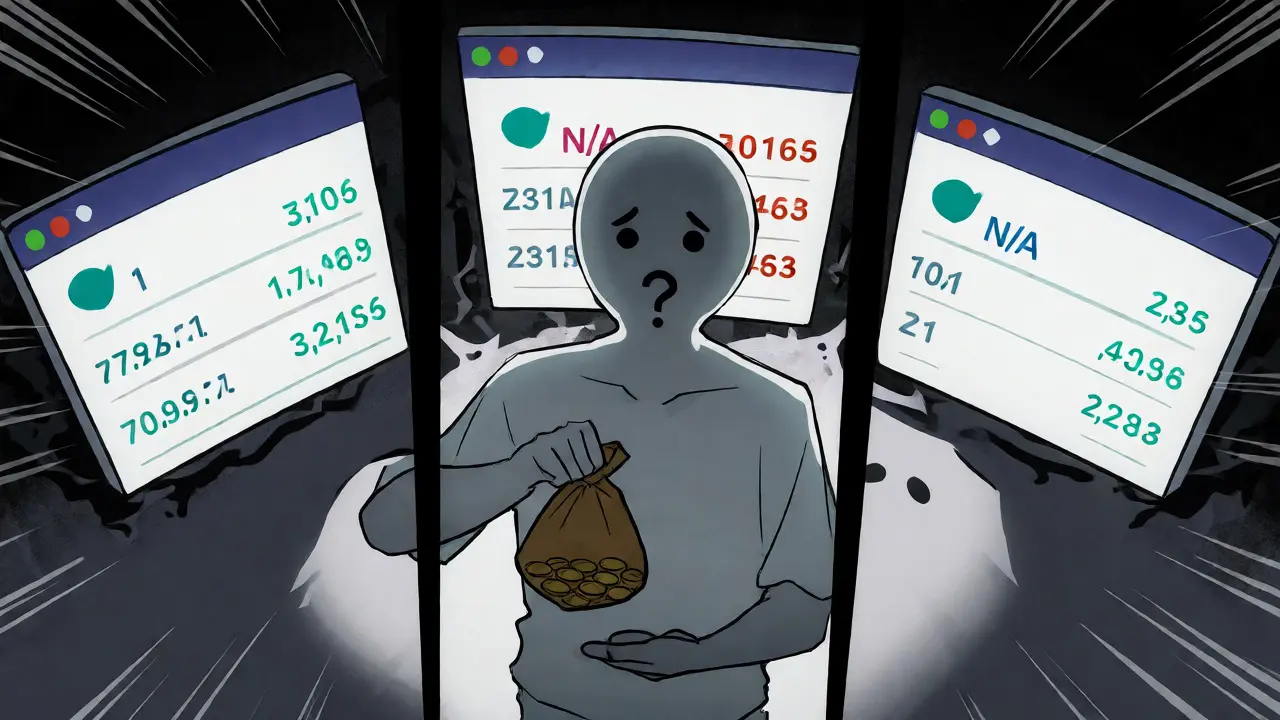
If you try to check the price of ATMC today, you will get different answers depending on where you look. This is a massive red flag in the crypto space. Established coins like Bitcoin or Ethereum have consistent pricing across CoinMarketCap, CoinGecko, and Binance. ATMC does not.
| Metric | CoinMarketCap | CoinStats | CoinGecko |
|---|---|---|---|
| Price | $0.00008 | $0.0506 | $0.0375 |
| Total Supply | 88 Billion | 9 Billion | N/A |
| 24h Volume | $116 | $62,990 | $50,179 |
| Rank | #5770 | N/A | N/A |
Look at that table. The price difference between sources is nearly 600x. One source says the total supply is 88 billion tokens; another says 9 billion. How can a project function when its own basic metrics don't match? Usually, this happens when a token has extremely low liquidity. There are so few buyers and sellers that one small trade can swing the price wildly. Or, worse, the data feeds themselves are outdated or manipulated.
Furthermore, the trading volume is dangerously low. On some days, the 24-hour volume drops below $100. That means less than ten people might be trading this coin globally. If you buy $1,000 worth of ATMC, you might not be able to sell it later without crashing the price yourself. This is known as slippage, and it eats your profits alive.
Who Is Behind Atomic Meta?
In crypto, anonymity is common. Satoshi Nakamoto didn't reveal his face, and Bitcoin still works. But there is a difference between being private and being invisible.
Atomic Meta was founded by an anonymous team. No names. No LinkedIn profiles. No GitHub history linked to known developers. When you search for "Atomic Meta founder," you find nothing concrete. Just vague references to a "historic strategy war game developer" behind the gaming arm.
Compare this to other successful DeFi projects. Look at Uniswap. You know who Hayden Adams is. Look at Lido Finance. You know the key contributors. With Atomic Meta, you are trusting your money to a black box. There is no public code repository that shows regular updates. There is no verified team page with bios. If the developers disappear tomorrow, you would never know until the website went offline.
The Staking Ecosystem: Does It Actually Work?
The core pitch of ATMC is staking. You lock up your coins to earn rewards. Simple enough. But let's look at the competition.
Ethereum staking holds over $24 billion in value. Cardano holds around $18 billion. Even smaller, legitimate altcoins have millions in staked assets. Atomic Meta? Its entire market cap hovers around $377,000 according to some trackers. That is pocket change. It suggests that virtually nobody is using the staking mechanism. If the staking APY (Annual Percentage Yield) looks high, ask yourself why. Often, high yields on tiny projects are paid out in more of the same falling token. You end up with more coins, but they are worth less.
There is also the issue of the "ATMCloud365" and "ATMCX" platforms. Do you have screenshots of them working? Real user reviews? Try searching Reddit for "ATMCX review." You will find almost zero results. Compare that to Coinbase or Kraken, which have thousands of daily reviews. The absence of user chatter is deafening. Are people using these platforms? Probably not. They exist mostly on paper to make the whitepaper look impressive.
Liquidity: The Killer Problem
Here is a rule of thumb I use when evaluating obscure coins: If the daily trading volume is under $10,000, treat it as illiquid. If it is under $1,000, consider it a zombie token.
Atomic Meta frequently reports volumes under $500. Some days, it is barely above $100. What does this mean for you?
- Hard to Exit: You might buy easily, but selling could take weeks.
- High Slippage: To sell a large amount, you might have to accept a price 20-50% lower than the market rate.
- Manipulation Risk: With such thin order books, a single whale (large holder) can pump or dump the price instantly.
A report from Chainalysis noted that tokens with sub-$1,000 daily volumes have a high probability of being abandoned or manipulated. ATMC fits this profile perfectly. It is not just volatile; it is fragile.

Community Sentiment: Silence is Loud
Crypto runs on community. Hype drives prices. Twitter trends, Telegram groups, and Discord servers create momentum. Where is the buzz for Atomic Meta?
It is non-existent. LunarCrush, a social sentiment tracker, gives ATMC a social dominance score of 0.00%. That means it generates no measurable discussion on major social channels. There is no dedicated subreddit. Trustpilot has no meaningful reviews. Bitcointalk forums show minimal engagement.
When I searched for user experiences, I found only a handful of posts from years ago. Most mentioned difficulty finding liquidity or inability to withdraw funds. No success stories. No viral memes. No influencer endorsements. In a market where even bad projects get hyped by shillers, the silence around ATMC is suspicious. It suggests that either the project has failed to attract users, or the users who tried it left quietly.
Should You Buy Atomic Meta (ATMC)?
Let's weigh the pros and cons honestly.
Potential Pros:
- The concept of integrating gaming, trading, and education is interesting if executed well.
- The token price is currently very low, offering potential upside if the project suddenly gains traction.
- Low entry barrier due to cheap token cost.
Major Cons:
- Anonymity: No known founders or developers.
- Data Inconsistency: Prices and supplies vary wildly across exchanges.
- Liquidity Crisis: Extremely low trading volume makes exiting difficult.
- No Verifiable Tech: No active GitHub, no live demos, no proven user base.
- Zombie Status: Fits the profile of projects likely to fail within 18 months.
If you are a seasoned trader looking for a lottery ticket with $50 you can afford to lose, maybe you give it a shot. But if you are building a serious portfolio, Atomic Meta lacks the fundamental pillars of trust: transparency, activity, and adoption.
Frequently Asked Questions
Is Atomic Meta (ATMC) a scam?
It is not necessarily a malicious scam, but it exhibits many characteristics of a "zombie token." These are projects that launch, raise some capital, and then fade away due to lack of development or user interest. The inconsistent data and anonymous team raise significant concerns about legitimacy and long-term viability.
Why do different websites show different prices for ATMC?
This discrepancy occurs because of extremely low liquidity. With very few trades happening, the price on any given exchange is determined by a small number of transactions. Additionally, some tracking sites may be pulling outdated data or failing to sync correctly with the actual market conditions.
Can I withdraw my funds from Atomic Meta platforms?
User feedback is scarce, but older reports mention difficulties with withdrawals and liquidity. Since the platforms (like ATMCX or ATM Cloud365) lack verifiable operational status, withdrawing funds can be risky. Always test with a small amount first if you decide to participate.
Where can I buy Atomic Meta (ATMC)?
ATMC is listed on smaller exchanges like LBank. It is generally not available on major tier-1 exchanges like Binance or Coinbase. Buying on smaller exchanges often comes with higher risks regarding security and customer support.
Does Atomic Meta have a working game or app?
While the whitepaper mentions "Atomic Games," there is little evidence of a widely played, functional game with an active user base. Most promotional materials appear to be conceptual rather than demonstrable software. Without live links to playable versions, treat these features as aspirational.