
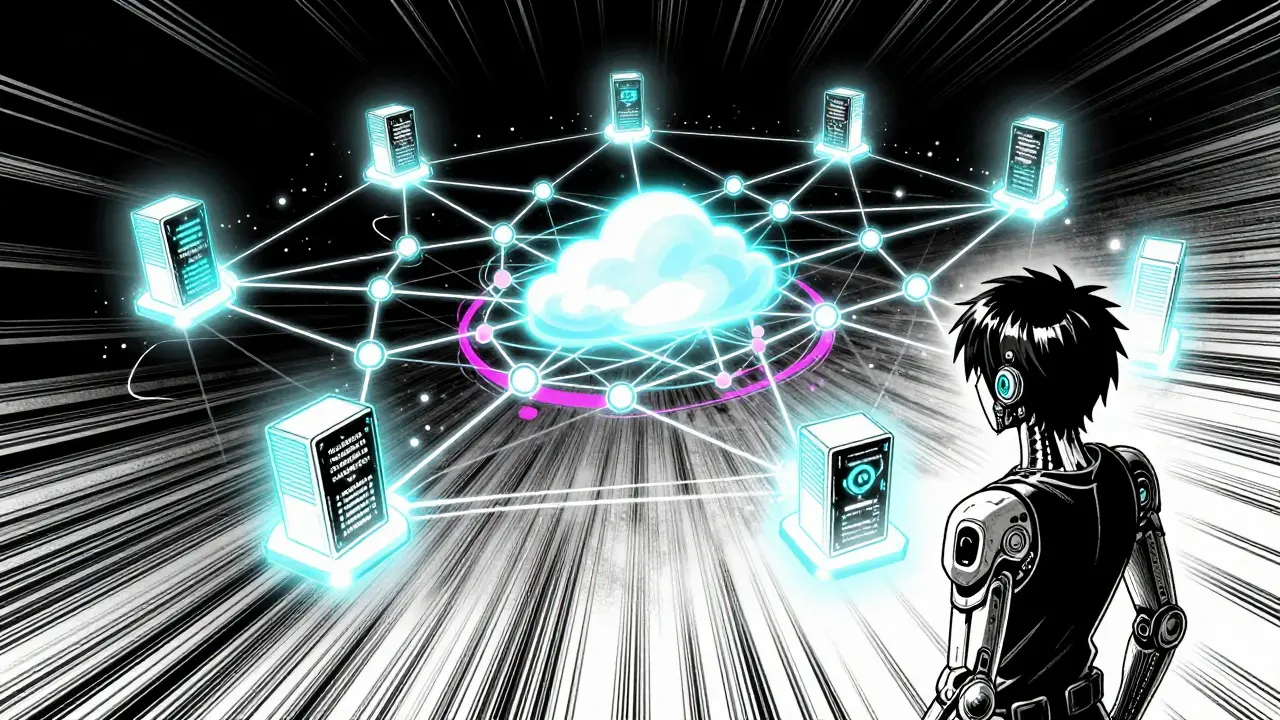
You might have seen the ticker COA pop up on a price chart or heard whispers about "AI-powered game creation" in crypto circles. But what exactly is Alliance Games, and why should you care? It’s not just another meme coin hoping for a viral moment. It’s an attempt to solve one of the biggest headaches in blockchain gaming: server costs and centralization.
Alliance Games positions itself as a decentralized infrastructure platform. In plain English, it provides the backend tools that developers need to build multiplayer games without relying on traditional, expensive cloud servers. Instead, it uses a network of distributed nodes powered by the COA token. If you’re wondering if this is a solid investment or a risky experiment, the answer lies in understanding its technology, its tokenomics, and the stark reality of its current market position.
The Core Problem: Why Decentralized Gaming Infrastructure?
Most online games run on centralized servers owned by companies like Amazon or Google. This creates two major problems for Web3 games. First, it’s incredibly expensive. Second, it defeats the purpose of decentralization. If the studio goes bankrupt or decides to shut down the server, your game-and often your digital assets-disappear instantly.
Alliance Games aims to fix this by creating a decentralized gaming infrastructure platform that combines AI-powered development tools with a globally distributed node network. The idea is simple but ambitious: let anyone run a node to host game data. This ensures that even if the original developer vanishes, the game remains playable because the community keeps the servers alive.
This model shifts the burden from a single corporation to a distributed network. For players, this means resilience. For developers, it means lower costs and faster deployment. But none of this works without a token to incentivize the people running those nodes. That’s where COA comes in.
How the COA Token Actually Works
COA isn’t just a speculative asset; it’s designed to be the fuel for the entire ecosystem. According to project documentation and aggregator data, the token serves three primary functions:
- Infrastructure Payments: Developers pay COA to access the decentralized backend services, including storage and compute power provided by node operators.
- Staking Rewards: Individuals who run nodes stake COA to secure the network. In return, they earn rewards for keeping game data available and synchronized.
- Governance: Holders can vote on protocol upgrades, treasury spending, and other critical decisions through a DAO-style framework.
There’s also a secondary utility layer involving in-game purchases and creator rewards. Bitget’s listing suggests that players can act as creators, earning COA for contributing content. This aligns with the broader GameFi trend of rewarding active participation rather than passive holding.
However, utility doesn’t equal value until there’s demand. Right now, the demand side is still developing. We’ll look at the supply dynamics next, which are crucial for understanding the token’s potential price action.
Tokenomics: Supply, Circulation, and Discrepancies
If you’ve looked at COA prices across different exchanges, you might have noticed something confusing: the numbers don’t always match. This is common for early-stage tokens listed on multiple chains, but it requires careful scrutiny.
| Metric | CoinMarketCap | CoinGecko | Bitget (BNB Chain) | CoinCarp |
|---|---|---|---|---|
| Total Supply | 2 Billion | N/A | 1.6 Billion | 2 Billion |
| Circulating Supply | 414.71 Million | N/A | 1.6 Billion | 2 Billion |
| Approx. Price (USD) | $0.000056 | $0.000058 | $0.000061 | $0.0108* |
| Market Cap | ~$23,730 | N/A | ~$968,840 | ~$21.7M* |
The discrepancies here tell a story. CoinMarketCap shows a very low circulating supply and market cap, suggesting most tokens are locked or not yet indexed correctly. Bitget reports a higher circulating supply on the BNB Chain contract. Meanwhile, CoinCarp’s older data points to a much higher valuation during the initial exchange offering (IEO) in July 2025.
This volatility is normal for micro-cap tokens. The total supply is capped at 2 billion COA. During the launch, 5 million COA (0.25%) were allocated to a launchpool program. The rest is distributed among team, investors, and ecosystem funds. Always check the specific contract address you’re trading against, as liquidity varies wildly between Ethereum and BNB Chain deployments.
Technology Stack: AI Tools and SDKs
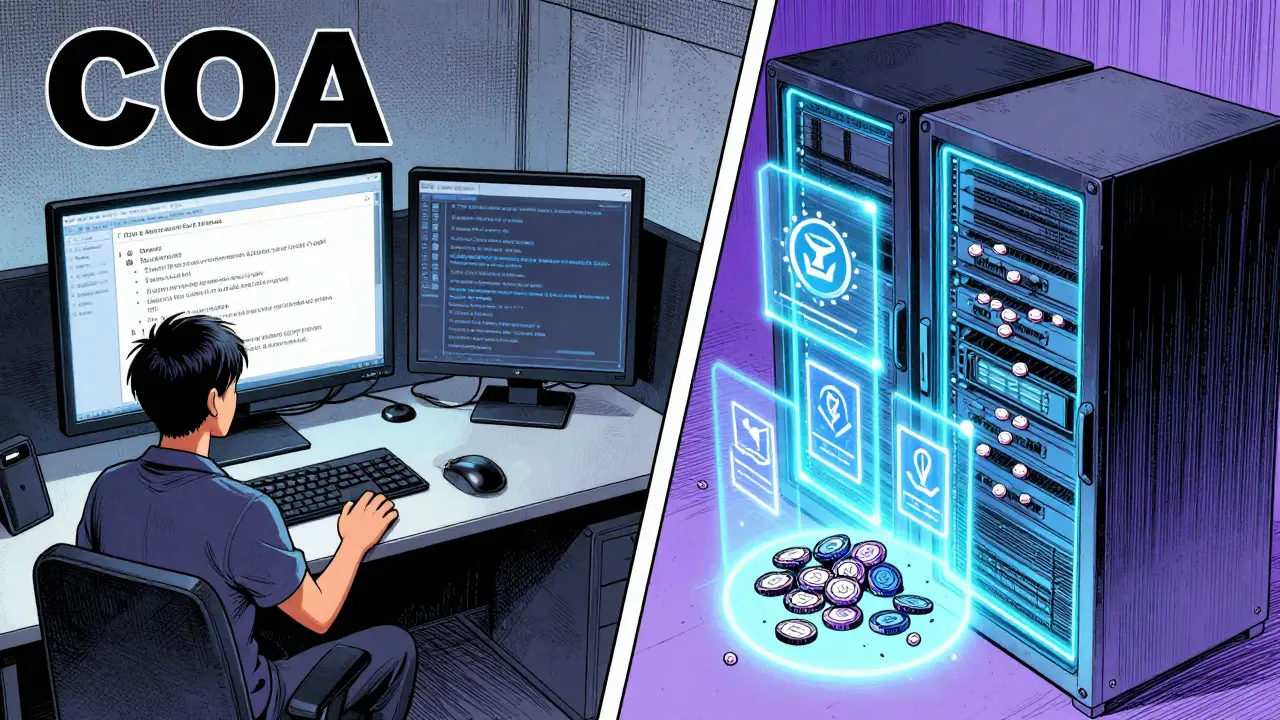
Infrastructure is only half the battle. Developers need easy ways to build on top of it. Alliance Games addresses this with two key technological pillars: AI-powered creation tools and standard SDK integration.
The AI tools are marketed as a way to let non-programmers create games. Imagine describing a game mechanic in plain English, and the AI generates the underlying logic. While this sounds futuristic, similar tools are emerging across the tech industry. For Alliance Games, this lowers the barrier to entry, potentially flooding the platform with new titles.
For professional developers, the platform offers Software Development Kits (SDKs) for Unity and Unreal Engine. These are the industry standards for PC and mobile game development. By integrating directly into these engines, Alliance Games allows studios to add blockchain features-like NFT ownership or decentralized matchmaking-without rebuilding their entire game from scratch.
The backend relies on a global node network. Nodes store game state and handle multiplayer synchronization. This reduces reliance on centralized APIs and makes the game resistant to censorship or shutdown. However, the technical specifics-such as whether they use rollups, sidechains, or custom middleware-are not fully detailed in public aggregators, leaving some questions about scalability open.
Investment Backing and Credibility
In the crypto world, who backs you matters almost as much as what you build. Alliance Games has raised approximately $8 million in funding from a notable group of investors. This isn’t random retail money; it’s strategic capital.
- Animoca Brands: A leading Web3 gaming company and investor, known for backing high-profile projects.
- Spartan Group: A venture fund focused on crypto-native startups.
- Overwolf: A major gaming platform company, providing industry expertise.
- Asymm Ventures, Coin98, Kyros Ventures: Established crypto-focused venture firms.
- Loi Luu: A prominent figure in the DeFi space.
This backing suggests that serious players believe in the long-term vision of decentralized game hosting. It also provides a safety net for development costs. However, venture backing does not guarantee success. Many well-funded projects fail to deliver usable products or lose traction in competitive markets.
Market Reality: Liquidity and Risk
Let’s talk about the hard numbers. As of mid-2026, Alliance Games ranks #3316 on CoinMarketCap. Its market cap hovers around $23,000 to $1 million depending on the data source and chain. Trading volumes are often negligible, sometimes hitting zero on certain platforms within a 24-hour window.
This is the definition of a micro-cap asset. Here’s what that means for you:
- High Volatility: Small trades can cause massive price swings. The token hit an all-time high of $0.02674 in July 2025 and dropped to $0.008846 just two days later. Such extremes are common when liquidity is thin.
- Limited Exchange Access: COA is not widely traded on major centralized exchanges like Binance or Coinbase for spot trading. It’s primarily available via DEX swaps or smaller venues like MEXC and Bitget. This limits accessibility for mainstream investors.
- Price Discovery Issues: With low volume, the “price” you see might not reflect true market demand. It could take significant capital to move the price up-or crash it down.
If you’re considering buying COA, understand that you’re betting on the future adoption of the platform, not current revenue or user base. The risk profile is extremely high.
Competitive Landscape: Who Else Is Doing This?
Alliance Games isn’t alone in trying to decentralize game infrastructure. It competes indirectly with several larger projects:
- Immutable X (IMX): Focuses on Layer 2 scaling for NFTs and trading, rather than backend hosting.
- Gala Games (GALA): Builds its own first-party titles and operates a publisher model, with less emphasis on third-party developer tools.
- Ultra (UOS): A distribution platform for blockchain games, not a hosting infrastructure provider.
Alliance Games’ unique angle is the combination of AI-assisted creation with node-hosted persistence. No major competitor currently offers this exact mix. However, being niche is a double-edged sword. It avoids direct head-to-head competition with giants, but it also means building demand from scratch in an unproven category.
Should You Invest in COA?
I’m not a financial advisor, but I can help you frame the decision. Ask yourself these questions:
Do you believe decentralized game hosting will become standard? If yes, COA is an early play on that thesis. Do you understand the risks of micro-cap tokens? If no, stay away. Can you afford to lose your entire investment? If not, consider sticking to larger, more liquid assets.
The project has strong backers and a clear technical vision. But execution is everything. There are no major hit games built on Alliance Games yet, and community metrics remain sparse. Until we see real usage-developers shipping titles, players joining networks-the token’s value will remain speculative.
Is Alliance Games (COA) a good investment in 2026?
COA is a high-risk, high-reward micro-cap asset. It has strong venture backing from firms like Animoca Brands and Overwolf, but its market cap is tiny and liquidity is low. Only invest what you can afford to lose, and do your own research on the project’s development progress.
What is the total supply of COA tokens?
The maximum total supply of COA is 2 billion tokens. However, circulating supply varies by platform and chain, ranging from roughly 414 million to 1.6 billion depending on the data source and contract address.
Can I buy COA on Binance or Coinbase?
As of mid-2026, COA is not directly tradable on major centralized exchanges like Binance or Coinbase for spot trading. It is primarily available on smaller exchanges like MEXC and Bitget, or via decentralized swaps on BNB Chain and Ethereum.
How does Alliance Games make money?
The platform generates value by charging developers in COA for using its decentralized backend services, such as storage, compute, and AI tools. Node operators also stake COA to provide these services, creating a circular economy within the ecosystem.
Who invested in Alliance Games?
Alliance Games raised $8 million from investors including Animoca Brands, Spartan Group, Overwolf, Asymm Ventures, Coin98, Kyros Ventures, and Loi Luu. This backing provides credibility and resources for continued development.