

For years, if you traded Bitcoin in Vietnam, you were operating in a legal vacuum. It wasn't illegal, but it wasn't protected either. You could buy and sell, but if an exchange vanished with your funds, you had little recourse. That uncertainty defined the "gray area" for nearly a decade. But as of January 1, 2026, that era is officially over. Vietnam has shifted from being a regulatory mystery to becoming the first country in the world with a comprehensive legal framework for digital assets.
This isn't just a minor update; it's a complete overhaul of how crypto works in one of Southeast Asia's most vibrant markets. The transition moves from ambiguous tolerance to strict, structured regulation. If you are a trader, investor, or developer looking at Vietnam, the rules have changed drastically. Let's break down what this new reality looks like and why it matters more than you might think.
The End of the Gray Area
To understand where we are, you need to know where we came from. Since 2017, Vietnam’s stance on cryptocurrency was essentially "don't ask, don't tell." The government didn't ban it, but they also didn't recognize it. This created a massive problem for courts. If two people fought over a crypto transaction, judges didn't know whether to treat it as property, currency, or something else entirely. There was no clear law to apply.
That changed with Law No. 71/2025/QH15, known as the Digital Technology Industry Law. Passed by the National Assembly in June 2025, this legislation formally recognizes virtual assets, cryptocurrencies, NFTs, and virtual currencies. For the first time, these digital items have legal standing under Vietnamese civil law. They can be owned, traded, and inherited. This single change resolves years of legal ambiguity and provides the foundation for a regulated market.
But recognition is only half the story. The other half is control. The government isn't just waving a flag saying "crypto exists." They are building a fence around it. This brings us to the operational rules that now dictate every trade.
Resolution 05/2025/NQ-CP: The Pilot Program Rules
While the Digital Technology Industry Law provides the legal definitions, Resolution 05/2025/NQ-CP sets the practical rules. Signed in September 2025, this resolution launched a five-year pilot program designed to test how a regulated crypto market functions before permanent laws take full effect. Think of this as a sandbox, but one with very high walls and strict security guards.
The most critical rule here is the currency requirement. All crypto transactions-from issuance to trading-must be conducted exclusively in Vietnamese Dong (VND). You cannot trade directly against USDT or USD in the official regulated channels. This forces all liquidity through local rails and gives the State Bank of Vietnam better visibility into money flows. It also means that stablecoins backed by fiat currencies outside Vietnam face significant hurdles in entering the domestic market.
Another major shift involves who can participate. Foreign investors can still access the market, but they must do so through licensed Crypto Asset Service Providers (CASPs) approved by the Ministry of Finance. Domestic investors face even stricter controls. After a six-month transition period following the first CASP license issuance, all domestic trades must go through these licensed organizations. Off-exchange peer-to-peer trading among locals will likely become non-compliant if it bypasses these regulated entities.
Who Can Play? The Rise of Licensed CASPs
If you want to run a crypto exchange or service in Vietnam today, you can't just set up shop. The barrier to entry is intentionally high. To qualify as a Crypto Asset Service Provider, a company must meet a minimum capital requirement of 10 trillion Vietnamese Dong (approximately $400 million USD). This figure is not a typo. It is designed to weed out small, fly-by-night operations and ensure that only well-capitalized, serious players enter the market.
Furthermore, these providers must be registered as limited liability companies or joint stock companies under the Law on Enterprises. This corporate structure ensures they are subject to standard business audits and liabilities. The government wants to avoid a repeat of the unregulated wild west seen in earlier years. By limiting the number of licensed entities, regulators can monitor compliance more effectively, particularly regarding anti-money laundering (AML) and counter-terrorism financing (CTF) standards.
This consolidation strategy has immediate implications for traders. Expect fewer exchanges to operate legally within Vietnam. While global giants like Binance or Coinbase may seek licenses, smaller regional platforms might struggle to meet the capital threshold. For users, this means less choice but potentially higher security and clearer consumer protections.

Defining Digital Assets: What Counts as Crypto?
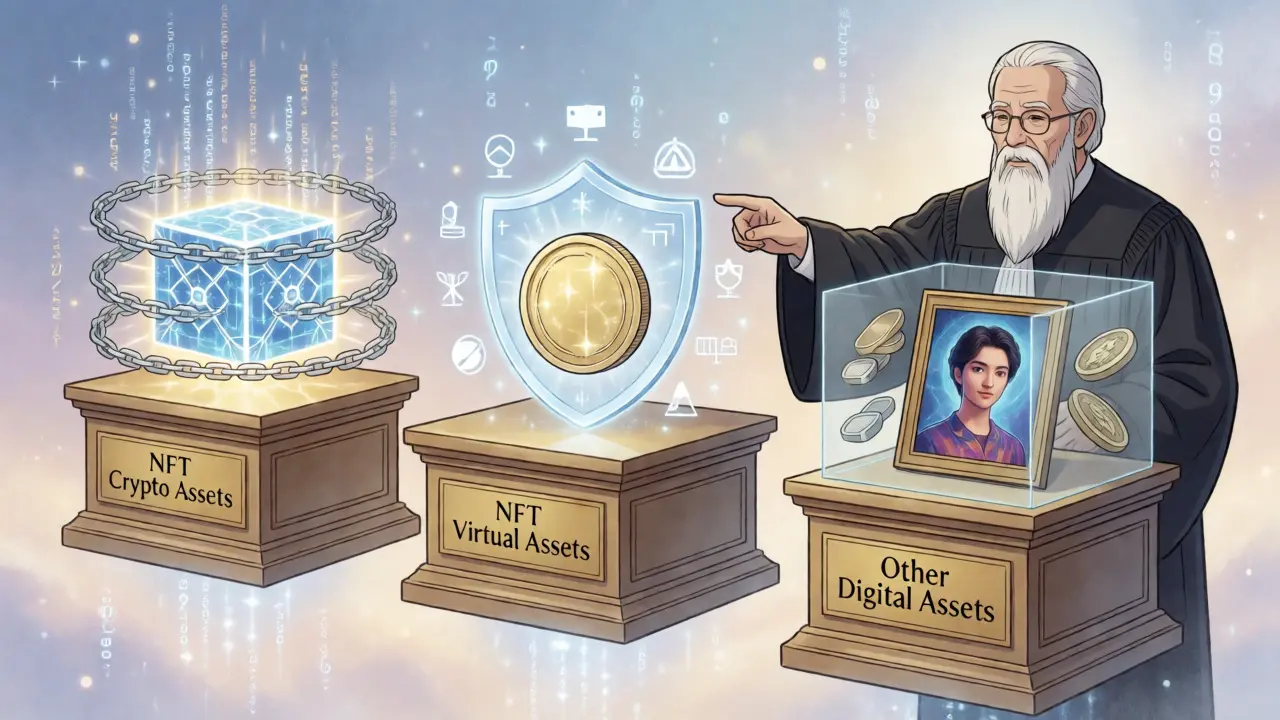
Not everything digital is treated equally under the new law. The framework categorizes digital assets into three distinct types to prevent confusion between securities, currencies, and tokens. Understanding these categories is crucial for anyone issuing or buying assets in Vietnam.
| Asset Type | Definition & Characteristics | Regulatory Treatment |
|---|---|---|
| Crypto Assets | Utilize encryption technology for authentication during creation and transfer. | Fully recognized as property; tradable via CASPs. |
| Virtual Assets | Used for exchange or investment purposes in electronic environments. | Protected under civil law; subject to AML/KYC. |
| Other Digital Assets | Includes NFTs and utility tokens with broader use cases. | Recognized but excluded from specific crypto trading rules if not financial instruments. |
Crucially, the definition of crypto assets excludes securities and digital forms of legal currency. This distinction prevents overlap with existing financial regulations governed by the Securities Commission. However, it creates a gray zone for tokenized securities, which currently face restrictions. Specifically, the issuance of assets backed by fiat currencies or traditional securities is prohibited under the current pilot rules. This effectively bans certain types of stablecoins and tokenized bonds from being issued domestically unless they fit strictly within the "real asset" backing requirement.
Taxation and Compliance: The Hidden Costs
Legal clarity often comes with tax bills. Vietnam hasn't yet released a standalone tax code specifically for crypto, but there is a temporary measure in place. Until separate regulations are issued, crypto asset transactions are taxed similarly to securities. This mirrors the existing framework for stock trading, providing a predictable baseline for accountants and traders.
Compliance goes beyond taxes. All market participants must adhere to strict information security and cybersecurity regulations. The government is treating data breaches in the crypto sector with the same seriousness as banking failures. Additionally, because the market is tightly controlled, violations carry heavy penalties. Administrative sanctions are the norm for minor infractions, but severe breaches-such as money laundering or operating without a license-can lead to penal liability. This is a stark contrast to the previous era, where enforcement was sporadic at best.
Why This Matters for Global Investors
You might wonder why Vietnam's internal rules matter to you if you live in Boulder or London. Here is the big picture: Vietnam ranks among the top countries globally for cryptocurrency adoption. Millions of citizens already hold digital assets. By creating a clear, regulated pathway, Vietnam is signaling to international capital that its market is safe, predictable, and open for business.
This move positions Vietnam as a potential regional hub for digital assets in Southeast Asia. Other nations in the region, such as Thailand and Singapore, are watching closely. If Vietnam's pilot program succeeds in balancing innovation with stability, it could set a new standard for emerging markets. Conversely, if the strict controls stifle growth, it serves as a cautionary tale about over-regulation.
For foreign investors, the opportunity lies in accessing a high-growth market with reduced legal risk. You no longer have to worry about sudden bans or unclear ownership rights. Instead, you deal with licensed entities, transparent pricing in VND, and a government committed to protecting civil property rights. It’s a mature step forward, albeit one that requires adapting to tighter operational constraints.
Next Steps for Traders and Developers
If you are active in the Vietnamese crypto space, here is what you should do right now:
- Verify Your Exchange: Ensure your platform is applying for or has received a CASP license. Unlicensed platforms face increasing pressure to exit the domestic market.
- Adjust Currency Strategy: Prepare for transactions primarily in VND. Understand how exchange rates impact your returns when converting back to your home currency.
- Review Asset Backing: If you are holding or planning to issue tokens, check if they comply with the "real asset" backing requirement. Fiat-backed stablecoins may face restrictions.
- Monitor Transition Timelines: Keep an eye on the six-month grace period for domestic investors. Once it expires, using unlicensed venues for domestic trades becomes a compliance risk.
The shift from gray area to regulated framework is not just bureaucratic paperwork. It represents a fundamental maturation of the Vietnamese economy. By embracing digital assets under strict oversight, Vietnam is betting that regulation will fuel long-term trust and adoption. Whether this bet pays off depends on how smoothly the pilot program runs over the next five years. But for now, the uncertainty is gone, replaced by clear rules and defined boundaries.
Is Bitcoin legal in Vietnam as of 2026?
Yes, Bitcoin is legal and recognized as a digital asset under Law No. 71/2025/QH15. It is considered property that can be owned, traded, and inherited. However, trading must occur through licensed Crypto Asset Service Providers (CASPs) and transactions are generally required to be denominated in Vietnamese Dong.
Can I use USDT for trading in Vietnam?
Direct trading pairs involving foreign stablecoins like USDT are restricted in the regulated domestic market. The Resolution 05/2025/NQ-CP mandates that crypto transactions be conducted in Vietnamese Dong. While USDT may still circulate informally, compliant exchanges will likely facilitate conversions to VND for regulated trades.
What is the minimum capital for a crypto exchange in Vietnam?
To obtain a license as a Crypto Asset Service Provider (CASP), a company must have a minimum capital of 10 trillion Vietnamese Dong (approx. $400 million USD). This high threshold is designed to ensure only financially robust companies operate in the regulated market.
Are NFTs regulated differently than Bitcoin in Vietnam?
NFTs fall under the category of "Other Digital Assets" in the new framework. While they are legally recognized, they are distinguished from crypto assets used primarily for exchange or investment. Their regulation focuses more on intellectual property and digital content rights rather than financial trading mechanics.
How are crypto profits taxed in Vietnam?
Currently, there is no standalone crypto tax code. Profits from crypto asset transactions are temporarily taxed according to the regulations applied to securities. This means traders should consult with local tax professionals to determine their exact liability based on existing stock market tax laws.