
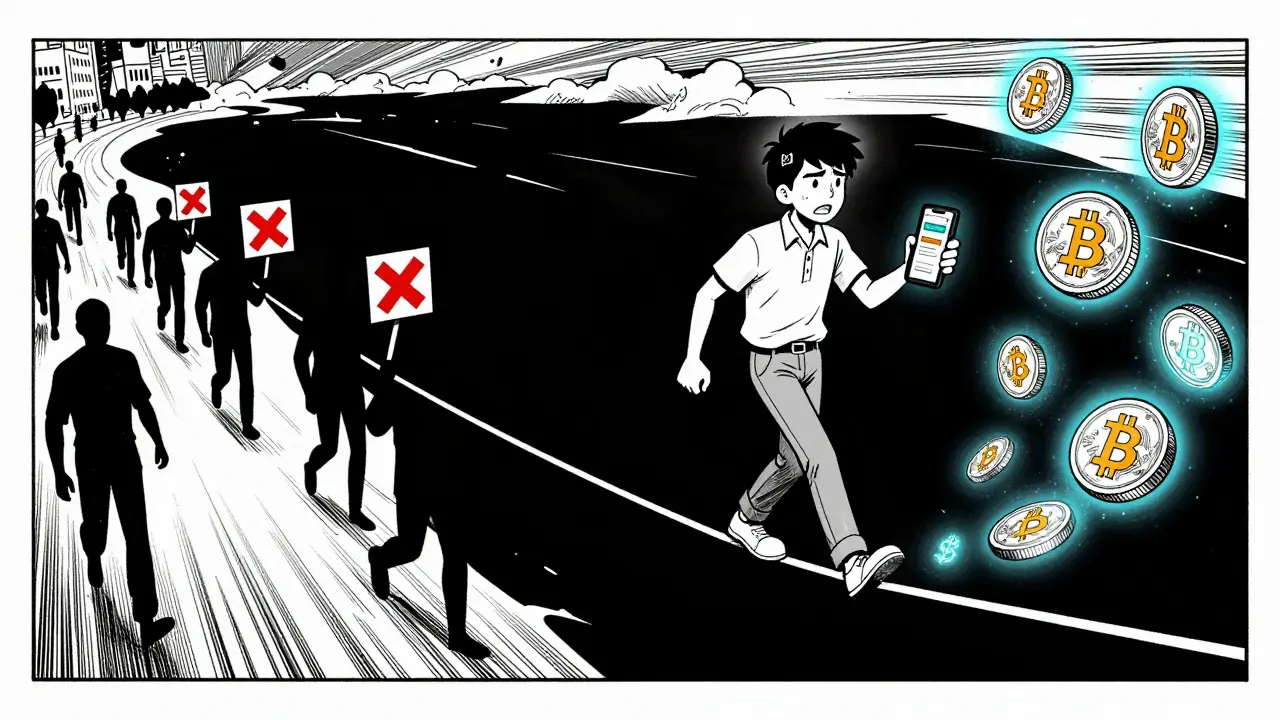
Buying Bitcoin in Skopje feels like walking a tightrope. On one side, you have the National Bank of the Republic of Macedonia (NBRM) issuing strict warnings since 2017 that classify crypto trading as illegal foreign securities activity. On the other side, thousands of Macedonian citizens are actively buying, selling, and holding digital assets every single day. This contradiction has created a vibrant, semi-underground ecosystem where peer-to-peer (P2P) platforms fill the void left by banned centralized exchanges.
If you are looking to trade crypto in North Macedonia right now, you aren't just fighting price volatility; you are navigating a legal gray area. The rules have shifted significantly from outright bans to ambiguous tolerance, especially with new anti-money laundering laws passed in 2022. But for the average trader, the risk remains real. Banks can freeze accounts, and there is no consumer protection if a trade goes wrong. Understanding how this underground market actually works is the only way to stay safe while participating in it.
The Legal Paradox: Banned on Paper, Active in Practice
To understand why the market operates "underground," we first need to look at the National Bank of the Republic of Macedonia (NBRM). In 2017, the NBRM issued a decision prohibiting the trading of cryptocurrencies. They classified these digital assets similarly to securities traded on foreign markets, which were restricted under the country’s Stabilisation and Association Agreement with the European Union. At the time, this was a hard line: don’t do it.
However, enforcement has been... inconsistent. By 2023, legal analysts noted that the NBRM clarified its stance, admitting that while unregulated, cryptocurrencies are not necessarily "illegal" in the criminal sense for individual holders. This shift created a massive loophole. You cannot open a licensed crypto exchange in North Macedonia, but you can hold Bitcoin in your wallet without getting arrested. This distinction is crucial. It means the government tolerates ownership but prohibits the infrastructure that makes trading easy.
This paradox forces traders into informal channels. Because local banks often block transactions related to known crypto services, users rely on cash deposits or obscure payment methods to move fiat money (Macedonian Denars) into digital currency. The result is a market that thrives on trust between individuals rather than institutional guarantees.
How P2P Platforms Bypass Banking Restrictions
Since you can’t use a standard broker like you would in Germany or France, most Macedonian traders turn to Peer-to-Peer (P2P) marketplaces. These platforms act as intermediaries that connect buyers and sellers directly. Two major players dominate this space in the region: Symlix and LocalCoinSwap.
Here is how the typical transaction works:
- Registration: You sign up for a platform like Symlix. They generate an automatic crypto wallet for you.
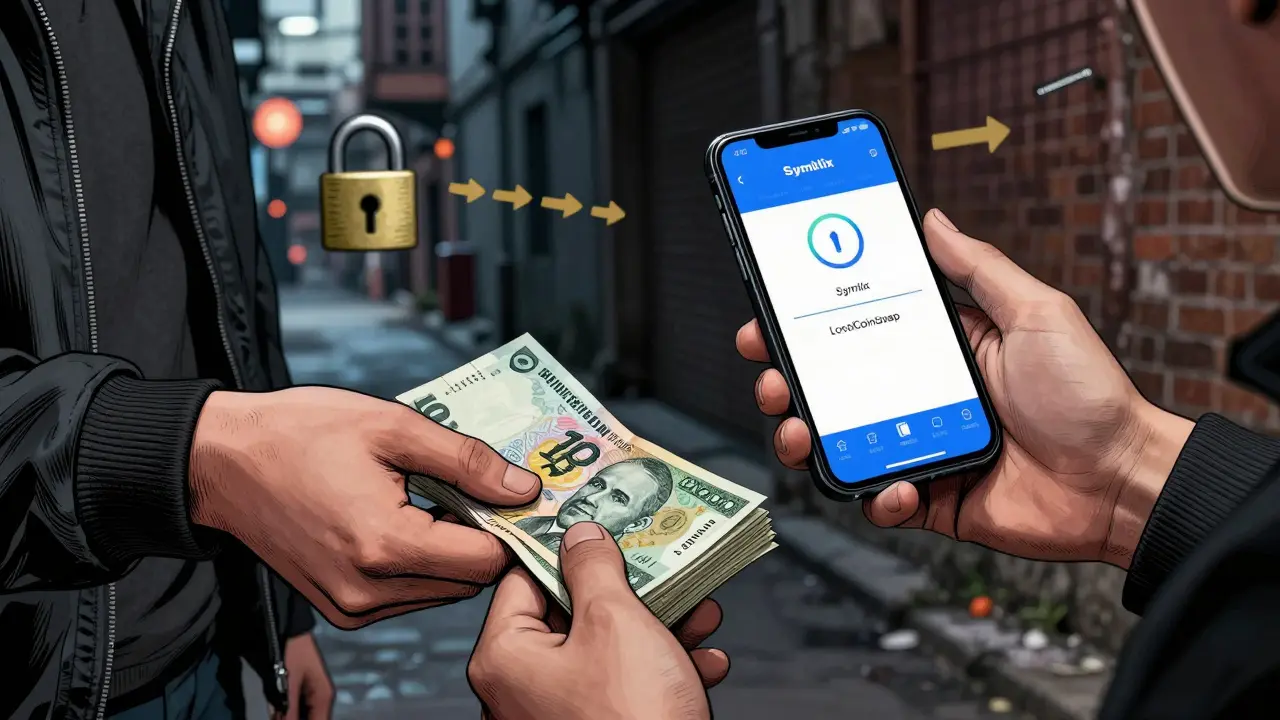
- Escrow Protection: When you agree to buy Bitcoin from another user, the seller locks their coins into an escrow wallet held by the platform. This prevents them from running away with your money.
- Payment Method: This is the tricky part. Since bank transfers might be flagged, many trades happen via cash meetup, mobile top-ups, or specific local payment processors that fly under the radar. LocalCoinSwap supports over 300 payment methods, allowing users to find obscure options that banks don’t monitor closely.
- Release: Once the buyer confirms they sent the money, the seller releases the crypto from escrow.
This system works because it removes the bank from the direct transfer chain. Instead of sending money to a company called "CryptoExchange Inc.," you are sending money to "Petar from Skopje." To the bank, it looks like a personal transfer, not a financial instrument purchase. However, this introduces significant counterparty risk. If Petar lies about receiving the money, you have to rely on the platform’s dispute resolution team, which may not have legal standing in Macedonia.
| Method | Legal Status | Risk Level | Best For |
|---|---|---|---|
| P2P Platforms (Symlix, LocalCoinSwap) | Gray Area / Tolerated | High (Scams, Frozen Funds) | Small retail traders, privacy seekers |
| International Brokers (Swissquote, Interactive Brokers) | Legal (if accessible) | Medium (Fees, Withdrawal Issues) | Larger investments, long-term holding |
| Local Bank Transfers to Exchanges | Prohibited / Blocked | Critical (Account Freeze) | Avoid entirely |
The Rise of International Brokers as a Safer Alternative
While P2P is the "underground" route, many savvy Macedonians are using international regulated brokers. Platforms like Swissquote and Interactive Brokers allow users to trade crypto derivatives or spot assets. According to 2025 data, Swissquote is ranked as the top choice for Macedonian users, despite high fees.
Why choose these? They offer a layer of regulatory compliance. If something goes wrong, you are dealing with a company subject to Swiss or US regulations, not an anonymous trader in Bitola. However, there is a catch: funding these accounts is difficult. You often need a multi-currency account or a credit card that isn’t blocked by local banks. Users report that small amounts get through easier, but large transfers trigger immediate inquiries from the NBRM.
Interactive Brokers is popular for its low fees but lacks a native crypto wallet, meaning you must withdraw assets to a private wallet immediately, adding another step to the process. MultiBank and Oanda also serve the market, but their selection of coins is limited compared to dedicated crypto exchanges.
New Laws: AML/CTF Amendments and the Future of Regulation
The landscape changed dramatically on February 1, 2022. The Macedonian government adopted amendments to the Anti-Money Laundering and Countering the Financing of Terrorism (AML/CTF) Draft-Law. This legislation did two important things:
- Defined Virtual Assets: It officially recognized cryptocurrencies as "property" and defined terms like "virtual asset service providers" and "virtual wallets."
- Created a Framework: It laid the groundwork for future licensing regimes, signaling that the government intends to regulate, not ban, the industry.
This aligns with North Macedonia’s broader goal of joining the European Union. As a candidate country, it is expected to adopt the EU’s Markets in Crypto-Assets (MiCA) regulation. Industry experts predict full implementation of MiCA-aligned standards by 2026-2027. This means the "underground" era will likely end soon. We are moving toward a world where licensed exchanges operate openly, but with strict KYC (Know Your Customer) requirements.
For now, however, the law is in transition. The NBRM acknowledges citizen interest in crypto but hasn’t issued licenses yet. This interim period is dangerous because old prohibitions still technically exist alongside new definitions. Traders are essentially testing the boundaries of what is enforceable.
Risks Every Trader Must Manage
Trading in this environment requires more than just technical knowledge; it requires operational security. Here are the specific risks you face in North Macedonia today:
- Bank Account Freezes: This is the most common nightmare. If your bank detects regular transfers to entities linked to crypto, they may freeze your account for investigation. One user reported having €1,200 frozen for two weeks during a dispute. Always keep a buffer of cash outside the banking system if you trade frequently.
- Counterparty Fraud: On P2P platforms, scammers exist. They might claim they sent money when they didn’t, or provide fake proof of payment. Always use platforms with escrow services. Never release crypto until you see the funds confirmed in your own bank app, not just a screenshot.
- Tax Uncertainty: There are no clear tax guidelines for crypto gains in Macedonia. While some argue that since it’s unregulated, it’s untaxed, others warn that future audits could treat gains as income. Keep detailed records of every trade, including dates, amounts, and counterparties.
- Price Slippage: Due to lower liquidity in the local P2P market, prices for Bitcoin or Ethereum in Macedonian Denars can be higher than global averages. You might pay a 2-5% premium just to access the asset locally.

Practical Steps for Safe Trading in 2026
If you decide to enter this market, follow these steps to minimize risk:
1. Start Small with Test Transactions
Before committing significant capital, make a tiny trade (e.g., $10 worth of Bitcoin) on a platform like Symlix. Verify that the seller is responsive, the escrow works, and the withdrawal to your personal wallet is smooth. Experienced traders suggest spending 2-3 weeks researching before making your first real trade.
2. Use Escrow Religiously
Never engage in off-platform trades. If someone offers you a better rate but asks to deal via Telegram or WhatsApp without escrow, walk away. The escrow system is your only insurance policy against fraud.
3. Diversify Payment Methods
Don’t rely on a single bank account. Some users rotate between different banks or use prepaid cards to avoid triggering fraud alerts. Mobile top-up payments are also popular because they are harder for banks to trace back to specific crypto activities.
4. Join Local Communities
Information is power. The "MK Crypto" Telegram group has over 1,200 members who share trusted trader lists and warn about scammers in real-time. Being part of this community helps you identify reputable sellers and avoid blacklisted ones.
5. Monitor Regulatory News
The situation changes fast. Follow updates from the NBRM and legal firms like Multilaw. If the government announces a crackdown or new licensing rules, adjust your strategy immediately. The window for unregulated trading is closing.
Conclusion: Navigating the Gray Zone
Underground crypto trading in North Macedonia is not going away anytime soon. The demand for digital assets outpaces the supply of legal avenues. While the NBRM’s 2017 ban casts a long shadow, the practical reality is that thousands of people trade safely every day using P2P platforms and international brokers.
The key is to respect the risks. Treat every transaction as potentially hazardous. Use escrow, keep records, and never put all your eggs in one basket. As the country moves toward EU alignment and MiCA adoption, the market will become safer and more transparent. Until then, you are operating in the wild west-stay alert, stay informed, and trade cautiously.
Is crypto trading illegal in North Macedonia?
Technically, the NBRM prohibited crypto trading in 2017, classifying it as foreign securities trading. However, recent clarifications suggest that holding crypto is not illegal, and the 2022 AML/CTF laws indicate a move toward regulation rather than criminalization. Most trading happens in a legal gray area via P2P platforms.
Which P2P platforms work best in North Macedonia?
Symlix and LocalCoinSwap are the most popular platforms among Macedonian users. They support local payment methods and offer escrow services to protect traders. Paxful is also used but has fewer local payment options.
Can I use my local bank account to buy crypto?
You can try, but there is a high risk of your account being frozen or blocked. Banks often flag transfers to crypto-related entities. Many traders prefer using cash meetups or obscure payment methods to avoid detection.
What is the future of crypto regulation in North Macedonia?
North Macedonia is expected to align with the EU’s MiCA regulation by 2026-2027. This will likely introduce licensing requirements for exchanges and clearer tax rules, ending the current "underground" status of the market.
Are international brokers like Swissquote safe to use?
Yes, international brokers like Swissquote and Interactive Brokers are regulated and safe. However, funding them from Macedonia can be difficult due to banking restrictions, and they often charge higher fees for small transactions.