
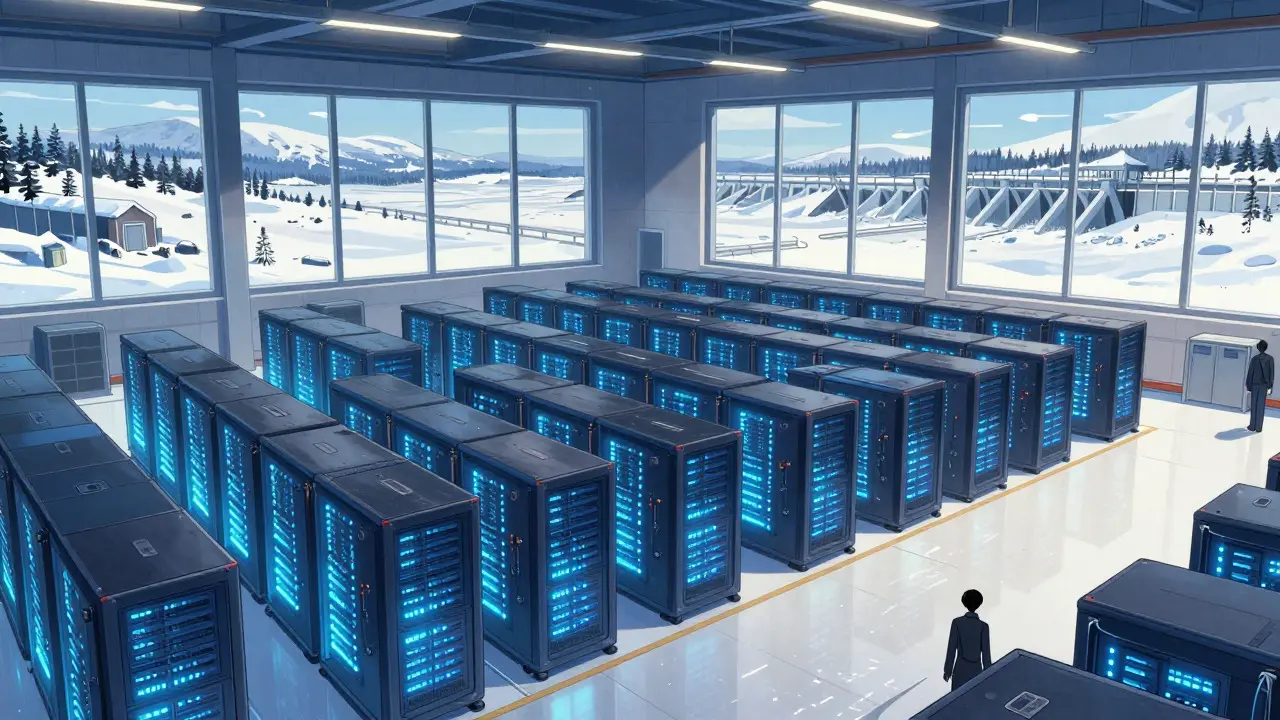
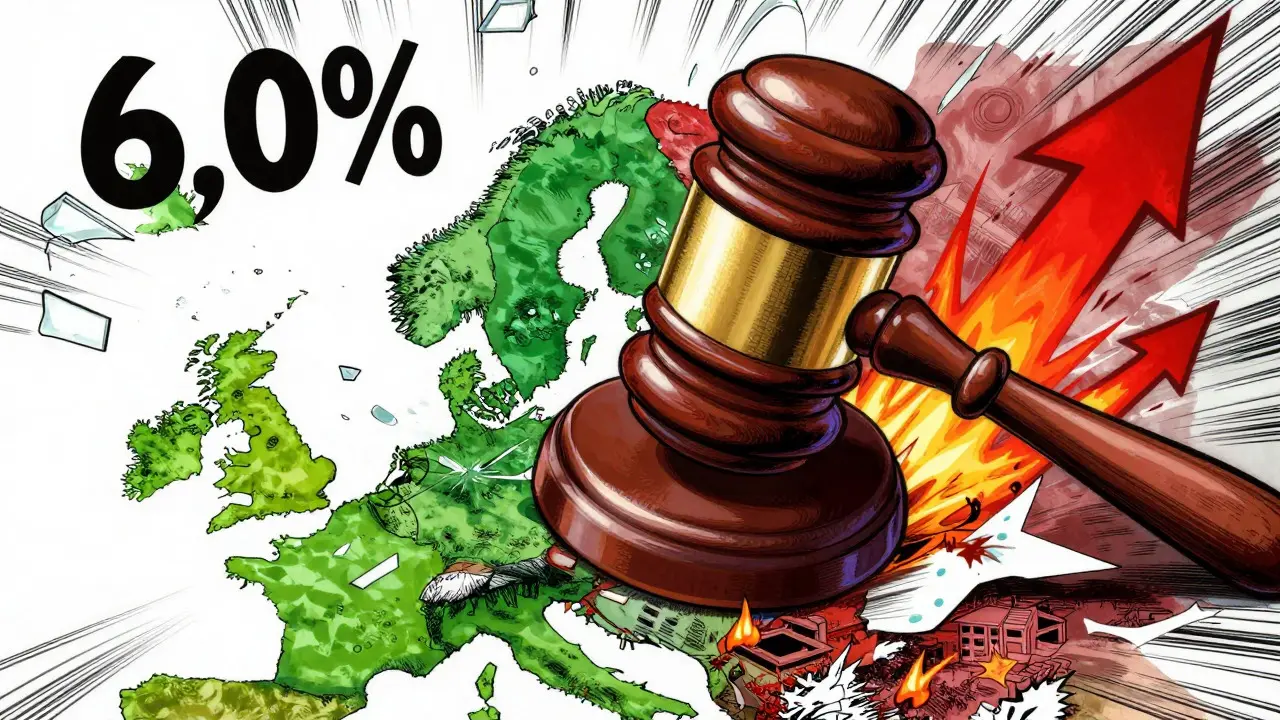
Just a few years ago, Sweden was the go-to spot for Bitcoin miners across Europe. Now, it’s one of the most hostile places on the planet to run a mining rig. The shift happened fast and hard. In 2017, the Swedish government introduced a generous 98% tax reduction for data centers, hoping to attract tech giants like Microsoft and Amazon. It worked. But by 2023, the mood had changed completely. The incentives were stripped away, replaced by an energy tax hike so steep-6,000%-that it effectively killed the industry overnight.
This isn’t just a minor tweak to local rules. It’s a total reversal of strategy that turned a profitable hub into a financial dead end. For anyone involved in crypto mining, understanding why this happened and where the industry is going next is crucial. Let’s break down what actually changed, why the government did it, and what it means for the future of digital asset operations in Europe.
The Dramatic Reversal: From Haven to Hostile
To understand the shock of the 2023 changes, you have to look at how attractive Sweden used to be. The country has two natural advantages: abundant hydroelectric power and a naturally cool climate. This combination keeps cooling costs low for server rooms. When Sweden added that 98% tax break in 2017, it became a magnet for infrastructure investment. Major tech companies set up shop, and with them came a wave of cryptocurrency miners who saw the same benefits.
By the early 2020s, Sweden hosted around 150 megawatts of active mining capacity. Most of this was concentrated in the northern regions, where the power grid was stable and cheap. For a while, it seemed like Sweden would remain the last major stronghold for Bitcoin miners in Europe. Then, in November 2022, the government published its budget for 2023. The news sent ripples through the industry: the tax incentive was gone, and a new, massive energy tax was coming.
The math behind this change is brutal. The old tax was negligible. The new tax is not. By raising the rate to SEK 0.36 per kWh, the cost of running a single miner jumped dramatically. For most operations, this extra cost alone exceeded the revenue they could generate from mining. It wasn’t just unprofitable; it was economically impossible to sustain without massive subsidies or price spikes that weren’t happening.
Why Did Sweden Do It?
You might wonder why a government would actively try to kill an industry. Usually, countries compete to attract businesses. But Sweden had specific reasons for its hostility. The first reason was economic efficiency. Policymakers argued that crypto mining didn’t contribute enough to the local economy compared to its energy consumption. Unlike traditional data centers that house offices, servers for global services, and create high-skilled jobs, mining facilities often operated with very few local employees.
The second reason was trust. During the 2018 crypto market crash, many mining companies left Sweden abruptly. Some even left behind unpaid energy bills. This caused significant disruption for local energy providers and left communities feeling burned. The government decided that if miners were going to treat the country as a temporary dumping ground for hardware, the perks shouldn’t continue.
There was also an environmental angle. While Sweden uses renewable energy, the sheer volume of power consumed by mining rigs raised concerns about grid stability and long-term sustainability. With European energy prices already spiking due to geopolitical tensions in Ukraine, adding a heavy industrial load like crypto mining felt risky to regulators. They wanted to prioritize residential and essential commercial use over speculative digital asset production.
The Impact on Miners and Infrastructure
The effect on the ground was immediate. When the new taxes took effect in July 2023, there was little time to adapt. Companies that had invested millions in building specialized facilities found themselves with stranded assets. These buildings, designed specifically for mining, suddenly had no viable business case. Selling them locally was difficult because the buyer would face the same tax burden. Relocating the hardware meant paying for shipping, dismantling, and setting up again elsewhere.
Most operators chose to move. The equipment headed to jurisdictions where the rules were friendlier. Kazakhstan, Texas, and parts of Canada became popular destinations. These places offered lower energy costs and clearer, more stable regulatory frameworks. For the miners, it was a painful but necessary exit. Staying in Sweden meant guaranteed losses. Leaving meant short-term pain but long-term survival.
The transition also affected the local energy grid. When large consumers suddenly stop drawing power, it creates imbalances. Regional grid operators had to adjust their distribution models and pricing structures. It wasn’t just a corporate issue; it was a logistical challenge for the entire northern part of the country. The sudden drop in demand required careful management to avoid inefficiencies in the power supply chain.
Sweden vs. Other Jurisdictions
To put Sweden’s move in perspective, you have to compare it to its neighbors and other global players. Norway, which shares similar geography and energy resources, did not implement comparable penalties. Despite having similar concerns about energy use, Norway kept its regulatory environment relatively neutral. This contrast highlights how aggressive Sweden’s approach truly was.
Then there are countries like El Salvador, which went the opposite direction entirely. El Salvador embraced Bitcoin as legal tender and encouraged mining as part of its national strategy. In the United States, states like Texas and New York compete fiercely to attract mining firms by offering favorable energy deals. Even within Europe, other nations have looked at Sweden’s model with caution. No other EU member state has implemented a tax penalty quite this severe. Sweden stands alone as the extreme example of using tax policy to eliminate an industry.
| Jurisdiction | Regulatory Approach | Energy Cost Impact | Primary Outcome for Miners |
|---|---|---|---|
| Sweden | Punitive taxation (6,000% increase) | High (SEK 0.36/kWh tax) | Industry collapse/relocation |
| Norway | Neutral/Standard regulation | Moderate (Hydro-based) | Sustained operations |
| El Salvador | Pro-crypto (Legal tender status) | Variability (Geothermal/Hydro) | Growth/Attraction |
| Texas, USA | Favorable/Competitive incentives | Low/Moderate (Natural Gas/Wind) | Major Hub Development |
| Kazakhstan | Flexible/Evolving framework | Low (Coal/Nuclear) | Relocation Destination |
This table shows that Sweden’s path was unique. While others balanced energy costs with growth potential, Sweden chose exclusion. The result is clear: if you want to mine in Europe, you’re no longer looking at Scandinavia. You’re looking south or east, or across the Atlantic.
Lessons for the Global Crypto Industry
Sweden’s experience offers a stark lesson for the rest of the world: regulatory risk is real. Miners can no longer assume that once they set up in a country, the rules will stay the same. Governments can change their minds quickly, especially when public opinion shifts or economic conditions change. This volatility forces companies to diversify their locations. Instead of building one giant facility, many now prefer smaller, distributed setups in multiple countries to hedge against political risk.
It also highlights the tension between renewable energy goals and industrial use. Sweden wanted to protect its green grid for essential uses. That’s a valid goal. But the method-using a punitive tax rather than a cap or a permit system-was blunt. It solved the problem by destroying the activity. Whether that’s the right way to manage energy allocation is a debate that continues in other countries considering similar moves.
For investors and developers, the takeaway is to watch the political landscape closely. A country with great energy resources isn’t enough if the government decides those resources aren’t “valuable” enough for your specific use case. Diversification and flexibility are now key strategies for any serious player in the space.

What Happens Next?
As of late 2023, the commercial mining sector in Sweden is essentially gone. The facilities are either empty, repurposed, or sold off. The question now is whether this trend will spread. So far, no other EU country has followed suit with such aggressive taxes. However, the Swedish model is being studied. If other governments see that they can redirect energy resources by simply taxing a specific industry out of existence, they might be tempted to do the same.
On the other hand, the success of relocated miners in places like Texas and Kazakhstan shows that the industry is resilient. It just needs better terms. As long as there are countries willing to offer cheap power and stable rules, mining will find a home. Sweden may have lost its place in the map, but the map itself hasn’t shrunk. It’s just redrawn.
Frequently Asked Questions
Why did Sweden increase the crypto mining tax by 6,000%?
Sweden increased the tax to discourage energy-intensive industries that provide limited local economic benefit. After some miners left during the 2018 crash leaving unpaid bills, the government decided the 98% tax incentive was no longer justified. The new tax aims to prioritize essential energy users and reduce grid strain.
Is it still possible to mine Bitcoin in Sweden today?
For commercial-scale operations, it is nearly impossible due to the high energy tax. The cost per kilowatt-hour makes profitability mathematically difficult under current market conditions. Only very small, hobbyist operations might survive, but they are not economically significant.
Where did Swedish mining companies relocate?
Most operators moved to jurisdictions with lower energy costs and friendlier regulations. Popular destinations include Kazakhstan, several U.S. states like Texas, and parts of Canada. These areas offer competitive power rates and stable regulatory environments for mining.
How does Sweden's policy compare to Norway's?
Norway has not implemented similar punitive taxes. While both countries share similar hydroelectric resources and climate, Norway has maintained a more neutral regulatory stance. This allows mining operations to continue in Norway, making it a preferred alternative within the Nordic region.
Will other European countries follow Sweden's lead?
So far, no other EU member state has adopted such aggressive measures. However, Sweden's case is being watched closely. If other governments face similar energy pressures, they might consider targeted taxes, though many prefer to balance innovation with sustainability rather than outright elimination.
18 Responses
It is fascinating how quickly the tides can turn in any industry. We often assume that once a location becomes established as a hub, it will remain so indefinitely, but this case proves otherwise. The shift from a generous tax incentive to a punitive measure illustrates the fragility of relying on political goodwill. It serves as a reminder that stability is not guaranteed by geography alone.
Oh, look at you little snowflakes crying about 'hostile' regulations when you were just freeloading off their hydro grid like leeches.
The Swedish government finally woke up from their slumber and realized that you weren't creating jobs, you were just burning electrons for fun. A 6,000% hike? That's not hostility, that's a reality check delivered with a sledgehammer. You wanted cheap power without accountability? Well, guess what, the party's over, folks. Time to pack your ASICs and go back to the coal pits in Kazakhstan or wherever else suits your low-hanging fruit energy strategy. Don't act shocked when the host kicks out the guests who leave unpaid bills behind. It’s basic hospitality, even if you don’t understand it. Your 'industry resilience' is just another word for lack of commitment to the local community. Enjoy the cold shoulder, it matches your new operating temperature.
One must consider the broader cultural context here!; Sweden has always prided itself on social cohesion and shared responsibility.;; The sudden departure of these mining firms likely left a bitter taste in the mouths of many locals who felt exploited.; It is a classic case of extractive economics meeting a society that values long-term sustainability over short-term gain.;; Perhaps other nations should take note before inviting similar industries into their fold without robust contractual safeguards.;
While the immediate financial impact is severe, one might argue that this event forces a necessary maturation in the crypto sector. The era of wild west expansion is ending, and we are moving into an era of structured compliance. This is not necessarily bad; it simply means higher barriers to entry, which may filter out the less serious players. The survivors will be those who understand regulatory landscapes as well as they understand hash rates. It is a painful lesson, but perhaps a valuable one for the longevity of the technology itself.
This is actually a great example of why diversification is key in our space! The capital expenditure (capex) sunk into those Swedish facilities is now a total loss, but the operational expenditure (opex) flexibility of modern rigs allows for quick relocation. We need to think about modular data center designs that can be deployed in multiple jurisdictions simultaneously to hedge against this kind of regulatory arbitrage failure. It’s all about risk mitigation and maintaining uptime across different geopolitical zones. Let’s keep pushing for more flexible infrastructure solutions!
typical western hypocrisy. they invite you in with open arms then stab you in the back. no wonder everyone is moving to india or china where the rules are stable. swedes are just jealous of the profits. they cant handle success so they burn it down. next time they will do the same to you. dont trust them. ever. its all a scam to protect their own elites.
India offers stable policies and cheap labor. Why stay in Europe?
The linguistic choice of 'kills' in the title is somewhat hyperbolic, given that hobbyist mining persists, albeit at a negligible scale. However, for commercial entities, the term is aptly precise. The distinction between legal prohibition and economic disincentive is crucial here; Sweden chose the latter, which is arguably more effective in the long run because it leaves the door ajar for future policy reversals if the economic calculus changes again. It is a nuanced approach to industrial management that deserves careful study by policymakers elsewhere.
Sure, let's just thank the Swedish government for being such 'generous' hosts. I'm sure the miners were thrilled to have their assets stranded while the locals got to keep their electricity bills paid. Oh wait, did I forget to mention the unpaid bills? No, let's not ruin the narrative. They're not 'leavers', they're 'strategic repositioners'. Very clever. I bet the Norwegian neighbors are laughing all the way to the bank, too. Or are they just too busy pretending they didn't see it coming? Typical EU drama.
so basically the whole thing was a setup right? i mean who would actually build a facility there knowing the politics? it feels like a big conspiracy to move all the money to texas. also why does nobody talk about the cooling costs anymore? seems like they just want us to focus on the tax. weird vibes honestly. i feel like we are missing something huge here. maybe the ice caps melting? idk just thinking out loud.
In the grand tapestry of global economic migration, this incident stands as a poignant testament to the volatility inherent in nascent industries. One cannot help but marvel at the sheer audacity required to implement such a drastic fiscal maneuver overnight. It speaks volumes about the shifting sands upon which digital empires are built. We must reflect deeply on whether true stability can ever exist in a world where laws are rewritten with the speed of light. The lesson is clear: adaptability is not merely a virtue, but a survival mechanism.
its all about the deep state controlling energy. they dont want us mining because it uses too much power for the people. obvious plot to kill bitcoin. sweden is just a pawn in the game. watch out for the next country. they are watching us all. the feds are involved too. mark my words. this is just the beginning of the end for crypto. wake up sheeple.
Nice write-up, really highlights the risks. Just a small tip for anyone looking to enter this space: always read the fine print on local energy taxes before signing a lease. It saves a lot of headache later. Keep going, good work analyzing this trend. It’s important to stay informed about these shifts. You’re doing a great job breaking down complex topics. Thanks for sharing this insight. Looking forward to more posts like this. Great job overall. Keep it up! 🚀
This is such a crucial point for new entrants! 💡 Always remember that regulatory stability is just as important as energy cost. I’ve seen so many projects fail because they ignored the political landscape. It’s like building a house on sand. Make sure you have backup plans! 🌍 Also, consider joining some communities where you can share intel on different jurisdictions. It helps a lot! 😊 Keep learning and growing! 📈
meh. just move somewhere else. its not that hard. texas has cheap power and nobody cares. also kazakhstan is still cool i think. dont overthink it. just plug in and mine. simple stuff. why is everyone making it so complicated. just buy a rig and go. done. easy peasy. stop worrying about taxes and start hashing. lol. whatever. next topic please. bored already. #mininglife
THIS IS EXACTLY WHY WE NEED TO BRING IT ALL BACK TO THE STATES! SWEDEN IS JUST ANOTHER EUROPEAN BUREAUCRACY TRYING TO KILL AMERICAN INNOVATION BY STEALING OUR TALENT AND RESOURCES. THEY THINK THEY CAN TAX US OUT OF EXISTENCE BUT THEY FORGET THAT THE AMERICAN DREAM IS UNSTOPPABLE. TEXAS WILL WELCOME THEM WITH OPEN ARMS AND NO NAGGING REGULATORS. LET THEM HAVE THEIR COLD MOUNTAINS. WE HAVE SUNSHINE AND FREEDOM. THIS PROVES THAT GOVERNMENT INTERFERENCE ALWAYS FAILS. TRUST THE MARKET. TRUST AMERICA. NEVER TRUST EUROPE AGAIN. GOD BLESS USA! 🇺🇸🇺🇸🇺🇸
Oh, darling, how tedious. 🙄 Another instance of governments meddling in what should be a free market. As if we needed another reminder that bureaucrats are the enemy of progress. But then again, who expected anything different from a nation obsessed with flat taxes and recycled water? 😂 Truly, the only thing more shocking than the tax hike is the fact that anyone thought this would last. Bravo, Sweden. You’ve truly outdone yourselves in the art of self-sabotage. 👏✨
Wow, this is so crazy but also super exciting! It shows that the world is changing fast. We just have to adapt and find new places to grow. Don't give up! There is always hope. Let's keep working hard and finding better solutions. This is just a bump in the road. We can do this together! Keep smiling and keep mining! 💪🌟