
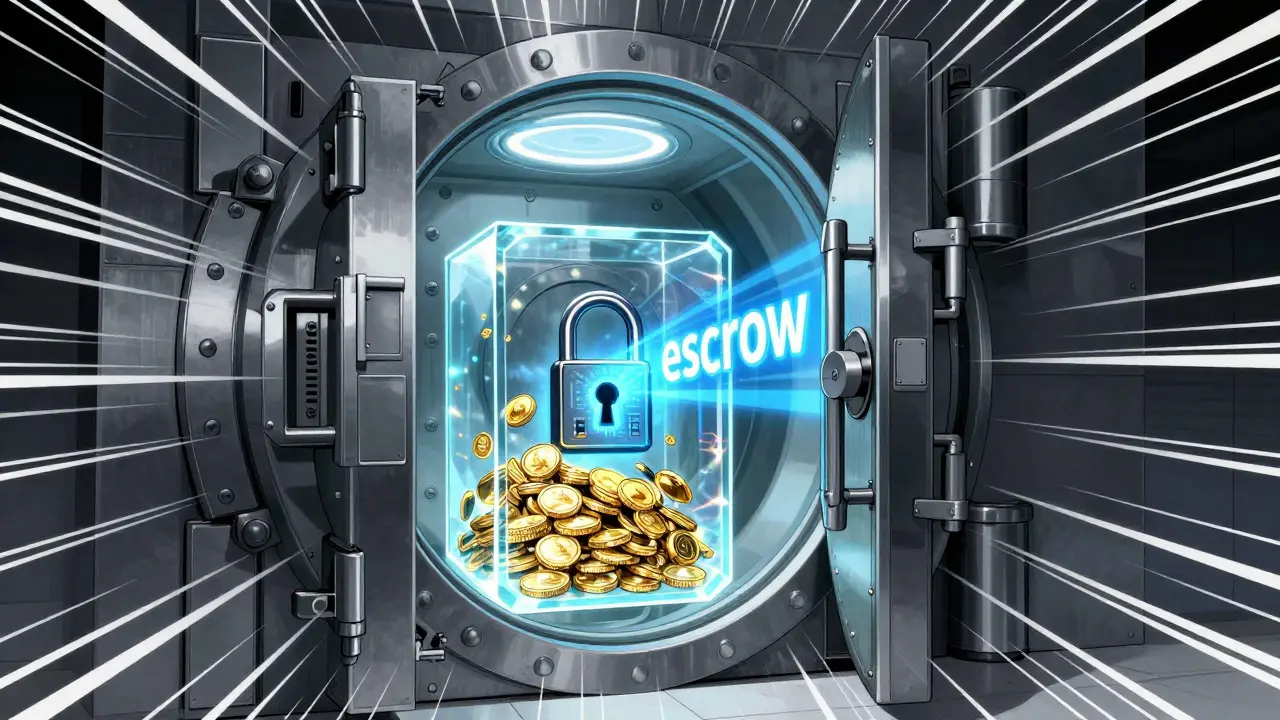
Imagine moving your money from a secure bank vault to a faster, more flexible branch. You get speed and new features, but you also take on a slightly different level of risk. That is exactly what happens when you move assets from a main blockchain to a sidechain. The core question isn't just about speed; it is about trust. Sidechain security models define how that trust is maintained, ensuring that the assets you lock up on the main chain don't vanish or get duplicated in the process.
For developers and investors alike, understanding these models is critical. A sidechain isn't just a slower version of the main chain; it is an independent network with its own rules. If the security bridge between them fails, the consequences can be severe. This article breaks down the specific mechanisms-like two-way pegs, consensus choices, and risk isolation-that keep these parallel networks safe.
The Core Mechanism: Two-Way Pegs and Asset Locking
At the heart of every sidechain is the two-way peg. This is the security bridge that allows assets to flow back and forth between the mainchain (like Bitcoin or Ethereum) and the sidechain. It operates through a strict three-phase protocol designed to prevent double-spending and asset loss.
- Asset Locking: When you want to move funds to a sidechain, your tokens are locked in a smart contract or a special output address on the mainchain. They aren't destroyed; they are simply held in escrow.
- Cryptographic Verification: Once the lock is confirmed, a cryptographic proof is generated. This proof triggers the minting of equivalent tokens on the sidechain. These are often called synthetic assets because they represent value on the mainchain without being the canonical coin itself.
- Redemption: To bring assets back, you burn the sidechain tokens. This action verifies the return and unlocks the original tokens on the mainchain.
This process relies heavily on smart contracts to automate the conditions. If the code has a bug, the assets could be stuck or lost. Therefore, the security of the peg is directly tied to the quality of the underlying cryptography and the reliability of the validators monitoring the transition.
Consensus Flexibility: Why Sidechains Choose Different Rules
One of the biggest advantages of sidechains is that they don't have to follow the same consensus mechanism as their parent chain. While Bitcoin uses Proof-of-Work, a sidechain built for high-speed transactions might use Delegated Proof-of-Stake (DPoS) or a hybrid model.
This independence creates a distributed security architecture. Here is why that matters:
- Customized Threat Models: Developers can choose a consensus algorithm that fits their specific needs. For example, a gaming sidechain might prioritize low latency over maximum decentralization, accepting a higher risk profile in exchange for speed.
- Failure Isolation: If a sidechain suffers a consensus failure or a fork, it doesn't automatically crash the mainchain. The mainchain continues operating normally, containing the damage within the sidechain's boundary.
- Economic Security Trade-offs: Smaller sidechains often have less stake distribution than major networks like Ethereum. This makes them more vulnerable to 51% attacks, where a single entity controls the majority of validation power. Security models must account for this by ensuring sufficient economic incentives to keep validators honest.

Risk Isolation and the Weakest Link Problem
Risk isolation is the fundamental principle behind sidechain design. The goal is to contain vulnerabilities so they don't cascade across the entire blockchain ecosystem. Think of it like circuit breakers in an electrical system. If one component fails, the rest of the grid stays stable.
However, this creates a paradox known as the "weakest link" problem. The overall security of your assets depends on the least secure part of the multi-chain architecture. If you hold assets on three different sidechains, your total exposure is determined by the one with the poorest security model. Attackers know this. They will target the sidechain with the lowest barrier to entry, whether that means fewer validators, simpler smart contracts, or less established track record.
To mitigate this, many projects implement multi-layered validation. Instead of relying on a single oracle or validator set, they use multiple independent sources to verify cross-chain movements. This assumes that while one oracle might fail or be bribed, it is unlikely that all of them would collude to steal funds simultaneously.
Common Attack Vectors and Mitigation Strategies
No security model is perfect, but knowing where the cracks are helps you assess risk. Here are the primary threats facing sidechains today:
| Attack Vector | Description | Mitigation Strategy |
|---|---|---|
| Gateway Oracle Failure | Oracles provide data to smart contracts. If compromised, they can forge proofs or withhold transactions. | Use multi-oracle architectures and require consensus among multiple independent nodes. |
| Third-Party Block Creation | Malicious actors create fake blocks disconnected from the legitimate chain to deceive contracts. | Implement withdrawal delays and rely on block count verification to ensure attackers cannot outpace the legitimate network. |
| Smart Contract Bugs | Errors in the code managing asset locking/unlocking can lead to permanent loss or duplication. | Rigorous auditing, formal verification, and gradual deployment with time-locked upgrades. |
Withdrawal delays are a particularly effective tool against fast-moving attacks. By requiring a waiting period before assets can be moved back to the mainchain, you give the community time to detect anomalies and freeze the process if necessary. This adds friction, but it buys crucial security time.
Synthetic Assets and Supply Integrity
Most sidechains do not move the actual canonical coins (like BTC or ETH). Instead, they create synthetic representations. This approach maintains the total supply integrity of the original asset. For every token minted on the sidechain, there is an equal amount locked on the mainchain.
This 1:1 backing is critical. If a sidechain mints more tokens than are locked, the synthetic assets become debased. Security models must therefore include robust accounting mechanisms that constantly verify the ratio. Any discrepancy should trigger an automatic halt or alert. This ensures that the sidechain remains a faithful mirror of the mainchain's value, preventing unauthorized creation of value out of thin air.
Frequently Asked Questions
Are sidechains safer or riskier than the mainchain?
Generally, sidechains carry higher risk because they have smaller validator sets and newer codebases. However, they offer better performance. Your risk depends entirely on the specific security model implemented, such as the strength of the two-way peg and the consensus mechanism used.
What happens if a sidechain gets hacked?
If the hack occurs on the sidechain itself, only assets on that sidechain are at risk. Thanks to risk isolation, the mainchain usually remains unaffected. However, if the hack exploits the two-way peg, assets locked on the mainchain could potentially be stolen until the vulnerability is patched.
How do withdrawal delays protect users?
Withdrawal delays force a waiting period before assets can return to the mainchain. This prevents attackers from quickly draining funds after exploiting a vulnerability. It gives the network time to reach consensus on the correct state of the chain and freeze fraudulent exits.
What is the role of oracles in sidechain security?
Oracles act as messengers between chains, verifying that events happened on the mainchain before allowing actions on the sidechain. Since they are a single point of failure, security models often use multiple oracles to ensure no single node can manipulate the data unilaterally.
Can I lose my principal assets if a sidechain fails?
Only if the failure involves the two-way peg mechanism. If the sidechain simply goes offline or halts, your assets remain locked safely on the mainchain. You just won't be able to access the sidechain version until the network recovers. The principal risk is always in the bridge, not the sidechain's internal operations.
10 Responses
The metaphor of the bank vault is a bit sterile, isn't it? It misses the profound philosophical shift we are undergoing. We are no longer just storing value; we are curating trust in a decentralized theater. When you lock assets in a two-way peg, you are essentially performing a ritual of faith. You believe that the cryptographic proof will hold, much like one believes in the integrity of a social contract. But here is the rub: the sidechain is not just a faster branch; it is a different culture entirely. It has its own norms, its own speed, and yes, its own vulnerabilities. The 'weakest link' problem is really a commentary on our collective fragility. We build these intricate bridges of code, yet they are only as strong as the human intention behind them. If the validators are lazy or corrupt, the bridge collapses. So, is it security, or is it just organized hope?
Wow this is so deep for me. I always thought sidechans were just for speed but now i see the risk part is huge. The thing about the weakest link makes sense to me because if one part is weak then everything falls apart right? It is like building a house with one bad wall. Even if the roof is strong the rain still comes in through that bad wall. I am from Nigeria so we know about power cuts and how one small issue can stop everything. This feels similar. The smart contracts need to be very very good otherwise people lose money. It is scary but also exciting.
To be perfectly honest, this article reads like a textbook written by someone who has never actually held a bag in a crash 📉. The concept of 'risk isolation' is a beautiful lie we tell ourselves to sleep at night. In reality, when a major sidechain goes down, the sentiment hits the main chain hard enough to shake the foundations. The 'multi-oracle' solution is just adding more points of failure while pretending it's security. It's like hiring three incompetent accountants and calling it an audit committee. 😒 The real issue is that we keep treating complex financial instruments like simple toys. Until we have formal verification that is actually enforced, not just promised, we are all gambling with our principal. Don't get me wrong, the tech is cool, but the risk model is laughably optimistic for retail investors. 🙄
too long to read. bottom line is dont trust the bridge. i lost coins in a bridge hack last year. the withdrawal delay was useless because the whole chain got forked before anyone could react. nice writeup though for the people who like reading 5 pages about what should be a 3 bullet point list. keep it simple next time.
Oh my gosh this is so important for everyone to understand! I think a lot of people just jump into sidechains because they want to play games or use new apps without thinking about where their money is actually sitting. It is like renting a fancy car without checking if the brakes work first! We need to be so careful about which projects we choose. Not all sidechains are created equal and some are basically casinos with extra steps. Let us look out for each other and do our research before we move any big amounts. Safety first always!
I really appreciate the breakdown of the consensus flexibility here. It’s easy to forget that a sidechain isn’t just a slower Bitcoin; it’s a completely different organism with its own heartbeat. The idea that a gaming chain might sacrifice decentralization for low latency is fascinating. It’s a trade-off that many users don’t fully grasp until they’re holding the bag. But here’s where it gets tricky: how do we quantify that 'trust'? If I’m using a DPoS sidechain, I’m trusting a smaller set of validators than I would on Ethereum. That’s a leap of faith. The article touches on economic incentives, but I wonder if those incentives are enough to keep validators honest during a period of high volatility. It’s a delicate balance between performance and security, and getting it wrong can be costly. Thanks for shedding light on this nuanced area.
I agree with the previous point about the trade-offs. It is interesting to think about how different chains solve the same problem in different ways. Some prioritize speed, others prioritize safety. There is no perfect answer, only different choices. I find the section on synthetic assets quite relevant too. The 1:1 backing is crucial. Without it, the whole system loses meaning. It is like having a receipt for something you did not buy. The accounting must be tight. Anyway, just sharing my thoughts. The topic is complex but worth exploring.
Ugh finally someone talks about the actual risks instead of just hyping up the tech. I feel like every other article is just 'look how fast this is!' without saying 'but you might lose everything.' It is so frustrating when people act like crypto is magic. It is not. It is code and code breaks. I am glad this post mentions the oracle failures because that is usually where things go sideways. Just remember that your money is only as safe as the person watching the door. And sometimes the person watching the door is asleep. Keep it real folks.
This is a fantastic resource for anyone looking to deepen their understanding of cross-chain security! The analogy of the circuit breaker is spot on. It highlights the resilience needed in modern blockchain architectures. One key takeaway for developers is the importance of 'failure isolation'. By ensuring that a sidechain fork doesn't cascade to the mainchain, we create a safer ecosystem for innovation. However, as mentioned earlier, the 'weakest link' remains a critical challenge. To address this, we must advocate for stricter auditing standards and perhaps even insurance pools for bridge assets. The future of multi-chain interoperability depends on how well we manage these interdependencies. Let's keep pushing for better security models and more transparent validation processes. The journey toward a truly robust multi-chain world is just beginning, and every piece of knowledge helps us get there faster and safer. Great job on this comprehensive overview!
Yeah exactly. And I think we need more insurance for these bridges. Why is it that when a bank fails the government bails it out but when a bridge fails we just cry on twitter? It is not fair. We need a safety net for the regular people who just want to use cool dapps. Stop making us take all the risk while the devs make millions. It is about time we started demanding better protections. Do not let them sell you a dream without the warranty card.