
Setting up a crypto mining operation in 2026 is no longer about plugging a graphics card into your laptop and waiting for riches. It is a serious business venture that demands capital, technical know-how, and a ruthless focus on energy efficiency. If you are looking to enter the space, you need to understand the hardware landscape, the brutal reality of electricity costs, and the strategic importance of mining pools before you spend a single dollar.
The Reality Check: Why Home Mining Is Harder Than Ever
Let’s get one thing straight immediately: casual mining is dead. The era when anyone with a decent gaming PC could mine Ethereum or Bitcoin for profit ended years ago. Today, Bitcoin mining is dominated by industrial-scale farms using specialized hardware. For an individual setting up a small operation in 2026, the barrier to entry is high. You are not just buying a machine; you are entering a competitive market where network difficulty adjusts every two weeks to ensure blocks are found consistently, regardless of how much total power joins the network.
If you live in a region with expensive electricity, such as parts of Europe or California, solo mining Bitcoin is likely a money-losing proposition. However, if you have access to cheap power-perhaps through solar surplus, hydroelectric rates, or government subsidies-you might find a niche. The key is not hope; it is math. Every decision you make must be backed by a profitability calculator that factors in your specific kilowatt-hour (kWh) rate.
Hardware Selection: ASICs vs. GPUs
When building your infrastructure, you face a binary choice: Application-Specific Integrated Circuits (ASICs) or Graphics Processing Units (GPUs). For Bitcoin, there is really only one viable option: ASICs. These machines do nothing but solve the SHA-256 algorithm. They are loud, hot, and efficient. In 2026, the top contenders include the Antminer S21 Pro and the Whatsminer M66S. These models offer efficiency ratings measured in joules per terahash (J/TH). Lower J/TH means better efficiency. Aim for units under 20 J/TH if possible.
GPUs, while still relevant for mining alternative cryptocurrencies (altcoins) like Ravencoin or Ergo, cannot compete with ASICs on Bitcoin. If you want flexibility to switch coins based on market trends, GPUs give you that agility. But remember, GPU mining requires more complex software management and offers lower hash rates per watt compared to dedicated ASICs. For most new operations focused on Bitcoin, ASICs are the standard.
| Model | Hashrate | Power Consumption | Efficiency (J/TH) | Estimated Cost |
|---|---|---|---|---|
| Antminer S21 Pro | 234 TH/s | 5,700 W | 24.4 J/TH | $3,500 - $4,500 |
| Whatsminer M66S | 230 TH/s | 5,600 W | 24.3 J/TH | $3,200 - $4,200 |
| NVIDIA RTX 4090 | ~150 MH/s (ETH) | 450 W | N/A | $1,600 - $1,800 |
Infrastructure: Power, Cooling, and Noise
You cannot ignore the physical environment. An ASIC miner draws significant power-often between 3,000 and 7,000 watts per unit. This means you need robust electrical infrastructure. Standard household outlets will not suffice. You may need to install dedicated circuits or even upgrade your service panel. Always use Power Supply Units (PSUs) rated at least 20% higher than the miner’s maximum draw to prevent brownouts and hardware damage.
Cooling is equally critical. These machines generate immense heat. Without proper ventilation, they will throttle performance or fail entirely. Basic exhaust fans cost between $50 and $500, but they create noise issues. If you are mining indoors, soundproofing is essential. Acoustic panels, ducting, and external venting can reduce noise from a jet-engine roar to a manageable hum. For larger operations, immersion cooling systems submerge miners in dielectric fluid, offering superior thermal management but requiring an initial investment exceeding $10,000.
Software Configuration and Operating Systems
Once your hardware is assembled, you need software to connect it to the blockchain. While Windows 10 or 11 works for beginners, experienced miners prefer Linux-based operating systems designed specifically for mining. HiveOS and RaveOS are popular choices. They provide remote monitoring, automatic updates, and detailed performance metrics via a web dashboard. This allows you to manage multiple rigs from your phone without logging into each machine individually.
Mining software itself, such as CGMiner or NiceHash Miner, acts as the bridge between your hardware and the mining pool. Ensure you download these only from official sources to avoid malware. Configure your worker names uniquely so you can track which rig is performing best. Also, set up a secure cryptocurrency wallet. Never store your mining rewards on an exchange; use a self-custody wallet like Ledger or Trezor for security.
Mining Pools vs. Solo Mining
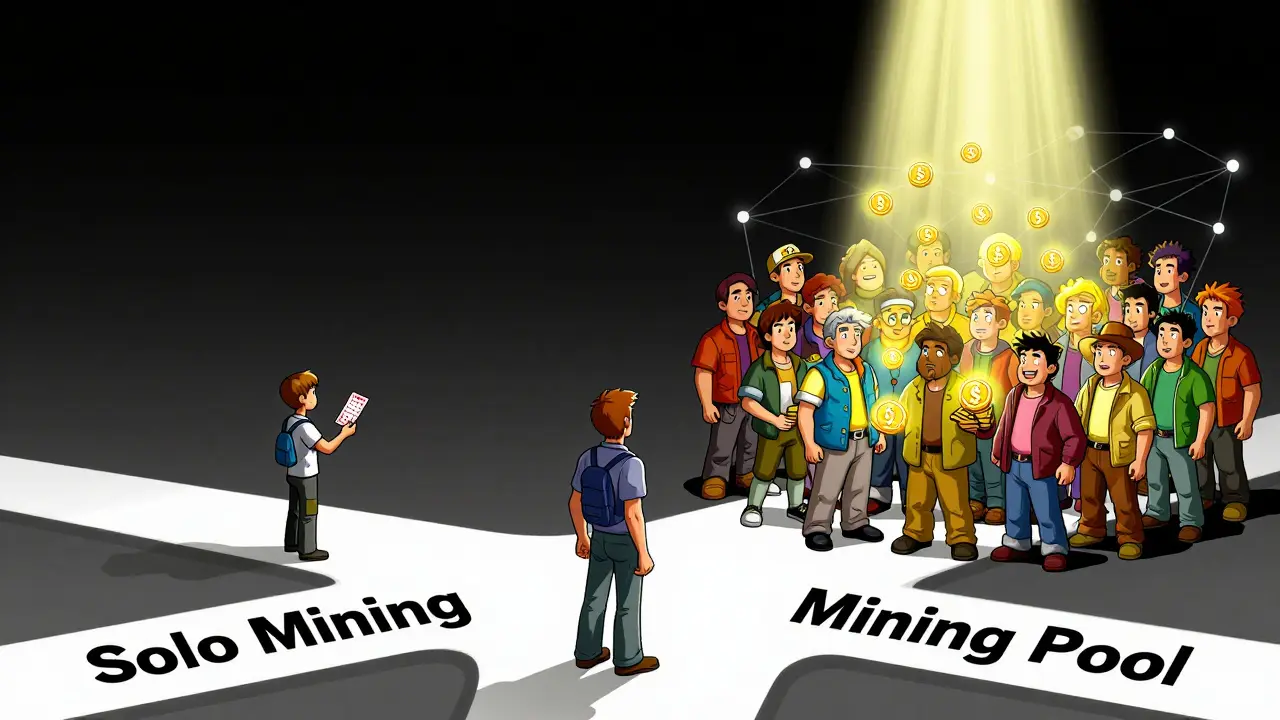
Should you mine alone or join a group? For almost everyone, the answer is a mining pool. Solo mining Bitcoin is akin to buying a single lottery ticket every ten minutes. The odds of finding a block alone are astronomically low unless you control a massive percentage of the network’s hash rate. Joining a mining pool combines your hash power with thousands of other miners. When the pool finds a block, the reward is distributed among participants proportional to their contributed work.
This provides consistent, predictable payouts rather than volatile, infrequent windfalls. Popular pools include F2Pool, Antpool, and Foundry USA. When choosing a pool, look for low fees (typically 1-2%), reliable uptime, and transparent payout histories. Some pools offer Pay-Per-Share (PPS) models, which guarantee payment for every share submitted, while others use Profit-Share (PPLNS), which rewards loyalty during lucky streaks.
Profitability Analysis: The Math Behind the Madness
Before flipping the switch, run the numbers. Use online calculators from sites like WhatToMine or ASIC Miner Value. Input your hardware model, electricity cost, and pool fee. The output will show your estimated daily earnings in USD and BTC. Be realistic: prices fluctuate, and difficulty rises. A profitable operation today might break even in six months.
Consider the following variables:
- Electricity Rate: The most critical factor. Below $0.05/kWh is ideal. Above $0.10/kWh makes Bitcoin mining very difficult.
- Hardware Depreciation: ASICs lose value over time as newer, more efficient models release.
- Network Difficulty: As more miners join, difficulty increases, reducing your share of rewards.
- Cryptocurrency Price: Volatility can turn profits into losses overnight.
Risk Management and Long-Term Viability
Mining is not passive income. It requires active management. Monitor your rigs daily for errors, overheating, or connectivity drops. Keep firmware updated to maintain compatibility with network protocols. Be aware of regulatory changes in your jurisdiction. Some countries restrict or ban mining due to energy concerns. Additionally, consider the environmental impact. Using renewable energy sources not only reduces your carbon footprint but also insulates you from rising fossil fuel prices.
If you are serious about scaling, consider cloud mining contracts cautiously. Many are scams. Legitimate providers exist but often offer poor returns after fees. Building your own operation gives you control and transparency. Start small, master the basics, and scale only when the economics justify additional investment.
Is it worth starting a crypto mining operation in 2026?
It depends entirely on your electricity costs and access to efficient hardware. If you pay less than $0.05 per kWh and buy modern ASICs, it can be profitable. Otherwise, the high upfront costs and rising network difficulty make it risky for casual investors.
What is the best ASIC miner for beginners in 2026?
The Antminer S21 Pro and Whatsminer M66S are top choices due to their balance of hashrate and efficiency. They are widely supported by mining pools and have large communities for troubleshooting.
Can I mine Bitcoin with my home computer?
No. Consumer-grade CPUs and GPUs lack the computational power to mine Bitcoin profitably. You would spend more on electricity than you earn in rewards. Stick to ASICs for Bitcoin or consider altcoin mining with high-end GPUs.
How much does it cost to set up a small mining farm?
A basic setup with one ASIC miner, necessary cabling, cooling, and networking can range from $3,000 to $6,000. Larger operations with multiple rigs, industrial cooling, and electrical upgrades can easily exceed $20,000.
Why should I join a mining pool instead of mining solo?
Solo mining Bitcoin has extremely low odds of success for individuals. Mining pools combine resources to find blocks more frequently, providing you with regular, smaller payouts rather than rare, large ones. This stabilizes your income stream.