
If you are tired of paying $50 in gas fees for a simple swap or waiting minutes for a trade to confirm, Serum offers a refreshing alternative. But is it safe? And does it actually function as a "decentralized" exchange after the drama of 2022? Let's break down how it works, the risks involved, and whether it's the right fit for your portfolio.
The Secret Sauce: Order Books vs. AMMs
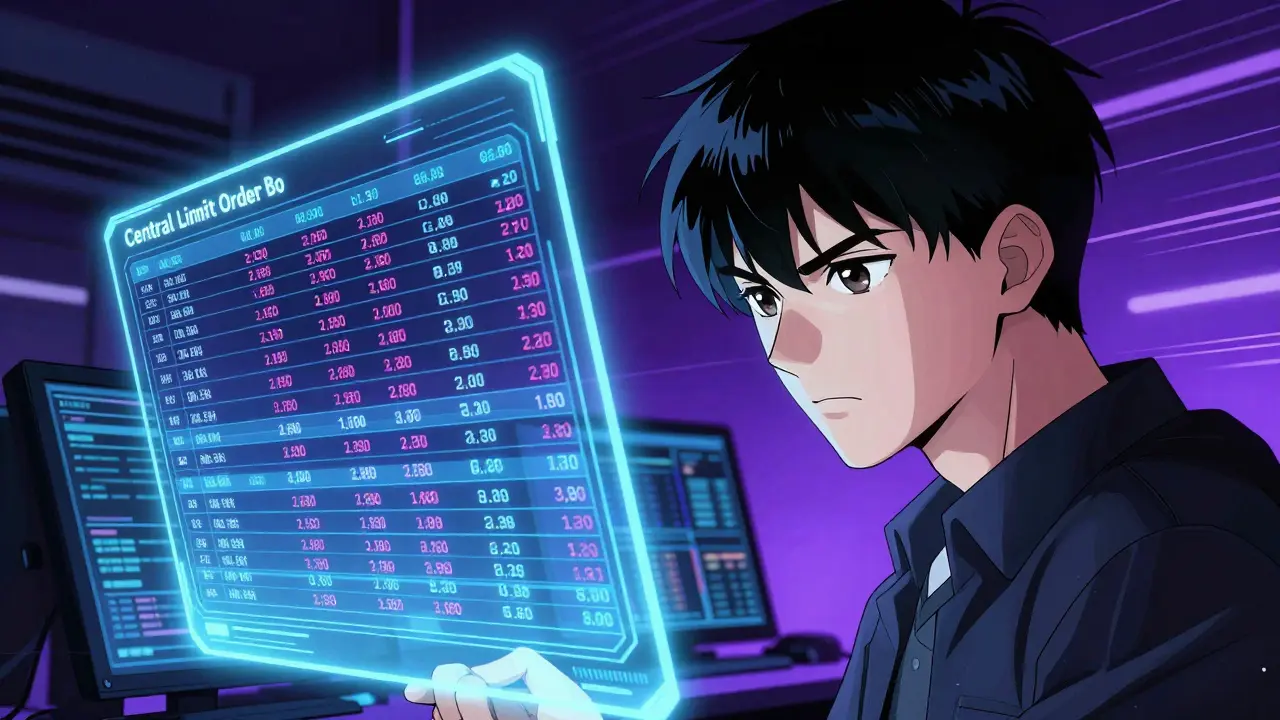
Most people are used to Automated Market Makers (AMMs) like Uniswap. In an AMM, you trade against a pool of assets, which often leads to slippage-where the price changes while your trade is processing. Serum does things differently. It uses a central limit order book, which is the same system used by giant centralized exchanges like Binance.
This means you can set specific buy and sell orders, see the depth of the market in real-time, and execute trades with surgical precision. Because it sits on the Solana blockchain, these updates happen almost instantly. For a trader, this is the difference between a lagging screen and a professional-grade terminal. It allows high-frequency trading to happen in a non-custodial environment, meaning you never hand over your coins to a third party.
The FTX Fallout and the Community Fork
We can't talk about Serum without mentioning the elephant in the room: FTX. For a long time, FTX held the "upgrade authority" for Serum. In plain English, this meant a centralized company had the keys to change how the decentralized protocol worked. When FTX collapsed in November 2022, Serum essentially became a ghost town because the entity controlling its updates vanished.
The crypto community didn't just give up, though. They created a community fork to keep the project alive. While the core tech survived, this event served as a massive wake-up call. It proved that a platform can be "on-chain" but still have a centralized point of failure. If you're using the current version of Serum, you're interacting with a project that is fighting to prove it can actually be governed by its users, not a single billionaire.
Performance and Cost Analysis
When you compare Serum to its competitors, the numbers are pretty shocking. While Ethereum-based DEXes might struggle with 15 transactions per second during peak times, Serum leverages Solana's architecture to maintain a massive lead. This isn't just about speed; it's about your wallet.
| Feature | Serum DEX | Uniswap (Ethereum) | PancakeSwap (BNB) |
|---|---|---|---|
| Trading Model | Order Book | AMM | AMM |
| Transactions Per Second | 50,000 - 65,000 | 1 - 15 | ~200 |
| Trading Fees | $0 (Network only) | Variable Gas | 0.25% |
| Avg. Tx Cost | ~$0.00025 | High / Variable | Low |
As of early 2025, the cost to trade on Serum is practically negligible. You aren't paying a platform fee; you're only paying the Solana network fee. This makes it an ideal spot for those who trade in small increments or those who perform dozens of trades a day.
Tokens and Tokenomics: SRM and MSRM
The ecosystem revolves around two main assets. First is SRM, the governance token. If you hold SRM, you have a say in how the platform evolves. To keep the token valuable, Serum uses a "buy-and-burn" mechanism. Specifically, 68% of the fees collected by the exchange are used to buy back SRM and destroy it, which reduces the total supply over time.
Then there is MSRM. This is a much rarer beast, with a hard cap of only 1,000 tokens. These are required to run validator nodes, ensuring the network stays secure and honest. Both tokens can exist on Ethereum as ERC-20 tokens and can be swapped to Solana at a 1:1 ratio, providing a bridge for users who aren't fully committed to the Solana ecosystem yet.
Real-World User Experience: The Good and the Bad
If you're coming from a centralized exchange like Coinbase, Serum will feel familiar but a bit intimidating. You'll need a Solana-compatible wallet- Phantom is the gold standard here. The setup process can be a bit rocky for beginners; some users report spending a few hours just getting their wallet and seed phrases sorted before they can make their first trade.
Once you're in, the experience is slick. Traders often describe it as "Binance but with my own keys." The order book updates in real-time without the lag you see on other DEXes. However, the platform is only as stable as Solana itself. In the past, Solana has suffered network outages that completely froze Serum trading. If the rest of the Solana network goes down, your ability to trade on Serum disappears instantly.
Integration and the Raydium Synergy
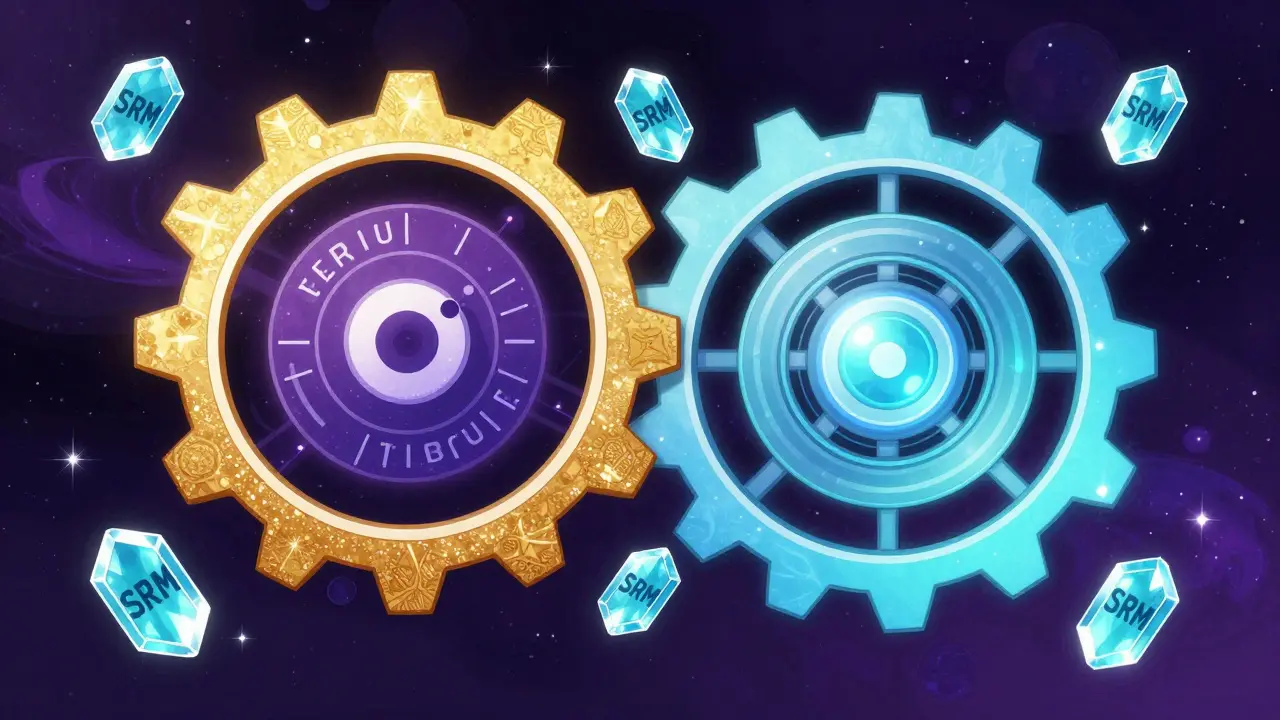
One of the coolest things about Serum is how it plays with others. It doesn't try to do everything alone. For example, Raydium uses Serum's central order book to boost its own liquidity. This creates a hybrid model where Raydium provides the liquidity pools (AMM style) and Serum provides the precision of the order book.
This "composability" is why Serum remains a top 10 DEX globally. It acts as a foundational layer that other apps build upon. Even though it has lost some of its 2021 glory, its role as a liquidity hub for Solana tokens is still incredibly influential.
Is Serum Still Worth Using in 2026?
Whether you should use Serum depends on your goals. If you are a casual holder who just wants to swap a few tokens once a month, a simple AMM might be easier. But if you are a serious trader who cares about slippage, fees, and execution speed, Serum is hard to beat.
The biggest risk is the governance. While the community fork improved things, the shadow of the FTX collapse still lingers. You have to ask yourself if you trust the current community-led governance enough to keep significant funds on the platform. On the technical side, the recent addition of direct cross-chain messaging in January 2025 has made it much easier to bring assets from Ethereum without needing a risky third-party custodian.
Is Serum DEX completely decentralized?
Not entirely. While the trading happens on-chain, the FTX collapse revealed that a centralized entity held the upgrade authority. The current version is a community fork aiming for true decentralization, but the governance structure is still evolving.
What are the fees for trading on Serum?
Serum does not charge platform trading fees, transfer fees, or withdrawal fees. Users only pay the standard Solana network fees, which are typically around $0.00025 per transaction.
How do I get started with Serum?
You need a Solana-compatible wallet like Phantom. Once installed, you fund your wallet with SOL, connect it to the Serum interface, and you can begin trading tokens using the order book.
What is the difference between SRM and MSRM tokens?
SRM is the governance token used for voting and subject to a buy-and-burn mechanism to increase scarcity. MSRM is a limited-supply token (only 1,000 exist) required for running validator nodes on the network.
Can I trade non-Solana tokens on Serum?
Yes, but they must be "wrapped" versions. Serum supports wrapped versions of Bitcoin, Ethereum, and Chainlink, allowing these assets to be traded on the Solana blockchain.
10 Responses
CLOBs on solana are basically the only way to avoid the massive slippage you get with standard AMMs especially when dealing with low liquidity pairs. the low latency is great but yeah the network stability is still the main bottleneck for a true pro setup
How quaint that some still believe a "community fork" magically erases the stench of centralized failure. One simply does not recover trust by merely changing the name on the door while using the same flawed architecture.
If you're new to Solana, just a heads up that Phantom is definitely the way to go for the wallet. It makes connecting to the Serum interface much smoother, though you should always double check the URL to avoid phishing sites since there are so many clones out there.
It is honestly disgusting that we are even talking about this platform as a viable option after what happened with FTX. People are so blinded by low fees that they're willing to ignore the absolute moral bankruptcy of the original founders. It's just greed over ethics all the way down!
i've used this for a bit and the speed is laegit crazy compared to eth. just make sure u have enough SOL for the network fees or the trasactions will fail and its super anoying to debug why it didnt go throuhg
Imagine thinking a "buy-and-burn" mechanism is some revolutionary financial engineering 🙄. It's basically the same thing every other failed project does to trick retail into holding bags. Yawn. 💅
It's quite fascinating to consider how the tension between absolute decentralization and the need for high-performance execution creates these paradoxical systems where we crave the speed of a centralized entity but the security of a distributed one, and perhaps this struggle is actually the most honest part of the crypto evolution because it forces us to define what we truly value in a financial system beyond just the numbers on a screen.
Focus on the fundamentals of the order book. Speed is secondary to security.
Westerners always try to act like they discovered desentralization but we in india see the real flow of capital. the whole solana ecosystem is just a playground for gamblers while the real philosopy of money is being rewritten in the east. your "reviews" are just surface level noise lol
The data on TPS is misleading. Actual throughput during congestion is far lower.