
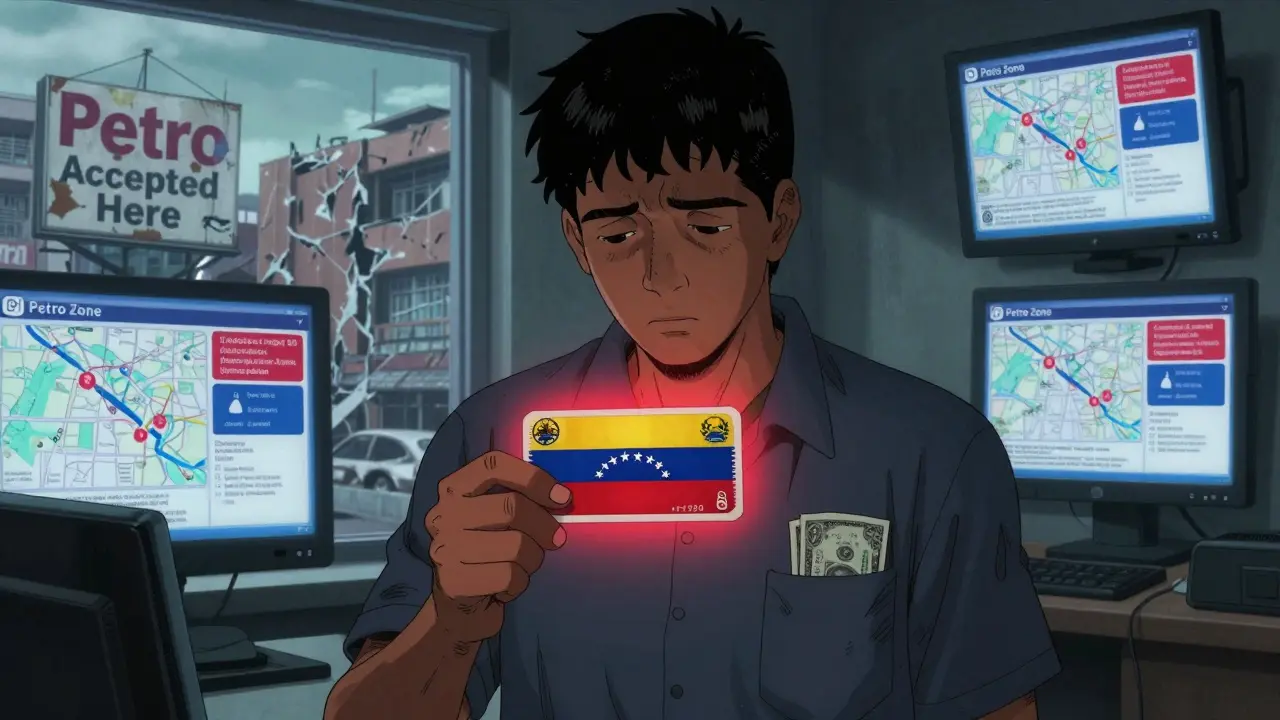
The Petro was never meant to be a free-market cryptocurrency. It was designed as a tool of state control - a digital weapon to bypass sanctions, prop up a failing economy, and force citizens into a currency no one truly trusts. Launched in February 2018 by Venezuela’s government, the Petro was presented as a revolutionary solution to hyperinflation and international isolation. But five years later, it remains a symbol of economic desperation, not innovation.
How the Petro Was Supposed to Work
The Venezuelan government claimed the Petro was backed by the country’s oil, gold, diamonds, and gas reserves. Each token was supposedly worth the price of one barrel of oil - around $60 at the time of launch. The idea was simple: sell Petro tokens to foreign investors, bring in hard currency, and use the proceeds to stabilize the collapsing bolívar. President Nicolás Maduro promised the Petro would unlock new financing channels and let Venezuela trade without relying on the U.S. dollar.
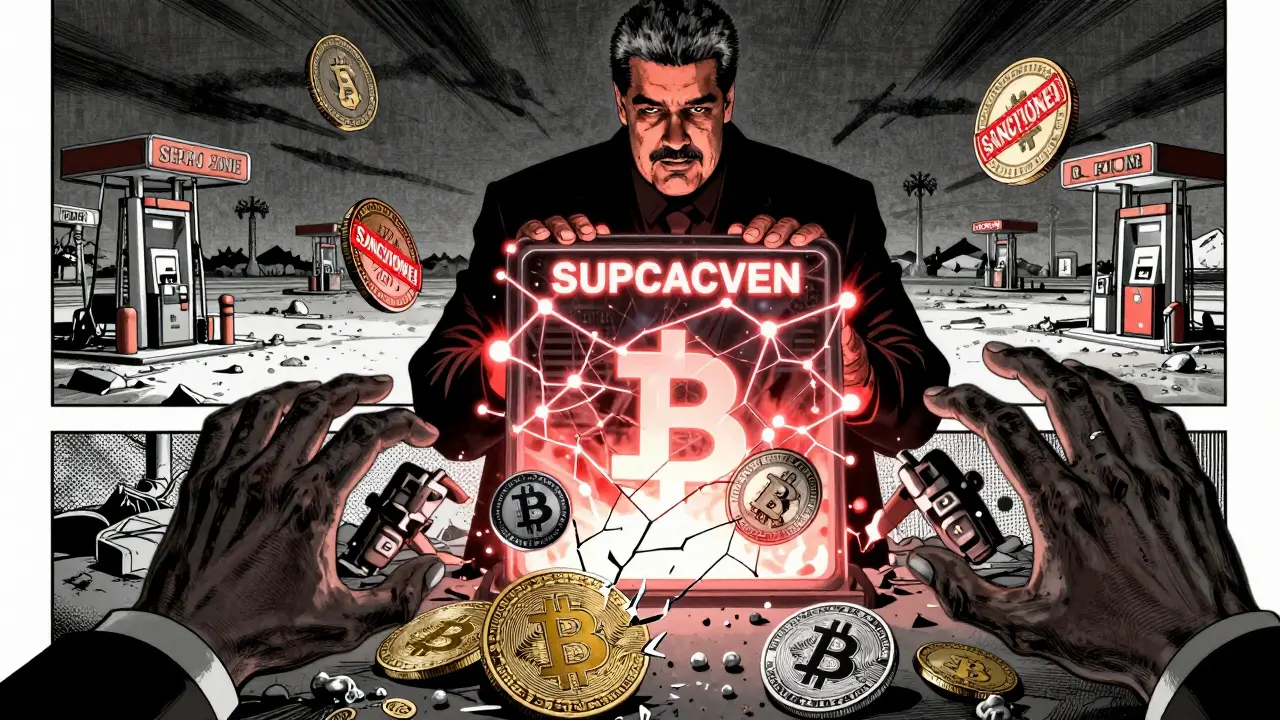
But the technical foundation was never open or decentralized. Unlike Bitcoin or Ethereum, the Petro runs on a federated blockchain - meaning only government-approved nodes can validate transactions. This isn’t blockchain as most people understand it. It’s a private ledger controlled by the state. The Supercintendencia de Activos Criptográficos y Actividades Relacionadas (Venezuela’s Superintendence of Crypto Assets and Related Activities, or SUPCACVEN) was created to oversee everything: mining, exchanges, and even who gets to hold Petros. No public audits. No transparency. Just a state-run digital money system with a blockchain label.
The Legal Battle Inside Venezuela
Even before the Petro launched, Venezuela’s opposition-controlled National Assembly declared it illegal. They called it an unconstitutional debt issuance - a way for the government to print money without oversight. The Assembly argued that only Congress could authorize new forms of currency. The government ignored them. In December 2017, Maduro signed Decree 3196, making the Petro official. Then, in March 2018, he issued Decree 3333, creating four "Petro Zones" - special economic areas on Margarita Island, Los Roques, Paraguaná, and near the Colombian border. In these zones, businesses could accept Petros, miners got tax breaks on imported equipment, and the government promised to boost crypto adoption.
But the zones never took off. Reports from inside Venezuela show little to no commercial activity. Gas stations in the Petro Zones still mostly take bolívares or U.S. dollars. Miners didn’t flood in. The promised tax exemptions on air conditioners and generators didn’t attract the kind of investment the government hoped for. Why? Because no one believes the Petro has real value.
International Sanctions Crushed the Petro’s Chances
The United States moved quickly to shut down the Petro’s global ambitions. In March 2018, the Treasury Department banned U.S. citizens and companies from dealing with the cryptocurrency. In 2019, the U.S. Treasury designated the Petro as a prohibited financial instrument under the Venezuelan sanctions regime. The law known as S.37, passed in 2020, made these restrictions permanent. No American bank, exchange, or investor can touch the Petro. No foreign company can legally accept it as payment without risking U.S. penalties.
Major crypto exchanges like Binance, Coinbase, and Kraken never listed the Petro. Even smaller platforms avoided it. Why risk legal trouble for a token with no market demand? The Petro’s price - set by the Venezuelan government at $60 - has never been confirmed by open trading. Leaked documents from Venezuela’s own crypto advisory group, VIBE, revealed the government planned to sell Petros at discounts of up to 60% just to get buyers. That’s not a market price. That’s a fire sale.
Forced Adoption, Not Real Use
By January 2020, the government made it mandatory to pay for certain services in Petros - like renewing passports, buying airplane fuel, and registering vehicles. But this wasn’t adoption. It was coercion. Venezuelans didn’t choose the Petro. They were forced into it.
And even then, compliance was patchy. Government offices often didn’t have the systems to process Petros. People still paid in cash, U.S. dollars, or Bitcoin. Many found ways to avoid it entirely. The Petro became a bureaucratic nuisance, not a currency. The Tesoro de Activos Criptográficos (Treasury of Cryptoassets), a state company created to manage Petro issuance and custody, became a black box - no public reports, no transaction logs, no accountability.
Why Venezuelans Avoid the Petro
Instead of the Petro, ordinary Venezuelans turned to Bitcoin, USDT (Tether), and other stablecoins. Why? Because those currencies are real. They trade on open markets. They’re accepted globally. They’re not tied to a collapsing economy or a regime under sanctions. Bitcoin’s value doesn’t depend on whether Maduro says it’s worth $60. It’s determined by supply, demand, and trust - the exact things the Petro lacks.
Even the government’s own advisors knew the Petro wouldn’t work. The leaked VIBE report recommended selling Petros at steep discounts, accepting them for tax payments, and letting PDVSA (Venezuela’s state oil company) use crypto in foreign deals. In other words: admit the Petro is worthless and try to use it as a shell to move real money. That’s not a financial innovation. That’s a workaround.
The Petro Today: A Ghost of a Promise
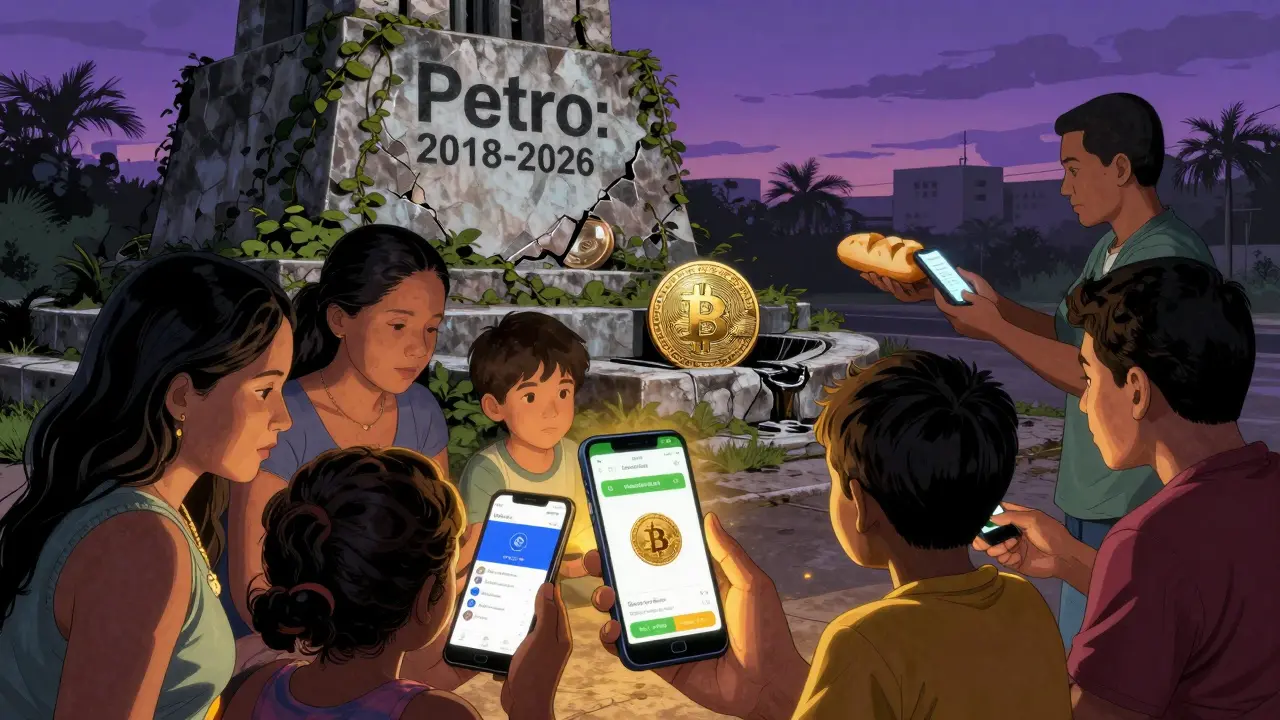
As of 2026, the Petro still exists - but only on paper. The four Petro Zones are still listed on government websites, but there’s no evidence of active mining or commerce. The federal blockchain still runs, but no one outside Venezuela knows if it’s even operational. The Petro is not traded on any major platform. It doesn’t appear in global crypto market trackers. It’s not used in international remittances. It doesn’t help Venezuelans buy food or medicine.
The government still insists it’s a success. But success for whom? Not for the people. Not for the economy. The Petro’s only function now is to give the regime a digital fig leaf - a way to say, "We’re not dependent on the dollar," while the country’s currency continues to lose value by the hour.
What the Petro Teaches Us About Government Crypto
The Petro is a case study in how not to build a cryptocurrency. It proves that when a government tries to force a digital currency into existence - without trust, without transparency, without market demand - it fails. Real cryptocurrencies thrive on decentralization, openness, and user choice. The Petro has none of that.
It also shows how sanctions can cripple even the most ambitious state projects. The U.S. didn’t need to hack the Petro’s blockchain. They just had to say, "Don’t touch it." And the world listened.
The Petro isn’t a currency. It’s a political statement. And like most political statements made in times of crisis, it’s empty.
What’s Next for Venezuela’s Crypto Experiment?
Without major economic reform, lifting of sanctions, or a change in leadership, the Petro will continue to fade into irrelevance. Even if Venezuela’s oil production rebounds, the Petro’s reputation is broken. No foreign investor will risk capital on a token backed by a government that can’t even pay its own workers on time.
For Venezuelans, the real crypto future lies elsewhere - in Bitcoin wallets, in peer-to-peer exchanges, in apps that let them send money across borders without government interference. The Petro? It’s a relic. A digital monument to a failed promise.
Is the Petro cryptocurrency still active in Venezuela?
Yes, but only in name. The government still lists it as legal tender for certain services like passport renewals and fuel purchases. But there’s no evidence of real, widespread use. Most Venezuelans avoid it. Businesses rarely accept it. The blockchain infrastructure exists but is not publicly verifiable or used in daily commerce.
Can I buy or trade Petro cryptocurrency outside Venezuela?
No. The Petro is not listed on any major cryptocurrency exchange. U.S. and international sanctions prohibit financial institutions, businesses, and individuals from dealing with it. Even if you find a platform claiming to trade Petros, it’s likely a scam or a violation of sanctions law. There is no legitimate market for the Petro outside Venezuela.
Why did Venezuela create the Petro?
Venezuela created the Petro to bypass U.S. financial sanctions, raise foreign currency, and stabilize its collapsing economy. The government claimed it was backed by oil and mineral reserves to give it value. In reality, it was a way to print money digitally and force citizens to use a state-controlled asset - not a true cryptocurrency.
Is the Petro backed by real oil or gold?
There is no verifiable proof. The government claims the Petro is backed by Venezuela’s oil, gold, and diamond reserves, but no independent audit has confirmed this. Venezuela’s oil production has declined for years, and its gold reserves are largely unaccounted for. Experts agree the backing is symbolic, not real. The Petro’s value is set by decree, not by market or asset reserves.
Do Venezuelans use the Petro in daily life?
Very few do. Most Venezuelans rely on the U.S. dollar, Bitcoin, or stablecoins like USDT to protect their savings and buy goods. The Petro is only used when forced by the government - such as for official documents or fuel. Even then, many people pay in cash or foreign currency to avoid the hassle. It’s not a currency people trust. It’s a policy they endure.
What happened to the Petro Zones?
The four Petro Zones - Margarita Island, Los Roques, Paraguaná, and Ureña-San Antonio - were created to encourage mining and crypto use with tax breaks on equipment. But there’s no public data showing meaningful activity. No mining farms have been verified. No businesses report consistent Petro transactions. The zones exist on paper, but not in practice. They’re empty promises, not economic hubs.
12 Responses
The Petro is a perfect example of how not to build a cryptocurrency. Governments don’t understand decentralization. They think blockchain means control, not freedom. This isn’t innovation-it’s digital authoritarianism wrapped in a whitepaper.
It’s chilling how the U.S. didn’t need to hack anything-just saying "don’t touch it" killed the Petro. Sanctions are a blunt instrument, but they work. And honestly? The world didn’t need another state-backed crypto to complicate things.
Everyone knows the Petro was never about oil or gold it was always about surveillance the government uses it to track every transaction every wallet every citizen who dares to use it they’re not building a currency they’re building a digital prison and no one talks about it because the media is too scared of the regime or too bought by the West
People still don’t get it-the Petro’s biggest failure wasn’t sanctions or bad tech. It was trust. Bitcoin works because people believe in it. Petro? People believe it’s a scam. Even the government doesn’t believe in it-they’re just forcing it on everyone. No amount of decree can create trust.
Oh please. The Petro was a failure? Newsflash: every government-backed currency is a failure if you're poor. The dollar is just a more polished version of the Petro. At least the Petro admits it's a tool of control. The dollar pretends it's "free market" while crushing entire nations with interest rates and SWIFT.
So we're supposed to feel bad for Venezuela because they tried to use crypto? Meanwhile, the U.S. is building CBDCs with zero transparency and zero public input. The Petro is a clown show-but the real joke is that we think our systems are any better.
It’s sad how people just give up on the Petro. But I get it. When the system is rigged, the only thing left is to use what works-Bitcoin, USDT, cash. No one needs permission to be free.
The Petro isn’t a currency it’s a psychological weapon designed to make people feel powerless and dependent on a regime that refuses to reform. It’s not about economics it’s about dominance and the fact that people still talk about it like it’s a real project shows how little we understand about authoritarian control
Let’s be real-the Petro was doomed from day one. You don’t create a currency by decree. You don’t build trust with a secret blockchain. You don’t solve hyperinflation by forcing people to use a token no one believes in. This wasn’t a crypto experiment-it was a delusion dressed up in whitepaper.
Look-the Petro’s real innovation was in its failure. It exposed the myth that blockchain can be weaponized by centralized power without collapsing under its own weight. The entire model is antithetical to crypto’s core principles. No decentralization? No trustless verification? No open ledger? Then it’s not crypto. It’s just a ledger with a fancy name. And the world saw right through it.
Why are we still discussing this? The Petro is dead. It’s a ghost. A bureaucratic zombie that still gets mentioned in press releases like it matters. The only people still using it are bureaucrats who have no choice. Everyone else? They’re on Telegram P2P exchanges using USDT. The future isn’t state-backed tokens-it’s peer-to-peer anonymity.
Real talk: the Petro’s only legacy is proving that you can’t force adoption. People don’t care about your oil-backed token if they can’t buy food with it. Bitcoin works because it’s permissionless. Petro? It’s permissioned, opaque, and useless. The real crypto revolution in Venezuela? It’s happening on WhatsApp, not on SUPCACVEN’s blockchain.