
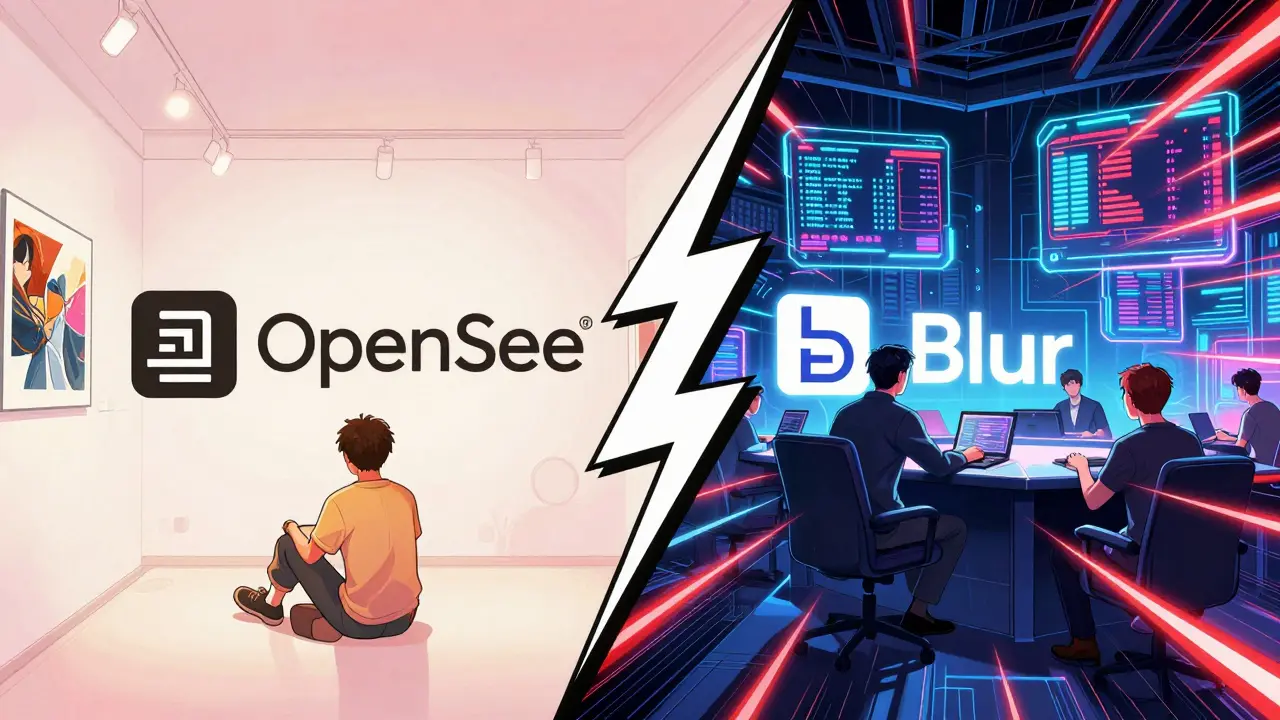
You’re staring at two tabs. On the left, OpenSea, the giant that taught the world what an NFT marketplace is. On the right, Blur, the zero-fee disruptor built for speed. If you are trying to decide where to buy or sell your next digital asset in 2026, this choice isn't just about preference-it’s about strategy. One platform treats you like a collector; the other treats you like a trader. Getting this wrong costs you money, time, and potentially missed opportunities.
The landscape has shifted dramatically since the early days of Web3. OpenSea used to hold nearly 95% of the market share. Today, that number has plummeted to around 15%, while Blur controls over 70% of the trading volume. But here is the catch: Blur’s dominance comes with significant risks, including concerns about wash trading and a lack of support for creators. OpenSea, meanwhile, is fighting back with new technology and token incentives. So, which one actually fits your needs? Let’s break down the real differences without the hype.
Who Are You Trying to Be?
Before we look at fees or features, you need to ask yourself what kind of user you are. This single question dictates which platform will serve you better. The divergence between these two platforms is not accidental; it is architectural.
OpenSea positions itself as a general-purpose hub. It is designed for beginners, casual collectors, and artists who want a straightforward experience. If you are looking to browse art, buy a profile picture, or mint your first creation, OpenSea’s interface feels familiar. It resembles traditional e-commerce sites. You get step-by-step guides, customer support, and a vast library of diverse collections across 19 different blockchains, including Ethereum, Polygon, and Solana.
Blur, on the other hand, was built exclusively for professional traders. Launched in October 2022 by CEO Pacman, Blur operates more like a stock exchange than an art gallery. It assumes you already know what you are doing. There are no hand-holding tutorials. Instead, you get real-time analytics, bulk trading tools, and portfolio management features that allow you to move large volumes of assets quickly. If you are a 'whale' looking to flip hundreds of tokens in a day, Blur is your home. If you are a novice, you might feel lost within minutes.
| Feature | OpenSea | Blur |
|---|---|---|
| Target Audience | Beginners & Collectors | Professional Traders ('Whales') |
| Primary Blockchain | Ethereum (Multi-chain support) | Ethereum & Solana |
| Seller Fees | 2.5% | 0% - 2% (Variable) |
| Creator Royalties | Enforced (5-10%) | Optional (Not Enforced) |
| User Interface | Simple, Visual | Data-Dense, Complex |
| Market Share (Jan 2026) | ~15% | ~71.5% |
The Fee Structure: Cost vs. Sustainability
Money talks, and in the NFT world, fees are the loudest voice. This is where the ideological battle between the two platforms becomes most apparent.
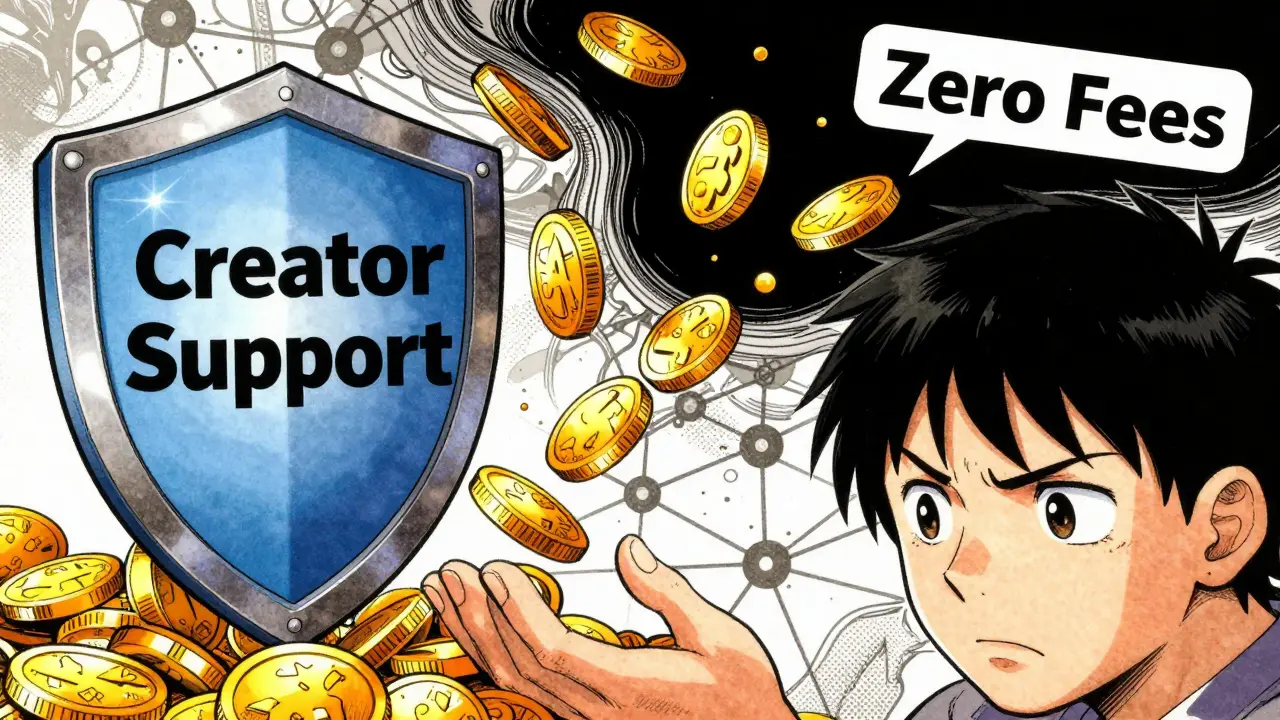
Blur won the fee war by offering zero trading fees. For sellers, this is incredibly attractive. When you are executing dozens of trades a day, saving even 0.5% adds up to thousands of dollars. Blur also allows buyers to avoid fees entirely. However, this model relies on a variable structure where some premium listings may incur small charges, and the platform makes its money through other means, such as potential future premium analytics subscriptions. The catch? By eliminating fees, Blur also eliminated mandatory creator royalties. Artists no longer receive a cut of secondary sales unless they explicitly opt-in, which most do not. This has sparked intense debate about the long-term health of the digital art ecosystem.
OpenSea maintains a 2.5% seller fee. While this sounds steep compared to Blur’s zero percent, it funds critical infrastructure. More importantly, OpenSea enforces standard royalty payments ranging from 5% to 10%, as determined by the original creators. In December 2024, OpenSea took a hardline stance by blocking collections listed on non-royalty platforms like Blur. This move was controversial but signaled a commitment to protecting artist income. For collectors who care about supporting the community, this matters. For pure speculators, it’s an unnecessary cost.
Consider this scenario: You buy an NFT for $1,000 and sell it for $1,200. On Blur, you keep almost all the profit, but the artist gets nothing. On OpenSea, you pay roughly $30 in fees and royalties, leaving the artist with a sustainable income stream. Which outcome aligns with your values?
Technology and Speed: OS2 vs. Aggregator Model
Under the hood, these platforms operate very differently. Understanding their technical architecture helps explain why one feels sluggish and the other feels instantaneous.
In Q3 2025, OpenSea launched its second-generation platform, known as OS2. This upgrade was a direct response to complaints about high gas fees and slow transactions. By optimizing smart contracts, OpenSea reduced gas costs by approximately 42%. It now supports 19 blockchains, making it the most versatile option if you trade across different ecosystems like Polygon or Avalanche. However, despite these improvements, it still processes transactions slower than its competitor because it prioritizes security and broad compatibility over raw speed.
Blur functions as an aggregator. It doesn’t host the assets directly in the same way; instead, it pulls listings from various sources and presents them in a unified dashboard. According to Bitquery’s January 30, 2026 benchmarks, Blur processes transactions 37% faster than OpenSea. It offers tools like 'floor sweeping,' which allows traders to buy the cheapest available items in a collection instantly. This speed is crucial during volatile market moments when prices change by the second. However, this efficiency comes with a trade-off: limited customer support. Blur only offers email assistance with a 72-hour average response time, whereas OpenSea provides 24/7 live chat.
Trust and Market Integrity
Here is the uncomfortable truth about Blur’s dominance: a significant portion of its volume may be artificial. Transparency is key when dealing with unregulated digital assets.
A forensic analysis by The Block in January 2026 revealed that 38% of Blur’s transactions showed suspicious patterns indicative of wash trading. Wash trading occurs when users buy and sell assets to themselves to inflate volume metrics and manipulate perceived demand. Nansen analytics further highlighted this issue, showing that the top 100 traders constitute 63% of Blur’s total trading volume. This concentration raises red flags for smaller investors who might be misled by inflated activity levels.
OpenSea faces fewer accusations of wash trading. Its user base is more diverse, with 193,000 unique wallets engaging in the past 30 days compared to Blur’s 54,000. While OpenSea’s market share has declined, its revenue remains robust at $5.67 million versus Blur’s $2.4 million in the same period. This suggests that OpenSea’s users are spending more per transaction and likely engaging in genuine buying and selling rather than speculative flipping.
If you prioritize market integrity and fear being caught in a pump-and-dump scheme fueled by fake volume, OpenSea offers a safer environment. If you believe you can navigate the noise and exploit inefficiencies, Blur provides the tools to do so.
Tokens and Future Incentives
Both platforms are leveraging cryptocurrency tokens to lock in user loyalty. This is a critical factor for anyone planning to stay in the space long-term.
Blur distributed 1 billion BLUR tokens in a massive airdrop in 2023. This created immediate network effects, rewarding early adopters and incentivizing continued usage. The token serves as a governance tool, allowing holders to vote on platform changes. Looking ahead, Blur plans to integrate DeFi lending against NFT collateral by Q4 2026, expanding its utility beyond simple trading.
OpenSea is preparing its own countermove with the upcoming $SEA token airdrop. Scheduled for Q2 2026, this initiative targets 1.2 million eligible users. The goal is to subsidize creator royalties and reward loyal collectors. If you have been active on OpenSea, keeping your wallet connected could yield significant returns. This token strategy aims to shift OpenSea from a mere marketplace to a 'creator-first ecosystem,' giving users a stake in the platform’s success.
Which Platform Should You Choose?
There is no single winner here. The best choice depends entirely on your goals.
- Choose OpenSea if: You are a beginner, you value supporting artists, you want multi-chain support, or you prefer a platform with robust customer service and lower risk of wash trading.
- Choose Blur if: You are an experienced trader, you prioritize low fees and high speed, you manage a large portfolio, and you are comfortable navigating complex interfaces and potential market manipulation.
Many serious users actually use both. They might discover new art on OpenSea, build relationships with creators, and then execute high-volume trades on Blur for efficiency. Diversifying your approach minimizes risk and maximizes opportunity. Just remember to verify the authenticity of any collection before transferring funds, regardless of the platform.
Is Blur safe to use?
Blur is technically secure, but it carries higher market risks. A significant portion of its trading volume involves wash trading, which can distort price signals. Additionally, it lacks the customer support infrastructure of OpenSea. Use caution and never invest more than you can afford to lose.
Does OpenSea charge buyer fees?
No, OpenSea does not charge fees to buyers. The 2.5% fee is applied only to sellers upon successful transaction completion. Buyers may still encounter gas fees depending on the blockchain network used.
Why did OpenSea block Blur collections?
In December 2024, OpenSea blocked collections that were listed on non-royalty platforms like Blur to enforce creator royalties. This was a strategic move to protect artist income and differentiate itself from competitors that ignore royalty standards.
When is the OpenSea $SEA token dropping?
The $SEA token airdrop is planned for Q2 2026. It targets approximately 1.2 million eligible users who have been active on the platform. Keep your wallet connected and monitor official announcements for specific dates.
Can I use Blur on mobile devices?
Blur is primarily optimized for desktop use due to its complex data dashboards and trading tools. While accessible via mobile browsers, the experience is significantly less intuitive compared to OpenSea’s dedicated mobile app.
Which platform has better customer support?
OpenSea offers superior customer support with 24/7 live chat options. Blur relies solely on email support, which has an average response time of 72 hours, making it difficult to resolve urgent issues quickly.