
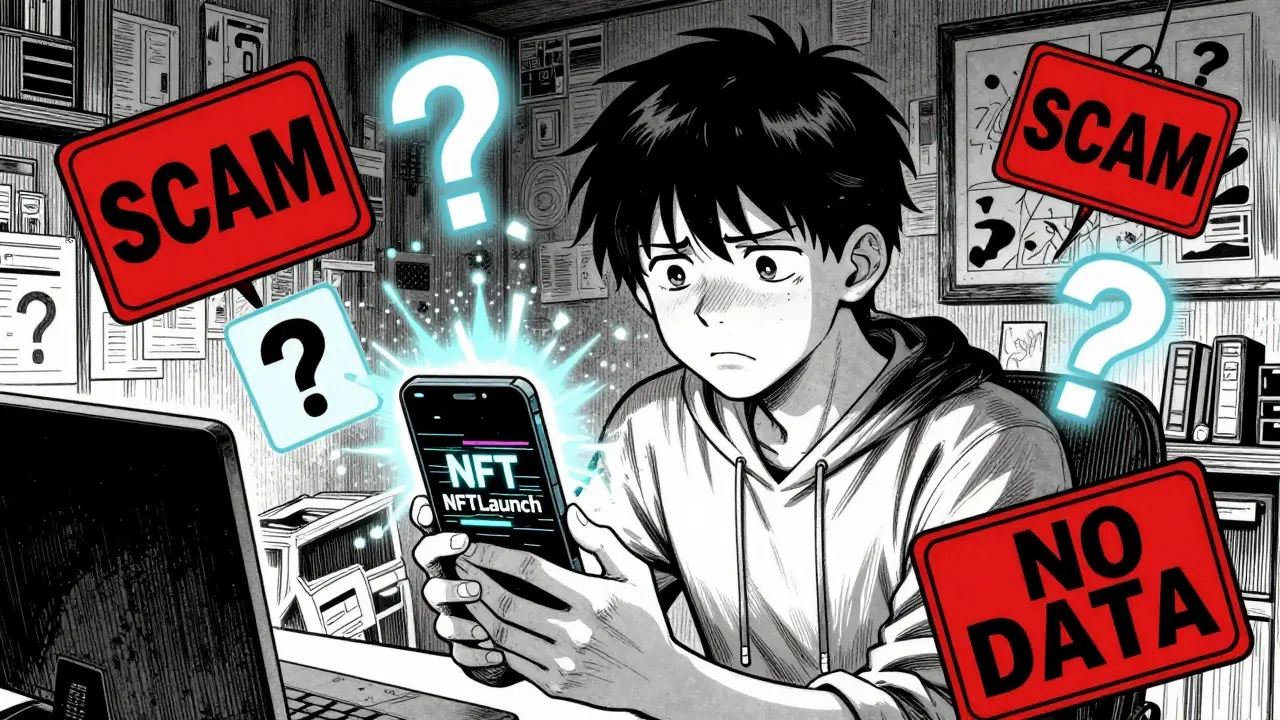
It is August 2026, and if you are searching for specific details on the NFTLaunch (NFTL) is a proposed cryptocurrency project aiming to combine NFT utility with Initial D Offering mechanics IDO launch or its associated airdrop, you likely hit a wall. There is no verified, widely recognized official documentation for a major project by this exact name dominating the current market landscape. This silence is either a massive oversight or, more likely, a red flag.
In the world of decentralized finance, information is currency. When a project claims to offer an Initial D Offering (IDO) is a fundraising method where new crypto projects sell tokens directly to investors via a decentralized platform before listing on exchanges, it should have a clear roadmap, a whitepaper, and a transparent team. The absence of these basics for "NFTLaunch" requires us to look closer at what this might be, how to verify such projects, and how to participate in legitimate IDOs safely without losing your capital to scams.
The Reality of the Current IDO Landscape
To understand why finding details on NFTLaunch is difficult, we need to look at where the action actually is. The IDO space has matured significantly since the early days of wild speculation. Today, reputable platforms act as gatekeepers. If a project is launching legitimately, it will likely be hosted on established infrastructure rather than operating in a vacuum.
Major launchpads like DAO Maker is a leading global launchpad for Web3 projects offering various token sale formats, PancakeSwap is a decentralized exchange and automated market maker built on BNB Chain known for its Syrup Pools and IDO launches, and Polkastarter is a cross-chain launchpad enabling projects to raise funds across multiple blockchains including Ethereum and Polkadot dominate the scene. These platforms have rigorous vetting processes. They don't just let anyone list. If NFTLaunch isn't listed on their upcoming schedules, its credibility drops significantly.
The trend in 2025 and continuing into 2026 shows a shift toward quality over quantity. Successful recent distributions, such as those by Nillion Network is a decentralized computation network that secured significant value through strategic token distribution or Initia is an interoperable L1 blockchain protocol focused on gaming and modular blockchain infrastructure, rewarded genuine community engagement and technical contributions. They didn't rely on vague promises; they relied on verifiable metrics. If NFTLaunch is promising similar returns without showing similar transparency, proceed with extreme caution.
How to Verify a New Crypto Project Before Investing
You found a tweet or a Telegram group mentioning an NFTL airdrop. Before you connect your wallet, run this mental checklist. Scammers know that FOMO (Fear Of Missing Out) makes people skip due diligence.
- Check the Contract Address: Is the smart contract verified on Etherscan is a blockchain explorer and search engine for the Ethereum blockchain providing data on transactions, addresses, and smart contracts or BscScan is a block explorer for the Binance Smart Chain allowing users to track transactions and verify smart contracts? Can you read the code? If the contract is not verified, it could contain hidden functions that allow the developer to drain your wallet.
- Team Anonymity: Are the founders doxxed (publicly identified)? While some successful projects started anonymous, most reputable IDOs now require KYC (Know Your Customer) verification for the team to build trust. If the team consists only of cartoon avatars and pseudonyms with no LinkedIn profiles, ask yourself who you are trusting with your money.
- Liquidity Locking: Has the liquidity been locked? If the developers can pull the liquidity pool at any time, they can execute a "rug pull," leaving you with worthless tokens. Look for locks on services like Uniswap or PancakeSwap that show a lock period of at least 6-12 months.
- Community Vibe: Join their Discord or Telegram. Are there real questions being answered by devs, or is it just bots spamming "GM" and "To the moon"? Real communities debate features and report bugs. Fake communities are echo chambers designed to hype price.

Step-by-Step: How to Participate in Legitimate IDOs
If you decide to pursue opportunities like NFTLaunch-or better yet, find a verified alternative-here is the standard process for participating in an IDO safely. This workflow applies to most reputable launchpads.
- Create and Secure Your Wallet: Use a hardware wallet like Ledger is a hardware cryptocurrency wallet brand that stores private keys offline for enhanced security or Trezor is a popular hardware wallet manufacturer known for secure cold storage solutions for cryptocurrencies. Never use a web-based wallet for large amounts. Connect this to a software interface like MetaMask is a browser extension and mobile app that acts as a bridge between websites and the Ethereum blockchain.
- Fund Your Wallet: Most IDOs require native tokens of the chain they operate on. For example, if the IDO is on BNB Chain, you need BNB. If it's on Polygon, you need MATIC. Keep extra funds for gas fees.
- Stake or Hold Platform Tokens: Many launchpads require you to stake their native token (like CAKE for PancakeSwap or DAO for DAO Maker) to qualify for whitelist spots or higher allocation tiers. Check the specific requirements of the platform hosting the IDO.
- Complete KYC: Reputable platforms require identity verification to prevent sybil attacks (one person creating multiple wallets). Upload your ID securely through their official portal only.
- Participate in the Sale: Once the IDO goes live, commit your funds. Remember, you are buying tokens at a fixed price. You cannot trade them immediately. They are usually vested or released after a vesting period.
- Claim and Trade: After the IDO ends, you claim your tokens. Wait for the trading unlock date. Set limit orders beforehand if you plan to sell, as volatility can be high.
Red Flags: Signs of a Potential Scam
Given the lack of concrete data on NFTLaunch, it is crucial to recognize the hallmarks of a fraudulent scheme. In 2026, scams are sophisticated. They often clone legitimate sites or create fake social media accounts.
| Feature | Legitimate Project | Suspicious Project (e.g., unverified NFTL) |
|---|---|---|
| Whitepaper | Detailed, technical, available on GitHub or official site | Missing, vague, or full of buzzwords without substance |
| Team | Public identities, linkedin profiles, past experience | Anonymous, stock photos, or stolen identities |
| Audits | Audited by firms like CertiK, Hacken, or OpenZeppelin | No audit, or audit from unknown/unverifiable firm |
| Tokenomics | Clear distribution, vesting schedules, burn mechanisms | Unclear supply, high team allocation, no vesting |
| Community | Active discussion, dev AMAs, critical feedback accepted | Bots, excessive hype, admins ban critics |
If NFTLaunch fits the "Suspicious" column, walk away. The crypto market is filled with gems, but also with traps. Do not let the promise of easy gains override basic safety checks.
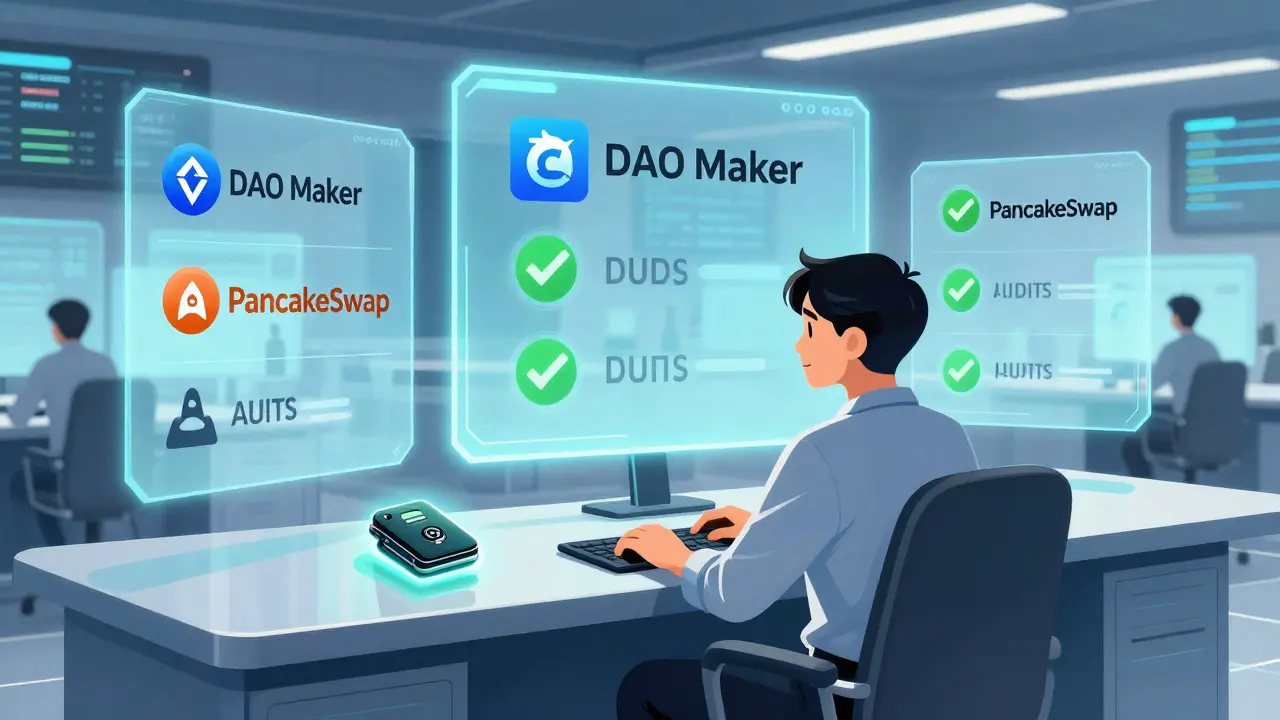
Alternative Opportunities in the NFT and IDO Space
If your goal is to invest in the intersection of NFTs and DeFi, there are established players with proven track records. Instead of chasing an obscure token, consider looking at projects that integrate NFT utility for access and rewards, a trend that has gained traction recently.
For instance, platforms that use NFTs as passes for governance or exclusive yield farming opportunities are gaining ground. Look for projects on major chains like Solana is a high-performance blockchain supporting smart contracts and decentralized applications with low transaction fees or Polygon is a protocol and framework for building and connecting Ethereum-compatible blockchain networks that have active development and regular updates. Checking the "Upcoming" sections of trusted launchpads like TrustPad is a multi-chain launchpad focusing on vetting projects for quality and security before listing or GameFi is a launchpad specifically tailored for blockchain gaming projects will give you a safer entry point into new projects.
Managing Risk in Volatile Markets
Even with a legitimate project, IDOs carry risk. The token price can drop below the IDO price immediately upon listing. This is known as "impermanent loss" in staking contexts or simply market correction in trading. To mitigate this:
- Diversify: Never put more than 1-2% of your total portfolio into a single IDO.
- Take Profits Early: If the token pumps 50-100% on day one, consider selling half to recoup your initial investment. Let the rest ride.
- Ignore Hype: Social media sentiment is often manipulated. Make decisions based on charts and fundamentals, not tweets.
The crypto space moves fast. What is hot today can be forgotten tomorrow. By sticking to verified platforms and doing your own research, you protect yourself from the inevitable scams that prey on the uninformed.
What is the NFTLaunch (NFTL) token?
As of August 2026, there is no widely recognized, verified cryptocurrency project named NFTLaunch (NFTL) with a confirmed IDO or airdrop on major launchpads. Users should exercise extreme caution as this may be a lesser-known project or a potential scam.
How do I verify if an IDO is legitimate?
Check if the project is listed on reputable launchpads like DAO Maker or PancakeSwap. Verify the smart contract on Etherscan/BscScan, ensure the team is public or has a strong anonymous track record, and look for third-party audits from firms like CertiK.
What are the risks of participating in crypto airdrops?
Risks include phishing scams where fake airdrop links steal your private keys, rug pulls where developers abandon the project, and receiving worthless tokens that drain your wallet when you try to interact with them. Always use a separate wallet for claiming airdrops.
Which launchpads are considered safe in 2026?
Established launchpads with strong reputations include DAO Maker, Polkastarter, TrustPad, GameFi, and PancakeSwap. These platforms perform due diligence on projects before listing them for IDOs.
Do I need to pay taxes on crypto airdrops?
In many jurisdictions, including the US and parts of Europe, airdropped tokens are considered taxable income at their fair market value on the day received. Consult a local tax professional for advice specific to your region.
11 Responses
bro this is just another rug pull waiting to happen lol
The article correctly identifies the absence of verifiable documentation as a primary indicator of fraud. It is fundamentally absurd that in 2026, retail investors are still falling for projects lacking basic whitepapers or team doxxing. The IDO landscape has matured precisely because platforms like DAO Maker and Polkastarter enforce rigorous vetting protocols. When a project operates in a vacuum, devoid of third-party audits from firms such as CertiK or Hacken, it is not an 'oversight' but a deliberate obfuscation strategy designed to facilitate liquidity extraction. The checklist provided is rudimentary at best; one must also analyze token vesting schedules on-chain using tools like Nansen or Arkham Intelligence to detect potential insider accumulation patterns before the public sale. Furthermore, the community vibe metric is critical; genuine development teams engage in technical discourse regarding smart contract optimizations and gas efficiency, whereas scam communities rely on algorithmic bot networks to simulate engagement metrics. If NFTLaunch cannot produce a GitHub repository with active commit history from verified developer accounts, it should be immediately categorized as high-risk speculative garbage.
theyre all lying about decentralization its just a new way for the globalist elites to track your every move through your wallet address while they drain the liquidity pools and leave you holding worthless digital rocks we need to go back to gold and cash only because crypto is literally designed by the same people who want to destroy our privacy and freedom under the guise of innovation
Hey there! :) Just wanted to add that using a separate burner wallet for claiming any airdrops is super important so you don't risk your main funds if the contract turns out to be malicious. I always use Rabby Wallet for testing interactions first because it shows exactly what permissions you're granting before you sign. Stay safe out there!
It is truly pathetic that humanity continues to gamble their life savings on unverified digital tokens rather than investing in tangible assets or ethical enterprises. The moral decay of prioritizing quick gains over due diligence is staggering. One wonders if these participants have ever read a single line of code or understood the fundamental economic principles of value creation. Instead, they flock to Telegram groups led by anonymous caricatures promising moonshots. This behavior reflects a broader societal failure to value integrity and transparency. Perhaps if we stopped rewarding greed with viral hype, we might see a return to honest labor and genuine innovation.
Oh please, spare me the lecture on 'integrity.' You sound like a boomer who thinks Bitcoin was a mistake because it doesn't have a physical branch in your town. The real conspiracy is that the SEC and traditional banks are trying to crush decentralized finance because they can't control it. They want to keep us poor and dependent on their rigged system. NFTLaunch might be sketchy, sure, but at least it's not part of the corrupt establishment stealing our pensions. Wake up, sheeple!
Your reliance on paranoid rhetoric does little to substantiate your argument. Conflating regulatory oversight with a grand conspiracy is a logical fallacy often employed by those who lack the intellectual rigor to understand market mechanics. The 'rigged system' you despise provides the legal framework that protects consumers from exactly the kind of predatory scams prevalent in the unregulated crypto sphere. Without these structures, the weak are devoured by the strong, which seems to be the outcome you are celebrating rather than lamenting. True freedom requires accountability, not anonymity.
The root cause of this chaos is attachment to material wealth. In the spiritual journey, one learns that external validation through token prices is illusory. Most traders suffer from ego-driven FOMO, mistaking volatility for opportunity. A true guru understands that peace comes from detachment, not from checking Etherscan every five minutes. Invest in your mind, not in memes.
I think both sides have valid points here. It's definitely risky to jump into unknown projects, but also, regulation can sometimes stifle innovation. Maybe the key is just finding a middle ground where we stay informed without being too cynical or too naive. Everyone just wants to grow their portfolio safely, right?
Ugh, reading this thread is exhausting. Can we please elevate the discourse? The average commenter here clearly lacks the sophisticated understanding of blockchain architecture required to evaluate IDOs properly. It’s not just about 'checking the contract'; it’s about understanding the underlying consensus mechanisms and governance models. If you’re relying on Reddit threads for financial advice, you’re already behind the curve. Truly, the state of financial literacy in this demographic is abysmal. Do try to keep up, shall we?
Oh my gosh, Michelle, you are absolutely dripping with condescension! 💅 It’s adorable how you think knowing a few buzzwords makes you superior. We get it, you read a whitepaper once. But let’s be real, even the 'sophisticated' experts got wrecked in the last bear market. At least we regular folks know when something smells fishy without needing a PhD in computer science. Keep judging, queen, while we actually make money. 😂✨