
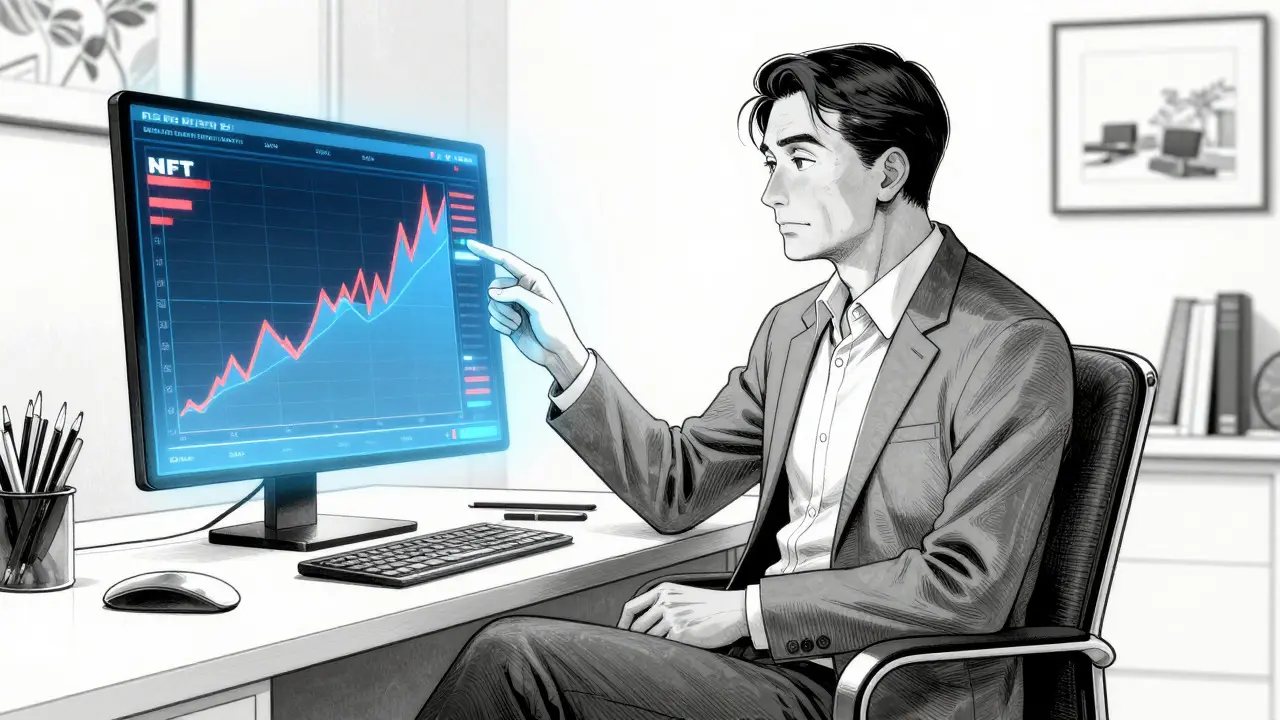
The hype cycle of 2021 is long gone. If you are looking at NFT art investment today, you aren't buying into a speculative bubble fueled by FOMO and celebrity tweets. You are entering a mature, utility-driven market that has shed its excess weight. The global NFT market is projected to generate $608.6 million in revenue during 2025, serving an estimated 11.64 million users worldwide. While the numbers look smaller than the peak frenzy years, the quality of participation has improved drastically. Transaction counts increased by nearly 80% in the first half of 2025, even as total sales volume dipped slightly. This tells us something crucial: fewer people are flipping assets for quick cash, and more serious collectors and investors are holding onto genuine value.
The Shift from Speculation to Utility
Gone are the days when any JPEG could fetch six figures overnight. The current landscape rewards patience, research, and an understanding of technological evolution. In 2025 and heading into 2026, the primary driver of value is no longer just scarcity; it is utility. Investors are now looking for projects that offer tangible benefits beyond mere ownership. This includes membership access to exclusive communities, rights to physical goods, or integration into broader digital ecosystems.
Consider the rise of hybrid NFTsdigital tokens linked to real-world assets or experiences. Brands like Nike with their Cryptokicks initiative have successfully bridged the gap between digital ownership and physical sneakers. Similarly, luxury watchmakers like Jacob & Co. are issuing NFTs tied to high-end timepieces. These aren't just pictures on a screen; they are verifiable certificates of authenticity and ownership that reduce counterfeiting in traditional industries. For an investor, this means the asset has intrinsic value backed by physical reality, not just community sentiment.
Intelligent NFTs: The AI Revolution
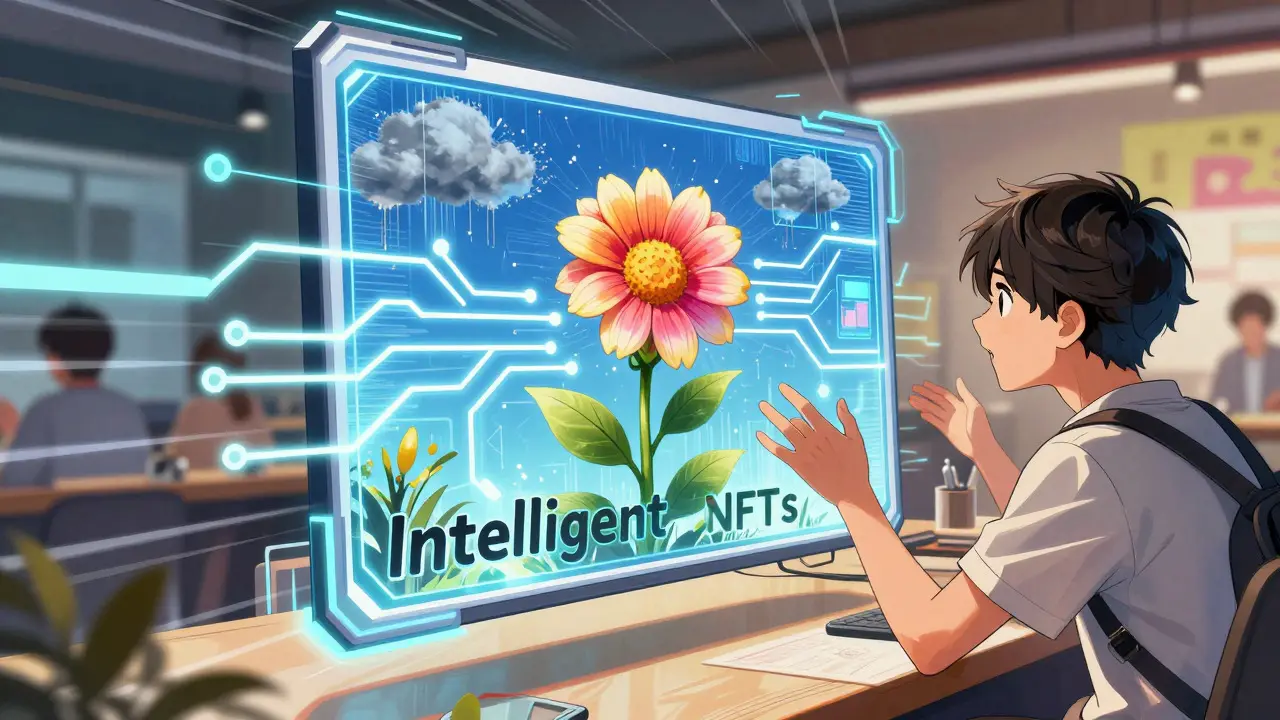
One of the most significant developments reshaping the investment potential of digital art is the integration of artificial intelligence. Approximately 30% of new NFT projects launched in 2025 incorporate AI technologies. We are seeing the emergence of intelligent NFTs (iNFTs)dynamic digital assets that evolve based on user interaction or autonomous algorithms. Unlike static images, these assets can change visually, adapt behaviors, or generate new content over time.
This creates a new category of programmable digital assets. Imagine owning a piece of art that evolves based on how often you view it, the weather in your location, or even your social media activity. Technology experts predict that by 2026, these adaptive features will make static collectibles seem obsolete to many buyers. For investors, this offers a unique value proposition: the asset appreciates not just through market demand, but through its own internal complexity and engagement metrics. It transforms art from a passive object into an active participant in your digital life.
| Feature | Speculative Era (2021-2022) | Utility Era (2025-2026) |
|---|---|---|
| Primary Driver | Fear Of Missing Out (FOMO) | Real-world utility and AI integration |
| Asset Type | Static images, meme coins | Hybrid assets, intelligent dynamic art |
| Risk Profile | Extremely high, binary outcomes | Moderate, tied to project longevity |
| Liquidity | High volatility, easy entry/exit | Lower turnover, longer holding periods |
| Value Anchor | Community hype | Physical links, AI functionality, royalties |
Evaluating Investment Potential: Efficiency, Availability, and Risk
To assess whether an NFT project is worth your capital, you need a structured approach. Academic research published in March 2025 suggests evaluating investment potential through three key lenses: efficiency, availability, and risk. Let’s break down what this means for your wallet.
Efficiency refers to how well the project delivers on its promises. Does the smart contract work seamlessly? Are royalty payments to artists actually distributed? Efficient projects have transparent codebases and active development teams. Look for platforms that prioritize user experience and low transaction fees, especially those moving beyond Ethereum to layer-2 solutions or alternative blockchains like Solana or Polygon, which offer faster speeds and lower costs.
Availability concerns market liquidity and accessibility. Can you easily buy or sell the asset without crashing the price? While NFTs are inherently illiquid compared to stocks, some blue-chip collections maintain deep order books. However, be wary of projects with tiny circulating supplies that lack secondary market depth. If you can’t exit your position, your paper gains mean nothing.
Risk is the most critical factor. The risks here are multifaceted. First, there is technological risk: bugs in smart contracts can lead to stolen funds. Second, there is regulatory risk: as governments clarify tax laws around digital assets, compliance costs may impact project viability. Finally, there is artistic risk: does the creator have a sustainable vision, or is this a one-off drop? Diversification remains key. Never put more than a small percentage of your portfolio into high-risk digital art.
The Role of Blockchain Provenance
At the heart of every NFT is blockchain technologya decentralized ledger that records ownership and transaction history. This provides immutable provenance, solving the age-old problem of authentication in the art world. When you buy an NFT, you are buying a verified record of ownership that cannot be altered or forged. This is particularly valuable for digital creators who previously struggled to prove originality.
For investors, this transparency allows you to trace the entire history of an asset. You can see who owned it before, at what price, and verify that the seller is indeed the legitimate owner. This reduces fraud and builds trust in the marketplace. As the market matures, this feature becomes less of a novelty and more of a baseline requirement for any serious investment platform.
Practical Steps for New Investors
If you are ready to dip your toes into the water, start with education. Understand the basics of wallets, gas fees, and marketplace dynamics. Here is a checklist to guide your initial steps:
- Choose a Reputable Wallet: Use hardware wallets like Ledger or Trezor for maximum security. Avoid keeping large amounts of value in hot wallets connected to your browser.
- Research the Team: Look for doxxed (publicly identified) teams with track records in art, tech, or finance. Anonymous teams carry higher risk.
- Analyze Community Health: Join Discord servers and Twitter spaces. Is the conversation focused on long-term vision and utility, or just price speculation?
- Start Small: Treat your first few purchases as tuition fees. Learn how the process works with minimal financial exposure.
- Focus on Artists You Love: Emotional connection often leads to better long-term holding behavior. If you believe in the artist’s future, you are less likely to panic-sell during dips.
Future Outlook: Beyond 2026
The convergence of AI and blockchain is setting the stage for a new era of digital ownership. By 2026, we expect to see more standardized frameworks for intelligent NFTs, making them easier to integrate into games, virtual worlds, and even professional workflows. Hybrid models will continue to expand, linking digital tokens to real estate, concert tickets, and luxury goods. The market is stabilizing, moving away from volatile spikes toward steady, incremental growth grounded in real utility.
Investing in NFT art today requires a shift in mindset. It is no longer about getting rich quick; it is about participating in the evolution of digital culture and technology. By focusing on projects with strong fundamentals, clear utility, and innovative use of AI, you can navigate this complex landscape with confidence. The potential is still there, but it belongs to those who do their homework.
Is NFT art investment safe in 2026?
No investment is entirely safe, but the risk profile has changed. The wild speculation of 2021 has cooled, leading to a more stable market driven by utility rather than hype. Risks remain in terms of technological bugs, regulatory changes, and project failure, so diversification and thorough research are essential.
What are intelligent NFTs (iNFTs)?
Intelligent NFTs are digital assets powered by artificial intelligence that can change appearance, behavior, or content over time. They react to user interactions or external data, creating a dynamic ownership experience that static images cannot match.
How do hybrid NFTs add value?
Hybrid NFTs link digital tokens to physical assets or real-world privileges, such as luxury watches, sneakers, or event access. This adds tangible value and utility, reducing reliance on pure speculation and providing a bridge between Web3 and traditional commerce.
Which blockchain is best for NFT investments?
Ethereum remains the dominant platform for high-value art due to its established ecosystem and security. However, layer-2 solutions like Polygon and alternative chains like Solana offer lower fees and faster transactions, making them attractive for newer projects and smaller-scale investments.
Can I make money from NFT art in 2026?
Yes, but expectations should be realistic. The days of guaranteed massive returns are over. Profit potential now comes from identifying undervalued projects with strong utility, AI integration, or hybrid physical links, and holding them for long-term appreciation.