
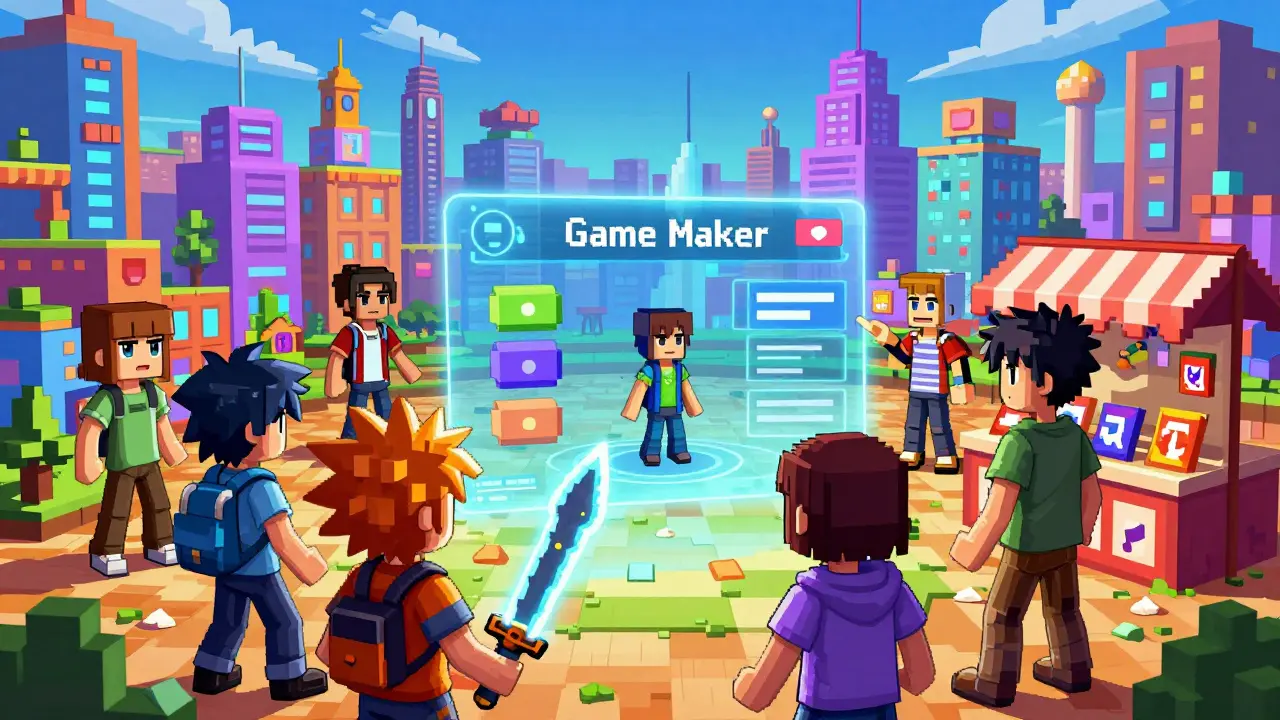
The metaverse isn't just a buzzword anymore. By 2025, it has evolved from speculative pixelated worlds into complex digital economies where gaming, social interaction, and commerce blend seamlessly. If you are looking to invest your time or money, understanding which platforms actually deliver value is crucial. The landscape is crowded, but only a few projects have managed to build sustainable ecosystems that attract both casual users and serious investors.
We are seeing a shift away from hype toward utility. Platforms now offer tangible tools for creation, robust economic models, and partnerships with mainstream brands. This guide breaks down the major players defining the metaverse in 2025, helping you decide where to focus your attention.
Key Takeaways
- The Sandbox remains the leader in user-generated content, offering no-code tools for building games and trading voxel-based NFTs on Ethereum and Polygon.
- Decentraland continues to dominate virtual real estate, serving as a hub for events, art galleries, and commercial branding experiences.
- Axie Infinity pioneered the play-to-earn model, maintaining relevance despite past security challenges through its established player base.
- Illuvium brings AAA-quality graphics and gameplay to blockchain, appealing to traditional gamers who previously avoided crypto.
- Virtuals Protocol represents the new frontier, integrating AI agents that can be tokenized and monetized within the metaverse.
The Sandbox: Building Without Code
The Sandbox is a decentralized virtual world built on the Ethereum blockchain, known for its user-generated content and voxel-based assets. Since its transition from a mobile game in 2012 to a blockchain platform in 2018, it has become one of the most recognized names in the industry. The project’s success is largely due to its accessibility; you don’t need to know how to code to create something valuable here.
The platform provides three core tools that empower creators:
- VoxEdit: A free software tool for creating 3D animated assets and characters. These assets can be minted as NFTs and used across the ecosystem.
- Game Maker: A no-code environment that allows users to build interactive 3D games using logic blocks. This lowers the barrier to entry significantly compared to traditional game development.
- Marketplace: A peer-to-peer exchange where users trade these digital assets using the SAND token.
Economically, The Sandbox is robust. It raised $93 million from SoftBank in 2021, signaling strong institutional confidence. More recently, the integration with the Polygon network has enabled zero-fee transactions and staking rewards, making micro-transactions viable. Partnerships with giants like Atari, CryptoKitties, and celebrities like Snoop Dogg have helped drive mainstream adoption, turning the platform into a cultural hub rather than just a tech experiment.
Decentraland: The Hub of Virtual Real Estate
If The Sandbox is about creation, Decentraland is a pioneering virtual world focused on virtual land ownership, events, and social gathering spaces. Launched earlier than many competitors, it established the concept of buying and selling parcels of land as non-fungible tokens (NFTs). Each parcel is a unique piece of property that you can develop, lease, or sell.
The MANA cryptocurrency fuels this economy. You use MANA to buy land, customize avatars, and pay for services within the world. Decentraland has positioned itself as a venue for high-profile events. Brands host product launches, artists open galleries, and communities gather for concerts. This makes it less of a "game" and more of a social media platform with spatial dimensions.
For investors, the appeal lies in scarcity. There is a fixed supply of land, meaning demand drives value. However, success depends heavily on traffic. Unlike sandbox games where you play alone, Decentraland thrives on crowds. Its consistent ranking in industry analyses reflects its ability to maintain active user bases during global events.
Axie Infinity: The Play-to-Earn Pioneer
Axie Infinity is a blockchain-based trading and battling game featuring collectible creatures called Axies, popularizing the play-to-earn model. Before 2025, Axie defined an entire era of crypto gaming by allowing players, particularly in developing countries, to earn significant income through gameplay. Players breed, battle, and trade Axies, earning Smooth Love Potion (SLP) and AXS tokens.
The project faced severe headwinds in 2022, including security breaches and market volatility. Yet, it remains a cornerstone of the metaverse sector. Why? Because it proved the economic model works. The player base is deeply entrenched, and the community loyalty is strong. In 2025, Axie Infinity focuses on stabilizing its economy and improving gameplay mechanics to retain users beyond just financial incentives. It serves as a case study for sustainability in play-to-earn ecosystems.

Illuvium: AAA Graphics Meet Blockchain
One of the biggest criticisms of early metaverse projects was poor graphics. Illuvium is an open-world RPG adventure game built on Ethereum, featuring high-fidelity graphics and auto-battler gameplay mechanics. Illuvium aims to change that narrative. It looks and feels like a premium console game, not a web experiment.
The game features an immersive story, diverse biomes, and deep strategic combat. All in-game assets, including creatures (Illuvials), vehicles, and weapons, are NFTs. This means true ownership. You can take your Illuvial out of the game and trade it on secondary markets. The ILV token governs the ecosystem and rewards players.
By targeting traditional gamers, Illuvium expands the total addressable market for blockchain technology. It doesn’t ask you to understand wallets first; it asks you to enjoy the game. Once engaged, the economic layer reveals itself naturally. This approach is critical for mass adoption in 2025 and beyond.
Emerging Innovators: MetaHero, Floki Inu, and Virtuals
Beyond the giants, several projects are carving out niche but powerful roles in the 2025 landscape.
MetaHero is a cross-platform avatar infrastructure project that uses 3D body scanning to create realistic digital twins. Instead of choosing from preset characters, you scan yourself. This avatar then works across multiple metaverse platforms. This interoperability solves a major pain point: identity fragmentation. With a market cap around $11.8 million and growing daily volume, MetaHero is betting on the future of unified digital identity.
Floki Inu is a meme coin ecosystem that has evolved into a comprehensive metaverse platform centered around the Valhalla game. Originally launched as a joke, Floki has developed serious utility. Valhalla, its flagship play-to-earn game, launched its mainnet in mid-2025. This transition from meme to utility demonstrates how community-driven projects can pivot to offer real value through gaming and NFTs.
Perhaps the most intriguing newcomer is Virtuals Protocol. It is a platform enabling the creation, tokenization, and monetization of AI agents within the metaverse. Imagine owning an AI character that interacts with others, generates content, and earns revenue for you. This blends artificial intelligence with blockchain ownership, creating dynamic, responsive virtual worlds. It represents the next evolution: moving from static assets to living, intelligent entities.
Specialized Gaming Ecosystems
Not all metaverse projects aim to be everything to everyone. Some focus on specific genres, delivering deeper experiences for targeted audiences.
Derby Stars is a horse racing simulation game built on Polygon, featuring a dual-token economy with RUN and CRT tokens. It prioritizes speed and low fees, essential for frequent betting and trading actions. The dual-token model separates governance (RUN) from utility (CRT), providing economic stability.
VulcanVerse is an open-world MMORPG part of the Vulcan Forged ecosystem, featuring fantasy storytelling and NFT-based asset ownership. It offers a rich narrative experience with quests and adventures. The use of PYR and LAVA tokens rewards players for participation and upgrades. Being part of the broader Vulcan Forged ecosystem, it benefits from shared infrastructure and liquidity.
Comparison of Major Metaverse Projects
| Project | Primary Focus | Blockchain | Key Feature | Token Utility |
|---|---|---|---|---|
| The Sandbox | User-Generated Content | Ethereum / Polygon | No-code Game Maker | Transactions, Staking, Governance |
| Decentraland | Virtual Real Estate | Ethereum | Land Ownership & Events | Purchases, Customization |
| Axie Infinity | Play-to-Earn Gaming | Ethereum / Ronin | Creature Breeding & Battles | Rewards, Governance |
| Illuvium | AAA RPG | Ethereum | High-Fidelity Graphics | In-Game Currency, Staking |
| Virtuals Protocol | AI Agents | Multi-chain | Tokenized AI Entities | Creation, Monetization |
Challenges and Future Outlook
Despite the excitement, the metaverse sector faces hurdles. Scalability remains a technical challenge; handling millions of concurrent users without lag requires advanced infrastructure. User experience must continue to improve, removing friction points like wallet management and gas fees. Regulatory compliance is also becoming stricter, requiring projects to adapt their legal frameworks.
However, the trajectory is positive. Integration with AI, as seen with Virtuals Protocol, adds depth and interactivity. Cross-platform interoperability, championed by MetaHero, ensures that your digital assets aren't trapped in one walled garden. As hardware improves and internet speeds increase, immersion will deepen. 2025 is a pivotal year where projects prove they can sustain growth beyond initial hype cycles.
How to Choose Your Platform
Selecting the right metaverse project depends on your goals. Are you a creator? Look at The Sandbox for its accessible tools. Do you prefer investing in digital assets? Decentraland’s land market offers historical data and liquidity. Want to play a high-quality game? Illuvium delivers that experience. Interested in emerging tech? Virtuals Protocol and MetaHero offer exposure to AI and interoperability trends.
Always research the tokenomics. Understand how tokens are issued, burned, and rewarded. Check the team’s track record and community engagement. Avoid projects that promise unrealistic returns. Focus on platforms with active development, clear roadmaps, and genuine user activity.
What is the best metaverse project for beginners in 2025?
The Sandbox is often recommended for beginners due to its user-friendly tools like VoxEdit and Game Maker, which require no coding knowledge. Its large community and extensive tutorials make it easier to learn the basics of creating and trading NFTs.
Is it still possible to make money in the metaverse?
Yes, but the methods have matured. Early days of easy profits are over. Now, earning comes from skilled creation (designing assets), strategic investment (buying undervalued land or tokens), or active participation in play-to-earn games like Axie Infinity and Illuvium. Success requires effort and research.
What role does AI play in the modern metaverse?
AI is transforming the metaverse by introducing intelligent agents. Platforms like Virtuals Protocol allow users to create and own AI characters that can interact, generate content, and even earn revenue. This makes virtual worlds more dynamic and responsive compared to static environments.
Which blockchain is best for metaverse applications?
There is no single "best" blockchain. Ethereum offers security and high-value asset support, making it ideal for expensive land sales. Polygon provides low fees and fast transactions, perfect for gaming and micro-transactions. Many projects, like The Sandbox, use both to balance security and cost.
Are metaverse investments safe?
Metaverse investments carry significant risk. Token prices are volatile, and projects can fail if they lose user interest. Always diversify your portfolio, never invest more than you can afford to lose, and thoroughly research each project's fundamentals before committing funds.