

You’ve probably heard the name Leverj pop up in a list of alternative crypto platforms. Maybe you saw it mentioned alongside other smaller exchanges or stumbled upon its native token, Leverj Gluon (L2). But here is the hard truth that most quick summaries skip: there is very little reliable information about this platform. In an industry where trust is everything, silence can be louder than marketing hype.
If you are looking for a robust, heavily regulated exchange with deep liquidity and thousands of user reviews, Leverj is likely not your best bet right now. However, if you are curious about niche platforms that claim to bridge the gap between centralized ease and decentralized control, you need to know exactly what you are getting into before you deposit a single cent.
The Core Concept: Bridging CeFi and DeFi
To understand why Leverj exists, you have to look at the two main camps in cryptocurrency trading. On one side, you have Centralized Exchanges (CeFi) like Binance or Coinbase. These are easy to use, fast, and offer customer support, but you don’t actually hold your keys. The exchange holds your funds for you. On the other side, you have Decentralized Exchanges (DeFi) like Uniswap. Here, you keep control of your assets via a wallet, but the experience can be clunky, slow, and technically demanding.
Leverj aims to sit in the middle of this spectrum. It positions itself as a hybrid platform, attempting to offer the user-friendly interface of a centralized exchange while incorporating some elements of decentralized finance. The goal is to provide traders with better privacy and potentially lower fees by reducing reliance on traditional banking rails and centralized custodianship.
In theory, this sounds great. In practice, executing a true hybrid model is incredibly difficult. Most platforms that try this either lean too far into centralization (defeating the purpose) or fail to provide the liquidity needed for smooth trading. Leverj’s technical architecture suggests it uses a proprietary matching engine that interacts with decentralized liquidity pools, but detailed whitepapers or open-source code audits are scarce compared to major competitors.
User Adoption and Reputation: The Numbers Don't Lie
When evaluating any financial platform, community sentiment is a vital health check. For major exchanges, you can find tens of thousands of reviews on sites like Trustpilot, Reddit threads dissecting every feature, and YouTube tutorials galore. For Leverj, the picture is starkly different.
As of mid-2025, data from comparison aggregators like Cryptogeek shows Leverj holding a rating of roughly 3.0 out of 5 stars. But look closer at the denominator: this score is based on only two user reviews. That is not a sample size; that is a statistical anomaly. For context, even smaller niche exchanges usually accumulate dozens of reviews within their first year of operation.
- Leverj Rating: ~3.0/5 (based on 2 reviews)
- Latoken Rating: ~2.1/5 (based on 12 reviews)
- LIQNET Exchange Rating: ~4.0/5 (based on 1 review)
This lack of data is a red flag for beginners. It suggests extremely low user adoption. Without a large user base, you face higher risks of slippage (your trade price being worse than expected due to low volume) and potential liquidity issues when trying to withdraw larger amounts. It also means there is no established community to help you if something goes wrong. You are essentially early-stage beta testers.

The Leverj Gluon (L2) Token Ecosystem
Every crypto exchange has a native token, and Leverj is no exception. Its utility token is called Leverj Gluon, traded under the ticker L2. This token is supposed to power the ecosystem, offering benefits like reduced trading fees, governance rights, or staking rewards.
However, the market performance of L2 tells a story of uncertainty. As of May 2026, L2 trades around $0.11. Price prediction models for this token are wildly contradictory. Some analysts project a modest rise to $0.13-$0.15 by late 2025, citing increased adoption of hybrid models. Others, such as those at PricePrediction.net, suggest bearish scenarios where the token could drop significantly, potentially reaching lows near $0.001 in 2026 if interest wanes.
This volatility isn't just about speculation; it reflects the broader struggle of niche tokens to maintain value without strong underlying usage metrics. If the exchange doesn't attract significant trading volume, the demand for the L2 token remains thin. Before buying L2, ask yourself: am I betting on the technology, or just hoping for a pump?
| Feature | Leverj | Binance | Bybit |
|---|---|---|---|
| Market Position | Niche / Emerging | Global Leader | Top Tier Derivatives |
| User Reviews | ~2 (Very Low) | Hundreds of Thousands | Tens of Thousands |
| Security Features | Limited Public Info | SFSA Insurance, SAFU Fund | AI Risk Engine, Proof of Reserves |
| Supported Coins | Limited Selection | 350+ | 600+ |
| Best For | Experimental Users | General Trading | Futures & Leverage |
Security and Regulatory Concerns
Security is the non-negotiable pillar of crypto trading. Major exchanges invest millions in cybersecurity, multi-signature cold wallets, and regulatory compliance. Binance, for instance, maintains a Secure Asset Fund for Users (SAFU) worth over $1 billion to protect against extreme security breaches. Bybit employs AI-driven risk engines that have reportedly prevented tens of millions in fraudulent withdrawals.
Leverj does not publish comparable security credentials. There is no public proof of reserves, no detailed breakdown of their custody solutions, and no clear statement on which jurisdictions they operate under. In 2026, with regulations tightening globally (especially in the US, EU, and UK), operating without clear regulatory status is risky. If the platform faces legal scrutiny, users on unregistered platforms often have zero recourse to recover their funds.
Furthermore, the "hybrid" nature can sometimes obscure who is actually responsible for your funds. Are you self-custodying? Or is Leverj acting as a custodian? If the latter, and they go insolvent, you become an unsecured creditor. Always verify these details directly from official documentation, not just marketing pages.
Who Should Actually Use Leverj?
Let’s be direct: Leverj is not for beginners. If you are new to crypto, stick to Coinbase, Kraken, or Binance. They have educational resources, responsive support teams, and insured accounts. Using a platform with two reviews and ambiguous security protocols is asking for trouble.
However, Leverj might appeal to a specific type of user:
- Privacy Advocates: Those who distrust centralized entities and want to explore platforms that minimize KYC (Know Your Customer) requirements, provided they accept the associated risks.
- Token Speculators: Traders interested in the L2 token specifically, betting on the long-term viability of the hybrid exchange model.
- Experienced DeFi Users: Individuals comfortable managing their own risk, using hardware wallets, and conducting deep technical due diligence on smart contracts and backend infrastructure.
If you fall into the last category, proceed with caution. Start with small amounts. Test the withdrawal process immediately after depositing. Do not move significant capital until you have verified the platform's reliability firsthand.
Final Verdict: Proceed with Extreme Caution
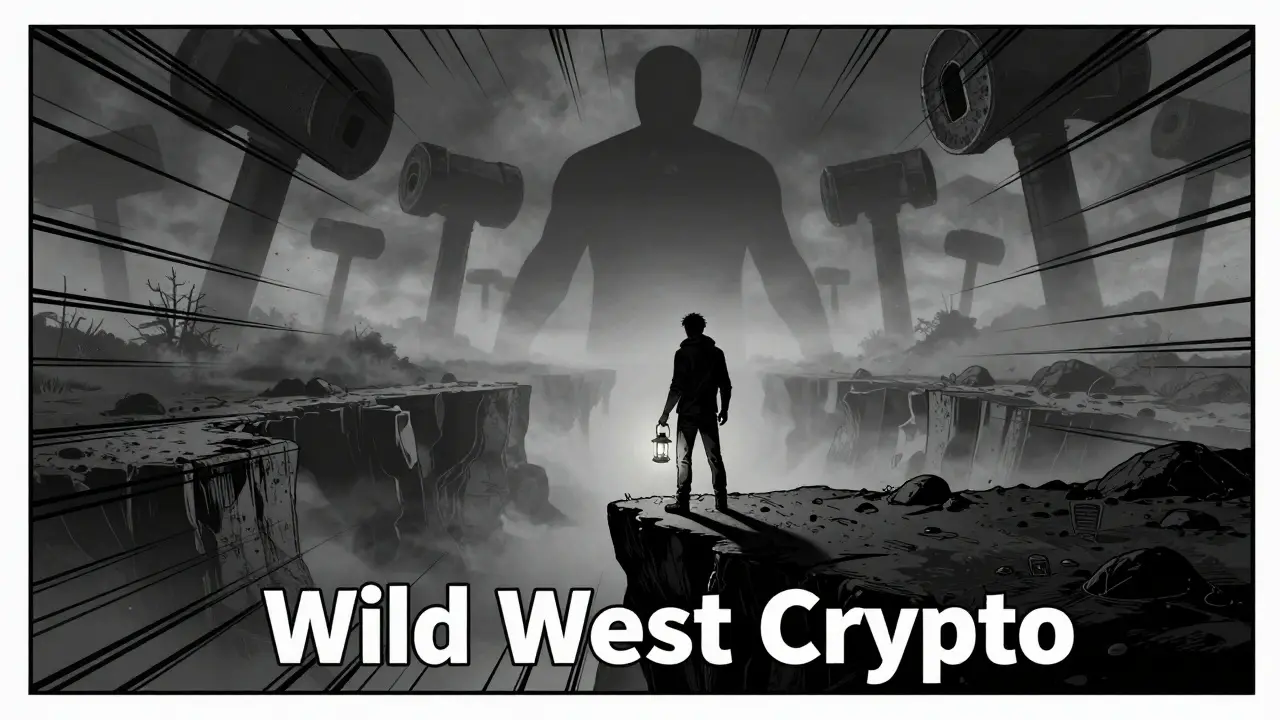
Leverj represents the wild west of crypto exchanges. It promises innovation by blending centralized convenience with decentralized principles, but it lacks the social proof, security transparency, and market depth to be recommended as a primary trading venue. The scarcity of user feedback and the volatile outlook for its L2 token suggest that the platform is still finding its footing.
For 95% of traders, the safer path is to use established exchanges for spot trading and perhaps explore dedicated DeFi protocols for decentralized activities. Leverj may grow into a viable option in the future, but as of mid-2026, it remains a high-risk, low-confidence play. Your capital is safer where the lights are bright, the reviews are plentiful, and the regulators are watching.
Is Leverj a safe exchange for beginners?
No. Due to limited user reviews, unclear security protocols, and lack of regulatory clarity, Leverj is not recommended for beginners. New users should stick to established platforms like Coinbase or Binance that offer robust support and insurance.
What is the Leverj Gluon (L2) token used for?
L2 is the native utility token of the Leverj ecosystem. It is intended to provide benefits such as reduced trading fees, participation in governance, and potential staking rewards. However, its value is highly speculative and volatile.
How does Leverj compare to Binance or Bybit?
Leverj is a niche player with minimal market penetration, whereas Binance and Bybit are global leaders with high liquidity, extensive security measures, and massive user bases. Leverj offers a hybrid model but lacks the proven track record and safety nets of major exchanges.
Can I trust Leverj with large amounts of money?
It is strongly advised against. The platform has very few user reviews and no public proof of reserves. Depositing large sums carries significant risk of loss due to potential liquidity issues, security vulnerabilities, or regulatory actions.
What is the current price prediction for L2 token?
Predictions vary widely. Some analysts see modest growth to $0.13-$0.15 in the short term, while others predict significant drops. Given the low trading volume and lack of consensus, any price movement should be viewed as highly speculative.
18 Responses
you are all so scared of a little risk lol. the whole point of crypto is to find the gems before the masses do. if you only trade on binance you are just a sheep following the herd. leverj might be small but that means less competition for early adopters.
i really feel for people who get burned by these shady sites its so stressful i know because my cousin lost money on a similar platform last year and it was terrible for her mental health she was crying every night about the lost savings
I hear you, Pauline. It’s absolutely heartbreaking when people lose their hard-earned money due to lack of transparency. That’s exactly why I always encourage everyone to double-check the security protocols before depositing anything. Your peace of mind is worth more than any potential high-yield promise from an unverified exchange. Stay safe out there!
It is indeed very important to consider all aspects of financial security before making any investment decisions as the market can be quite volatile and unpredictable at times which may lead to significant losses if one does not conduct proper due diligence regarding the regulatory status of the platform in question
this article is weak garbage written by someone who doesnt understand real trading. american investors should stick to us regulated exchanges only or go full defi with audited contracts. this hybrid nonsense is just a scam waiting to happen and anyone falling for it is stupid
Oh, please! Spare me the patriotic drivel. The rest of the world isn't waiting for your precious US regulations to catch up to reality. Leverj is exactly what the industry needs-a break from the bloated, over-regulated dinosaurs like Binance that treat users like ATMs. You're not protecting anyone; you're stifling innovation with your narrow-minded fear.
ugh another boring thread about safety 🙄 like wow ground breaking stuff here. i bet the author got paid to write this clickbait trash. can we talk about something interesting instead? maybe how much coffee i need to survive today ☕️💀 #bored #cryptoisdead
The silence surrounding Leverj is not an accident but a calculated maneuver by shadowy entities to obscure their true intentions. They want you to think it's just 'low adoption' but in reality, they are testing the waters for a massive data harvest operation that will compromise millions of wallets simultaneously while regulators sleep. Wake up.
Hey folks 👋 Just wanted to add some practical advice here. If you're curious about Leverj, never connect your main wallet. Use a burner wallet with zero funds first. Also, check Etherscan or BscScan for any unusual contract interactions. Safety first, always! 🛡️🔍 Let me know if you need help setting up a secure environment.
I appreciate the detailed breakdown provided in the post. It seems like a collaborative effort to keep everyone informed is really helpful for the community. I would love to see more discussions on how we can collectively verify new platforms without relying solely on marketing claims.
Actually, I think the contrarian view is completely wrong here. Everyone says 'stick to the big ones' but that's exactly why the big ones get complacent and sloppy. Leverj might be risky, sure, but isn't that where the alpha is? I'm pretty confident they'll pull through despite the lack of reviews.
Welcome to the discussion everyone! It's great to see such diverse perspectives coming together. Whether you're cautious or optimistic, let's ensure we're all learning from each other. Remember, knowledge is power in the crypto space, and sharing experiences helps us all grow as a community.
it is imperative that one understands the fundamental principles of financial prudence which dictate that investing in entities lacking substantial historical data and verified security audits is inherently foolish and demonstrates a profound ignorance of basic risk management strategies that have been established for centuries in traditional finance
lol u guys are so gullible. the token price is gonna crash to zero trust me. i saw a tweet somewhere that said the dev team is running away. dont buy l2 unless u want to donate to their vacation fund. typical scam playbook nothing new here
Sigh. Another day, another 'revolutionary' exchange that promises the moon but delivers dust. I suppose I should be grateful for the entertainment value of watching people argue about whether to jump off a cliff with or without a parachute. Truly, the human spirit is resilient in its capacity for self-deception.
the lack of transparency is concerning and it makes me wonder if the founders have any intention of being honest with their users. i prefer to keep my distance until there is concrete evidence of reliability rather than trusting vague promises of hybrid models
Let us maintain a respectful dialogue here. While skepticism is healthy, personal attacks undermine our collective ability to assess risks objectively. We should focus on verifying facts, such as audit reports and regulatory filings, rather than speculating on malicious intent without evidence. Thank you for keeping the conversation civil.
Stay focused on your goals. Don't let noise distract you. Do your own research. Trust your gut. Keep it simple.