
You’ve likely heard the buzz around Kim Exchange, a rising star in the decentralized finance (DeFi) space built on the Optimism Superchain. But there’s a catch. If you are searching for a specific "Kim v4" update, you might be chasing a ghost. As of mid-2026, Kim Exchange operates as a modular platform rather than releasing traditional versioned software updates like "v1" or "v4." Instead, it evolves through plugin integrations and protocol upgrades. This guide cuts through the noise to explain what Kim Exchange actually is, how its unique architecture works, and whether it deserves a spot in your trading portfolio.
What Exactly Is Kim Exchange?
To understand Kim, you have to look past the label of a standard exchange. Kim Exchange is a decentralized exchange (DEX) that functions as a primary liquidity hub within the Mode platform and the broader Optimism Superchain ecosystem. Unlike centralized exchanges like Binance or Coinbase, where a company holds your funds, Kim is non-custodial. You trade directly from your wallet.
The core innovation here is the move away from traditional order books. Most people think of trading as matching buyers and sellers at specific prices. Kim uses an Automated Market Maker (AMM) model with concentrated liquidity pools. This means liquidity providers can allocate their capital to specific price ranges, making the pool more efficient. For traders, this translates to lower slippage and tighter spreads, especially for large trades.
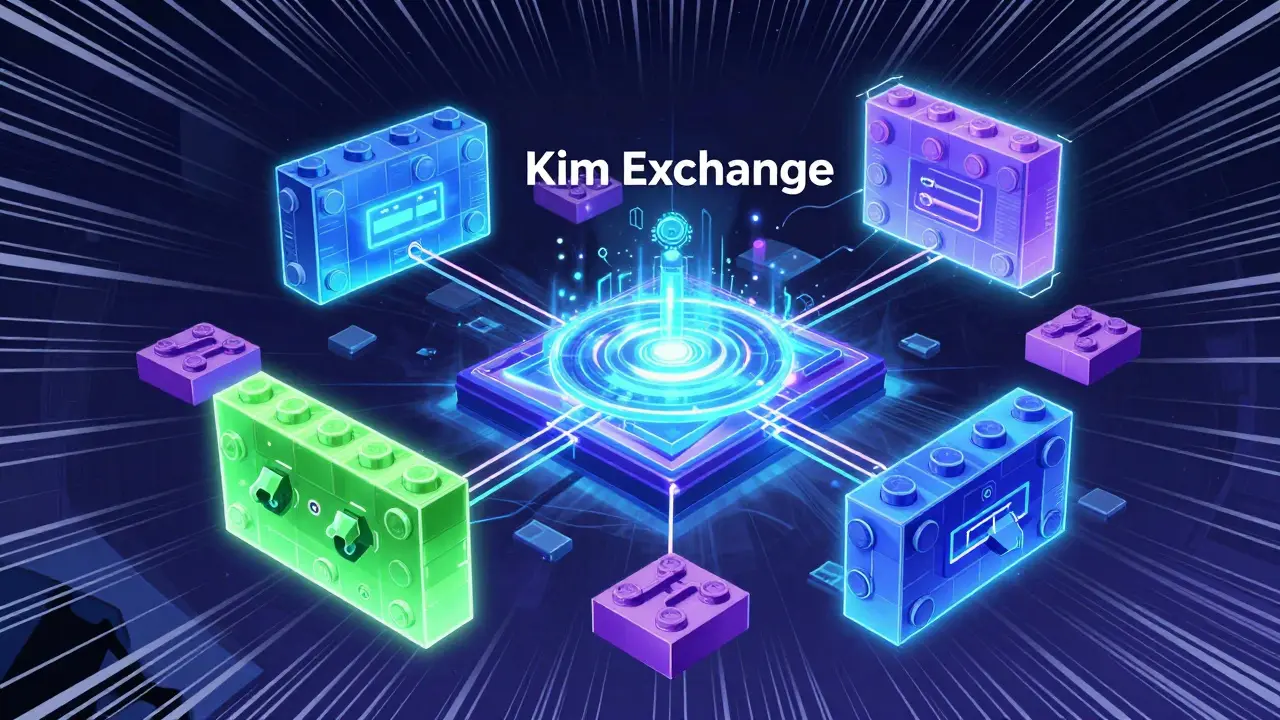
Think of it like this: In a traditional market, you wait for someone to match your price. On Kim, you trade against a smart contract algorithm that adjusts prices based on supply and demand. The "modular architecture" mentioned in technical docs simply means the platform is built like Lego bricks. You can snap on different features-called hooks-to customize how liquidity is managed without breaking the whole system.
The "v4" Confusion: Modular Upgrades vs. Version Numbers
Why did you search for "Kim v4"? It’s a common misconception. In the world of decentralized protocols, developers rarely release "versions" in the way smartphone apps do. There is no "Kim v3" or "Kim v4" app download. Instead, the protocol upgrades continuously via governance votes and smart contract deployments.
When users talk about new features, they are usually referring to:
- New Hooks: Customizable plugins that change how fees are distributed or how liquidity is concentrated.
- Governance Proposals: Community decisions that alter tokenomics or add new supported assets.
- Superchain Integration: Enhanced connectivity across the Optimism network layers.
If you see claims about "Kim v4," treat them with skepticism unless they come from the official Kim Discord or GitHub repository. The platform’s evolution is iterative, not episodic. This approach allows for faster innovation but requires users to stay updated on governance forums rather than waiting for a major "release day."
Security: How MPC Protects Your Assets
Security is the biggest concern for any DeFi user. Kim Exchange addresses this by employing Multi-Party Computation (MPC) technology. But what does that mean for you?
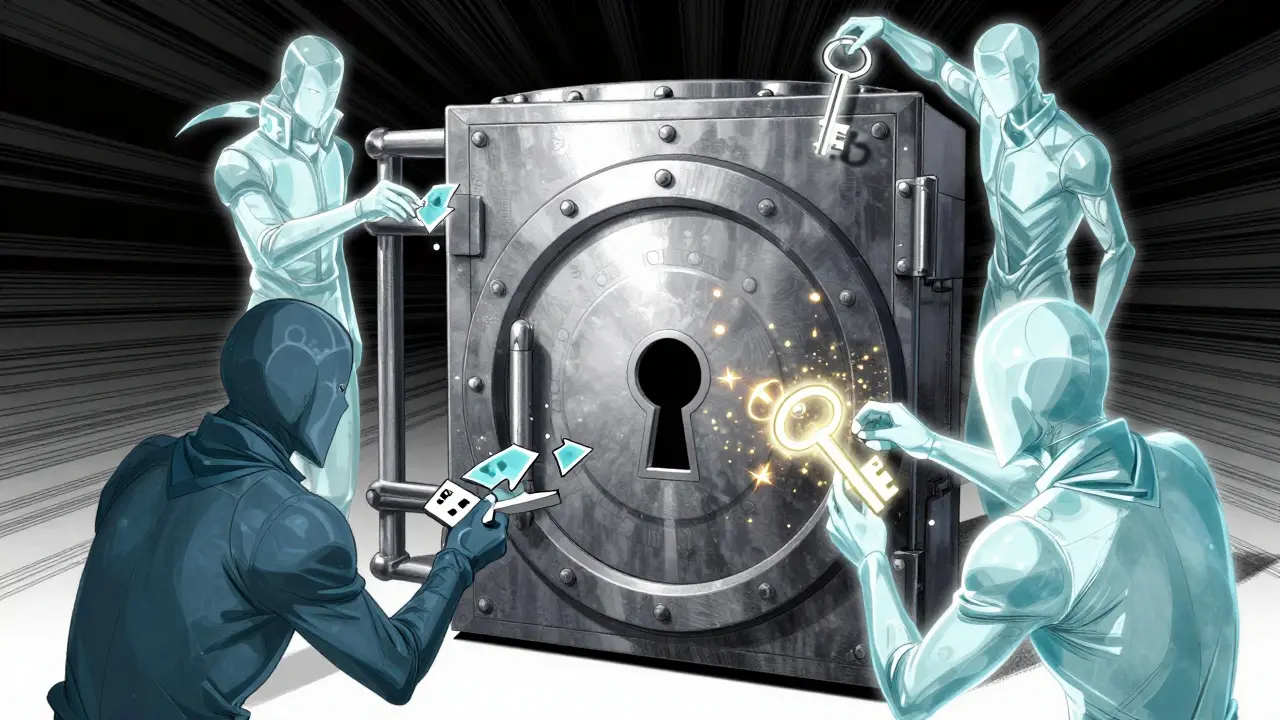
In traditional crypto wallets, you hold one private key. Lose it, and your funds are gone forever. Stolen, and hackers take everything. MPC splits the cryptographic keys into multiple parts, held by different parties or nodes. To sign a transaction, these parties must compute the signature together without ever revealing the full key to each other.
This creates a significant security layer. Even if one node is compromised, the attacker cannot access your funds because they lack the complete mathematical puzzle pieces. While no system is unhackable, MPC represents a shift from "trust me, I’m secure" to "mathematically verified security." However, remember that smart contract bugs remain a risk. Always check if recent audits have been conducted by reputable firms before depositing large sums.
Tokenomics: $KIM and $xKIM Explained
Kim’s economy runs on two distinct tokens, and understanding the difference is crucial for maximizing returns.
| Feature | $KIM Token | $xKIM Token |
|---|---|---|
| Type | Utility Token | Governance Token |
| Transferable? | Yes (Tradeable on markets) | No (Non-transferable) |
| Primary Use | Liquidity provision, staking base | Voting, allocating rewards to plugins |
| How to Get It | Buy on exchanges or earn via fees | Stake $KIM to receive $xKIM |
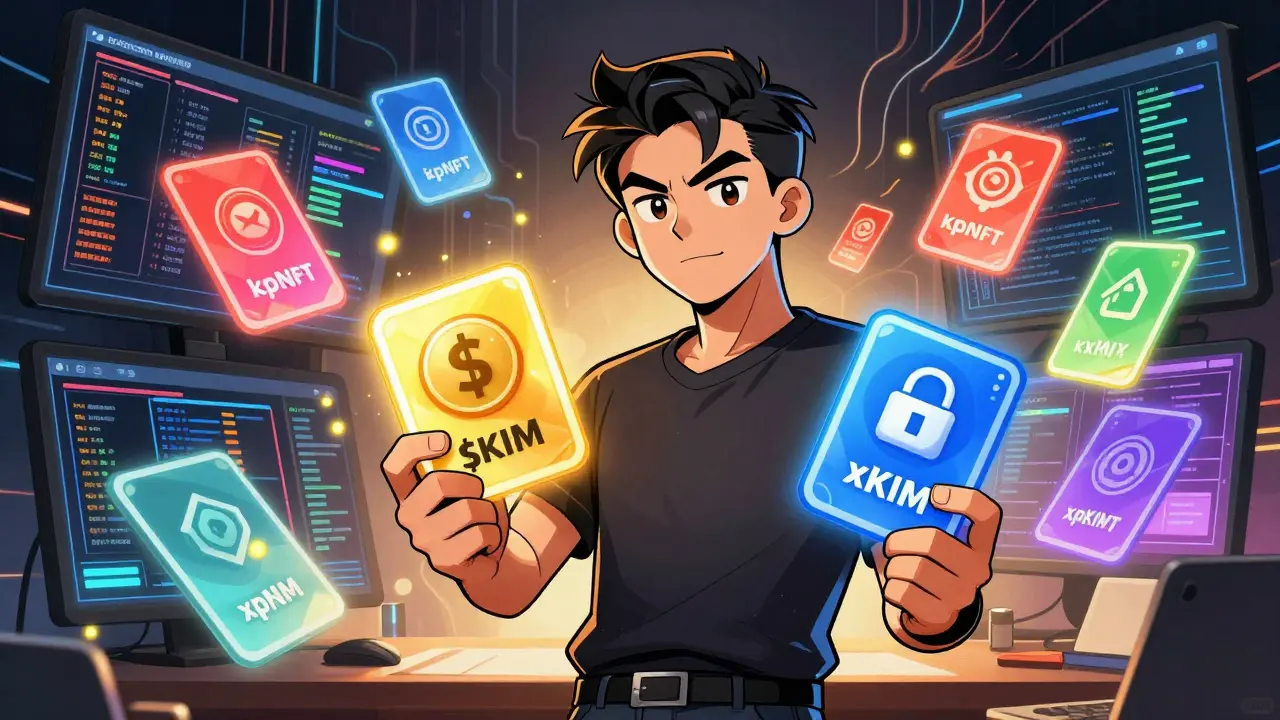
The $KIM token is your entry point. You use it to provide liquidity to pools. When you stake $KIM, you earn $xKIM. This is where it gets interesting. $xKIM is not just a reward; it’s a tool. Because it is non-transferable, it prevents speculative dumping. Instead, you use $xKIM to vote on which "plugins" (features or liquidity strategies) should receive higher fee distributions. By directing $xKIM to specific plugins, you effectively steer the protocol’s development and boost your own yields.
Yield Farming with kpNFTs
If you are looking for passive income, Kim introduces kpNFTs, which are yield-generating non-fungible tokens obtained through $xKIM staking. These aren’t just profile pictures; they are functional financial instruments.
Here’s how it works: When you hold kpNFTs, you unlock multipliers on your liquidity positions. The platform claims users can achieve up to 4x yield on their investments when using these NFTs strategically. This is achieved by concentrating liquidity in high-demand pairs and leveraging the governance power of $xKIM to direct more fees toward those specific pools.
However, higher yield always comes with higher risk. Impermanent loss-the potential loss incurred when providing liquidity compared to holding the assets-is amplified in concentrated liquidity models. If the price of the traded asset moves sharply outside your chosen range, your position may stop earning fees entirely until you rebalance. kpNFTs help offset this with higher rewards, but they don’t eliminate the underlying market risk.
User Experience and Accessibility
For beginners, the interface of Kim Exchange can feel dense. It is designed primarily for active DeFi participants who understand concepts like slippage tolerance, gas fees, and wallet connections. There is no simple "buy/sell" button like on centralized exchanges. You connect a Web3 wallet (such as MetaMask or Rabby), select a pool, and execute swaps or deposits manually.
Mobile accessibility is handled through web browsers rather than a dedicated native app. This ensures compatibility across iOS and Android devices without requiring app store downloads, but it also means you rely on your browser’s stability and speed. Ensure you are using a mobile wallet that supports the Optimism network seamlessly to avoid failed transactions.
Risks and Considerations Before Trading
Before you commit capital, consider these critical factors:
- Smart Contract Risk: Despite MPC security, the underlying code governing the AMM and NFTs could contain vulnerabilities. Always verify recent audit reports from independent security firms.
- Liquidity Depth: While Kim is a major hub on Optimism, it may not have the same depth as Uniswap or SushiSwap for obscure tokens. Trading illiquid pairs can result in significant slippage.
- Regulatory Uncertainty: DeFi platforms operate in a gray area globally. Regulations regarding governance tokens and yield farming are evolving rapidly in 2026. Stay informed about legal developments in your jurisdiction.
- Complexity Barrier: Managing $KIM, $xKIM, and kpNFTs simultaneously requires active participation. Set-and-forget strategies work better on simpler platforms.
Final Verdict: Is Kim Exchange Right for You?
Kim Exchange is not a beginner-friendly gateway to crypto. It is a sophisticated tool for experienced DeFi users who want to leverage the speed and low costs of the Optimism Superchain. If you understand concentrated liquidity, are comfortable managing multiple token types, and want to participate in protocol governance, Kim offers compelling opportunities for yield optimization.
However, if you are looking for a simple, safe place to buy Bitcoin or Ethereum with a few clicks, stick to established centralized exchanges. Kim shines for those who view themselves as active participants in the financial infrastructure, not just consumers. Start small, learn the mechanics of the hooks and plugins, and never invest more than you can afford to lose.
Is Kim Exchange a centralized or decentralized exchange?
Kim Exchange is a decentralized exchange (DEX). It operates without a central authority holding your funds, using smart contracts on the Optimism Superchain to facilitate trades.
What does "Kim v4" refer to?
There is no official "Kim v4" product. The term likely stems from confusion with modular updates or plugin releases. Kim evolves through continuous governance-driven upgrades rather than numbered versions.
How do I start using Kim Exchange?
You need a Web3 wallet compatible with the Optimism network, such as MetaMask. Fund your wallet with ETH or OP tokens, visit the Kim website, connect your wallet, and you can begin swapping or providing liquidity.
Are kpNFTs safe to use for yield farming?
kpNFTs enhance yields but do not eliminate market risks like impermanent loss. Their safety depends on the robustness of the underlying smart contracts and the volatility of the trading pairs you choose.
Can I transfer my $xKIM tokens to another person?
No, $xKIM tokens are non-transferable. They are designed solely for governance voting and yield allocation within the Kim ecosystem, preventing speculative trading of governance power.
15 Responses
Great breakdown of the modular architecture! 🧱 It’s wild how most people still think in terms of app versions when DeFi is all about continuous protocol upgrades. The explanation of hooks really clarifies why there’s no "v4" button to click. Thanks for cutting through the noise! 🙌
You’re missing the point entirely. Kim isn’t just a DEX, it’s a liquidity layer that redefines capital efficiency on Optimism. If you’re looking for version numbers, you’re thinking like a Web2 user. The real alpha is in the kpNFT multipliers and how $xKIM directs fee flow. Most retail traders don’t understand that governance power is actually yield optimization here.
typo alert but who cares. this whole v4 thing is a scam anyway. they just change the code and call it an upgrade so u dont notice the rug pull waiting to happen. smart contracts are buggy trash and MPC is just marketing fluff to make u feel safe while they steal ur keys. stay away from kim unless u want to lose everything.
The moral hazard here is staggering. You promote yield farming without emphasizing the catastrophic risk of impermanent loss. These platforms prey on uninformed users who chase APYs without understanding the underlying mechanics. It is unethical to present this as a viable investment strategy for anyone other than institutional hedgers. The regulatory gray area is not a feature; it is a liability waiting to explode.
I appreciate the detailed explanation of the tokenomics. It can be quite overwhelming for newcomers to grasp the difference between $KIM and $xKIM, especially with the non-transferable aspect. I’ve been slowly learning how to use the hooks, and it does seem more efficient once you get the hang of it. Would love to see more beginner-friendly guides on rebalancing positions though.
Oh, look at you, trying to explain DeFi to the masses! 🎓 Let me guess, you think you’re the only one who understands concentrated liquidity? Spoiler alert: you’re not. But hey, keep preaching about gas fees and slippage tolerance. Maybe one day the rest of us will catch up to your elite level of confusion. 😉
This article is absolute garbage. You clearly don’t know what you’re talking about if you’re suggesting Kim is secure because of MPC. I’ve seen better security audits on shitcoins. Stop wasting everyone’s time with this mediocre overview. Real traders don’t need hand-holding explanations about basic AMM mechanics. Get a life.
it is quite amusing how the masses continue to fall for these so called innovations when in reality the fundamental principles of value exchange remain unchanged by these superficial technological wrappers one must consider the historical context of financial instruments before blindly adopting new protocols which often lack the rigorous testing required for true stability furthermore the reliance on governance tokens introduces a democratic element that is fundamentally flawed in its execution leading to inefficiencies that plague the entire ecosystem
we are all just cogs in the machine really aren't we chasing yields that vanish like smoke i find it fascinating how we convince ourselves that holding a non transferable token gives us power when in truth we are merely directing the flow of capital for those who built the system it's a beautiful tragedy honestly
lol another long boring post about dexes. yawn. i just want to buy btc and forget about it. why do these de fi nerds have to make everything so complicated with their nfts and governance votes. sounds like a lot of work for very little reward. probably gonna scam u eventually anyway. typical.
brother listen to me closely. this is the future of finance. yes its complex but that is where the opportunity lies. if u can master the kpNFTs and leverage the xKIM voting power u will outperform every centralized exchange trader out there. dont let the fear stop u. take control of ur financial destiny now. the optimisim superchain is the way forward and kim is leading the charge. believe in yourself and the tech.
Drama much? Everyone is acting like this is rocket science. It’s just code. And bad code at that. The whole concept of "modular upgrades" is just a fancy way of saying they can patch holes without telling you until it’s too late. I’m watching this space with extreme skepticism because every time I see "governance," I see a roadmap to disaster. Typical DeFi hype cycle.
i think the part about mpc is really interesting even tho i dont fully understand the math behind it. it feels safer than just holding one private key. maybe ill try putting a small amount in to test the waters. the interface looks a bit scary but i guess thats just part of the de fi experience right?
I disagree with the notion that Kim is "rising star." It’s overhyped. The liquidity depth isn’t there compared to Uniswap, and the complexity barrier is intentionally high to keep casual users out. I’d rather stick to established protocols where the risks are known quantities. This "modular" talk is just buzzword bingo for developers trying to justify underperformance.
Hello everyone! 👋 I wanted to add that community support is crucial here. If you are new to Optimism, please join the Discord channels linked in the official docs. We have mentors who can help you navigate the wallet connections and pool selections. Remember, we are all learning together, and sharing knowledge makes the ecosystem stronger for everyone. Let’s build a supportive environment! 🌟