

You’ve probably seen the headlines or social media posts promising free Ally Direct Token (DRCT) airdrops. The promise is always the same: sign up, complete simple tasks, and get rich quick with a new cryptocurrency. But before you connect your wallet or share personal details, you need to stop and look at the actual data. Right now, there is zero evidence that a legitimate DRCT airdrop exists. In fact, the signs point toward a dormant project or a potential scam designed to steal your information.
As of July 2026, the crypto landscape is crowded with noise. Distinguishing between a genuine opportunity and a phishing attempt is critical. This guide breaks down exactly what Ally Direct Token claims to be, why its market status is alarming, and how you can protect yourself from fake airdrop schemes.
The Reality Check: No Active DRCT Airdrop Exists
Let’s cut through the hype immediately. There is no verifiable announcement from any major exchange, official blockchain explorer, or reputable crypto news outlet regarding an active Ally Direct Token airdrop. If someone is telling you they have a "secret link" or an "exclusive invite" for a DRCT drop, they are likely lying.
Legitimate airdrops in 2026 require transparency. Projects like those on the TON blockchain or Ethereum Layer 2 networks publish clear rules, snapshot dates, and smart contract addresses. DRCT has none of this. The absence of official communication is the first red flag. When a project goes silent while rumors of free tokens swirl, it usually means one of two things: the project has failed, or bad actors are using the name to trick users.
Don’t fall for the FOMO (Fear Of Missing Out). If an airdrop isn’t listed on trusted aggregation sites or announced by the project’s verified Twitter/X account, assume it doesn’t exist.
What Is Ally Direct Token (DRCT)?
To understand why this token is suspicious, we first need to understand what it was supposed to be. Ally Direct pitched itself as a blockchain-based software-as-a-service platform. The goal was noble: remove middlemen like DoorDash or Uber Eats to help merchants keep more profit, drivers earn more, and customers pay less.
The theory went like this:
- Merchants would use branded apps to retain customer relationships.
- Drivers would earn reportedly 42% more than on traditional platforms.
- Customers would save around 30% on orders.
The DRCT token was meant to facilitate value transfer, escrow services, and dispute resolution within this ecosystem. However, a beautiful pitch deck does not equal a working product. For a token to hold value, the underlying service must have users, revenue, and activity. Currently, Ally Direct appears to lack all three.
Market Data: The Zero-Volume Problem
Numbers don’t lie, even when marketers do. Let’s look at the hard data for DRCT as of mid-2026.
| Metric | Status | Implication |
|---|---|---|
| Trading Price | $0.00 USD | No market value; cannot be sold for real money. |
| 24-Hour Volume | $0.00 USD | No liquidity; no one is buying or selling. |
| Exchange Listing | Not Listed (Binance) | Absent from major regulated exchanges. |
| Total Supply | 1.2 Billion | High supply with no demand equals inflation risk. |
A trading volume of $0 is catastrophic for a cryptocurrency. It means the token is illiquid. Even if you somehow received thousands of DRCT tokens in a fake airdrop, you would have no way to convert them into Bitcoin, Ethereum, or fiat currency. You would simply own digital paper.
Binance, one of the world’s largest exchanges, explicitly lists DRCT as "Not Listed." While Binance has pages describing how to buy various assets, the absence of actual trading pairs for DRCT confirms that institutional players have no interest in this asset.
Why Fake Airdrops Are Dangerous
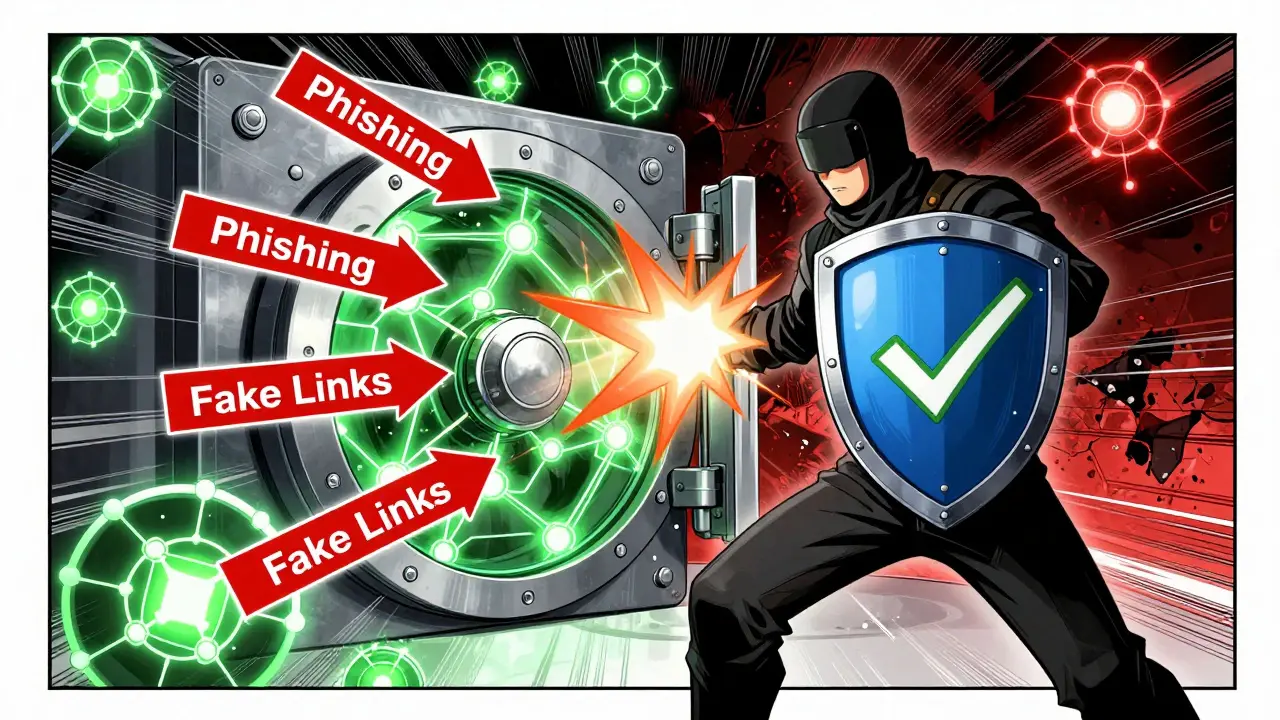
If the token is worthless, why are people promoting it? The answer is malicious intent. Scammers often create fake websites that mimic legitimate projects. They might ask you to:
- Connect your wallet: This is the most dangerous step. Malicious contracts can drain your entire balance of ETH, SOL, or other assets the moment you click "Approve."
- Complete social tasks: Following accounts or joining Telegram groups helps scammers build influence for future scams.
- Pay a "gas fee": Legitimate airdrops never ask you to send money to receive money. If you’re asked to pay $5 in ETH to claim $500 in DRCT, it’s a scam.
In 2026, sophisticated phishing kits can replicate the look of official sites perfectly. Always verify URLs. If the domain looks slightly off (e.g., ally-direct-token-airdrop.com instead of allydirect.com), close the tab immediately.
Confusion with ADT and Other Tokens
Another layer of confusion surrounds the ticker symbol. Some older sources refer to "Ally Direct Token" as ADT rather than DRCT. This inconsistency suggests poor governance or rebranding attempts without proper community communication.
ADT descriptions often highlight generic crypto features like "privacy" and "decentralization" without technical proof. Compare this to established privacy coins like Monero (XMR) or Zcash (ZEC), which have open-source codebases and rigorous security audits. DRCT offers neither. The lack of clarity on whether the token is DRCT or ADT makes due diligence nearly impossible for average users.
How to Spot a Legitimate Airdrop in 2026
Not all airdrops are scams. Projects like EigenLayer and various Solana ecosystems have rewarded users fairly. Here is how to tell the difference between a real opportunity and a DRCT-style trap:
- Verify the Smart Contract: Real projects publish their contract addresses on Etherscan, Solscan, or BscScan. You can check if the contract is verified and who holds the majority of tokens. If the team holds 90% of the supply, run away.
- Check Community Activity: Look at the Discord or Telegram. Are developers answering questions? Or is it just bots spamming "Buy Now" messages? Silent communities are dead projects.
- Look for Partnerships: Legitimate projects partner with known entities. If a project claims to work with Visa or Microsoft but has no press release from those companies, it’s false advertising.
- Use a Burner Wallet: Never connect your main holding wallet to unknown dApps. Use a separate wallet with minimal funds for testing new protocols.
Conclusion: Stay Safe and Skeptical
The Ally Direct Token (DRCT) airdrop is not a golden ticket; it is a warning sign. With zero trading volume, no exchange listings, and no official announcements, engaging with DRCT-related promotions poses a significant security risk. Your time and capital are better spent researching projects with transparent roadmaps, active development, and proven liquidity.
In the crypto world, if something sounds too good to be true, it almost always is. Protect your private keys, ignore unsolicited DMs, and only interact with protocols you have thoroughly vetted.
Is there an official Ally Direct Token (DRCT) airdrop right now?
No. As of July 2026, there is no verified or official airdrop for DRCT. Any website or person claiming otherwise is likely running a scam.
Why is the price of DRCT $0?
The price is $0 because there is no trading volume. No one is buying or selling the token on major exchanges, indicating it has no market liquidity or value.
Can I buy DRCT on Binance?
No. Binance lists DRCT as "Not Listed," meaning you cannot trade it on their platform. Be wary of third-party sites claiming to offer it.
What should I do if I already connected my wallet to a DRCT site?
Immediately revoke permissions on tools like Revoke.cash. Move any remaining funds to a new, secure wallet. Monitor your transaction history for unauthorized approvals.
Is Ally Direct Token a scam?
While the original project had a business plan, the current state of the token-zero volume, no listings, and fake airdrop rumors-makes it highly risky and potentially fraudulent. Treat it as unsafe until proven otherwise.
12 Responses
Oh, absolutely darling. 🙄 The sheer audacity of thinking a token with zero liquidity is anything but a dumpster fire for retail investors is just... exhausting to witness. It’s not even a question anymore, it’s a tragedy of human gullibility wrapped in blockchain jargon. I suppose we should all just lower our standards and accept digital paper as currency? How quaint. 💅
One must consider the deeper philosophical implications of value itself when looking at this situation because if money is merely a shared belief system then what happens when that belief is placed in something that has no tangible utility or community support behind it? It seems that the market is trying to tell us something profound about trust and how easily it can be manipulated by those who understand the mechanics of hope better than they understand the mechanics of economics which leads one to wonder if we are truly learning from past mistakes or if we are doomed to repeat them endlessly in an infinite loop of greed and disappointment.
Actually, you’re missing the nuance here because while the volume is zero right now, that doesn’t necessarily mean the project is dead; it could just be in a stealth phase where the team is working on partnerships without publicizing them to avoid front-running, and historically many successful projects had periods of silence before their launch so assuming it’s a scam based solely on current metrics is intellectually lazy and ignores the complex lifecycle of crypto development cycles which often involve long dormancy periods followed by sudden explosive growth if the fundamentals are sound underneath the surface noise.
I think it is really important that we all stay calm and look at the facts together! It is okay to feel frustrated, but let us remember that safety comes first for everyone involved. We can learn from this without being harsh on each other. Please take care of your wallets, my friends. ❤️
The entire premise of this discussion is flawed because you are analyzing the symptom rather than the disease. The lack of volume is irrelevant compared to the structural incompetence of the whitepaper which clearly demonstrates a fundamental misunderstanding of tokenomics by developers who likely never shipped a single line of code in their lives. It is pathetic how people cling to these 'opportunities' when the data screams failure. Wake up.
its honestly so sad how ppl fall for this stuff every single time. like do u guys have no moral compass or smth? connecting ur wallet to random sites is just asking for trouble and its not even smart. we should be protecting each other not enabling these scammers. stop being greedy ok?
I totally get why people might be confused!! It’s super easy to mix up real projects with fake ones these days. But hey, every mistake is a chance to grow stronger and smarter! You’ve got this! Just keep your head up and double-check everything before you click. Sending good vibes your way! ✨🌈
I appreciate the detailed breakdown provided in the original post. It is crucial to verify sources before engaging with any financial instrument. I agree that caution is the best policy in this instance. Thank you for sharing this information with the community.
Wow! This is such a wild ride we are on! 🎢 It’s crazy how fast things change in crypto, isn’t it? One minute it’s hype, the next it’s silence. Let’s just keep riding the wave and stay safe out there! 🌊
Look, I don’t care about your feelings, but if you’re still holding onto DRCT, you’re part of the problem. 📉 The data is clear, the contract is unverified, and the team is ghosting. Stop making excuses for bad actors and start taking responsibility for your own losses. It’s not complicated. 🤷♂️
In consideration of the aforementioned points regarding the absence of verifiable exchange listings and the complete lack of trading volume it becomes evident that the asset in question fails to meet the basic criteria for legitimacy within the contemporary cryptocurrency ecosystem therefore it is advisable for all participants to exercise extreme diligence and refrain from interacting with any platforms claiming to offer distribution of said tokens as the risk profile is excessively high and the potential for financial loss is virtually guaranteed given the current market conditions.
Yeah whatever. If it was a scam, they would have pulled it off better. There’s always more to the story than what’s printed in some blog post. People need to stop panicking over nothing and do their own research instead of listening to fear-mongers. 🤷♂️