

When a country bans cryptocurrency, it doesn’t mean your money disappears. It means you have to work harder to keep control of it. In places like China, Algeria, Bangladesh, and Egypt, owning or trading crypto is illegal. Banks block transactions. Websites get shut down. Police can raid your home. But DEX access from banned crypto jurisdictions is still possible - and growing. Not because the laws changed, but because the technology outpaced them.
Why DEXs Are the Only Option Left
Centralized exchanges like Binance or Coinbase require ID. They follow local laws. If you live in a banned country, they’ll freeze your account or report you. DEXs don’t. They run on blockchains. No company owns them. No one can shut them down. You trade directly from your wallet. No KYC. No middleman. Just smart contracts doing the work. That’s why, even in China - where the government says crypto trading is a crime - over 14 million people still use DEXs. Not because they’re reckless. Because they have no other choice. Their savings are trapped in a currency losing value. Their kids’ education costs are rising. They need a way to protect what they’ve earned.How DEXs Get Around Internet Bans
Governments don’t just block websites. They block IP addresses. They scan traffic. They use AI to detect encrypted crypto transactions. In China, the Great Firewall now flags 82% of DEX traffic with machine learning. So users adapted. Most people use a VPN. NordVPN and ExpressVPN work best - they’re fast, reliable, and have servers that change IPs often. But even that’s not enough. Many DEX websites are now blocked outright. So users skip the website entirely. They go straight to the contract address. Instead of typing uniswap.org, they copy a 0x address: 0x1f9840a85d5af5bf1d1762f925bdaddc4201f984. They paste it into MetaMask. The wallet connects directly to the blockchain. No browser, no domain, no filter to block. Some use Ethereum Name Service (ENS) - like uniswap.eth - which is harder to censor because it’s stored on-chain. Others use Telegram bots that send updated contract links every hour. In Algeria, users rely on a network called Algeria DEX Mesh - a peer-to-peer wireless system that skips the internet entirely. It runs on Bluetooth and Wi-Fi Direct between phones in the same city.Wallets Are Your Lifeline
Your wallet isn’t just a tool. It’s your bank, your ID, and your fortress. In banned countries, you can’t trust software wallets alone. They’re easier to hack. So 58% of users in China use hardware wallets like Ledger Nano X or Trezor. They store keys offline. Even if your phone is infected, your crypto stays safe. MetaMask and Trust Wallet are the most common. But they need extra layers. Users install privacy extensions like Brave Browser with Tor. Some even run wallets on old, disconnected devices - air-gapped signing. You create the transaction on a phone, then move it to a laptop that’s never been online. You sign it there. Then you send it back. It’s slow. It’s annoying. But it works. And in places where the government can seize your assets, that’s the only way to be sure they’re really yours.
Getting Started: The Real Cost
You can’t just sign up and start trading. First, you need crypto to pay for gas fees. But in a banned country, you can’t buy it on an exchange. So you turn to P2P networks. In Bangladesh, people use WhatsApp groups to trade USDT for cash. In Algeria, Telegram bots connect buyers and sellers. You meet in a public place. You hand over local currency. They send crypto to your wallet. The average first purchase? $187. That’s just enough to cover failed transactions, which are common. The learning curve is brutal. Most users spend 93 hours before making their first successful DEX trade. That’s three weeks of nights and weekends. You have to learn:- How to read gas fees under network lag
- What a nonce is and why it keeps failing
- How to spot fake DEX sites (31% of Algerian users got scammed in 2024)
- How to check contract addresses against verified lists
What Goes Wrong - And How to Avoid It
The biggest risk isn’t the government. It’s the scammers. Fake DEX sites look identical to the real ones. They copy the logo. They use the same colors. They even have the same URL structure. But they’re traps. You connect your wallet. You approve a transaction. And your entire balance vanishes. In China, 22% of transactions fail because the Great Firewall blocks the request mid-process. In Egypt, religious leaders preach that crypto is haram. That creates social pressure. People get reported by neighbors. In Bangladesh, some users hide transaction data inside photos using steganography - but 38% say it’s too complex to use reliably. Liquidity is another problem. You can’t swap local currency for crypto directly. You need to go through multiple steps: USDT → ETH → BTC → local stablecoin. Each hop costs money. Each one adds risk. Slippage is 17% higher in banned jurisdictions. You might think you’re getting 1 ETH for $3,000. You end up with 0.92 ETH because the pool is thin. And then there’s detection. Even with a VPN, TRM Labs found that 31% of transactions from banned countries can still be traced. Your IP leaks. Your transaction pattern looks like someone in Algiers. Your wallet gets flagged. Banks freeze your accounts. Employers fire you.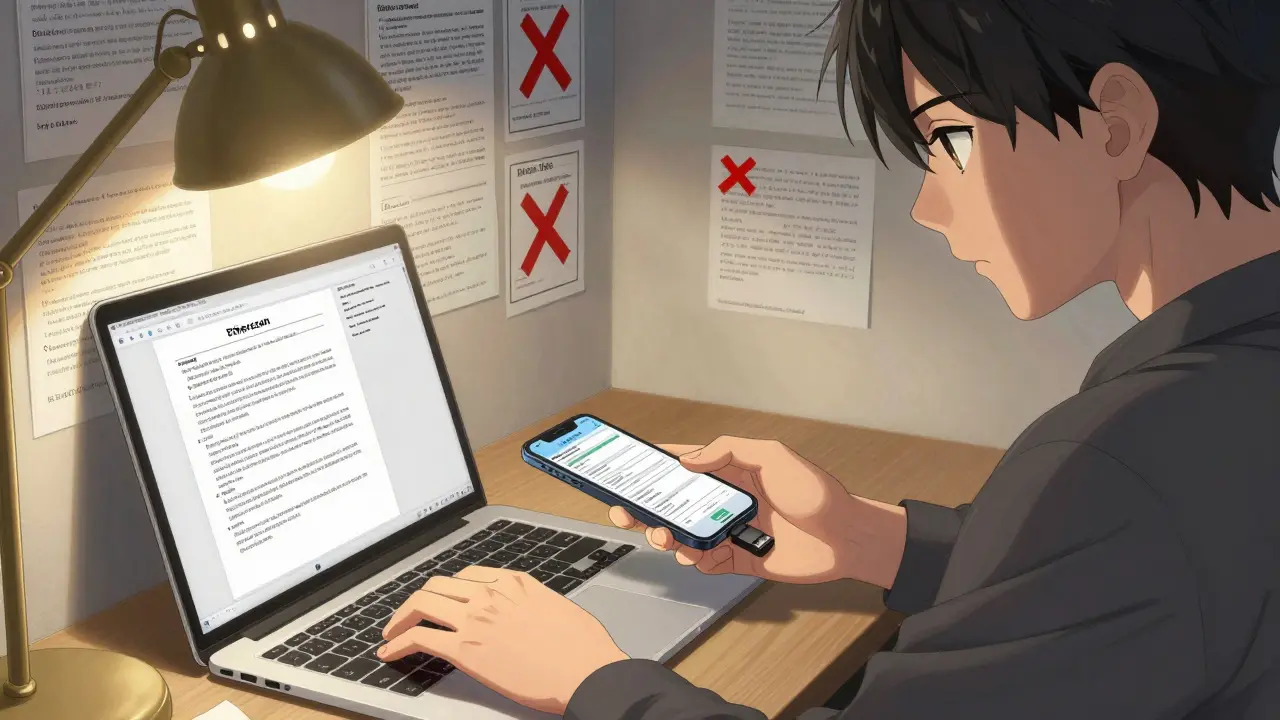
Who’s Really Using DEXs - And Why
It’s not just speculators. It’s people with real needs. In Nigeria, 89% of users say DEXs are their only way to send money home. Traditional banks won’t process crypto transfers. But DEXs let them send USDT to family in Ghana or the UK. No fees. No delays. No permission. In Venezuela, where inflation hit 200% in 2024, people use DEXs to buy groceries. They convert crypto to USDT. Then they use it to pay local vendors who accept it. It’s not perfect. But it’s better than watching your salary lose half its value in a week. Businesses are using DEXs too. In Bangladesh, 38% of textile exporters now use DEXs to settle payments in EUR or USD. They avoid banks that charge 8% fees and take 10 days. With DEXs, they get paid in hours. No paperwork. No approval.The Future: Can Bans Last?
Governments are spending billions to stop this. China spends $2.3 billion a year on crypto surveillance. Yet DEX usage there grew 19% in 2024. Algeria criminalized crypto in 2025 - but its crypto economy grew 63% that year. The truth? You can’t ban a protocol. You can’t ban a blockchain. You can only make it harder. Experts agree: complete bans will collapse by 2027. Why? Because they hurt the economy more than they help. Central banks are building CBDCs - digital currencies controlled by the state. But those need the same infrastructure as DEXs. You can’t block one without blocking the other. Some countries are already shifting. The UAE created the world’s first DeFi risk framework. Singapore is testing a compliance layer that lets DEXs prove they’re not being used for crime - without revealing user identities. The endgame isn’t more bans. It’s regulation that actually works. But until then, DEXs remain the last free financial tool for millions.What You Need to Start (Minimal Setup)
If you’re in a banned country and want to try:- Get a reliable VPN (NordVPN or ExpressVPN)
- Buy a hardware wallet (Ledger Nano X or Trezor)
- Install MetaMask on your phone, but never connect it to the internet directly
- Join a trusted Telegram group that shares verified DEX contract addresses
- Start with $200 in P2P USDT - enough to cover gas and mistakes
- Always double-check contract addresses before approving any transaction
Can I get arrested for using a DEX in a banned country?
Yes, technically. Countries like Algeria, China, and Bangladesh have laws that criminalize crypto trading. Penalties range from fines to prison. But enforcement is inconsistent. Most arrests happen when someone is caught transferring large amounts or using public platforms. Users who use hardware wallets, VPNs, and P2P networks rarely get caught - not because it’s legal, but because it’s nearly impossible to track.
Is it safe to use a VPN for DEX access?
VPNs are the most common tool, but they’re not foolproof. Free VPNs often log your data or leak your IP. Stick to paid services like NordVPN or ExpressVPN - they’ve been tested in banned regions and have strong no-log policies. Still, your transaction patterns can be flagged. Combine your VPN with a hardware wallet and direct contract access to reduce risk.
Why do DEX transactions fail so often in banned countries?
Three main reasons: network latency from VPN routing, government firewalls blocking transaction data, and low liquidity in local currency pairs. Each step adds delay. If your gas fee is too low, the transaction gets stuck. If the network is congested, it times out. That’s why users need at least $200 to cover multiple failed attempts before succeeding.
How do I know a DEX website is real and not a scam?
Never trust a website you find through Google or social media. Instead, get the contract address from trusted sources: verified Telegram groups, the BannedCrypto subreddit, or community-maintained lists. Always verify the address on Etherscan or Polygonscan. If the contract has no transaction history or was created recently, don’t connect your wallet.
Can I use DEXs without a smartphone?
Yes, but it’s harder. You need a computer with a hardware wallet connected via USB. You’ll need to manually sign transactions on the device. Most users rely on smartphones because they’re easier to carry, use with Telegram, and connect to mobile wallets. But desktop users with hardware wallets and offline signing can operate completely without a phone.
Will governments ever stop DEX access completely?
Not if history is any guide. Governments banned file-sharing, torrenting, and anonymous email - but those tools evolved. DEXs run on open-source code, distributed across thousands of nodes worldwide. You can’t shut down the internet to stop them. The only real solution is regulation that adapts - not bans that ignore reality. Until then, users will keep finding ways.
15 Responses
Okay but imagine being in Nigeria and using this to send money to your mom instead of paying $50 in fees for a wire transfer. This isn’t crypto bro stuff-it’s survival. I’m so proud of these people just trying to keep their families afloat.
Also, the Algeria DEX Mesh? That’s next-level ingenuity. We need more of this, not less.
The philosophical underpinning here is profound: freedom isn’t granted-it’s engineered. DEXs aren’t just financial tools; they’re acts of civil disobedience coded in Solidity.
When a state bans a protocol, it reveals its fear-not its power. The blockchain doesn’t care about borders. It only cares about consensus.
lol 14 million people in china using dex? more like 14 million people trying not to get arrested while their vpn keeps dropping. also 31% scam rate in algeria? that’s not a risk, that’s a casino.
and no one talks about how most of these ‘users’ are just flipping usdt to pay for weed and iphone 15s.
the way people are hacking finance together with bluetooth and old phones and telegram bots… it’s beautiful. like building a rocket out of duct tape and hope.
i cried when i read about the algeria mesh. no one’s teaching this in business school. this is real-world magic.
This is a direct threat to national sovereignty. The United States does not tolerate foreign actors circumventing monetary policy through unregulated, pseudonymous systems. These individuals are not heroes-they are lawbreakers enabling illicit capital flight.
Any government that permits this erosion of financial control is failing its citizens.
Actually, the data is misleading. The 19% growth in China is statistically insignificant when compared to the 92% decline in overall crypto adoption due to regulatory pressure. Also, the ‘DEX access’ figures conflate active users with transient connections.
Furthermore, the claim that ‘governments cannot ban a protocol’ is a fallacy rooted in technolibertarian fantasy. The Chinese state controls the entire TCP/IP stack-what you call ‘unblockable’ is merely delayed.
if you’re reading this and you’re in a banned country-keep going. it’s messy, it’s slow, it’s scary-but you’re not alone.
the first time i helped my cousin in nigeria send money to his sister via usdt? that was the first time i felt like tech actually did something good.
Everyone’s acting like this is some Robin Hood operation. Newsflash: most of these users are laundering drug money. The ‘Algeria DEX Mesh’? Sounds like a front for smuggling. And don’t get me started on the steganography nonsense.
Stop romanticizing criminal behavior.
So let me get this straight-you’re telling me people are risking prison to avoid bank fees… and we’re supposed to clap? Next you’ll tell me stealing bread is noble because the supermarket is overpriced.
just saw a guy in egypt use a qr code hidden in a photo of his cat to send usdt to his cousin… i’m not even mad. i’m impressed 😍
humanity is wild and i love it.
The architectural resilience of DEXs stems from their decentralized consensus model, which renders centralized censorship vectors asymptotically ineffective.
Furthermore, the liquidity fragmentation observed in sanctioned jurisdictions introduces non-linear slippage dynamics that deviate significantly from traditional order-book paradigms.
Additionally, the adoption of air-gapped signing protocols represents a cryptographic mitigation strategy against endpoint compromise-critical in high-surveillance environments.
in nigeria, we don’t talk about dex like it’s some rebellion. we just use it. like water. if your salary evaporates by noon, you find a way.
the government? they don’t care as long as the oil keeps flowing. we’re just the quiet ones keeping the lights on.
lol everyone thinks this is cool but 90% of these users are just rug-pull victims waiting to happen. also why are we praising people who use bluetooth to trade crypto? that’s not innovation, that’s desperation.
reading this made me think about my aunt in Johannesburg who uses crypto to buy medicine. she doesn’t know what a smart contract is-but she knows it keeps her alive.
we’re not talking about tech. we’re talking about dignity.
thank you for writing this 🌱
Let me break this down for you because this is the most important thing you’ll read this year.
People think DEXs are about trading. They’re not. They’re about autonomy. In places where the state controls your money, your identity, your future-DEXs give you back your agency. Not because they’re perfect. Not because they’re easy. But because they’re *yours*.
You don’t need to understand gas fees to understand this: if your child needs insulin and the bank freezes your account, you don’t wait for permission. You find a way. That’s what these people are doing.
The hardware wallets? They’re not gadgets. They’re vaults. The VPNs? They’re shields. The Telegram groups? They’re lifelines. The 93 hours of failed transactions? That’s the tuition fee for freedom.
And yes, scams are rampant. Yes, the government is watching. Yes, it’s terrifying. But here’s the truth no one wants to admit: the people using this aren’t the problem. The system that left them no choice is.
Every time someone in Bangladesh sends USDT to their sister in Canada without a bank’s permission, they’re not breaking the law. They’re rewriting it.
And guess what? History doesn’t remember the bans. It remembers the people who refused to be silenced.
So if you’re reading this and you’re thinking ‘this is too risky’-ask yourself: what’s riskier? Trying to survive on your own terms… or waiting for permission to live?