
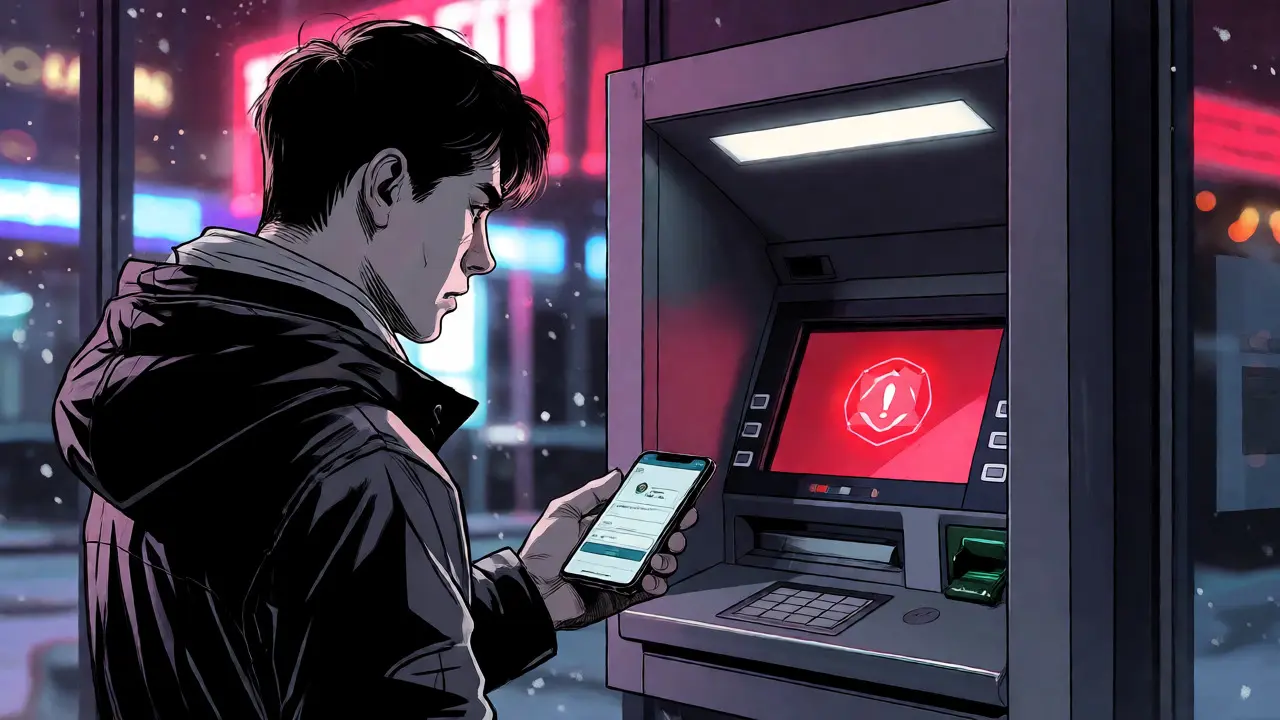
You just sold some Bitcoin on a peer-to-peer platform. The buyer sent the rubles to your card. You head to the nearest ATM, expecting to grab your cash and walk away. Instead, you hit a wall. Your daily limit is slashed to 50,000 rubles, or roughly $600, for the next two days. Why? Because the moment that money hit your account, Russian banking algorithms flagged it as "suspicious." This isn't a glitch; it's the new reality for anyone converting crypto to fiat in Russia.
If you are trading digital assets in Russia, you need to understand how banks react when you withdraw crypto to fiat. Since September 1, 2025, the Central Bank of Russia (CBR) has enforced strict monitoring rules under Federal Law No. 3-1092818-2025. These rules target the specific patterns of cryptocurrency conversion, aiming to curb fraud and unregulated circulation. Here is exactly what happens behind the scenes, why banks freeze your funds, and how you can navigate these restrictions without losing access to your money.
The New Reality: Immediate Cash Limits on Crypto Conversions
Gone are the days when you could withdraw large sums immediately after selling crypto. Under the current framework, if a bank detects a transaction linked to cryptocurrency activity, they have the authority to impose an immediate daily cash withdrawal cap of 50,000 rubles for a period of 48 hours. This measure was introduced to combat a surge in scams. According to CBR data from Q2 2025, there were over 273,000 reported scams totaling 6.3 billion rubles, with 89% involving cryptocurrency at some stage.
This restriction applies even if the money is legally yours. The bank doesn't necessarily accuse you of a crime; they simply pause access to ensure the source of funds is legitimate. For many users, this creates a significant liquidity crunch. If you rely on crypto income for daily expenses, getting only $600 out of the bank per day can be a major headache.
What Triggers the Bank’s Alarm Bells?
Banks don't guess. They use specific indicators defined by CBR Directive No. 74-P. If your transaction matches any of these criteria, expect scrutiny. It is not just about the amount; it is about the behavior surrounding the transaction.
- Unusual Timing: Withdrawing cash between 11:00 PM and 5:00 AM local time raises red flags.
- Odd Amounts: Transactions for amounts not divisible by 1,000 rubles often trigger automatic checks.
- Location Mismatch: Using an ATM more than 50 kilometers from your registered address is suspicious.
- Digital Footprints: Using QR codes or virtual cards instead of physical plastic for withdrawals.
- Rapid Turnover: Withdrawing cash within 24 hours of receiving a transfer exceeding 200,000 rubles via the Faster Payments System.
- Communication Spikes: Receiving three or more messages from unknown numbers within six hours before the withdrawal.
These indicators are designed to catch "mule" accounts used in fraud schemes. However, they also catch legitimate traders who operate quickly or travel frequently. If you see an SMS notification within 15 minutes of your deposit stating that your limit has been reduced, one of these triggers likely fired.
The Role of Peer-to-Peer (P2P) Platforms
A significant portion of crypto-to-fiat conversions in Russia happens through P2P platforms like LocalBitcoins or Paxful. The CBR explicitly identifies transactions on these platforms exceeding 100,000 rubles as high-risk categories. Unlike centralized exchanges where KYC (Know Your Customer) is thorough, P2P involves direct transfers between individuals. This opacity makes banks nervous.
When you receive funds from a P2P buyer, the sender’s name might differ from your contact list, or the payment reference might be vague. Banks view this inconsistency as a potential sign of money laundering. Consequently, small exchange offices that facilitate these cash deals face existential threats. Reports indicate that 63% of surveyed operators saw revenue drop by 40-60% in the first two weeks after the new rules took effect because customers were too afraid to move large sums.

Real User Experiences: What Happens When You Get Flagged?
Let’s look at a real-world scenario. A user on the BitBoom forum reported freezing their Sberbank account for 72 hours after withdrawing 65,000 rubles following a successful Paxful trade. To unlock the funds, they had to visit a branch in person and provide proof of the cryptocurrency source. This wasn't a simple app confirmation; it required physical documentation.
Data from Reddit’s r/RussianCrypto community shows that 68% of flagged cases require additional documentation proving legitimate income sources. The average resolution time is 3.2 business days. Meanwhile, Trustpilot reviews for Tinkoff Bank dropped to a 2.1-star average for crypto-related services in September 2025, down from 4.3 stars in August. Users complain about opaque reasons for freezes and slow customer support responses.
Strategies to Minimize Banking Restrictions
You cannot stop banks from monitoring, but you can reduce the friction. Legal experts recommend adapting your behavior to appear "natural" to banking algorithms.
- Maintain a Natural History: Use cards with at least three months of regular spending patterns. Avoid sudden spikes in activity on dormant cards.
- Stick to Known Counterparties: Transacting with verified contacts reduces restriction rates by 73%. If possible, reuse trusted buyers or sellers.
- Stagger Your Withdrawals: Do not dump all your cash at once. Spread withdrawals across multiple days or different ATMs.
- Use Multiple Accounts: Active traders often maintain an average of 3.7 bank accounts. Distributing funds can help, but be careful-cross-institutional monitoring can still link your activities.
- Keep Documentation Ready: Always save screenshots of your P2P trades and exchange histories. Some banks now demand notarized transaction histories, which can be tricky for decentralized platforms.

Institutional vs. Individual: A Double Standard?
Interestingly, while individuals face tight constraints, institutional handling of crypto is loosening slightly. In September 2025, First Deputy Chairman Vladimir Chistyukhin announced that domestic banks would be permitted to engage in cryptocurrency operations, provided their exposure does not exceed 1% of regulatory capital. They must also maintain reserve ratios of 150% for digital asset holdings.
This dual-track approach suggests the government wants to suppress unregulated domestic circulation while creating controlled channels for international trade. Finance Minister Anton Siluanov confirmed plans to legalize crypto settlements for foreign trade, aiming to increase institutional usage by 400% by 2027. So, while you struggle to withdraw $600 in cash, big corporations are preparing to settle billions in cross-border payments using digital assets.
Future Outlook: Tighter Rules Coming?
Do not expect these restrictions to relax soon. Current developments indicate continued tightening through late 2025 and into 2026. By December 1, 2025, banks will be required to verify the source of funds for any withdrawal exceeding 100,000 rubles. Furthermore, legislation is progressing in the Duma that introduces criminal penalties for repeated violations. Organized crypto conversion schemes could face up to five years in prison, with aggravated circumstances pushing that to ten years.
Denis Polyakov of GMT Legal predicts a full prohibition on cryptocurrency circulation within 6-8 months based on pending legislation. While others argue this drives transactions underground-Rosfinmonitoring noted a 22% spike in unregulated activity post-implementation-the trend is clear: convenience is being traded for control.
| Feature | Russia | United States | European Union |
|---|---|---|---|
| Primary Focus | Individual withdrawal behavior | Reporting thresholds | Service provider compliance |
| Cash Limit Trigger | Algorithmic flagging of crypto-linked deposits | $10,000 USD reporting threshold | No direct individual cash limits |
| Restriction Duration | 48 hours | N/A (Reporting only) | N/A |
| P2P Scrutiny | High (Automatic flagging >100k RUB) | Moderate (KYC dependent) | Low to Moderate |
Frequently Asked Questions
Why did my bank limit my withdrawal after I sold crypto?
Your bank likely triggered one of the 12 specific indicators outlined in CBR Directive No. 74-P. Common triggers include withdrawing cash shortly after a large transfer, using an ATM far from your registered address, or making odd-numbered withdrawals. The system automatically restricts you to 50,000 rubles per day for 48 hours to prevent potential fraud.
Can I withdraw more than 50,000 rubles if I go to the bank branch?
Not immediately. The 50,000 ruble limit applies to cash withdrawals generally. To access more funds, you usually need to undergo enhanced verification. This may involve visiting a branch, providing proof of income, or showing transaction history from your crypto exchange. Resolution times average around 3.2 business days.
Does this apply to all banks in Russia?
Yes. Approximately 98% of Russia's 347 licensed banks implemented the required monitoring systems by the September 1, 2025 deadline. Major banks like Sberbank and VTB have significantly expanded their compliance teams to handle these checks, so you will encounter these restrictions regardless of your primary bank.
Are P2P transactions riskier than exchange withdrawals?
Generally, yes. The CBR identifies P2P transactions exceeding 100,000 rubles as high-risk. Banks scrutinize these more heavily because the counterparty is an individual rather than a regulated financial institution. Using known counterparties can lower your risk profile by up to 73% according to internal banking data.
Will I get fined for having my account frozen?
No, the initial freeze is a protective measure, not a penalty. However, repeated violations or failure to provide requested documentation can lead to longer blocks. Future legislation proposes criminal penalties for organized schemes that repeatedly bypass these restrictions, so consistent compliance is key.