
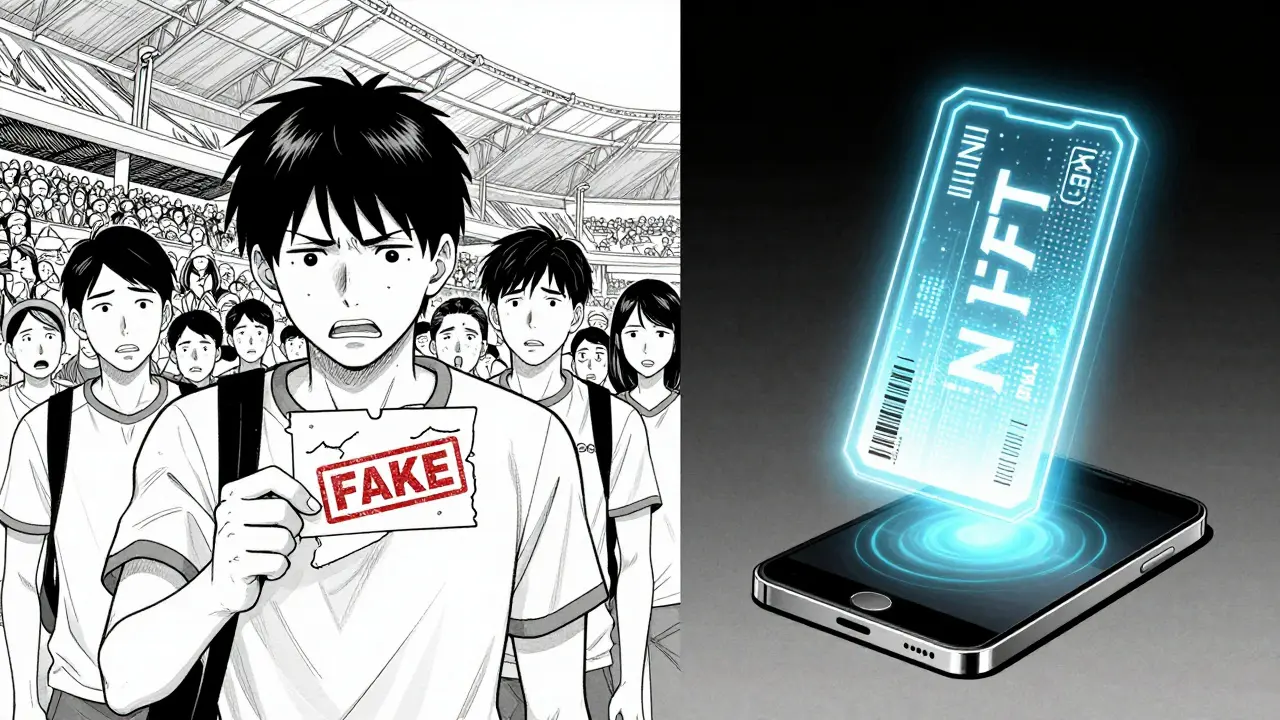
Imagine paying hundreds of dollars for a front-row seat at a massive festival, only to arrive at the gate and find out your ticket is a fake. Or perhaps you're an organizer watching scalpers flip your tickets for 10x the price on a secondary market, while you don't see a single cent of that extra profit. This is the broken reality of traditional ticketing. But blockchain ticketing is a system that uses distributed ledger technology to turn event tickets into unique, programmable digital assets. By using NFT tickets, the industry is finally moving away from easily forged PDFs and paper scraps toward a secure, transparent ecosystem.
Killing the Counterfeit Market
The biggest nightmare for any attendee is the counterfeit ticket. In the old world, a PDF is just a file that can be copied and emailed to a hundred different people. The venue only realizes there's a problem when the 101st person tries to enter. Non-Fungible Tokens (NFTs) solve this because they are unique by design. Each ticket is recorded on a blockchain with a specific identity that cannot be duplicated. If a ticket has been used or transferred, the ledger shows it in real-time.
Security doesn't stop at the digital signature. Many modern systems integrate with facial recognition to match the ticket holder's identity with the blockchain record before they even reach the turnstile. This eliminates the clunky, manual ID checks that slow down entry and allows organizers to ensure the person holding the ticket is actually the rightful owner.
Taking Control of the Secondary Market
For decades, event organizers lost control of their tickets the moment they were sold. Scalpers would buy up inventory using bots and resell them at predatory prices. This didn't just hurt fans; it robbed organizers of potential revenue. Enter Smart Contracts, which are self-executing contracts with the terms of the agreement directly written into code.
With a smart contract, an organizer can set hard rules for the ticket's entire lifecycle. Want to stop price gouging? You can set a maximum resale price. Want a piece of the action? You can program a royalty fee-say 5% or 10%-that automatically sends a payment back to the organizer every time a ticket is resold on the secondary market. This turns the secondary market from a headache into a consistent revenue stream.
| Feature | Traditional Ticketing | Blockchain NFT Ticketing |
|---|---|---|
| Authentication | Easily forged PDFs/Paper | Immutable digital identity |
| Resale Control | None (Wild West) | Programmed via Smart Contracts |
| Organizer Revenue | Initial sale only | Initial sale + Secondary royalties |
| Attendee Data | Lost after resale | Direct connection via Crypto Wallets |
| Entry Speed | Manual ID/QR checks | Instant digital verification |
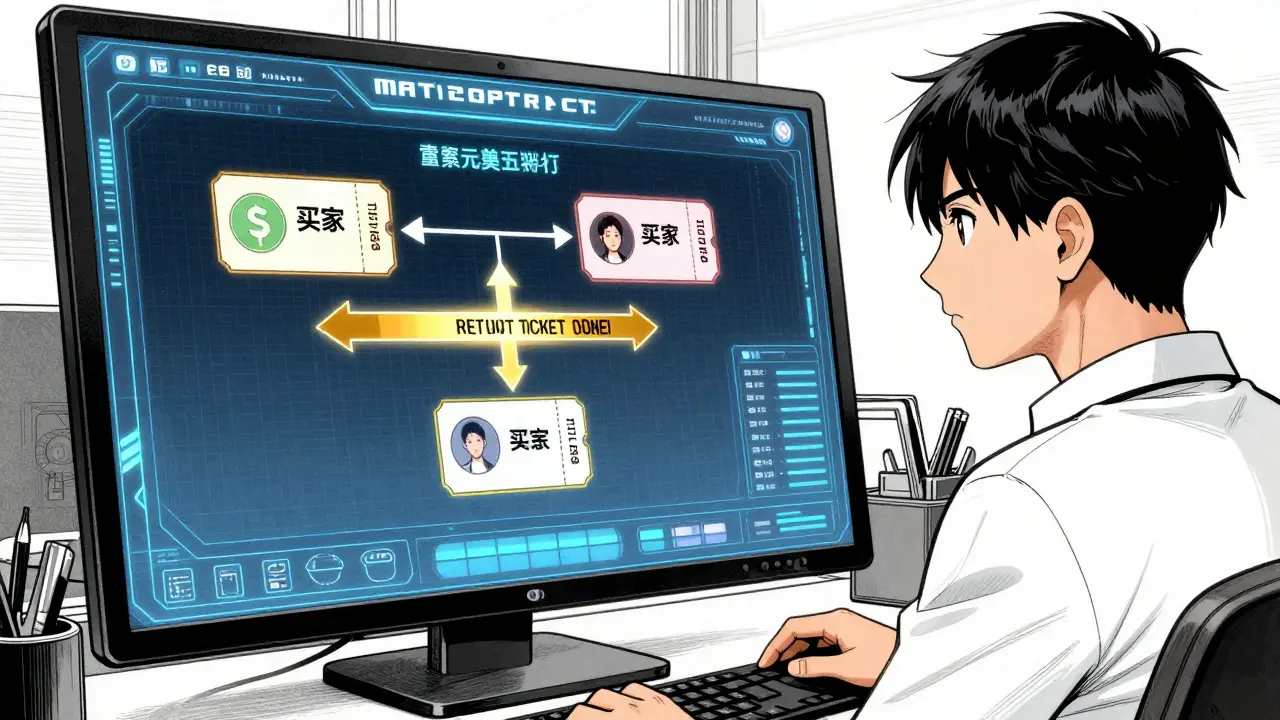
Turning a Ticket into a Digital Experience
A traditional ticket is a piece of trash the moment the event ends. An NFT ticket, however, is a collectible digital asset. This opens up a whole new way to engage with fans. Think of it as a digital scrapbook. After the concert, that ticket can serve as a "proof of attendance" token that grants the holder special perks at future events, like early-bird access or a discount on merchandise.
Because these tickets are linked to Crypto Wallets, organizers can maintain a direct relationship with their audience. Instead of relying on a third-party platform to send an email, they can send rewards or announcements directly to the wallet. This creates a loyalty loop where returning attendees feel valued through personalized perks, such as exclusive backstage passes or meet-and-greet opportunities programmed directly into their ticket NFT.
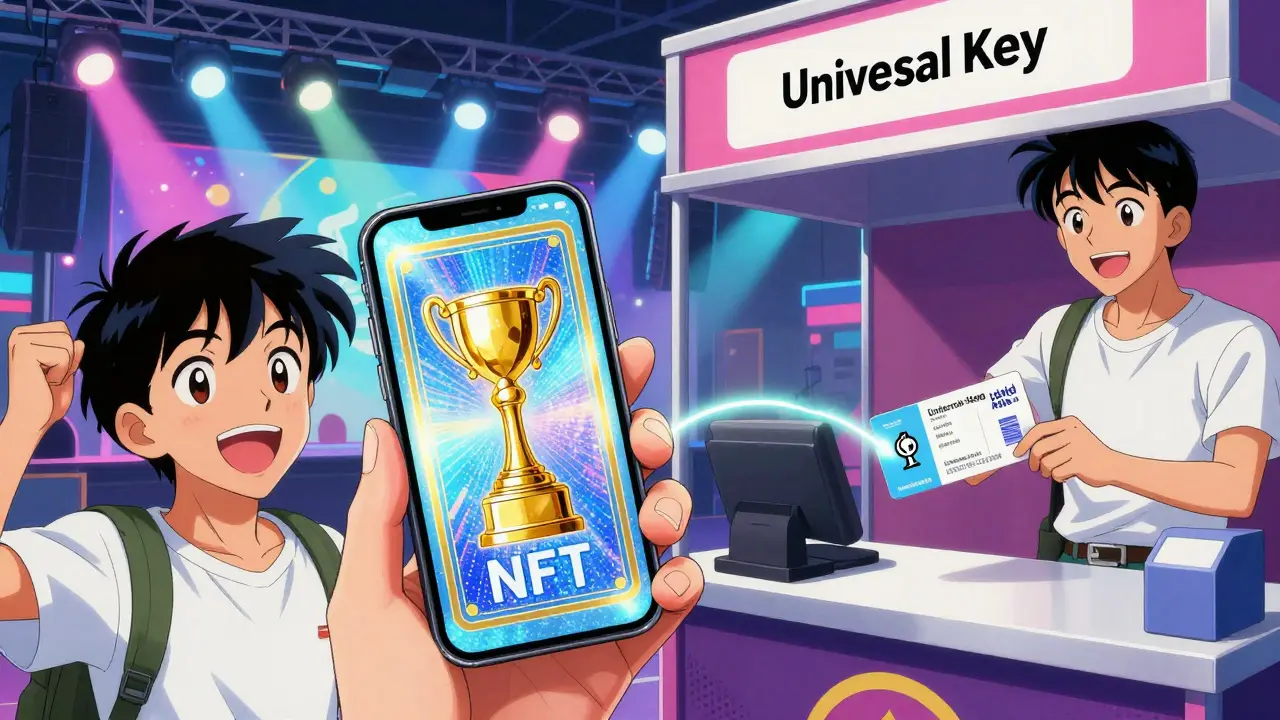
Streamlining Venue Operations
The benefits extend inside the venue walls. When a ticket is an NFT, it can function as a universal digital key. Rather than fumbling with cash or separate apps, attendees can use their ticket identity to handle transactions at concession stands or merchandise booths. This reduces queues and increases the average spend per person because the friction of payment is removed.
From an operational standpoint, digital production removes the need for physical printing and shipping. This isn't just about saving paper; it's about speed. Tickets can be generated and distributed instantly, and any changes to the event (like a time shift or venue change) can be updated across all digital assets immediately.
The Hurdles to Adoption
It isn't all smooth sailing. The biggest barrier is the learning curve. Not every music fan knows how to set up a wallet or handle private keys. If a user loses their wallet access, they effectively lose their ticket. For this technology to go mainstream, ticketing platforms need to hide the "crypto" part of the experience, allowing users to log in with an email while the blockchain handles the heavy lifting in the background.
There is also the technical setup for the organizer. While specialized software now exists to simplify this, it still requires a shift in how events are managed. However, for high-demand events like Coachella or the Super Bowl, where the cost of fraud is in the millions, the effort to implement these systems is a small price to pay for total control and security.
Can someone steal my NFT ticket?
As long as you keep your private keys secure, your ticket is safer than a PDF. However, like any digital asset, if you give your wallet password to a scammer, they can transfer the ticket. Using reputable ticketing platforms that offer secure login methods is the best way to prevent this.
Do I need to know how to use crypto to buy these tickets?
Not necessarily. Many modern blockchain ticketing platforms allow you to pay with credit cards or Apple Pay. The platform creates a "custodial wallet" for you in the background, so you get the security of the blockchain without needing to manage complex seed phrases.
How do royalties actually work for organizers?
It's handled by a smart contract. When a buyer sends funds to a seller to buy a ticket, the blockchain automatically splits the payment. For example, if a ticket sells for $100 and the organizer has a 10% royalty, $90 goes to the seller and $10 is instantly routed to the organizer's wallet.
Will NFT tickets replace paper tickets entirely?
In high-demand industries, yes. The ability to stop fraud and earn secondary revenue is too valuable to ignore. While some small-scale events might stick to simple methods, any event with a high risk of scalping will likely move to a blockchain-based system.
What happens if the blockchain goes down?
Blockchains are decentralized, meaning they don't have a single point of failure. Unlike a centralized server that can crash and lock everyone out of their accounts, a blockchain is maintained by thousands of nodes worldwide, making it incredibly resilient.
19 Responses
Integrating facial recognition with the blockchain for entry is a massive step forward for venue logistics, though the hardware overhead for smaller organizers might be the real bottleneck here.
Oh sure, because adding another layer of tech that can potentially glitch at the gate is exactly what we need. Absolute genius. 🙄
Sick tech! 🚀
The premise that this eliminates scalping is fundamentally flawed. Scalpers will simply pivot to selling the access to the custodial wallet or the account associated with the ticket, rendering the smart contract's price ceiling irrelevant in a peer-to-peer cash transaction.
true but the royalty part is where the real money is for the bands and venues finally getting paid for the hype they create
It is honestly so typical of the tech industry to propose a solution that completely ignores the digital divide, because while the author thinks everyone can just 'hide the crypto part,' the actual infrastructure of gas fees and network congestion on popular chains makes this an absolute nightmare for a casual user who just wants to see their favorite artist without needing a computer science degree 🙄🤦♀️.
I really love the idea of the digital scrapbook!! It adds so much sentimental value to the experience!!!
Just sounds like a way for companies to keep track of us even more. No thanks.
The utility is obvious. 🥂
I wonder if the L2 scaling solutons could mitigate the gas costs for the minting process since that's usually where the friction is in the UX flow... might be a way to make it more seamless for the avg user who isn't into the web3 stack.
It is truly fascinating to witness the evolution of ticketing! 🌟 The implementation of smart contracts provides a level of security that was previously unthinkable in the event industry. While the transition may be dramatic, the result will be a far more equitable system for both artists and fans! ✨
Typical corporate greed trying to 'solve' a problem by creating a new way to skim money off secondary sales through royalties. It's just another layer of extraction from the fans who already pay too much for tickets.
A pedestrian analysis of a complex ecosystem. The audacity to suggest that a simple 'custodial wallet' solves the philosophical dilemma of decentralization is quite quaint, really. It is a mere veneer of innovation over a very banal business model.
I believe this approach opens up such a beautiful bridge between the physical and digital worlds! 🌈 Imagine the joy of a fan keeping a digital token that evolves based on how many shows they've attended, creating a lifelong bond with the artist that transcends a simple transaction. We are moving toward a more mindful way of experiencing art and community where the ticket is not just a permit but a cherished memory 💖✨🌻.
The points about venue operations are spot on! Using the ticket as a payment key would literally save me from standing in those endless lines for a drink 💅✨.
The security benefits regarding counterfeit prevention are indeed significant and merit further consideration from a logistical perspective.
People simply need to be more responsible with their passwords. Complaining about losing a ticket because you gave your key away is just laziness
This is the future!! I can't wait to see this rolled out for every major tour!!! 🤩
Bro the throughput on some of these chains is trash lol. If the network gets congested right when the gates open, everyone is just standing there staring at a loading screen while the hype is peaking. That's a total disaster for the UX.