
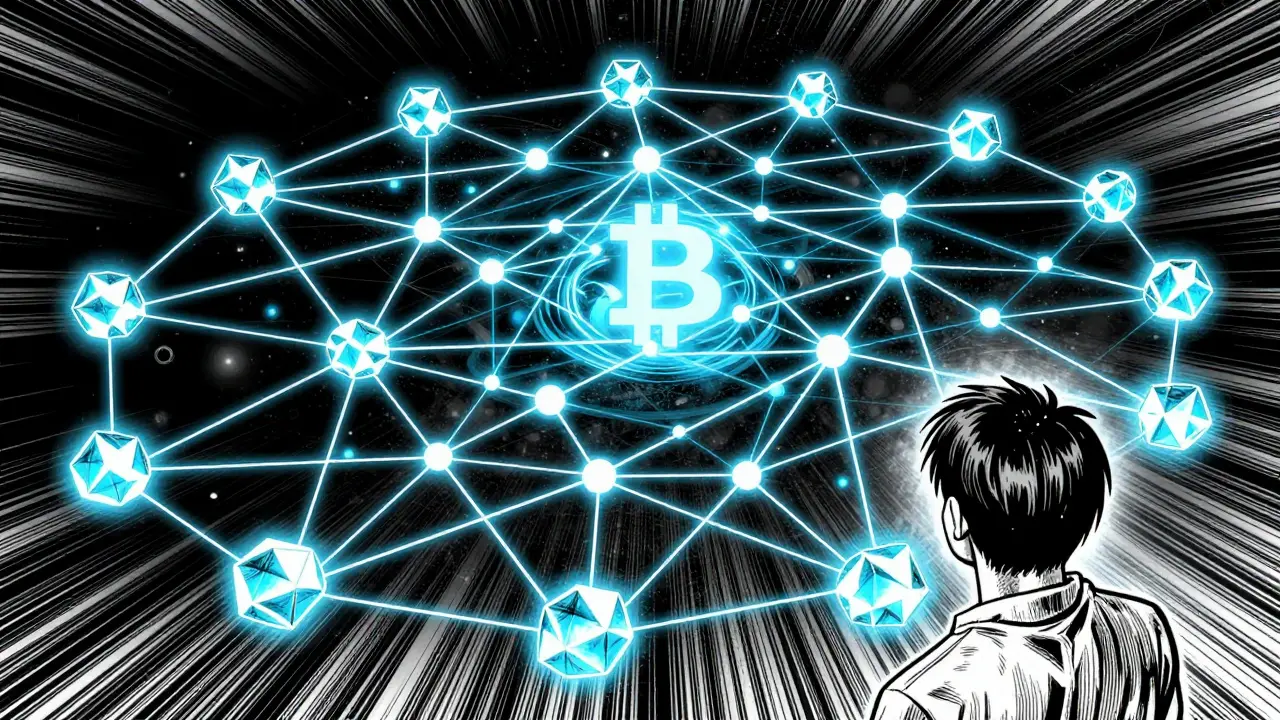
Imagine a world where you can send money directly to someone across the globe without calling a bank, filling out a form, or waiting for a third party to approve the transfer. That is the promise of Bitcoin, a decentralized digital currency that operates on a peer-to-peer (P2P) network. But how does this magic actually work? There is no central server, no CEO, and no headquarters. Instead, thousands of computers around the world talk to each other to keep the system running. This is the core of Bitcoin’s resilience.
Understanding how the Bitcoin P2P network functions is not just for coders. It explains why Bitcoin cannot be easily shut down, censored, or corrupted by a single entity. In this guide, we break down the mechanics of this distributed system, from how new nodes find their way in to how transactions travel across the globe. You will learn why this architecture matters for your financial sovereignty and what it takes to participate in the network yourself.
The Core Concept: No Masters, Only Peers
In traditional banking, you rely on a client-server model. Your phone (the client) sends a request to Bank of America’s massive mainframe (the server). If that server goes down, you cannot access your money. Bitcoin flips this script entirely. Every computer in the Bitcoin network is both a client and a server. These computers are called full nodes, computers that download and verify every block and transaction in the Bitcoin blockchain.
This creates a mesh topology with a flat hierarchy. There is no "boss" node. Every participant has equal status and privileges. When you run a full node, you are not just using Bitcoin; you are helping to secure it. The network relies on these peers to collaboratively maintain the ledger. This design eliminates intermediaries like payment processors, which usually charge fees and impose restrictions. By removing the middleman, Bitcoin reduces costs and enhances system resilience through distributed fault tolerance. If half the nodes disappear tomorrow, the network keeps working because the remaining peers automatically pick up the slack.
How New Nodes Find Their Way: The Bootstrap Problem
If there is no central directory, how does a brand-new computer know who to talk to when it first joins the network? This is known as the bootstrap problem. Imagine moving to a new city with no friends and no phone contacts. You need a way to find people to connect with. Bitcoin solves this with a multi-layered peer discovery strategy that is surprisingly robust.
First, the software queries DNS seed servers, nine independent domain name system servers operated by different individuals to help new nodes discover peers. These nine servers return lists of IP addresses of active nodes. Because they are controlled by different entities, it is highly unlikely that all nine would fail simultaneously. This diversity ensures that even if one operator goes offline or acts maliciously, the network remains accessible.
If those DNS seeds fail, the system has a backup plan. It falls back to seed nodes. These are hard-coded IP addresses of publicly reachable and well-maintained nodes compiled into the chainparamseeds.h file with each release of Bitcoin Core, the reference implementation software for the Bitcoin network. This redundancy is a key feature praised by technical experts. It makes the network extremely fault-tolerant. Additionally, advanced users can configure custom peer lists via command-line parameters or use privacy-focused networks like Tor, an anonymity network that allows Bitcoin nodes to communicate via onion services or I2P to resist censorship. This means even in restrictive jurisdictions, finding entry points into the network remains technically feasible.
The Anatomy of a Node: Identity and Roles
Once a node connects, it needs an identity. Each node is identified by a unique triple consisting of an IP address, a port number, and a node ID. The node ID is generated either as a random number during installation or as a hash of the computer’s hardware details, such as the MAC address and hard disk serial number. This ensures no two peers have the same ID, preventing collisions in the network.
Not all nodes do the exact same thing. While all full nodes validate transactions, they differ in storage:
- Archival Nodes: These store the entire history of the blockchain from day one. They serve historical blocks to other nodes, acting as libraries for the network.
- Pruned Nodes: These maintain full validation capabilities but delete old block data after verification. They save disk space while still contributing to security.
This flexibility allows users with limited resources to participate meaningfully. However, pruned nodes cannot serve historical data to others, so archival nodes remain essential for long-term network health.
Transaction Relay and Validation: Keeping the Ledger Honest
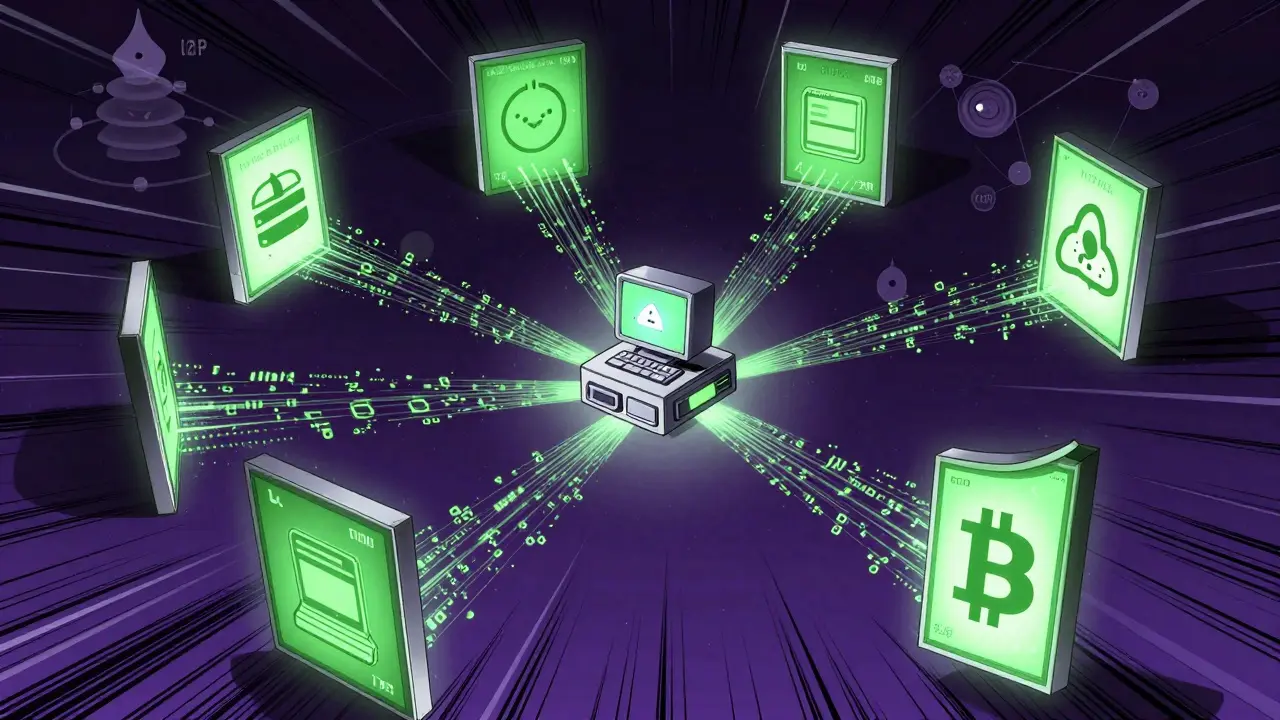
When you send Bitcoin, your transaction doesn’t go to a bank teller. It broadcasts to your connected peers. Those peers check if the transaction is valid-does the sender have enough funds? Is the signature correct? If yes, they relay it to their neighbors. This gossip protocol spreads the transaction across the global network in seconds.
Miners then pick up these pending transactions, bundle them into a block, and solve a complex mathematical puzzle (Proof of Work). Once solved, the new block is broadcast to all nodes. Each node independently verifies the block against the consensus rules. If it passes, the node adds it to its copy of the blockchain and rejects any conflicting blocks. This process ensures that no single entity can alter the past or double-spend coins. The security comes from the fact that thousands of independent actors must agree on the state of the ledger. Contrasting sharply with traditional banking networks where central authorities manage all transactions, Bitcoin’s trust model is cryptographic, not institutional.
Running a Node: Practical Requirements and Trade-offs
You might wonder, "Can I run a node myself?" Yes, but it requires some resources. As of 2025, the Bitcoin blockchain weighs approximately 400-500 GB. You need at least that much free storage space, preferably on an SSD for faster read/write speeds. You also need a steady internet connection with several gigabytes of daily bandwidth for receiving and relaying transactions and blocks.
The initial synchronization-the process of downloading and verifying every block since 2009-can take days depending on your hardware and connection speed. This represents a significant barrier for casual users. Many opt for SPV clients, Simplified Payment Verification wallets that connect to full nodes without storing the entire blockchain. SPV clients are lighter and faster to set up, but they trade off some security and privacy because they rely on other nodes to provide partial information. Running a full node gives you complete sovereignty over your Bitcoin holdings and allows you to verify transactions without trusting third parties.
For those willing to invest the time, the learning curve is steep but rewarding. Community support resources like Bitcoin Stack Exchange, developer IRC channels, and GitHub repositories offer help with connectivity issues and performance optimization. Understanding concepts like peer discovery and block validation empowers you to troubleshoot problems rather than relying on external support.

Scalability Challenges and Future Enhancements
The P2P model faces performance trade-offs. Network efficiency depends on the number of active peers. Popular transactions spread quickly when many peers share the load, but fewer resources become available when peer counts drop. Unlike centralized systems that guarantee consistent performance through dedicated infrastructure, Bitcoin’s performance fluctuates based on network conditions. This has led to scalability challenges, particularly during periods of high transaction volume.
To address this, developers have introduced second-layer solutions like the Lightning Network, a layer-two protocol that enables instant, low-cost micro-transactions on top of the Bitcoin blockchain. Lightning maintains P2P principles while offloading small payments from the main chain. On the base layer, protocol upgrades like Taproot activation and Schnorr signatures improve transaction efficiency and privacy. Projects like Dandelion++ enhance transaction relay privacy by obscuring the origin of transactions, making it harder for observers to track user activity.
Despite these improvements, Bitcoin’s P2P architecture remains a key differentiator against emerging central bank digital currencies (CBDCs) and traditional financial systems. CBDCs often rely on centralized databases, creating single points of failure. Bitcoin’s distributed nature ensures that no government or corporation can unilaterally shut it down. Regulatory developments worldwide continue to impact node operation, with some jurisdictions restricting cryptocurrency activities. Yet, the network’s decentralized bootstrap process and global node distribution make complete shutdown technically infeasible.
Why This Matters for You
Whether you are a developer, investor, or everyday user, understanding Bitcoin’s P2P network changes how you view digital money. It is not just a speculative asset; it is a resilient, open-source protocol designed to withstand censorship and corruption. By running a node or supporting projects that enhance network privacy and scalability, you contribute to the longevity of this financial innovation. The next time you send Bitcoin, remember that you are part of a global conversation between thousands of independent peers, all working together to maintain a shared truth.
What is the difference between a full node and an SPV client?
A full node downloads and verifies the entire blockchain, ensuring complete independence and security. An SPV (Simplified Payment Verification) client only downloads block headers and relies on full nodes to provide transaction data. Full nodes require more storage and bandwidth but offer greater sovereignty, while SPV clients are lighter and easier to use but sacrifice some privacy and trustlessness.
How does Bitcoin prevent double-spending without a central authority?
Bitcoin prevents double-spending through Proof of Work and consensus rules. Miners compete to solve puzzles to add blocks to the chain. Once a block is added, it is computationally expensive to alter. All full nodes independently verify transactions and reject invalid ones. Since the longest chain is accepted as valid, attackers would need to control more than 51% of the network’s hash rate to rewrite history, which is practically impossible due to the cost and energy required.
Why are DNS seeds important for Bitcoin’s network?
DNS seeds help new nodes discover existing peers without relying on a central directory. With nine independent operators, the system avoids single points of failure. If one seed server goes down or is compromised, others can still provide valid IP addresses. This decentralized bootstrap mechanism ensures that anyone can join the network reliably, enhancing overall resilience and censorship resistance.
Can I run a Bitcoin node on my home computer?
Yes, if your computer meets the hardware requirements. You need at least 400-500 GB of storage (preferably SSD), a stable internet connection with sufficient bandwidth, and a modern operating system compatible with Bitcoin Core. Initial synchronization may take several days, but once synced, the node runs passively. Home nodes contribute to network security and allow you to verify transactions independently.
How does the Lightning Network relate to the P2P network?
The Lightning Network is a second-layer protocol built on top of Bitcoin’s P2P network. It enables fast, low-cost micro-transactions by opening payment channels between users. While the base P2P network handles final settlement and security, Lightning handles frequent small transfers off-chain, reducing congestion and fees. It maintains P2P principles by allowing users to control their own channels and settle disputes on the main blockchain if necessary.