
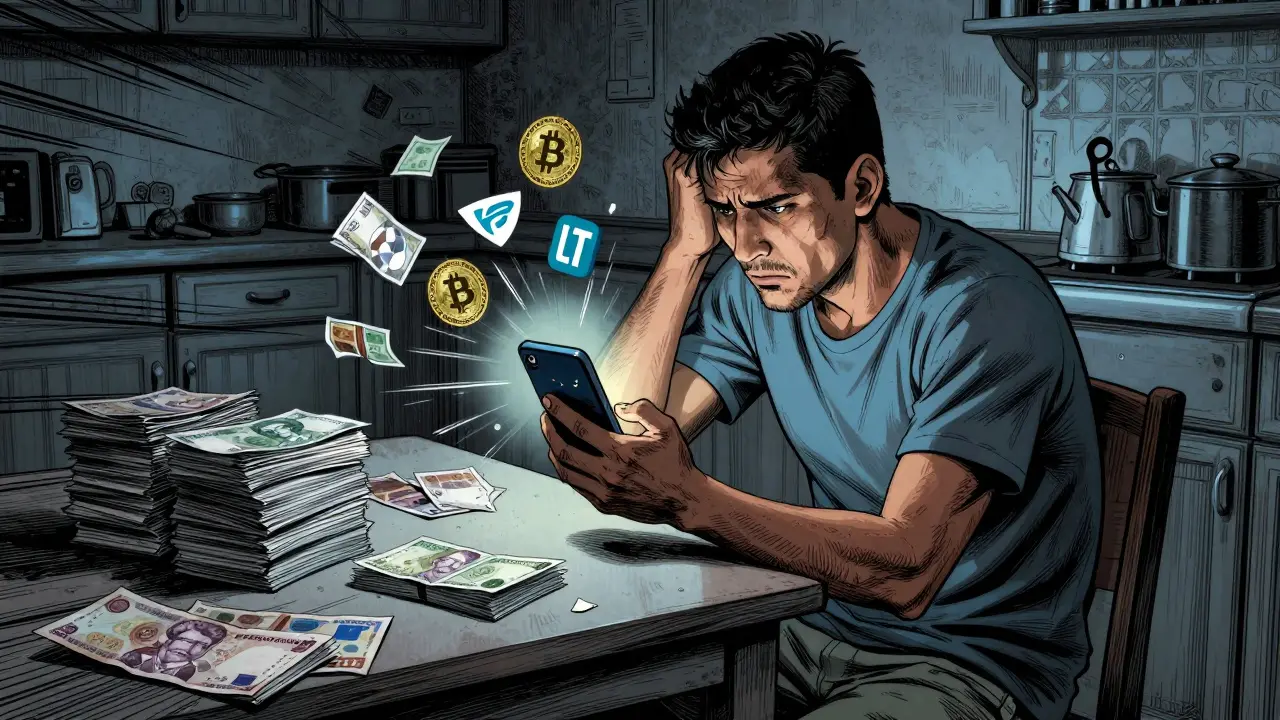
Imagine waking up to find your paycheck worth half of what it was yesterday. This is the daily reality for millions of Venezuelans living through one of the most severe economic collapses in modern history. As the bolívar crumbles under the weight of hyperinflation, citizens aren't just watching their savings vanish-they are adapting. They have turned to Bitcoin and stablecoins not as speculative investments, but as essential tools for survival.
This isn't a story about getting rich quick. It is a case study in human resilience and financial innovation under extreme pressure. When traditional banking systems fail and currency loses its value by the hour, people find a way. For Venezuela, that way has been cryptocurrency. But this shift comes with significant risks, technical hurdles, and regulatory gray areas that define a new kind of economic landscape.
The Collapse That Forced Crypto Adoption
To understand why Venezuela became a global leader in crypto usage, you have to look at the numbers behind the crisis. In May 2024, the Venezuelan Finance Observatory (OVF) recorded an annual inflation rate of 229%. Between October 2023 and June 2024 alone, the bolívar lost more than 70% of its value after the government stopped defending the currency's exchange rate.
This devaluation hit ordinary people hard. Wages didn't keep pace with prices, making basic goods like food and medicine unaffordable for many. According to Chainalysis' 2024 Crypto Adoption Index, Venezuela ranked 13th globally for cryptocurrency adoption, showing a staggering 110% year-over-year growth. Economist Aarón Olmos noted in August 2025 that this surge wasn't driven by ideology. "Venezuelans started using cryptocurrencies out of necessity," he explained, citing inflation, low wages, and the difficulty of opening bank accounts.
The timeline of this shift is clear. Before late 2023, crypto usage was relatively niche. After the currency collapse, it became mainstream. By July 2025, private sector cryptocurrency transactions reached $119 million in a single month, according to data from the National Superintendence of Crypto Assets and Related Activities (SUNACRIP). This wasn't just individuals buying coins; it was entire communities moving their economic lives onto digital ledgers.
Why Stablecoins Won Over Bitcoin in Daily Life
While Bitcoin often gets the spotlight, it is actually stablecoins-specifically Tether (USDT)-that power daily life in Venezuela. Bitcoin's price volatility makes it risky for buying groceries or paying rent. If the price drops while you are waiting for a transaction to confirm, you could lose money instantly. Stablecoins solve this problem by pegging their value to the U.S. dollar.
Locally, USDT is often referred to as "Binance dollars." This nickname highlights how deeply integrated these tokens have become in everyday commerce. In a survey of 1,200 businesses in Caracas conducted in August 2025, over 65% of merchants reported accepting cryptocurrency for routine transactions. For them, USDT offers predictability. The token maintains near-perfect parity with the U.S. dollar, shielding users from the bolívar's wild swings.
| Feature | Bitcoin (BTC) | Tether (USDT) |
|---|---|---|
| Primary Use Case | Long-term value storage | Daily transactions & payments |
| Price Stability | Highly volatile | Pegged to USD (stable) |
| Transaction Speed | 10-60 minutes (avg.) | <2 minutes (on Tron network) |
| Merchant Acceptance | Growing but limited | Widespread in urban areas |
| Risk Factor | Market price fluctuation | Centralized issuer risk |
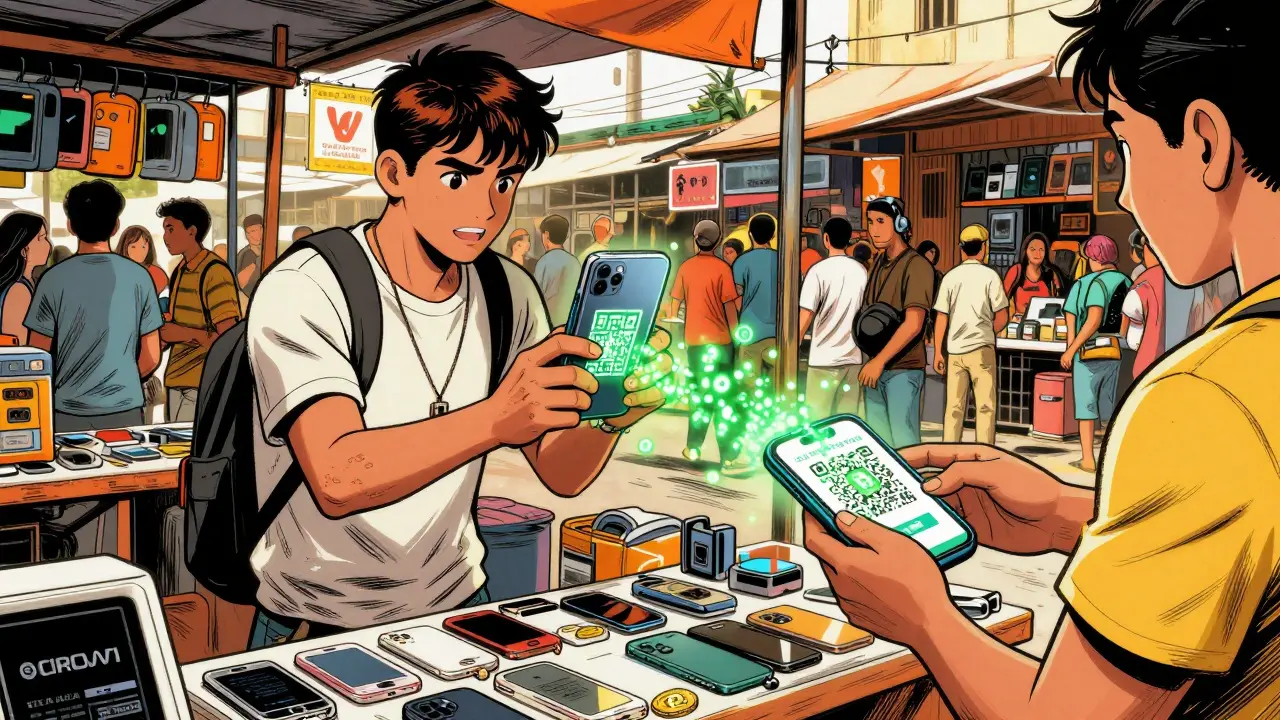
The speed difference matters. During peak usage, Bitcoin transactions can take up to an hour to confirm. USDT on the Tron network typically confirms in under two minutes. For a small business owner selling phone accessories, that speed means they can keep inventory moving without worrying about price changes during checkout.
How People Actually Buy and Sell Crypto
You cannot simply walk into a bank in Venezuela and buy Bitcoin. Traditional banking infrastructure has been severely restricted by U.S. sanctions since 2017. Instead, Venezuelans rely on peer-to-peer (P2P) platforms. These platforms connect buyers and sellers directly, bypassing banks entirely.
Binance P2P dominates this space, holding approximately 63% of the market share for P2P trading volume in Venezuela, according to Chainalysis' July 2025 report. LocalBitcoins follows with 22%, while decentralized exchanges like Bisq account for 8%. On Binance P2P, a user might post an offer to sell USDT for bolivars via bank transfer or mobile payment apps like Pago Móvil. Once the buyer sends the fiat currency, the seller releases the crypto from escrow.
This system works because it leverages existing informal networks. Trust is built through reputation scores on the platform. However, it is not without friction. Connectivity remains a major hurdle. Venezuela ranks 153rd globally for internet speed, averaging just 14.79 Mbps download speed in Q2 2025 per Ookla's Speedtest Global Index. Slow connections can cause transactions to time out or fail, leading to frustration and potential losses.
Additionally, U.S. sanctions complicate things further. Binance restricts services for accounts linked to sanctioned Venezuelan banks or individuals. Internal data shared with CoinTelegraph suggests that approximately 18% of attempted transactions are blocked due to these restrictions. Users must constantly navigate these rules, often switching between multiple wallets or platforms to stay compliant.
The Role of Remittances and Family Support
Cryptocurrency has revolutionized how families send money across borders. Remittances are a lifeline for many Venezuelan households, totaling $5.4 billion in 2023. Of that amount, 9%-roughly $461 million-was sent via cryptocurrency, according to CoinTelegraph reports from March 2025.
Traditional remittance services like Western Union charge high fees and take days to process. Crypto transfers happen almost instantly and cost a fraction of the price. A family member living in Spain or Colombia can send USDT to a relative in Caracas within minutes. The recipient then converts it to bolivars locally to pay for essentials.
This efficiency has made crypto indispensable for cross-border support. Platforms like Airtm and Binance Wallet have become essential financial tools for approximately 4.3 million Venezuelans, representing 13% of the population, according to MEXC's March 2025 analysis. For many, this is not optional technology-it is the only way to receive help from abroad.
Challenges and Risks Beyond the Hype
Despite its benefits, relying on cryptocurrency carries significant risks. One major concern is dependency on centralized issuers. Tether Limited controls 76% of Venezuela's stablecoin market, according to Chainalysis. If Tether were to face regulatory issues or suspend redemptions, millions of Venezuelans could see their savings freeze overnight.
Connectivity issues also pose a threat. In a country where only 45% of the population has reliable internet access (per ITU data from February 2025), being offline means being financially invisible. During network outages, users cannot check balances, make payments, or convert assets. In Markets.com's August 2025 survey, 37% of respondents reported connectivity issues affecting their transactions, and 22% cited difficulties converting crypto to physical goods during outages.
Volatility during conversion is another pain point. While USDT itself is stable, the process of buying or selling it involves spreading costs. During high-demand periods, spread costs average 3.7%, documented by Chainalysis. This means users effectively lose nearly 4% of their value every time they switch between bolivars and crypto-a steep toll when margins are already thin.

Government Response and Regulatory Uncertainty
The Venezuelan government's stance on cryptocurrency has been inconsistent. In 2018, it launched its own state-backed crypto, the Petro, tied to oil reserves. However, the Petro collapsed in 2024 following corruption allegations linked to oil transactions. Meanwhile, the government cracked down on private exchanges, shutting down SUNACRIP, the main exchange regulator, in 2023.
Yet, enforcement is uneven. The Central Bank of Venezuela acknowledged cryptocurrency's role in the economy in its 2024 report but provided no formal regulatory framework. This creates a de facto acceptance of parallel crypto markets. University of Zulia Professor Carlos Hernández described this dynamic in April 2025: "Crypto adoption in Venezuela is a symptom of economic failure, not a solution."
This ambiguity leaves users vulnerable. Without clear laws, consumer protection is minimal. The Venezuelan Finance Observatory documented 1,247 consumer complaints related to cryptocurrency transactions in Q1 2025, primarily concerning price volatility during conversion and platform technical failures. Victims often have nowhere to turn for recourse.
Education and Community-Led Learning
In the absence of formal guidance, communities have stepped up. Most Venezuelans master basic crypto transactions within 2-3 weeks, according to a March 2025 study of 500 new users by the University of Carabobo. This rapid learning curve is driven by necessity and community support.
YouTube channels like "Cripto Para Todos" (with 127,000 subscribers) provide free tutorials in Spanish. Universities are also adapting; Universidad Central de Venezuela launched mandatory cryptocurrency courses in January 2025. These initiatives fill critical gaps left by official institutions.
Documentation quality varies by platform. Binance's Spanish-language resources received a 4.2/5 rating from 1,200 Venezuelan users on Trustpilot, while LocalBitcoins scored lower (3.1/5) due to limited Spanish support. Clear instructions matter immensely when mistakes can mean losing life savings.
Future Outlook: Survival Tool or Long-Term Solution?
Will cryptocurrency remain central to Venezuela's economy? Short-term projections suggest yes. IMF economists in their April 2025 outlook report indicated that bolívar inflation is unlikely to fall below 50% annually before 2027. Until then, crypto will likely remain essential for preserving value.
However, long-term viability faces challenges. Luisa Mendoza, an economist at the University of Caracas, warned in May 2025 that "centralized stablecoin risks and U.S. sanctions complicate long-term viability for Venezuela's crisis-driven digital economy." If the bolívar stabilizes even moderately, adoption could decline rapidly, leaving users exposed to risks they previously ignored out of necessity.
There is also potential for broader integration. Venezuela has participated in BRICS cross-border payment initiative discussions since February 2025, which could provide alternative infrastructure less vulnerable to U.S. sanctions. Such developments might allow crypto to transition from a survival mechanism to a formalized parallel payment system.
Is Bitcoin legal in Venezuela?
Yes, cryptocurrency is legal in Venezuela under the 2020 Crypto Assets Law. However, the regulatory framework is vague, and enforcement is inconsistent. While the government allows private use, it has previously shut down regulators like SUNACRIP and promoted its own failed currency, the Petro. Users operate in a gray area with minimal consumer protection.
Why do Venezuelans prefer USDT over Bitcoin?
Venezuelans prefer USDT (Tether) because it is pegged to the U.S. dollar, offering stability against the bolívar's hyperinflation. Bitcoin's price volatility makes it risky for daily purchases like food or rent. USDT also processes faster on networks like Tron, confirming in under two minutes compared to Bitcoin's 10-60 minute average.
How do people buy crypto without banks?
Most Venezuelans use peer-to-peer (P2P) platforms like Binance P2P or LocalBitcoins. These platforms connect buyers and sellers directly. Users trade crypto for bolivars via mobile payment apps like Pago Móvil or cash deposits. Binance P2P holds 63% of the market share, facilitating transactions without traditional banking infrastructure.
What are the biggest risks of using crypto in Venezuela?
Key risks include dependency on centralized issuers like Tether (which controls 76% of the stablecoin market), vulnerability to U.S. sanctions blocking 18% of transactions, and poor internet connectivity (only 45% have reliable access). Additionally, lack of regulation means few protections if platforms fail or fraud occurs.
Can I send money to Venezuela using crypto?
Yes, sending USDT via platforms like Binance or Airtm is common and efficient. In 2023, 9% of all remittances to Venezuela ($461 million) were sent via crypto. It is faster and cheaper than traditional services. Recipients can convert USDT to bolivars locally using P2P traders or merchants who accept crypto payments.