

When the U.S. Treasury slapped sanctions on Garantex in April 2022, most thought it was the end of the road for one of Russia’s biggest crypto exchanges. But by August 2025, after another wave of sanctions targeting its role in laundering over $100 million in cybercrime funds, it became clear: Garantex wasn’t shutting down. It was evolving.
Sanctions Didn’t Kill Garantex - They Made It More Invisible
Garantex Europe OU, originally registered in Estonia but run out of Moscow and Saint Petersburg, was never just another crypto exchange. By 2025, it had become a central hub for Russian traders trying to move money out of the country without triggering bank flags. The U.S. Treasury accused it of processing payments for ransomware gangs and darknet markets. Treasury Secretary Janet Yellen called it a direct enabler of cybercriminals. But instead of disappearing, Garantex fragmented. Its operators didn’t shut down. They rebuilt. New platforms like Grinex, Exved, and MKAN Coin popped up, each handling parts of the old system. Grinex took over trading. Exved moved money between Russia and overseas exporters. MKAN Coin, running on Telegram from Dubai, let users swap rubles for USDT without touching a traditional bank. The core function stayed the same: get crypto out of Russia, quietly.How Russian Traders Are Still Using It
For Russian crypto users, the process is now a multi-step puzzle. It starts with sending rubles to a Hong Kong-based shell company called Feilian Company Limited, which has an account at Russia’s Alfa-Bank. That company then converts the rubles into dollars, yuan, or USDT and sends them out through foreign accounts in places like the UAE, Brazil, or Georgia. The whole chain hides the crypto trail from Russian banks - and from Western regulators. One trader on a Russian Telegram channel said in August 2025: "Even after sanctions, I can still convert rubles to USDT and send them abroad in 24 hours without my Russian bank flagging anything." That’s the goal. No paper trail. No bank alerts. Just crypto moving in the shadows. But it’s not easy anymore. New users now need 3 to 4 weeks of guidance from Telegram groups to figure out the process. Before the sanctions, it took 1 to 2 weeks. Support channels are gone. No live chat. No email help. Just bots and forum posts from other users who’ve been through it.Fees Have Skyrocketed
The cost of using these services has jumped. Before 2025, transaction fees on Garantex hovered around 0.1%. After the FBI and international law enforcement cracked down in March 2025 - seizing servers, freezing $26 million in crypto, and taking down three domains - fees jumped to 1.5% or higher. That’s a 15x increase. Traders on the Russian forum BitBrothers complained that the higher fees eat into profits, especially for small-scale traders. But they still use it. Why? Because there’s no better alternative. Russian banks block international crypto transfers. Western exchanges like Binance and Coinbase ban Russian IPs. Garantex’s network is one of the few that still works.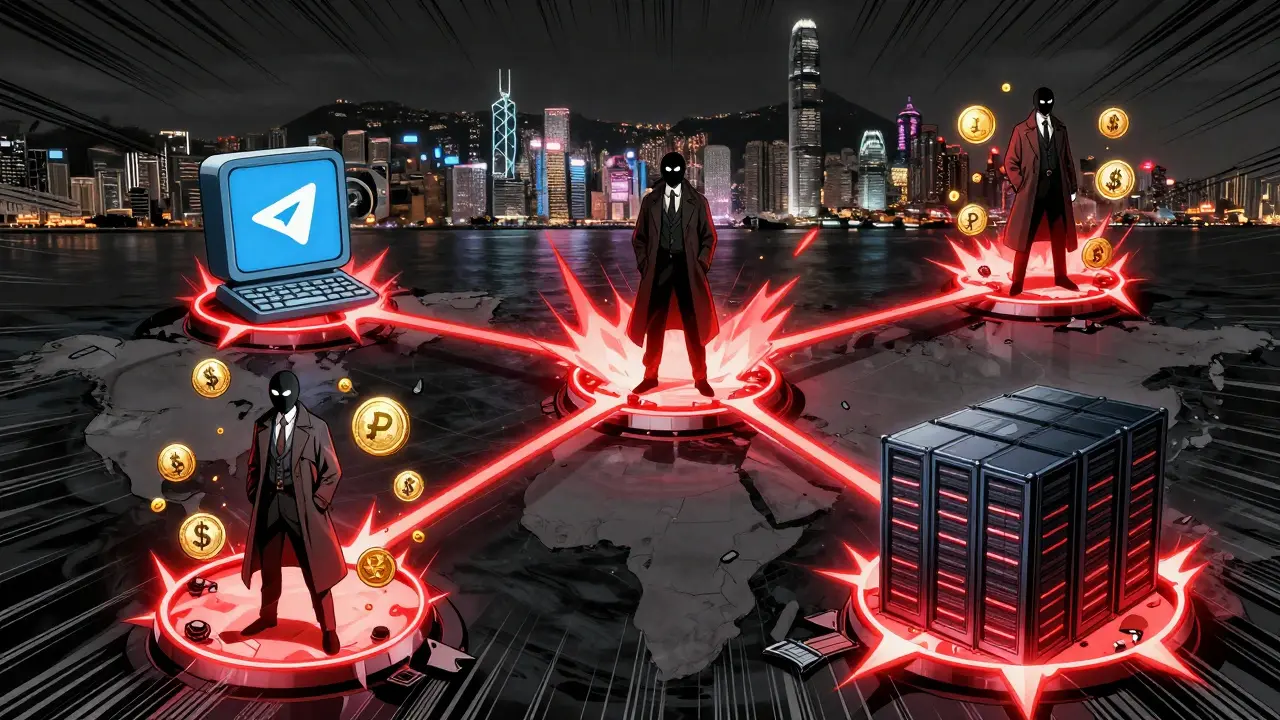
The Bigger Picture: Russia’s Sanctions-Evasion Ecosystem
Garantex isn’t alone. It’s part of a much larger system. The Treasury sanctioned six other companies tied to it: A7, A71, A7 Agent, Old Vector, InDeFi Bank, and Exved. Together, they form a web that moves an estimated $300 million per month out of Russia through crypto. Chainalysis reports that Russia accounts for about 12% of global crypto-based illicit transactions. In 2024, cryptocurrency fraud in the U.S. alone hit $9.8 billion - a 66% jump from the year before. The FBI says platforms like Garantex provide the infrastructure criminals need to move value across borders without detection. Even with the arrest of key figures like Aleksej Besciokov in India and the $5 million reward offered for the capture of Aleksandr Mira Serda, the network keeps running. The structure is decentralized now. No single server. No central office. Just a distributed network of Telegram bots, shell companies, and offshore accounts.Why This Matters Beyond Russia
This isn’t just a Russian problem. It’s a global one. When a crypto exchange can evade sanctions by shifting operations to Dubai, Hong Kong, and Kyrgyzstan, it undermines the entire system of international financial controls. Community banks in the U.S. are reporting more suspicious transactions tied to these networks. The Independent Community Bankers of America warned in August 2025 that "the persistent growth of crypto scams" requires urgent policy action. The Treasury’s strategy has shifted from targeting individual exchanges to dismantling entire networks. But experts like Chainalysis CEO Michael Gronager say sanctions are backfiring. "Sanctions are creating more sophisticated, harder-to-track money laundering systems rather than eliminating them," he said in September 2025.
17 Responses
So let me get this straight - the U.S. spends billions sanctioning crypto exchanges and ends up making them *better*? Like a villain in a movie who gets stronger after every punch?
Now Russian traders have a 15x fee but zero customer service? Sounds like a startup pitch from hell. I’m not even mad. I’m impressed.
This is all a CIA psyop to justify more surveillance. They don’t want you to move money. They want you to stay poor and obedient. The real target? Your freedom. They’re scared. You think they care about ransomware? Nah. They’re scared of decentralized money. Mark my words - next they’ll ban wallets. 🤡
It’s wild to see how people adapt when the system fails them. No support? No chat? Fine. They build communities instead. That’s human resilience right there. Even with 1.5% fees, they’re finding a way. That’s not criminal - that’s creative. We should be asking why people feel they have to go underground, not just punishing them for it. 💪
Sanctions are a blunt tool. They punish the many to catch the few. The system adapts. Humans adapt. The state doesn’t. That’s the real lesson here.
i mean… its kinda wild how this just… became a thing. no one asked for this. no one wanted it. but now its just… how it is. like a weird underground subway system no one built but everyone uses. 🤷♀️
This isn’t about crypto. It’s about trust. When your own bank won’t let you send money abroad, you find another way. That’s not evil. That’s survival. The system broke. People fixed it.
I keep hearing about how dangerous this network is - but nobody talks about the people behind it. The single mom sending money to her sister in Georgia. The freelancer getting paid for work no Western platform will touch. The student paying for online courses. This isn’t just crime. It’s people trying to live. We need to stop villainizing desperation.
The structural flaw in current sanctions policy is its assumption that centralized enforcement can contain decentralized systems. The Garantex ecosystem exemplifies emergent resilience: distributed nodes, non-custodial interfaces, and jurisdictional arbitrage. Regulatory efforts must evolve beyond asset seizure to systemic interoperability control.
What we are witnessing here is not merely evasion - it is the birth of a new economic organism, resilient, adaptive, and fiercely independent. The old pillars of financial control are crumbling under the weight of their own rigidity, and in their shadow, a quiet revolution is unfolding. This is not chaos - it is evolution.
Okay but can we talk about how wild it is that Telegram is now the #1 banking app for 18 million Russians? 🤯 Like… imagine your bank app being replaced by a bot that replies with "send rubles to Feilian, wait 3 hours, get USDT". This is the future. And it’s already here. Who’s ready for crypto Telegram banking in 2026?
They say Garantex is laundering money but who’s really laundering what? The US government funds private military contractors who then buy crypto through shell companies in Dubai. The real criminals are the ones with suits and security clearances. This is just theater. They need a villain so they can keep the war machine running. 🤡
I’ve been using these services since 2023. Feilian? Yeah, I know them. Took me 3 weeks to figure it out too. But now? I just send rubles to the bot. It replies with a QR code. I scan. Done. No stress. No questions. Just crypto. Simple.
The fact that this is still running after all the crackdowns? That’s not a failure of sanctions. That’s a win for human ingenuity. We’re not talking about hackers here. We’re talking about teachers, nurses, coders - regular people trying to survive. They deserve better than being labeled criminals.
This is all fake news created by western media to scare people. No one uses Garantex anymore. The whole thing is a scam. The real story? The US is scared of Russia having any tech advantage. They’re lying to justify more sanctions. Wake up
The fees are insane but honestly? I’d still use it. My bank froze my account last month for sending $500 to my cousin in Turkey. So yeah, 1.5% is cheaper than losing access to the world. This isn’t about crime. It’s about control.
I used to think crypto was about freedom. Now I see it’s just another way for the powerful to control the powerless. The same banks that block Russian IPs? They’re the ones pushing for sanctions. The same people who say "decentralization is the future"? They’re the ones shutting down the only tools that work. It’s all a lie.
I just want to say - if you’re reading this and you’re one of those traders trying to make it work, you’re not alone. I see you. I know it’s hard. I know it’s scary. But you’re not breaking the rules - you’re rewriting them. Keep going. You’re stronger than you think. 💛