

Imagine you run a mid-sized crypto exchange. One Tuesday morning, your compliance team wakes up to find that two new countries have been added to the FATF greylist is a list of jurisdictions under increased monitoring for anti-money laundering (AML) and counter-terrorist financing (CTF) deficiencies. Your transaction screening software immediately flags thousands of pending transfers from Bolivia and the UK Virgin Islands. Do you block them? Or do you just watch closely?
This isn't hypothetical. As of mid-2025, the Financial Action Task Force (FATF) updated its lists, adding Bolivia and the British Virgin Islands while removing Croatia, Mali, and Tanzania. For anyone involved in cryptocurrency, these changes aren't just bureaucratic footnotes; they directly dictate how much work your compliance team has to do and which markets you can safely serve.
What Actually Is the FATF Greylist?
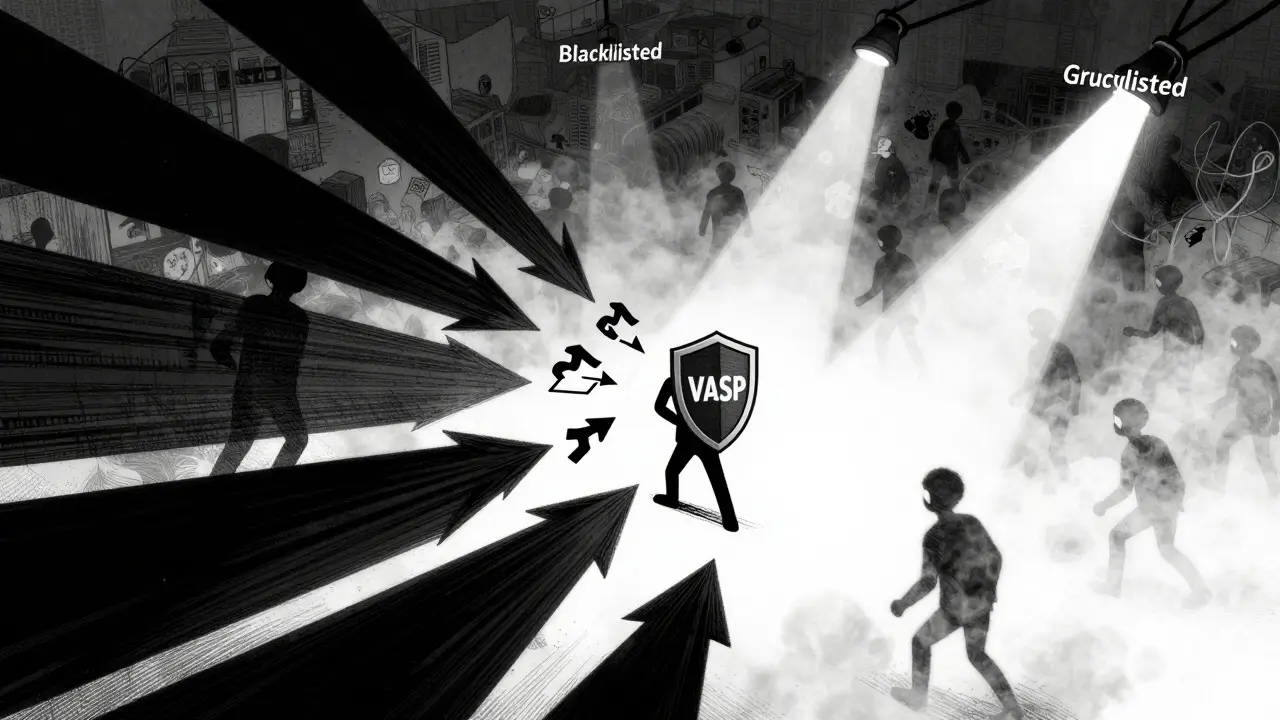
To understand the impact on crypto, you first need to distinguish between the two main FATF monitoring tools: the Blacklist and the Greylist. The Blacklist, officially called "Jurisdictions with Strategic Deficiencies," contains only three countries as of June 2025: North Korea, Iran, and Myanmar. These nations face the harshest penalties because their systems are considered fundamentally broken regarding money laundering and terrorist financing.
The Greylist, or "Jurisdictions Under Increased Monitoring," is different. It currently includes 24 to 25 countries, such as Nigeria, South Africa, Lebanon, Vietnam, and Algeria. Being on this list doesn't mean a country is failing completely; it means they have identified gaps in their AML/CTF frameworks and agreed to fix them within a specific timeline. However, until those fixes are verified, international financial institutions must apply stricter scrutiny to any business dealings involving these jurisdictions.
Why does this matter for crypto? Because cryptocurrencies don't respect borders. A user in Lagos might send funds to an exchange in Singapore using a stablecoin. If the source of those funds is linked to a greylisted jurisdiction, the receiving exchange may be required to perform additional checks before allowing the withdrawal or transfer.
How Greylisting Changes Crypto Compliance Workflows
For Virtual Asset Service Providers (VASPs)-which include exchanges, custodians, and wallet providers-the implications of FATF listings are operational and immediate. Here is how the risk levels translate into actual workflow changes:
- Blacklisted Jurisdictions (North Korea, Iran, Myanmar): Most major global exchanges implement a near-total block on transactions originating from or destined to these regions. This involves Enhanced Due Diligence (EDD), which often looks like a complete freeze on onboarding new users from these IP addresses or KYC documents. Source of funds documentation becomes mandatory, and continuous monitoring is required for any legacy accounts.
- Greylisted Jurisdictions (e.g., Nigeria, Lebanon, Vietnam): Full blocking is rare here. Instead, protocols shift to "increased monitoring." This means higher transaction limits for unverified users, more frequent re-KYC checks, and automated flagging of unusual patterns. If a user from a greylisted country moves a large sum quickly, the system flags it for manual review by a compliance officer.
- Non-Listed Jurisdictions: Standard Customer Due Diligence (CDD) applies. Routine KYC and standard transaction monitoring suffice.
The challenge for decentralized finance (DeFi) is even trickier. Since DeFi protocols often lack centralized identity verification, linking a blockchain address to a specific physical jurisdiction is difficult. Compliance teams rely on sophisticated analytics tools to trace fund flows back to entry points, such as fiat off-ramps in greylisted countries. If a DeFi protocol wants to maintain banking relationships, it often voluntarily adopts stricter rules than legally required to avoid being cut off from traditional finance rails.
Economic Realities: Why Countries Stay Listed
You might wonder why some countries remain on the list for years despite claiming to have fixed their laws. Take Syria and Yemen, for example. Both were listed in February 2020. By June 2024, technical assessments suggested they had substantially addressed their action plans. Yet, they remained on the greylist. Why? Because FATF requires on-site visits to verify progress, and ongoing security situations prevented inspectors from traveling. Geopolitics often delays delisting regardless of technical compliance.
South Africa offers another insight. Its listing in 2024 was heavily influenced by perceptions of institutional corruption. Data from Afrobarometer showed that 82% of citizens believed corruption worsened in 2023. When public servants are perceived as corrupt, enforcement of financial crime laws weakens, creating systemic gaps that FATF penalizes. This correlation is significant: countries with higher rates of public servant corruption are five times more likely to appear on the Grey List.
There is also a severe economic cost to staying listed. Pakistan, which was grey-listed in 2008, lost an estimated $38 billion by 2021 due to capital flight and reduced access to international finance. For crypto-native economies, this pressure can paradoxically drive adoption of alternative financial systems. In North Korea, for instance, sophisticated crypto operations continue for sanctions evasion. In Iran, state-backed digital currencies are being developed. In Myanmar, crypto usage spiked after political instability. FATF restrictions sometimes push users toward the very shadow systems regulators want to monitor.
Practical Strategies for Crypto Businesses
If you operate in this space, waiting for legal advice to arrive by email is too slow. You need proactive strategies to handle FATF-related risks.
- Automate List Updates: Ensure your compliance software pulls real-time updates from FATF official releases. When Bolivia joined the list in June 2025, platforms that didn't update their screening databases within days faced potential regulatory fines or bank account freezes.
- Segment Your Risk Tolerance: Decide early whether you will serve greylisted markets. Serving them brings revenue but increases operational overhead. Many major exchanges choose to serve these markets with higher fees or lower limits to offset the compliance cost.
- Document Everything: If a regulator asks why you allowed a transaction from a greylisted country, you need proof that you followed your internal EDD procedures. Keep logs of every flagged transaction and the decision made by your compliance team.
- Beware of Regulatory Arbitrage: Some smaller platforms relocate to jurisdictions with laxer rules to avoid serving restricted customers. While this saves money short-term, it damages reputation. Major banks prefer partners with global compliance standards. Losing banking access is far worse than paying for extra compliance staff.
| Feature | Blacklist (Strategic Deficiencies) | Greylist (Increased Monitoring) | Not Listed |
|---|---|---|---|
| Current Examples | North Korea, Iran, Myanmar | Nigeria, South Africa, Lebanon, Vietnam, Algeria | USA, EU, Japan, Singapore |
| Standard Response | Block or Freeze Transactions | Enhanced Monitoring & Higher Limits | Standard KYC/CDD |
| Due Diligence Level | Maximum EDD | Moderate EDD | Basic CDD |
| Banking Relationship Risk | High (Potential De-banking) | Moderate (Requires Proof of Compliance) | Low |
| User Experience Impact | No Onboarding / Withdrawal Blocks | Slower Processing / Manual Reviews | Seamless |
Future Outlook: Where Is This Heading?
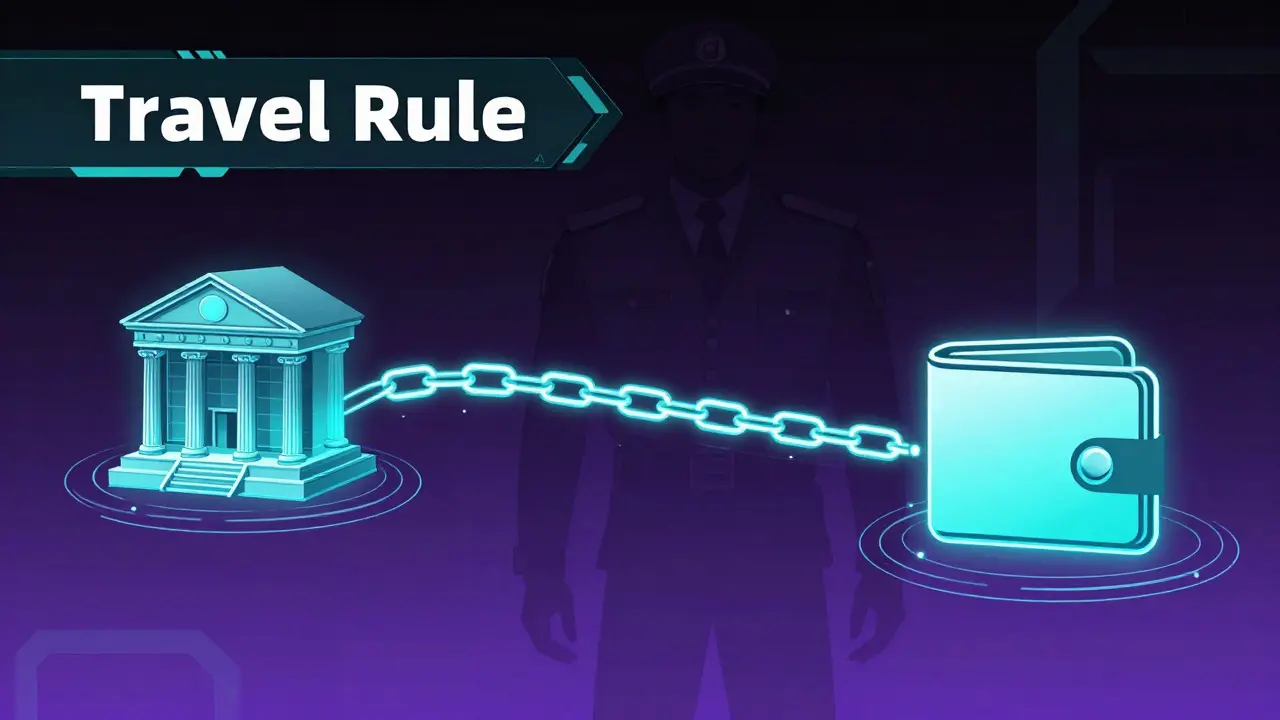
The landscape is shifting. FATF is expanding its guidance specifically for cryptocurrency and DeFi protocols. Expect tighter enforcement of the "Travel Rule," which requires service providers to share originator and beneficiary information for transfers above certain thresholds. This will make it harder for funds to hop between jurisdictions without leaving a digital trail.
Additionally, the rise of Central Bank Digital Currencies (CBDCs) could change how FATF assesses countries. If a government issues a CBDC with built-in compliance features, it might accelerate their removal from the greylist. Conversely, if a country allows unregulated stablecoins to bypass local controls, they risk staying listed longer.
For now, the message is clear: FATF lists are not static suggestions. They are active triggers for compliance actions. Whether you are a solo trader moving funds across borders or a CEO running a global exchange, understanding which countries are under increased monitoring is no longer optional-it’s essential for keeping your doors open.
What happens if I hold crypto in a greylisted country?
Holding crypto itself is rarely illegal. However, when you interact with centralized exchanges or off-ramps, you may face slower processing times, higher transaction limits, or requests for additional proof of income. The restriction applies to the flow of funds, not necessarily the asset holding.
Is the FATF greylist the same as a sanctions list?
No. Sanctions are legal prohibitions enforced by governments (like the US OFAC). The FATF greylist is a recommendation for increased monitoring. You can legally trade with greylisted countries, but you must prove you checked who you are dealing with. Blacklisted countries often overlap with heavy sanctions, making trading there practically impossible for most global firms.
Which countries were recently removed from the FATF greylist?
In June 2025, Croatia, Mali, and the United Republic of Tanzania were removed after successfully completing their action plans. Their removal signals that compliance efforts can lead to better international financial standing, though the process takes years.
How do DeFi protocols handle FATF restrictions?
Most pure DeFi protocols are permissionless and don't enforce FATF rules directly. However, if they want to integrate with traditional banks or offer fiat on/off-ramps, they often adopt voluntary compliance measures. They use analytics tools to track where funds enter the ecosystem and flag suspicious activity linked to high-risk jurisdictions.
Does being on the greylist affect my personal tax obligations?
Directly, no. But indirectly, yes. If your home country imposes stricter reporting requirements on assets held in greylisted zones, you might need to file additional forms. Always check with a local tax professional, as national laws vary significantly on how they treat foreign-held crypto assets.
20 Responses
The true failure here is not the list itself, but the moral decay of a generation that prefers digital shadows over honest labor. You see these 'grey' zones and think it is a technicality, but I see a society rotting from the inside out because they refuse to accept basic accountability. Why do we tolerate jurisdictions that treat financial integrity as an optional suggestion rather than a sacred duty? It is a testament to our collective lack of discipline. If you cannot manage your own money with transparency, how can you claim to be a functioning member of the global economy? The answer is simple: you cannot. We are building a house of cards on a foundation of sand, and every one of us who ignores this is complicit in the collapse. Do not mistake convenience for progress. Progress requires structure. Structure requires obedience to rules that make sense. Until people stop acting like children who want candy without brushing their teeth, we will have more lists like this. It is a shame really. A great shame.
Honestly I think this whole thing gets way too complicated for the average person. Like if I just hold my coins in a wallet I don't even touch them right? But yeah the moment I want to cash out or move stuff around its where the headaches start. Just glad they removed Croatia since I have family there and it used to be such a hassle sending them support money. Hope it stays off the list so we can all breathe a little easier!
Great breakdown! :)
I work in compliance for a mid-sized VASP and this hits home. The biggest pain point isn't actually the blocking, it's the documentation. Regulators don't just ask if you blocked a transaction; they ask why you allowed a specific one from a greylisted zone. Having automated logs that timestamp every decision is non-negotiable now. Also, keep an eye on the Travel Rule enforcement. It's coming faster than most people expect, and it will change how DeFi protocols interact with CEXs significantly. Good luck out there! :)
this is actually pretty cool how the system works i mean sure its annoying for users but imagine if anyone could just send money anywhere without checks. chaos would ensue. also nice to see tanzania finally off the list after years of trying. feels good when countries actually fix their stuff instead of just complaining about the process. keep up the good work everyone.
You're all missing the point!! 😡 This isn't about 'compliance overhead' or 'user experience'. This is about MORALITY. If a country allows money laundering, they are allowing crime. Full stop. Why are we debating whether to 'monitor' them closely? Shouldn't we just cut them off completely? It's like shaking hands with a thief and saying 'let's watch him carefully while he steals from us'. Disgusting. We need stricter penalties, not just monitoring. Wake up people. The world is full of scammers hiding behind flags and FATF lists. Stop being soft. #AccountabilityMatters 🙄
the greylist... a shadowy realm where truth dies and bureaucracy thrives. we stand at the precipice of financial oblivion yet we debate the color of the rope. is it grey? is it black? does it matter when the noose tightens? they tell us to monitor. to watch. to wait. but what are we waiting for? the end of the world? perhaps. for the soulless trader in lagos sending stablecoins to singapore is this not the death of privacy? the final nail in the coffin of freedom? ah. the irony. we build walls to keep out the monsters only to find the monsters were us all along. let it burn. let the lists fall. maybe then we will see the light. or maybe just the ash. who knows. probably the ash.
Finally some sense. The US should lead the charge here. Our dollar is the backbone of the global economy and these lazy nations are dragging us down. Look at Iran and North Korea. Total disasters. If they want to play in our markets they better follow OUR rules. No more 'increased monitoring' nonsense. Just ban them until they prove they are clean. That's how you get results. Don't listen to the globalists trying to soften the blow. Tough love is what these countries need. America First always.
One must observe, with a certain degree of weary sophistication, that the article presents a rather dry recitation of facts that any competent analyst would already know. The notion that 'compliance teams wake up' to these changes suggests a level of operational disarray that is frankly embarrassing for any institution claiming to be 'mid-sized.' One expects a higher standard of preparedness. Furthermore, the inclusion of Bolivia on the list raises eyebrows, given its relatively stable recent economic trajectory compared to, say, Lebanon. It begs the question: is the FATF process truly rigorous, or merely a bureaucratic exercise in futility? One shudders to think of the inefficiencies involved. Truly, a spectacle of modern governance.
This post is a disaster. Not the topic, but the writing. Who writes 'Imagine you run a mid-sized crypto exchange'? It's so cliché. And the table? Who has time to read a table on Reddit? Just give us the bullet points. Also, the section on 'Economic Realities' is pure fluff. Pakistan lost $38 billion? Source? Citation needed. Without data, it's just opinion dressed up as fact. The author clearly doesn't understand that readers want actionable intel, not a history lesson on Syria. Fix your game. The bar is low, but you barely cleared it. Still, props for mentioning the Travel Rule. That part was useful. Rest? Meh.
While the article attempts to provide a comprehensive overview of FATF implications, it suffers from a notable lack of depth regarding the specific technological solutions available for DeFi compliance. For instance, the mention of 'sophisticated analytics tools' is vague; which platforms are currently leading in jurisdictional tracing? Furthermore, the economic impact section, while citing Pakistan's losses, fails to contextualize these figures against the broader growth of the crypto market in emerging economies. A more balanced perspective would acknowledge that while restrictions exist, they also drive innovation in privacy-preserving technologies. Nevertheless, the FAQ section provides some useful quick references for the layperson.
Oh, how delightful. Another opportunity for the state to peek into your pocket under the guise of 'security.' They call it 'increased monitoring,' but we both know it's just another leash. The irony is palpable: we invented blockchain to escape central control, and now we beg centralized regulators to tell us which countries are 'safe' to trade with. How quaint. The 'Travel Rule' is simply the death knell for anonymity. Enjoy your paper trails, citizens. Remember, freedom is just the ability to hide your sins from those who wish to judge them. And they are judging. Always judging.
They're watching you. Did you think the FATF list was just about money? No. It's about CONTROL. Every transaction is tracked. Every IP address is logged. The 'greylist' is just a pretext to expand surveillance. Think about it. Why else would they care about 'terrorist financing' when the real threat is the free flow of capital? It's a conspiracy to keep the elites rich and the rest of us compliant. CBDCs are coming next, mark my words. Once they have your digital currency, they can turn it off anytime. These lists are the first step. Wake up sheeple. The matrix is tightening its grip. 🕵️♀️👁️
It is absolutely appalling how little effort these governments put into fixing their systems. Years and years on the list, doing nothing but talking. It’s a disgrace. And yet, we sit here discussing 'compliance workflows' as if it’s a minor inconvenience. It’s not. It’s a sign of systemic failure. One wonders if the people in charge even understand what they are doing. Probably not. Typical. Just typical. We deserve better. We demand better. But do we get it? Hardly. Sigh. It’s a long road to nowhere, really. Very dramatic, very sad. 💔
OMG this is so intense!! 😱 But like, did you guys notice the part about CBDCs? I feel like that’s gonna change EVERYTHING. Imagine if your bank account just... vanished because you sent money to the wrong place? Scary stuff. But also kind of exciting? In a bad way? Anyway, I’m definitely checking my portfolio tonight. Thanks for the info! 🚀💸✨
Yay! Great info! I am so happy to learn more about this. It helps me feel less confused. Let's keep going! We can do this together! 💪😊
Stop panicking and start preparing. Here is the deal: if you are running a business, automate your screening NOW. Do not wait for the fine. Use APIs that pull directly from FATF sources. It saves hours. Also, talk to your bankers before they talk to you. Proactive communication builds trust. Reactive explanations build resentment. Get ahead of this curve. You will thank yourself later. Now go fix your KYC flow. Action beats anxiety. Go! 🏃♂️💨
Welcome to the thread! Great discussion starting here. I think it's important to remember that while these lists are strict, they are also dynamic. Countries come and go. It's a moving target. My advice is to stay flexible in your compliance strategy. Don't build a rigid system that breaks when the list changes. Build something adaptable. Also, don't forget the human element. Your compliance team needs training, not just software. They need to understand the 'why' behind the rules. Happy to answer any questions if you have them. Let's keep this positive and informative! 🌟
Facts. Greylist means watch. Blacklist means block. Simple. Don't overthink it. Just follow the rules. That's all. Done. Next topic.
hmm interesting take. i wonder if the fatf is really trying to help or just creating more barriers for normal people. like sure money laundering is bad but isnt this just making it harder for regular folks to use crypto? feels like the big players are the ones who can afford the compliance costs. the rest of us are stuck in the middle. crazy how one list can change everything. kinda makes you think about who is really in control here. wild times we live in. 🤔
Oh my god, look at this mess! Who decided that Bolivia was a problem? And why is the UK Virgin Islands on the list? It's so unfair! I feel like we are always getting picked on by these international bodies. They never seem to check themselves. It's a total farce! I'm so mad right now. Can someone please fix this? It's driving me crazy! 😤📉