

Imagine selling your Bitcoin for a massive profit and paying absolutely zero tax on that gain. For most of the world, this is a fantasy. In El Salvador, it is the law. Since becoming the first nation to adopt Bitcoin as legal tender in September 2021 under President Nayib Bukele, the country has positioned itself as a unique sanctuary for crypto investors. The core promise? A complete exemption from capital gains tax on Bitcoin transactions.
But here is the catch you need to know before packing your bags or moving your funds. While the headline "no capital gains tax" sounds like a blank check, the reality in 2026 is more nuanced. Recent agreements with international financial bodies have tweaked the rules, and domestic adoption tells a different story than the government’s press releases. If you are looking to leverage El Salvador’s tax haven status, you need to understand exactly what is exempt, what isn’t, and how the regulatory landscape has shifted since the initial hype.
The Core Rule: Zero Capital Gains on Bitcoin
At its heart, El Salvador’s Digital Assets Law is straightforward regarding profits. When you sell Bitcoin at a higher price than you bought it, the difference is not taxed. This applies to individuals and businesses alike. Unlike countries where short-term trades might be taxed as income and long-term holdings as capital gains, El Salvador treats Bitcoin profits as tax-free events.
This policy extends beyond just locals. Foreign investors who bring significant capital into the country-specifically those investing over ₿3 (three Bitcoin)-are eligible for this complete exemption. It is a powerful incentive designed to attract global liquidity. However, this benefit is specific to Bitcoin. If you trade Ethereum, Solana, or other altcoins, the rules change slightly, though they remain favorable compared to traditional jurisdictions.
How the IMF Deal Changed the Game
You cannot talk about El Salvador’s Bitcoin policy in 2026 without mentioning the International Monetary Fund (IMF). In December 2024, El Salvador secured a $1.4 billion loan from the IMF. This wasn’t free money; it came with strict conditions that forced the government to adjust its Bitcoin strategy.
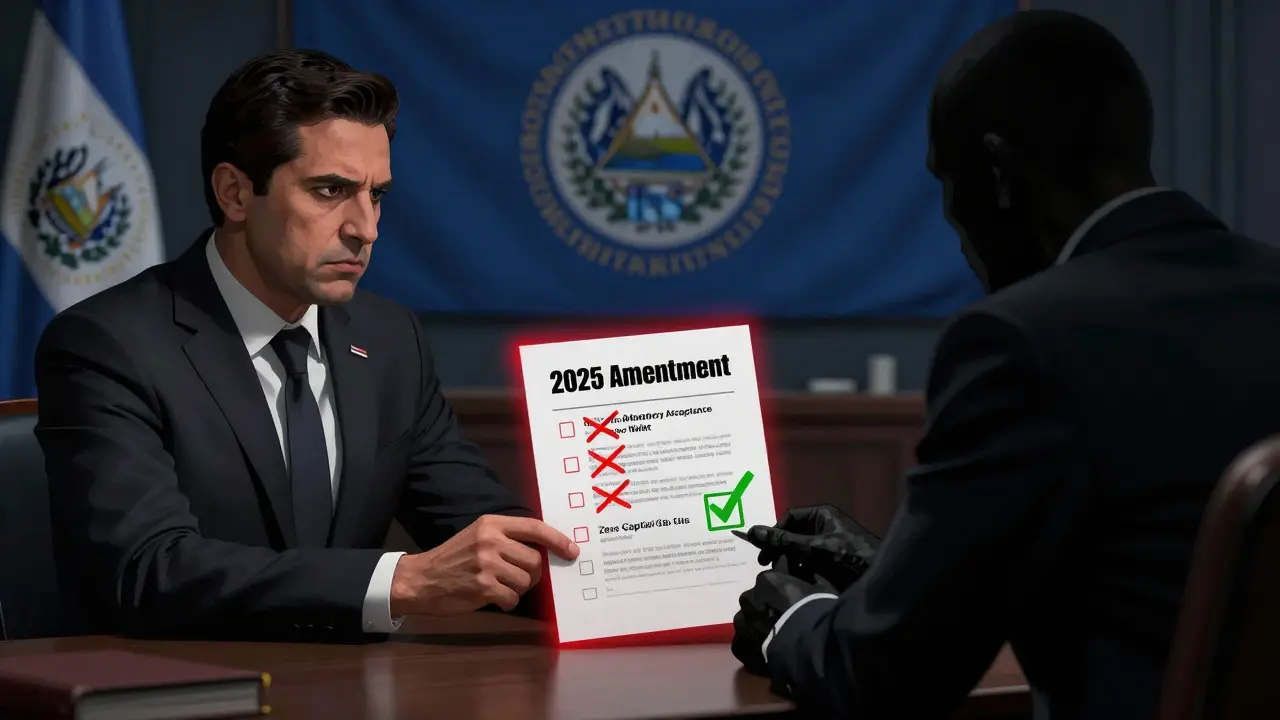
An amendment passed in February 2025 required several key changes:
- No Mandatory Acceptance: Merchants are no longer legally forced to accept Bitcoin if they don’t want to.
- Reduced Government Buying: The state scaled back its aggressive Bitcoin purchasing program.
- Chivo Wallet Wind-Down: The state-sponsored Chivo wallet saw reduced involvement and promotion.
- No Tax Payments in BTC: Citizens can no longer pay taxes using Bitcoin directly.
Crucially, however, the zero capital gains tax exemption remained intact. The IMF did not demand that El Salvador start taxing Bitcoin profits. Instead, they wanted stability and reduced fiscal risk. So, while the mandatory nature of Bitcoin usage disappeared, the tax advantage for holders and traders stayed put. This distinction is vital for anyone planning to use the jurisdiction for wealth management.
Licensing Your Business: CNAD Rules
If you plan to operate a business in El Salvador dealing with digital assets, you must register with the National Commission of Digital Assets (CNAD). This body oversees all crypto operations. You can’t just set up shop; you need the right license. There are two main types:
| License Type | Scope | Best For |
|---|---|---|
| BSP (Bitcoin Service Provider) | Covers only Bitcoin activities | Bitcoin-only exchanges, wallets, payment processors |
| DASP (Digital Asset Service Provider) | Covers all other cryptocurrencies and tokens | Multi-crypto exchanges, NFT platforms, token issuance, investment services |
Even with these licenses, you still enjoy significant tax breaks. Businesses holding a BSP or DASP license are exempt from corporate income tax, services transfer tax, and municipal taxes under the LEAD program. Additionally, foreign investors benefit from exemptions on import duties. Just remember: while you don’t pay tax on your profits, you do have to follow strict Anti-Money Laundering (AML) and Know Your Customer (KYC) rules. The CNAD expects clear records, annual financial statements, and full transparency.
Is It Really a Haven? The Adoption Reality
Policies look great on paper, but do people actually use them? The data suggests a cooling trend. According to statistics from the Instituto Universitario de Opinión Pública (Iudop) at UCA University, Bitcoin usage among Salvadorans has dropped significantly since 2021.
- 2021: 25.7% usage rate
- 2022: 21%
- 2023: 12%
- 2024: 8.1%
Why the decline? Volatility, lack of merchant acceptance after the mandate was lifted, and simple habit. Most daily transactions still happen in US Dollars. However, this doesn’t negate the value for foreign investors or high-net-worth individuals who view El Salvador primarily as a tax-efficient jurisdiction rather than a daily spending hub. The government’s own Bitcoin holdings have seen mixed results, sitting at a 50% profit by March 2024 when prices hit $69,000, but the cost of promoting the ecosystem remains high.

El Salvador vs. Other Crypto-Friendly Jurisdictions
El Salvador isn’t alone in offering tax benefits. If you are deciding where to base your crypto activities, it helps to compare. Here is how El Salvador stacks up against other major crypto-friendly regions in 2026:
| Jurisdiction | Capital Gains Tax | Key Condition |
|---|---|---|
| El Salvador | 0% | Specific to Bitcoin; requires residency/investment threshold |
| Cayman Islands | 0% | No income/corporate tax at all; ideal for funds |
| UAE | 0% | Zero tax on all crypto activity; strong regulatory clarity |
| Germany | 0% | Only after holding assets for 12+ months |
| Portugal | 0% | Long-term gains; benefits via Non-Habitual Resident program |
El Salvador’s unique angle is its legal tender status. The Cayman Islands and UAE offer broader zero-tax environments but lack the "legal tender" narrative. Germany and Portugal offer exemptions but with time-based restrictions or residency requirements that can be complex. El Salvador offers immediate, permanent exemption on Bitcoin profits, provided you navigate the licensing and residency rules correctly.
Practical Steps for Investors in 2026
If you are serious about leveraging El Salvador’s tax laws, here is your checklist:
- Determine Your Status: Are you an individual investor or a business? Individuals need to consider residency options. Businesses need CNAD licenses.
- Choose the Right License: If you deal only with Bitcoin, go for BSP. If you touch other coins, get DASP.
- Prepare Documentation: Have your KYC/AML procedures ready. The CNAD is strict on compliance even if they are lenient on taxes.
- Understand Income Sources: Exemptions apply to capital gains. Income generated within El Salvador (like local salaries) may still be subject to local regulations, though foreign-sourced income often enjoys exemptions.
- Monitor Policy Shifts: Keep an eye on further amendments related to the IMF agreement. While the core tax break is safe, peripheral rules can change.
The bottom line? El Salvador remains one of the few places where you can hold and trade Bitcoin without fear of capital gains tax. But it is no longer the wild west. It is a regulated, compliant, and increasingly mature market. Do your due diligence, get licensed, and enjoy the tax freedom.
Do I have to live in El Salvador to avoid Bitcoin capital gains tax?
Not necessarily for the exemption itself, but residency plays a role. Foreign investors investing over ₿3 are eligible for the exemption. However, to fully benefit from the broader tax haven structure (like no income tax on foreign earnings), establishing residency or operating a licensed entity within the country is usually required. Consult a local tax expert to confirm your specific status.
Does the zero tax rule apply to Ethereum and other altcoins?
The primary focus of the legal tender status and the most robust exemptions is on Bitcoin. However, businesses holding a DASP license for other digital assets also benefit from corporate income tax exemptions under the LEAD program. Individual capital gains on non-Bitcoin assets should be verified with current CNAD guidelines, as the "legal tender" status specifically applies to Bitcoin.
What happened to the Chivo wallet?
Following the IMF agreement in late 2024 and early 2025, the government wound down its active involvement and promotion of the state-sponsored Chivo wallet. While the app may still exist, it is no longer a central pillar of the national strategy, and merchants are no longer mandated to support it.
Can I still pay my taxes in Bitcoin?
No. As part of the amendments passed in February 2025 to satisfy IMF conditions, the ability to pay taxes directly in Bitcoin was discontinued. Taxes must now be paid in fiat currency (US Dollars).
Is it safe to invest in El Salvador given the IMF deal?
The IMF deal actually added a layer of regulatory stability. While it removed some aggressive mandates (like forcing merchants to accept BTC), it preserved the core tax exemptions. The requirement for CNAD licensing means the market is more regulated and less prone to fraud, making it safer for legitimate businesses and investors.