
You’ve probably heard the name Decaswap is a cryptocurrency trading platform that has appeared in various online discussions and promotional campaigns. But here is the hard truth: finding reliable, independent information about this specific exchange is incredibly difficult. In an industry where transparency is everything, silence can be just as loud as a warning siren. If you are looking to deposit funds into Decaswap in 2026, you need to pause and look closer before you click "connect wallet" or transfer any assets.
The Missing Information Problem
When we review major exchanges like Binance, Coinbase, or even decentralized giants like Uniswap, we have years of data. We know their transaction volumes, their security audits, and their regulatory status. With Decaswap, the picture is blurry at best. A search for credible, third-party reviews often leads to circular links or generic marketing copy rather than genuine user experiences.
This lack of digital footprint is a significant red flag. Legitimate platforms, especially those handling user funds, usually have a presence on sites like Trustpilot, CoinMarketCap, or CoinGecko. They also have active communities on Twitter (X), Discord, or Telegram where real users discuss bugs, features, and customer service issues. If you cannot find these organic conversations, ask yourself: who is actually using this platform?
| Warning Sign | What It Means | Risk Level |
|---|---|---|
| No verifiable team members | Anonymous founders make accountability impossible | High |
| Lack of security audits | Code may contain vulnerabilities or backdoors | Critical |
| Promises of guaranteed high returns | Classic Ponzi scheme tactic | Critical |
| No listing on CoinMarketCap/CoinGecko | Platform lacks market validation | High |
| Pressure to deposit quickly | Fear-of-missing-out (FOMO) manipulation | High |
Decentralized vs. Centralized: What Kind of Exchange Is It?
To understand the risk, you first need to identify what type of platform Decaswap claims to be. The name suggests it might be a decentralized exchange (DEX), similar to Uniswap or PancakeSwap. However, many scams mimic the branding of legitimate DEXs to confuse users.
If Decaswap is a Centralized Exchange (CEX), a platform where a company holds custody of your funds and facilitates trades, you are trusting them with your private keys. Without proof of reserves or a known corporate entity behind the operation, your funds could vanish overnight. This happened to countless users during the collapse of FTX and other fraudulent platforms. Always verify if the exchange publishes regular Proof of Reserves (PoR) reports.
If it is a Decentralized Exchange (DEX), a protocol that allows peer-to-peer trading without intermediaries, the risk shifts slightly but doesn't disappear. You interact directly with smart contracts. If those contracts haven't been audited by reputable firms like CertiK, OpenZeppelin, or Trail of Bits, you might be sending money into a black hole. Many fake DEXs use interfaces that look identical to popular ones but route your tokens to a hacker's wallet instead of swapping them.
Security Audits and Smart Contract Risks
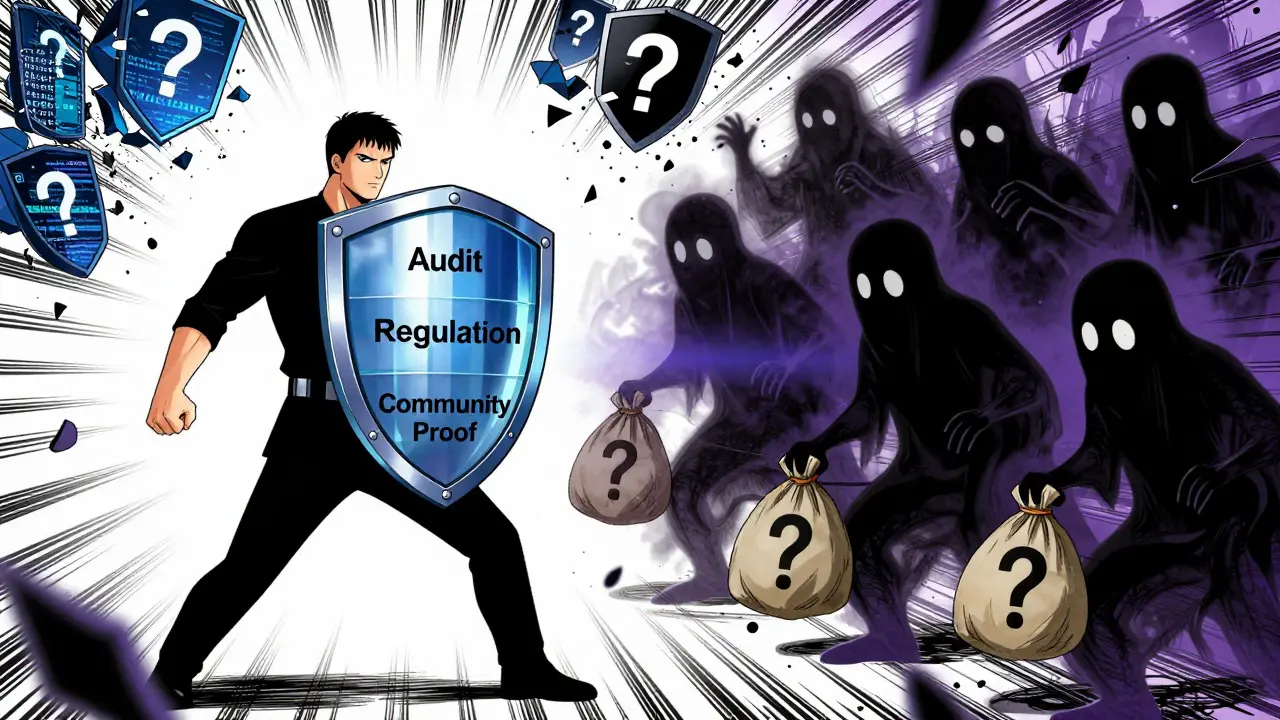
In the world of crypto, code is law. If Decaswap operates on a blockchain, its security depends entirely on the quality of its smart contracts. A smart contract audit is a professional review of the code to find bugs, loopholes, or malicious functions.
Check the Decaswap website carefully. Do they link to a public audit report? Be wary of PDFs hosted only on their own site; anyone can forge these. Look for the audit on the auditor’s official website. Common red flags include:
- "Audit Passed" badges from unknown firms: There are hundreds of low-quality auditing companies. Stick to industry leaders.
- No GitHub repository: Legitimate projects usually have open-source code so developers can inspect it.
- Renounced ownership: For DEXs, renouncing ownership means the developers can no longer change the contract rules. This is a good sign, but only if the code was safe to begin with.
If Decaswap cannot provide transparent, verifiable audit details, assume the worst. The cost of a potential loss far outweighs the convenience of trying a new, unproven platform.
Regulatory Status and Legal Protection
By 2026, the regulatory landscape for cryptocurrencies has tightened significantly across major jurisdictions like the US, EU, and UK. Legitimate exchanges comply with Anti-Money Laundering (AML) and Know Your Customer (KYC) regulations. They hold licenses from bodies like the Financial Conduct Authority (FCA) in the UK or state-level Money Transmitter Licenses (MTL) in the US.
Does Decaswap list any regulatory licenses? If they claim to be fully anonymous while holding your fiat currency or stablecoins, they are likely operating illegally. This means if something goes wrong, you have zero legal recourse. No court will help you recover funds from an unregulated offshore entity. Always check the footer of their website for legal disclaimers and license numbers, then verify those numbers on the regulator’s official database.
User Experience and Hidden Fees
Beyond security, consider the practicality of using the platform. Even if Decaswap is not a scam, it might be poorly designed. High fees are a common way for obscure exchanges to extract value from users. Look out for:
- Withdrawal fees: Are they higher than network gas fees? Some exchanges charge exorbitant rates to discourage you from leaving.
- Spread costs: The difference between the buy and sell price. A wide spread means you lose money immediately upon trading.
- Liquidity issues: Can you actually sell your assets when you want to? Low liquidity means large trades crash the price, resulting in significant slippage.
Compare these metrics against established competitors. If Decaswap charges 2% in fees while Binance or Kraken charges 0.1%, ask why you would take the extra risk for worse terms.

Social Proof and Community Sentiment
One of the most powerful tools in your research arsenal is social listening. Go to Reddit, X (Twitter), and specialized crypto forums. Search for "Decaswap scam," "Decaswap review," or "Decaswap withdrawal."
Pay attention to the tone of the comments. Are they all overly positive and posted by accounts with few followers? That’s a sign of bot activity. Real users complain. They talk about slow support, confusing interfaces, or minor bugs. A complete absence of negative feedback is suspicious. Conversely, if you find threads detailing frozen withdrawals or unresponsive support teams, treat those as definitive warnings.
Alternatives to Consider
If your goal is to trade safely and efficiently, there are proven alternatives that offer better security, lower fees, and greater transparency. Depending on your needs, consider these options:
- For Beginners: Coinbase or Kraken offer regulated, user-friendly interfaces with strong customer support.
- For Advanced Traders: Binance or Bybit provide deep liquidity and advanced charting tools.
- For DeFi Enthusiasts: Uniswap, Curve, or PancakeSwap are battle-tested decentralized exchanges with millions of dollars in total value locked (TVL) and extensive audit histories.
Switching to a well-established platform reduces your risk profile dramatically. You don’t need to chase the newest name in town to get good trading conditions.
How to Verify Any Crypto Exchange
Use this step-by-step checklist before depositing into any new platform, including Decaswap:
- Check Domain Age: Use WHOIS lookup tools. New domains (less than 6 months old) are higher risk.
- Verify Team Identity: LinkedIn profiles of founders should match the people listed on the site.
- Look for Independent Reviews: Check CoinMarketCap, CoinGecko, and Trustpilot.
- Test with Small Amounts: Never deposit your life savings initially. Start with $10 and try to withdraw it.
- Enable 2FA: Ensure the platform supports authenticator apps (not just SMS).
Is Decaswap a scam?
While there is no definitive court ruling labeling Decaswap a scam, the lack of transparent information, verifiable audits, and independent user reviews makes it highly risky. Many platforms with similar characteristics have turned out to be fraudulent. Proceed with extreme caution.
Where can I find real Decaswap reviews?
Search for Decaswap on Trustpilot, Reddit, and CoinMarketCap. Be skeptical of reviews hosted only on the Decaswap website itself, as these can be fabricated. Look for discussions on independent crypto forums like Bitcointalk or dedicated Discord servers.
Is Decaswap regulated?
As of 2026, there is no clear evidence that Decaswap holds major regulatory licenses such as those from the SEC, FCA, or FinCEN. Always verify any claimed license number directly with the issuing government agency.
What are safer alternatives to Decaswap?
Safer alternatives include centralized exchanges like Coinbase, Kraken, and Binance, or decentralized exchanges like Uniswap and PancakeSwap. These platforms have established track records, security audits, and large user bases.
Can I trust anonymous crypto exchanges?
Anonymous exchanges carry significantly higher risk. Without a known corporate entity or identifiable team, there is little accountability if funds are lost due to hacks or mismanagement. Regulated exchanges with public teams are generally safer choices.