

Imagine a company with millions of dollars in the bank but no CEO, no CFO, and no single person who can sign a check. That is the reality for most Decentralized Autonomous Organizations (DAOs) today. The money sits there, governed by code and voted on by token holders scattered across the globe. This pool of funds is known as the DAO Treasury, which serves as the financial backbone of the organization, providing essential resources for operations, projects, and governance. If managed poorly, this treasury can drain away through bad investments or security breaches, killing the project before it truly begins. If managed well, it fuels growth, rewards contributors, and ensures the DAO survives market crashes.
The challenge? There are no rulebooks written by accountants. Traditional finance relies on centralized authority-bank accounts overseen by finance officers. DAOs operate through smart contracts that execute transactions automatically based on pre-defined rules, eliminating the need for governing bodies and operating without central authority over decision-making. This shift creates unprecedented transparency but also introduces unique risks. You are not just managing money; you are managing trust in a system where every transaction is public and irreversible.
The Core Pillars of Effective Treasury Management
Effective DAO Treasury Management refers to the process by which decentralized autonomous organizations handle, allocate, and utilize their financial resources to support their mission and objectives. It is not just about holding assets; it is about strategic allocation, risk mitigation, and community alignment. According to analysis from LimeChain published in October 2022, proper management of these financial resources is crucial for ensuring sustainability and growth, while poor treasury management can lead to the complete destruction of a DAO.
To build a resilient treasury, you must focus on three non-negotiable pillars:
- Security-First Approach: This requires multi-signature wallets where transactions require approval from multiple authorized members, mitigating the risk of single points of failure and unauthorized access. Smart contract audits are conducted regularly to minimize vulnerabilities that could be exploited by hackers.
- Transparency and Collective Decision-Making: All treasury transactions should be publicly viewable on the blockchain, fostering transparency and accountability. DAOs establish clear processes for involving the community in treasury decisions through proposals and voting mechanisms.
- Financial Responsibility: Prioritize long-term sustainability over short-term gains. Diversification spreads holdings across various asset classes to mitigate risk and protect the treasury from market volatility.
Metana’s expert assessment indicates that effective DAO treasury management rests upon a strong foundation of core principles that ensure responsible use of community funds and foster trust among members. When you ignore these pillars, you invite chaos. When you embrace them, you build an institution that can outlast bear markets and regulatory shifts.
Security: Protecting the Digital Vault
In traditional banking, if your password is stolen, you call the bank. In a DAO, if a private key is compromised, the funds might be gone forever. Security is not a feature; it is the foundation. The primary defense mechanism is the Multi-Signature Wallet (often called a multisig), which requires a specific number of signatures (e.g., 3 out of 5) to authorize any transaction. This eliminates the risk of a single insider threat or a hacked device draining the entire treasury.
Beyond multisigs, you must implement Cold Storage for a significant portion of holdings, keeping assets offline and inaccessible to internet-based attacks. Regular Smart Contract Audits are conducted by third-party firms to identify and address potential vulnerabilities in the code governing the treasury. Think of this like having an architect inspect your building’s foundation every year. Without it, a small crack can become a catastrophic collapse.
Coinmetro’s editorial team analysis from May 2, 2024, states that effective treasury management is pivotal for enhancing a DAO's financial health and ensuring its sustainability over the long term. They note that adopting transparent treasury practices cultivates trust and dependability among stakeholders, leading to a more engaged and committed community. Conversely, experts warn that poor treasury management can lead to significant financial losses and mismanagement issues, eroding the trust of community members and stakeholders.

Governance: How Decisions Are Made
Who decides how the money is spent? In a corporation, it’s the board. In a DAO, it’s the token holders. Token Holders have governance rights and actively participate in the decision-making process through different voting mechanisms. This democratic approach is powerful but slow. Every major expense-from hiring a developer to buying real estate-usually requires a proposal, a discussion period, and a vote.
This process differs significantly from traditional organizational financial management. While traditional businesses function with centralized financial authority, DAOs operate as decentralized entities built on smart contracts and blockchain technology. The transparency requirements in DAO treasury management exceed those of traditional organizations, with all transactions being publicly viewable on the blockchain, creating unprecedented levels of financial transparency.
However, this model has pitfalls. Voter apathy is common. Most token holders do not read every proposal. To combat this, successful DAOs delegate power to specialized working groups or treasurers who operate within strict budgets approved by the broader community. This balances efficiency with decentralization.
| Feature | Traditional Corporation | Decentralized Autonomous Organization (DAO) |
|---|---|---|
| Decision Authority | Centralized (CFO/Board) | Decentralized (Token Holders/Voting) |
| Transparency | Limited (Quarterly Reports) | Full (On-chain, Real-time) |
| Security Mechanism | Bank Insurance/Fraud Detection | Multi-Sig Wallets/Cold Storage |
| Auditing | Annual External Audit | Continuous On-chain Verification + Smart Contract Audits |
| Asset Type | Fiat Currency (USD, EUR) | Cryptocurrencies (ETH, USDC, Native Tokens) |
Risk Management: Navigating Volatility
Crypto markets are volatile. A 20% drop in Ethereum’s price can wipe out a quarter of a DAO’s treasury overnight. Risk management involves the identification, assessment, and mitigation of financial risks that could impact the treasury's holdings, such as market volatility, regulatory changes, and security threats.
The main risks include:
- Market Risk: The value of assets fluctuates wildly. Mitigation involves diversifying into stablecoins (like USDC or DAI) and yield-bearing assets.
- Protocol Risk: The underlying blockchain or DeFi protocol fails. Mitigation involves spreading assets across multiple chains (Ethereum, Solana, etc.) and audited protocols.
- Technical Risk: Bugs in smart contracts. Mitigation involves rigorous auditing and bug bounty programs.
- Governance Risk: Bad proposals pass due to low voter turnout. Mitigation involves quadratic voting or delegation systems.
101 Blockchains emphasizes that though DAOs are promising entities in the decentralized ecosystem, they are still in developmental stages and rely on efficient treasury management. The DAO treasury is significant for fueling the longevity of an organization as it provides financial resources required for development and growth. Ignoring risk management is like sailing a ship without checking the weather forecast.
Performance Review and Reporting
You cannot manage what you do not measure. Performance reviewing and reporting facilitate accountability through regular reviews of treasury performance against desired metrics, allowing for adjustments in the DAO's strategies to improve future performance.
Unlike traditional companies that hide internal data, DAOs must publish everything. Regular reporting systems provide clear and concise updates on treasury status. These reports should include:
- Total asset value (TVL) and breakdown by asset type.
- Yield generated from staking or lending.
- Expenses incurred for grants, salaries, and operations.
- Changes in token supply and vesting schedules.
The blockchain and cryptocurrency landscapes evolve rapidly, necessitating regular reviews and updates to ensure that treasury management practices remain aligned with the current environment. Changes in governance, regulations, market conditions, and technology require continuous updates in treasury management practices. A static treasury strategy is a dying treasury strategy.
Best Practices for Long-Term Sustainability
If you are building or joining a DAO, here is how to ensure the treasury lasts:
Diversify Early: Do not hold 100% of your treasury in the native token. Market sentiment can turn against your project quickly. Hold a mix of stablecoins for operational expenses, blue-chip assets (BTC, ETH) for store of value, and yield-bearing tokens for growth.
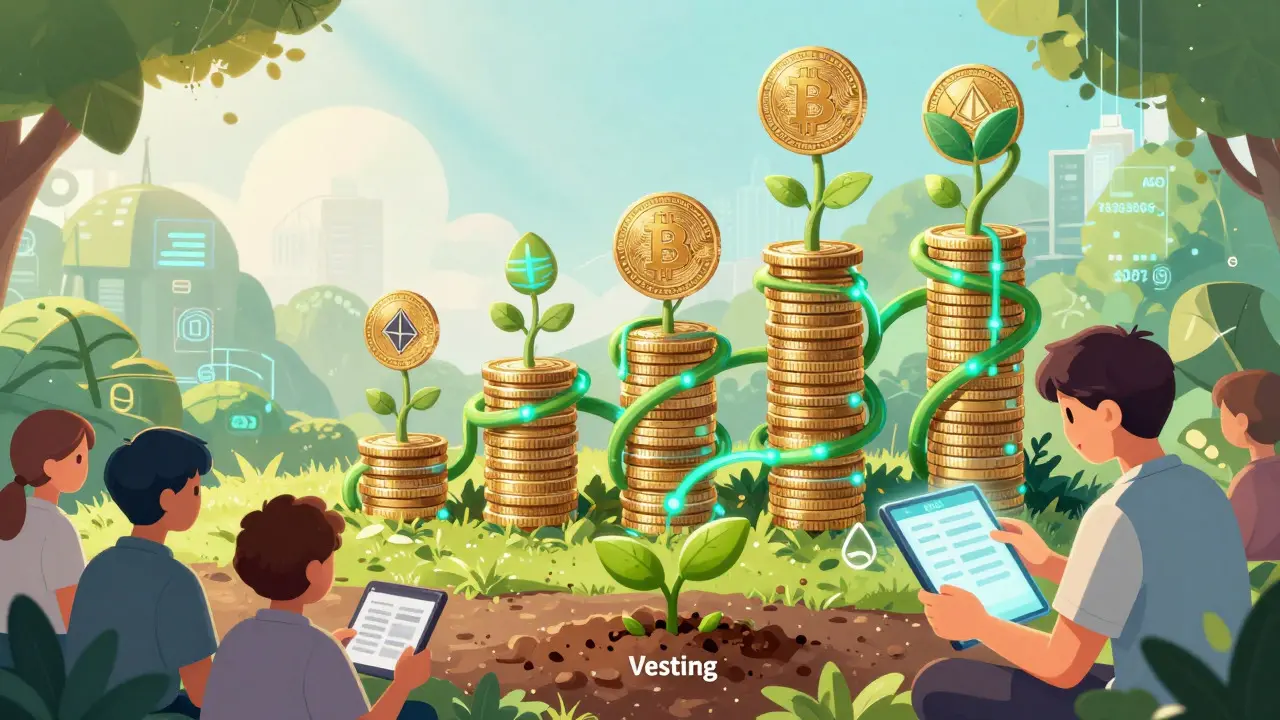
Implement Vesting Schedules: When paying contributors, use vesting contracts. This ensures that developers and marketers stay committed to the project over time, rather than taking the cash and leaving immediately.
Engage the Community: Shared ownership and stewardship principles establish that the DAO community collectively owns the treasury, fostering a sense of shared responsibility and accountability. Active participation encouraged among members strengthens the DAO's decision-making through continuous improvement based on community feedback and best practices in the evolving landscape.
Stay Compliant: Regulatory environments are shifting. Keep an eye on tax implications for DAOs in different jurisdictions. What is legal in one country may be scrutinized in another. Consult with legal experts familiar with blockchain law.
What is a DAO Treasury?
A DAO Treasury is the collective pool of assets held by a Decentralized Autonomous Organization. It includes cryptocurrencies, tokens, and sometimes fiat currency, used to fund operations, pay contributors, and invest in future projects. Unlike a corporate bank account, it is managed via smart contracts and governed by token holder votes.
How do DAOs secure their funds?
DAOs primarily use Multi-Signature Wallets, requiring multiple key holders to approve transactions. They also employ cold storage for long-term holdings, conduct regular smart contract audits, and implement role-based access controls to prevent unauthorized spending.
What are the biggest risks to a DAO Treasury?
The biggest risks include market volatility (asset value drops), smart contract bugs (hacks/exploits), governance attacks (malicious proposals passing), and regulatory uncertainty. Diversification and rigorous auditing are key mitigations.
Why is transparency important in DAO Treasury Management?
Transparency builds trust. Since there is no central CEO to hold accountable, the community must verify that funds are used correctly. All transactions are visible on the blockchain, allowing anyone to audit the flow of money in real-time.
How does DAO Treasury Management differ from traditional finance?
Traditional finance relies on centralized intermediaries (banks, CFOs) and limited transparency. DAO Treasury Management is decentralized, using smart contracts for automation, offering full on-chain transparency, and relying on community voting for financial decisions.