
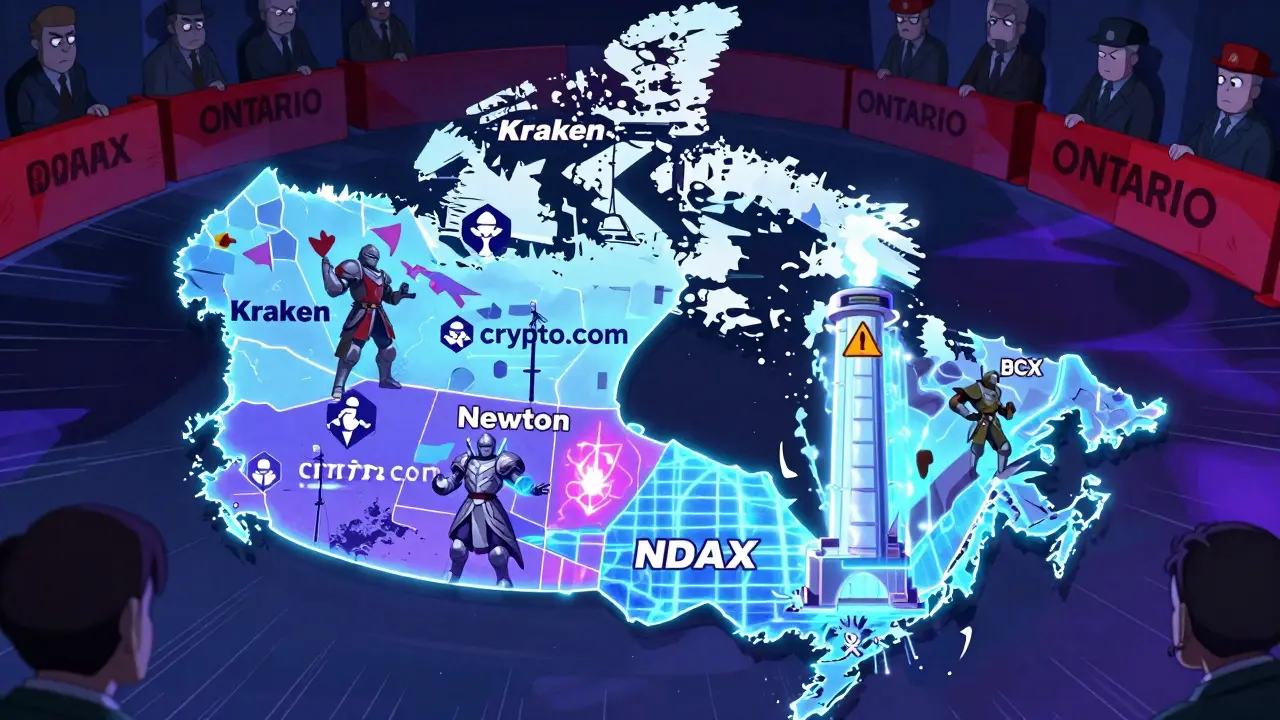
Canada doesn’t have one single rulebook for cryptocurrency - it has 13 different rulebooks, one for each province and territory. If you’re trading, mining, or running a crypto business in Canada, you can’t just follow federal guidelines. You need to know what your province demands. And in 2025, those differences matter more than ever.
Canada treats crypto as property - not money
At the federal level, Canada has been clear: cryptocurrency isn’t legal tender. It’s a commodity. That means every time you sell Bitcoin for cash, trade Ethereum for Solana, or use Dogecoin to pay for coffee, you trigger a taxable event. The Canada Revenue Agency (CRA) treats these as capital gains. Half of your profit gets added to your income, and you pay tax at your personal rate. That’s 20% to 50% depending on where you live.
But here’s the good part: buying crypto with Canadian dollars? No tax. Holding it in your wallet? No tax. Sending it to your own other wallet? Still no tax. Only when you cash out, trade, or spend it does the CRA take notice. This applies nationwide. But what happens after that? That’s where the provinces step in.
Provincial regulators control who can operate
The Canadian Securities Administrators (CSA) is the umbrella group for provincial securities regulators. It doesn’t issue licenses - each province does. And they don’t always agree.
Take Kraken. It’s authorized to operate in Alberta, British Columbia, Manitoba, and Saskatchewan. But if you’re in Ontario and try to sign up, you’ll hit a wall. Why? Because Ontario’s Securities Commission hasn’t approved Kraken for its jurisdiction. Same with Crypto.com. It got its green light in May 2025, but only after a long review process in multiple provinces. Newton Crypto and NDAX have similar patchwork approvals.
That means if you’re a Canadian crypto startup, you can’t just launch nationwide. You need to apply separately in each province. Some provinces have faster review times. Others demand extra audits, insurance, or custody rules. The result? A fragmented market. A platform that works in BC might be blocked in Quebec. That’s not just inconvenient - it’s expensive.
Energy rules for miners vary wildly
Canada used to be a magnet for crypto miners. Cheap hydro power, cold winters, stable government. But that’s changing. Provinces are now treating mining like a power plant - and regulating it like one.
British Columbia made headlines in 2024 when it amended the BC Utilities Commission Act. Now, BC Hydro can block, limit, or set special rates for mining operations. Before that, they froze new projects for 18 months. Why? Because one large mining farm was using as much power as 30,000 homes.
Quebec took a different approach. Instead of banning mining, it priced it. In January 2023, the Régie de l’énergie set a fixed rate of 16.603¢/kWh for any new mining project using 50 kW or more. That’s more than double the average residential rate. The goal? Make mining profitable only if it’s efficient, not if it’s greedy.
In Ontario, there’s no official mining ban - but the province hasn’t approved any new grid connections for crypto farms since 2022. Alberta and Saskatchewan are still open, but they’re watching closely. If energy demand spikes again, they might follow BC or Quebec.

Who’s authorized to operate where? (2025)
Here’s a snapshot of crypto trading platforms that have official provincial approval as of March 2026:
| Platform | Company | Approved Provinces | Last Decision Date |
|---|---|---|---|
| Kraken | Payward Canada Inc. | Alberta, BC, Manitoba, Saskatchewan | Multiple (2023-2025) |
| Crypto.com | Foris DAX CAN ULC | Alberta, BC, Ontario, Quebec, Saskatchewan | May 8, 2025 |
| Newton | Newton Crypto Ltd. | Alberta, BC, Ontario, Quebec | March 12, 2025 |
| NDAX | NDAX Canada Inc. | Alberta, BC, Ontario, Quebec, Saskatchewan | April 1, 2025 |
| Fidelity Digital Assets | Fidelity Digital Assets Services | Alberta, BC, Ontario | January 18, 2023 |
| Netcoins | Netcoins Inc. | Alberta, BC, Ontario | October 6, 2023 |
Notice something? Ontario and Quebec are the toughest markets. They approve fewer platforms. They demand more documentation. And they’re more likely to delay or reject applications. If you’re a Canadian investor, your access to crypto depends on where you live.
Crypto funds get stricter rules
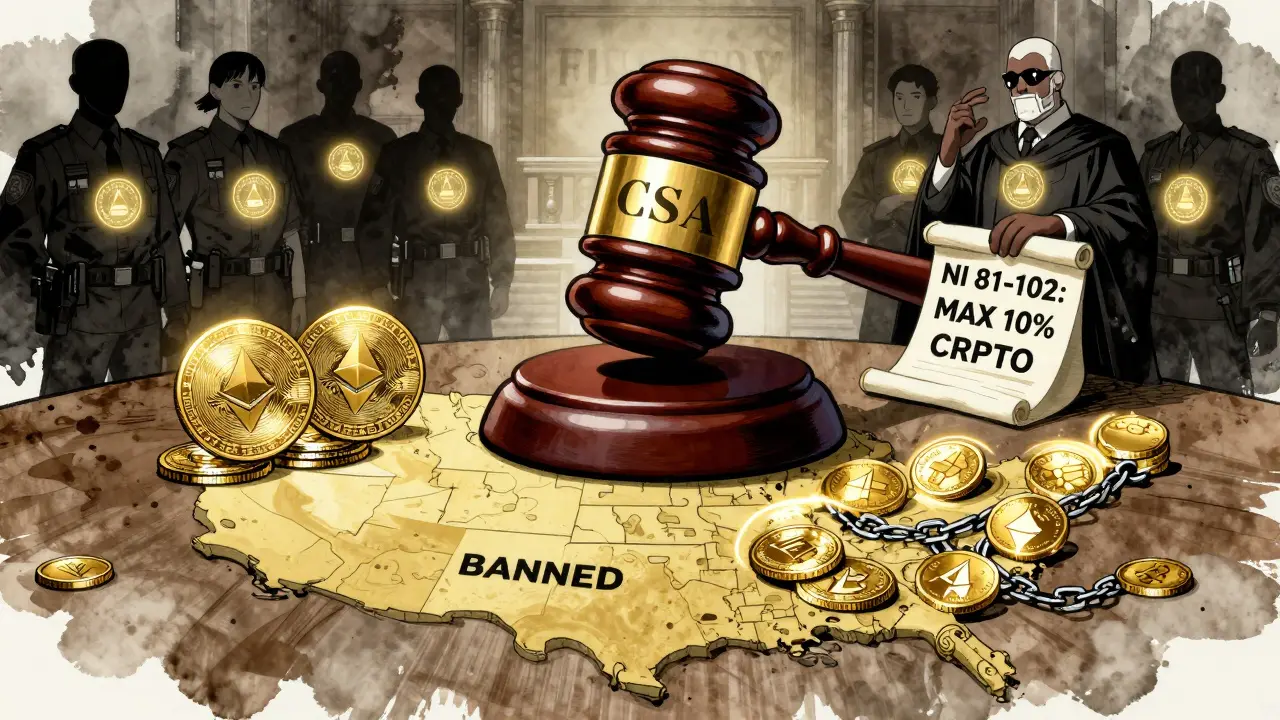
In April 2025, the CSA updated National Instrument 81-102 to clarify how public investment funds can hold crypto. Now, any fund that wants to invest in Bitcoin, Ethereum, or other digital assets must meet strict criteria:
- Only approved crypto assets (Bitcoin and Ethereum are in; meme coins are out)
- Custody must be through a regulated third party - no self-custody allowed
- Maximum 10% of fund assets can be in crypto
- Annual audits required
This doesn’t stop retail investors from buying crypto directly. But it does limit how much institutional money can flow in. That’s intentional. The CSA wants to protect everyday investors from wild swings, not stop innovation.
What’s not changing - and what might
Canada isn’t banning crypto. It’s not creating a central bank digital currency (CBDC) anytime soon. It’s not trying to be like China or the U.S. Instead, it’s doubling down on what it’s always done: enforce existing laws tightly.
Every crypto business must register with FINTRAC as a money service business. That’s been required since 2014. No exceptions. If you’re running a crypto ATM, an exchange, or even a wallet service - you’re regulated. And if you skip registration? You’re breaking the law.
What’s coming next? Don’t expect sweeping reforms. The federal government says it’s happy with the current system. The real action is happening at the provincial level. More provinces will likely follow BC and Quebec by setting energy caps. More will tighten platform approvals. Some may even require local data storage or audits.
One thing’s certain: Canada’s crypto market won’t become simpler. It’ll become more complex. And if you’re operating across provinces, you’ll need legal help - not just a spreadsheet.
What you need to do right now
If you’re a Canadian crypto user or business, here’s your checklist:
- Know your province. Check if your exchange is authorized in your region. Don’t assume it’s legal everywhere.
- Track your trades. Keep records of every buy, sell, trade, and spend. The CRA audits crypto users.
- Don’t mine without checking. If you’re setting up a mining rig, contact your provincial energy regulator first. You could be blocked.
- Register if you’re a business. If you’re offering crypto services - even as a side gig - register with FINTRAC. It’s mandatory.
- Watch for updates. Provincial regulators publish decisions quarterly. Subscribe to your local securities commission’s newsletter.
Canada’s crypto rules aren’t about stopping innovation. They’re about making sure innovation doesn’t leave people behind. The system isn’t perfect - but it’s working. And if you play by the rules, you can still thrive.
Is cryptocurrency legal in Canada?
Yes, cryptocurrency is legal in Canada. You can buy, sell, trade, and hold crypto without breaking any federal laws. However, it’s not considered legal tender - meaning businesses don’t have to accept it as payment. You must still follow tax rules and, if operating a business, register with FINTRAC.
Do I have to pay taxes on crypto in Canada?
Yes. Any time you sell crypto for cash, trade one crypto for another, or use it to buy goods or services, you trigger a capital gain. Half of that gain is added to your taxable income. You pay tax at your personal rate. Buying crypto with Canadian dollars, holding it, or transferring it between your own wallets is tax-free.
Can I mine cryptocurrency in Canada?
Yes, but it’s getting harder. Provinces like British Columbia and Quebec now regulate mining based on energy use. BC can block new projects. Quebec charges higher rates. Ontario hasn’t approved new grid connections since 2022. Always check with your provincial energy regulator before setting up a mining operation.
Which crypto exchanges are legal in my province?
Exchanges need approval from each province individually. Kraken is approved in Alberta, BC, Manitoba, and Saskatchewan. Crypto.com and Newton are approved in Ontario and Quebec. NDAX and Fidelity are also authorized in multiple provinces. Always verify your exchange’s status on your provincial securities commission’s website before signing up.
Why do provinces have different crypto rules?
Canada’s securities laws are provincial, not federal. Each province’s securities commission regulates trading platforms and investment products within its borders. There’s no national licensing system. This creates a patchwork of rules. The federal government coordinates through the Canadian Securities Administrators (CSA), but enforcement is still local.
Are crypto investment funds allowed in Canada?
Yes, but only under strict conditions. As of April 2025, public crypto asset funds can only invest in Bitcoin and Ethereum, must use regulated custodians, and cannot hold more than 10% of their assets in crypto. Meme coins and DeFi tokens are banned from these funds. Retail investors can still buy crypto directly - these rules only apply to publicly traded funds.
What happens if I don’t register my crypto business with FINTRAC?
You could face fines up to $5 million CAD and criminal charges. FINTRAC requires all crypto businesses - including exchanges, ATMs, and wallet providers - to register as money service businesses. This has been mandatory since 2014. Unregistered operators are subject to audits, asset seizures, and prosecution under Canada’s anti-money laundering laws.
11 Responses
Really appreciate this breakdown-it’s such a mess, but you made it digestible. I’m in Alberta and honestly didn’t realize how much more relaxed things are here compared to Ontario. My cousin in Toronto got rejected by Kraken and had to use Newton instead. Wild.
Canada’s crypto rules are a joke. You’d think we’d have one national system, but nope. Let’s just make 13 different bureaucracies fight over who gets to say no. Classic.
It is truly remarkable, however, how the provincial regulatory frameworks-though fragmented, and, frankly, inefficient-demonstrate a commendable commitment to investor protection, and, indeed, to the maintenance of financial integrity. One cannot help but admire the nuanced, albeit cumbersome, approach taken by each jurisdiction. The fact that Quebec imposes differentiated energy pricing for mining operations? A masterstroke of economic prudence. One only wishes more nations would emulate this level of thoughtful governance.
Provincial approval systems are necessary because federal oversight is too broad and ignores regional energy and market dynamics. The CSA coordinates but doesn’t enforce. That’s correct. If you’re mining in BC, you need to understand BC Hydro’s capacity limits. If you’re trading in Ontario, you need to know OSC’s criteria. This isn’t chaos-it’s precision.
Stop pretending this is about regulation. It’s about control. Provinces are scared of losing power-literally and figuratively. BC blocks mining because they’re afraid of blackouts. Quebec charges double because they want to ration access. Ontario refuses approvals because they’re terrified of being ‘out of step.’ This isn’t policy. It’s fear dressed up as law.
my dude i just wanna buy solana and you’re talking about BC Hydro like it’s a national security issue?? 😭
Oh wow, so we’re all supposed to be grateful that Ontario rejected 90% of exchanges? That’s not regulation, that’s gatekeeping. And now you’re telling me I can’t even use a fund that holds 10% crypto? Who the hell decided that? A committee of retired bank managers who still think Bitcoin is a pyramid scheme? This isn’t protecting investors-it’s protecting old money.
Let’s be real. This whole system is a performance. The provinces don’t want to regulate crypto-they want to perform regulation. They hold hearings, publish reports, form task forces, and then do nothing. Ontario’s ‘strict’ rules? They’ve been sitting on 47 applications since 2022. Quebec’s energy pricing? It’s a tax disguised as environmental policy. Alberta’s openness? Just because they haven’t figured out how to tax it yet. This isn’t a patchwork-it’s a farce. And the worst part? Everyone knows it. But no one has the guts to say: ‘Let’s just make one national rule. It’s 2025. We’re not in 1925.’
I read this whole thing and still don’t know if I can mine in Saskatchewan. Did they say? Or did they just say ‘watch closely’? That’s not guidance. That’s a threat wrapped in a memo.
The Canadian securities regulatory framework, while ostensibly decentralized, is, in fact, a carefully calibrated mechanism designed to mitigate systemic risk without stifling innovation. The provincial approach ensures localized accountability, which, in the context of energy-intensive activities such as cryptocurrency mining, is not merely prudent-it is ethically imperative. One must acknowledge that the absence of a federal monopoly on regulation is not a failure, but rather a deliberate safeguard against overcentralization. The CRA’s treatment of crypto as property is, therefore, not an anomaly, but a foundational pillar of fiscal responsibility. To demand homogeneity is to misunderstand the very nature of federalism.
Why does this exist? Just let people do crypto. Why do I need a lawyer just to buy Dogecoin?