
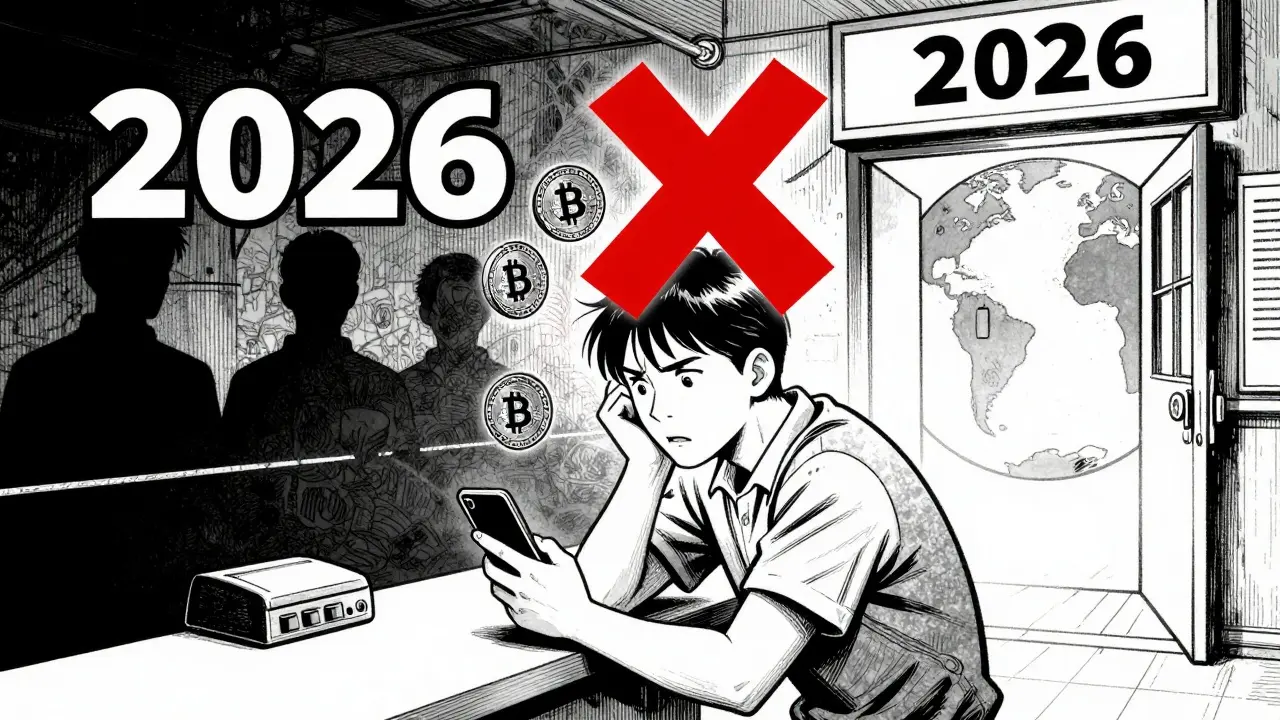
The Great Paradox of Russian Crypto Law
If you think Russia has banned cryptocurrency completely, you're missing half the picture. If you assume Bitcoin works freely there, you're setting yourself up for serious trouble. As of March 2026, the country operates under a strict dual system: domestic payments remain illegal, while international trade using digital assets is technically permitted under heavy regulation. This creates a confusing reality where owning crypto is legal, spending it at a local cafe is not, but paying a supplier in China with Bitcoin is allowed.
Russia's Regulatory Framework is a complex mix of federal laws and Central Bank directives that distinguish between domestic consumption and cross-border settlement. The core principle rests on Federal Law No. 114-FZ, signed back in July 2020, which legalized crypto ownership but explicitly forbade its use for goods and services within Russian borders. This prohibition went live on January 1, 2021, marking the start of a five-year journey where the definition of "legal" kept shifting.
Why does this matter to you? Because the stakes changed drastically in January 2026. While the laws were passed earlier, the enforcement mechanisms are just kicking into high gear. Fines for violating the domestic ban are now active. If you try to pay for groceries with Bitcoin in Moscow today, you aren't just breaking a minor rule; you are facing penalties that can wipe out your portfolio.
Domestic Payments Are Off Limits
Inside Russia, the rule is clear: cryptocurrency cannot act as money. You cannot buy bread, rent an apartment, or pay employees in Bitcoin. Bitcoin is treated strictly as a digital asset or property rather than legal tender, similar to how you might own a rare painting or a piece of gold, but it lacks the status of currency for daily exchange. The Bank of Russia maintains this line hard. Chair Elvira Nabiullina consistently argues that crypto lacks stability and state backing, making it dangerous for general circulation. They view volatility as a threat to financial sovereignty, especially after the surge in dollar-denominated transactions.
This restriction extends to peer-to-peer exchanges intended for commercial purposes. If a business owner accepts crypto from a customer for a service, they violate the Law on Digital Financial Assets. Even if both parties agree privately, the transaction itself is void under domestic jurisdiction. However, simply holding a wallet isn't the crime. You can own Bitcoin, sell it on an exchange, or trade it for profit-the ban specifically targets its function as a medium of exchange for goods and services inside the country.
The confusion often arises because people see others using crypto. That activity usually falls into one of two buckets: unregulated gray market usage (which carries risk) or legitimate international trade operations. In early 2026, regulators are cracking down harder on the gray market. The proposed fine structure, finalized in late 2025, imposes penalties ranging from 100,000 to 200,000 rubles for individuals and up to 1,000,000 rubles for companies, plus mandatory confiscation of the funds involved.
International Trade Gets a Green Light
Here is where the story gets complicated. In summer 2024, Russia passed Law No. 382-FZ. Why? Sanctions made traditional banking difficult. To keep exports moving-especially oil, gas, and military tech-they carved out a massive exception for international settlements. You are allowed to use digital currencies to pay foreign partners, but only under specific conditions.
This access isn't open to everyone. It operates through what is known as the Experimental Legal Regime (EPR) is a sandbox framework allowing limited crypto payments for cross-border trade, requiring participants to register with the Central Bank. Think of it as a VIP club. To get in, you need substantial proof of wealth. Individuals require financial assets exceeding 100 million rubles (about $1.2 million USD at current rates) or annual income above 50 million rubles. Businesses must undergo a rigorous registration process including real-time monitoring setup.
The goal here is economic survival, not mass adoption. The Central Bank expects only "qualified investors" to participate. By July 2025, statistics showed only 1,842 entities had registered for the regime. Most were banks or financial institutions helping large corporations settle debts, rather than regular citizens. This effectively means regular traders cannot legally send Bitcoin to friends abroad unless those recipients are part of the approved list of international counterparts.

Taxation and Reporting Requirements
Owning crypto isn't enough; the state wants a share of your gains. Starting January 1, 2025, the Tax Code officially recognized cryptocurrency as property. This means you owe taxes on any profit made from trading. The standard rate is 13% for residents on capital gains. But the reporting requirement is the tricky part.
You must report these transactions quarterly. Unlike previous years where many users operated in the shadows, the new infrastructure connects tax authorities directly to exchange operators. Foreign exchanges wishing to do business with Russians must establish a local legal entity and maintain a minimum capital reserve of 100 million rubles. This forces most offshore platforms to partner with compliant intermediaries who track every transfer. If you hold more than 600,000 rubles worth of crypto, financial institutions are required to flag the account for enhanced anti-money laundering (AML) monitoring.
Mining is treated slightly differently but remains regulated. Operators must register with Roskomnadzor and adhere to strict energy limits. Industrial facilities are capped at 150 MW capacity per site. This acknowledges the boom in domestic mining centers but keeps control tight over energy consumption. Essentially, the government tolerates mining as long as it stays industrial and doesn't bleed household power grids dry.
Enforcement and Real-World Challenges
Does anyone actually follow these rules? On paper, yes. In practice, it's messy. The 2026 fines create a tangible fear that wasn't present in 2022. Previously, violations were administrative nuisances; now, they result in asset seizures. Banks play the biggest role in enforcement. Since crypto-to-fiat conversions must happen through verified Russian bank accounts, banks can freeze assets immediately if they spot a pattern that looks like domestic payment usage.
| Feature | Domestic Use | International (EPR) |
|---|---|---|
| Purpose | Banned for goods/services | Allowed for cross-border trade |
| Participant | N/A (Illegal) | Qualified Investors (100M RUB+) |
| Penalty (2026) | 100k-200k RUB + Confiscation | Compliance Audits |
| Monitoring | Enhanced P2P tracking | Real-time API Integration |
User experiences reveal the friction. Reports from mid-2025 indicate that while the international exemption was welcomed by exporters, the bureaucracy slowed them down. Companies complained that getting EPR registration took eight weeks and required seventeen different documents. Many small IT exporters, frustrated by this red tape, abandoned crypto payments entirely despite the legal permission. Meanwhile, individual users still trying to trade locally are finding themselves pushed toward non-custodial wallets to avoid bank freezes, though this exposes them to higher security risks and potential fraud.

Future Outlook and Stricter Monitoring
Looking ahead, the trend is tightening, not loosening. The State Duma plans further updates in Fall 2025 aimed at closing loopholes. Biometric verification is slated for introduction later in 2026 for transactions over 500,000 rubles. This will link your face directly to your blockchain movements. Additionally, discussions on banning stablecoins have intensified following global algorithmic failures. The government fears that private issuers could threaten the Ruble's dominance.
Cybersecurity experts note a paradoxical shift: by forcing sophisticated tech into the shadows (the unregistered personal market), Russia might inadvertently fuel criminal activity. Conversely, the EPR brings transparency to the high-value end of the market. It seems the government has accepted that they cannot stop crypto from existing, so they are building walls around specific, controlled areas where they can watch every cent that moves.
Frequently Asked Questions
Is it legal to own Bitcoin in Russia?
Yes, owning cryptocurrency is fully legal under Federal Law No. 114-FZ. You can buy, hold, mine, and sell crypto, but you cannot use it to pay for goods or services within Russia.
Can I use crypto to pay for online shopping in Russia?
No, using crypto for domestic payments is prohibited. Attempting to do so since January 2026 can result in fines up to 200,000 rubles and confiscation of the funds.
How do I qualify for international crypto payments?
You must join the Experimental Legal Regime (EPR). Individuals generally need assets over 100 million rubles and must register with the Central Bank to participate legally.
What is the tax rate on crypto profits?
As of 2025, the capital gains tax is 13% for residents. You must file reports quarterly, and failure to declare gains can lead to severe penalties.
Are foreign exchanges allowed to operate in Russia?
They must establish a local legal entity and hold a minimum capital reserve of 100 million rubles. Most smaller exchanges rely on partnerships rather than direct operation.
19 Responses
I actually think this dual system makes sense for their economy right now. It helps them keep imports flowing even with sanctions in place. We shouldn't judge their financial sovereignty from here. Local stability is important for the citizens living there daily. The bank really needs to maintain control over the ruble. Digital assets offer flexibility that fiat just cannot match in this situation.
So everyone thinks the rules are clear but they arent realy clear at alll. You cant buy bread but you can pay chinese suppliers which is weird. Its funny how they allow mining but only industrial stuff. Household power grids stay safe from crypto miners that way. I think most people will just ignore it and use p2p methods anyway. The fines are scary but people always find loopholes eventually. Bureaucracy kills momentum faster than bans do for sure. They want to track every cent but tracking takes work. Realtime api integration is hard to pull off smoothly. Companies complain about red tape taking eight weeks or more. Small exporters give up and stop trying to join the club. Big banks love the monitoring because they get paid to enforce it. Tax reporting is a nightmare if you dont file quarterly. Offshore platforms have to set local entities now which costs cash. Energy limits for mining sites keep the lights on elsewhere. People will still trade but maybe they lose money to fraud. The state wants a share of your gains no matter what. Biometric checks coming in 2026 will link faces to wallets soon. Privacy basically disappears if that goes live fully. Stablecoin bans might happen after global algo failures occur. Government fears private issuers threatening the ruble dominance. They accept crypto exists so they build walls around areas. Criminal activity rises when tech gets pushed into shadows. Transparency is only good for high end markets usually. Regular traders cant legally send bits to friends abroad easily. Registration process is super strict for qualified investors alone. Financial assets over 100 million rubles is alot of money. Annual income above fifty million puts you in the sandbox. Business registration involves seventeen different documents needed. Many IT firms abandon payments because of the delay. Individual users try non custodial wallets to avoid freezes. Security risks go up when you hide from the banks. Confiscation of funds involved creates real fear now. Previously violations were just administrative nuisances mostly. Asset seizures change the mindset of everyone involved. Banks play biggest role in enforcement by spotting patterns. Crypto to fiat conversions must use verified accounts. Domestic payment usage triggers immediate account freezing actions. Penalties wipe out portfolios if you break domestic law. Buying groceries with bitcoin isnt legal anymore today. Renting apartments using digital tokens gets voided instantly. Law on Digital Financial Assets makes business accepting crypto illegal. Peer-to-peer exchanges for commercial purposes are banned strictly. Ownership remains legal under Federal Law No 114-FZ. Holding a wallet isnt the crime specifically defined by courts. Selling on exchange or trading profit stays okay legally. Ban targets function as medium of exchange inside country borders. Confusion arises when seeing others use crypto frequently. Gray market usage carries risk but happens often still. Regulators crack down harder on gray market in early 26. Proposed fine structure finalized in late twenty five exists now. Mandatory confiscation applies if you try to spend locally. Bank of Russia maintains line hard against volatility threats. Chair Nabiullina argues crypto lacks state backing reliably. Stability issues pose danger to general circulation indeed. Legal tender status absent means no daily exchange value. Bitcoin treated strictly as property like rare painting art. Gold ownership comparison holds weight for asset classification. Sovereignty threatened by surge in dollar denominated transactions. Sanctions made traditional banking difficult back in summer 24. Export movement needs oil gas military tech settlement options. Digital currencies allowed for cross-border trade under conditions. Summer 24 passed Law No 382-FZ for survival reasons. Economic survival goal means not mass adoption push yet. Qualified investors expected to participate only in regime. Statistics showed eighteen hundred forty two entities registered by July 25. Banks or financial institutions help large corporations settle debts. Regular citizens restricted from sending bitcoin to friends abroad. Foreign recipients must be part of approved international counterparts. Tax Code recognized crypto as property starting January 2025. Profit from trading owes taxes under new rules set. Standard rate thirteen percent capital gains for residents. Reporting requirement tricky part involves quarterly filings. Infrastructure connects tax authorities directly to exchange operators. Foreign exchanges wish to do business with russians now. Minimum capital reserve of one hundred million rubles required. Most offshore platforms rely on partnerships rather than direct operation. Financial institutions flag accounts enhanced anti-money laundering monitoring. Mining treated slightly differently but regulated strictly too. Operators register with Roskomnadzor adhere strict energy limits. Industrial facilities capped at one hundred fifty megawatts per site. Acknowledges boom in domestic mining centers keeps grid safe. Government tolerates mining staying industrial household grids dry. State Duma plans further updates fall 2025 closing loopholes. Cybersecurity experts note paradoxical shift forcing tech shadows. Building walls around controlled areas allows watching cents move. Future outlook trend tightening not loosening regulations. Biometric verification slated for introduction later two six. Transactions over five hundred thousand rubles link face directly. Discussions on banning stablecoins intensified following global failures. Private issuers could threaten Ruble dominance government fears. Enforce mechanisms kicking into high gear recently observed. Jan 2026 enforcement stakes changed drastically for holders. Five year journey where definition of legal kept shifting before. Core principle rests on federal laws central bank directives mixed. Domestic consumption versus cross-border settlement distinction made clear.
This is exactly why decentralized finance fails everywhere.
They are setting everyone up for disaster waiting for it to happen. Trust no one in these systems because they watch everything you do. Your data is already sold or stolen by the time you read this news. The banks are just middle men stealing your freedom away slowly. I bet the biometrics are fake or leaked tomorrow morning. Dont trust the government when they say they protect you. Just hold cold storage and never connect to the internet. This whole thing is a trap to grab your coins anyway.
Why does anyone bother following rules when the world is ending soon anyway? Its just crazy drama trying to play by their book honestly. People should focus on surviving instead of worrying about taxes and fines. I saw my cousin lose everything trying to export goods last week. It hurts so much when you cant use your money freely anywhere. Just hope it gets better before the winter comes around.
The asymmetry in regulatory arbitrage presents significant systemic risk vectors. Cross-border liquidity friction is being artificially inflated to maintain fiat hegemony. Qualified investor thresholds act as capital control gates effectively. Experimental Legal Regime functions merely as a veneer for compliance theater. Market participants operate within constrained topology parameters. Volatility suppression measures target retail exposure primarily. Sovereign risk premiums remain elevated despite official denial channels. Capital flight mitigation strategies prioritize surveillance over accessibility. Transaction metadata retention policies exceed international standards significantly. Blockchain analytics tools integrate deeply with centralized ledgers.
Oh my god its so sad :((( everyone is scared and worried rn.. i feel bad for the people there :( they cant even buy coffee wth
This legislation represents a paradigmatic shift in fiscal policy architecture. The bifurcation of domestic and international utility is unprecedented in modern monetary history. One observes a deliberate decoupling from Western sanctions protocols here. Compliance burdens serve as a barrier to entry for smaller actors. Institutional frameworks are designed to favor established financial intermediaries exclusively. Regulatory capture appears inherent within the proposed experimental legal regime. Enforcement mechanisms utilize banking infrastructure as primary detection vectors.
i think we should chill and let them figure it out. everyone has their own way of doing things these days no?
Im not shure if this is gud or bad for us honestly. Just hope they fix the misspelling in the laws soon. My friend got finned last monf and he was really sad about it.
We should support innovation wherever it sprouts up globally. Every country has the right to manage their own economic security. It is tough but regulation brings safety sometimes too. Let's be kind to those struggling with the changes. Hope everyone finds a peaceful solution soon.
Matt bridger makes a point about the barriers. It is not easy for small guys to enter the system. We should encourage understanding rather than judgment here. Peace is the best outcome for all parties involved.
The philosophical implications of state-sponsored surveillance on digital assets are profound. One must consider the nature of trust in a digitized age. Privacy becomes a commodity rather than a fundamental right. Authority expands its reach into every transaction layer. Freedom of association diminishes when identity binds movement. Ethics demand a reevaluation of consent in automated governance systems.
You guys are putting a lot of thought into this analysis. Keep pushing forward and reading the details carefully. Understanding the law helps protect yourself from penalties. Stay positive and prepare for whatever comes next. Knowledge is definitely power in this situation.
Hey everyone loves the update on the fines and everything. Crazy how they changed the rules this year seriously. What do you all think about the mining caps specifically? I guess most people know about the tax rates now. Lets keep talking about the future of payments in russia. It feels like the world is changing fast again. Technology always moves ahead of the laws written by humans. Excited to see how the biometric rollout happens soon.
Its so dramatic when money gets taken away like that. I would cry if that happened to me personally. Everything is just too stressful dealing with all the rules. Who cares about the laws when you lose your life savings. They never care about the little people feelings. Its just so unfair to regular citizens trying to survive.
joy crawford points out the fear aspect accurately. emotions run high in these situations. regulation impacts human psychology deeply
The toxicity of relying on sanctioned currencies is inevitable. Markets self correct regardless of political interference. Neutrality is the only safe position for investors here. Risk management dictates diversification away from single jurisdictions entirely. Compliance costs outweigh potential profits in this specific region.
The atmosphere around this topic is heavy with tension. Everyone watches every move the government makes carefully. Silence speaks volumes about the true intent behind these laws. Reservations remain strong among cautious market observers.