

For years, living in Nigeria and wanting to trade Bitcoin felt like playing a high-stakes game of cat and mouse. You’d deposit funds, watch your bank account freeze, or face sudden police questions about where your money came from. But if you are reading this in mid-2026, the rules have changed completely. The days of an outright ban are over, replaced by a complex but structured regulatory framework that actually recognizes crypto as a legal asset class.
The landscape shifted dramatically with the passage of the Investments and Securities Act (ISA) 2025, which officially recognized digital assets including cryptocurrencies as securities under Nigerian law. Signed into law by President Bola Ahmed Tinubu in March 2025, this legislation marked a total reversal from the restrictive policies of the past. Today, Nigeria isn’t just allowing crypto; it’s regulating it. However, "legal" doesn’t always mean "easy." While the federal government has cleared the path, local enforcement and banking habits lag behind. This guide breaks down exactly what is allowed, what is restricted, and how you can trade safely without losing your funds or your freedom.
From Total Ban to Regulated Market: The 2025 Shift
To understand where things stand today, you have to look at where we started. Between 2021 and late 2023, the Central Bank of Nigeria (CBN) effectively banned cryptocurrency transactions. They prohibited commercial banks from maintaining accounts for any Virtual Asset Service Providers (VASPs). If your bank saw a transfer to a known exchange, they would block it. Many Nigerians lost access to their savings overnight because they used platforms like Binance or LocalBitcoins.
That pressure cooker situation exploded in December 2023. Governor Godwin Emefiele announced the lifting of the circular that barred banks from servicing crypto businesses. But lifting a ban is different from creating a system. For two years, regulators were caught off guard by how quickly Nigerians embraced these assets. With over 22 million citizens involved in crypto activities, the informal market was too big to ignore. The result was the ISA 2025, which defines crypto assets as "a digital representation of value that can be transferred, digitally traded and used for payment or investment purposes."
This definition is crucial. It excludes stablecoins pegged directly to fiat currencies from being treated as securities in some contexts, but it brings investment-focused tokens, NFTs, and exchange-traded products under the strict oversight of the Securities and Exchange Commission (SEC Nigeria). The goal? To balance innovation with consumer protection, specifically targeting the Ponzi schemes and fraud that plagued the early unregulated era.
Who Can You Trust? Licensed vs. Unlicensed Exchanges
In 2026, not all exchanges are created equal. The biggest restriction you face isn't from the government telling you "don't trade." It's the risk of using an unlicensed platform that gets shut down or frozen. Under the new framework, all crypto exchanges operating in Nigeria must register with the SEC.
Early approvals went to established local players who had already built robust compliance teams. Platforms like Quidax and Busha received licenses, giving them the green light to operate openly with banking partners. These platforms now offer direct bank transfers, something that was impossible three years ago. Using them means your deposits are protected by regulatory standards, and your identity is verified through rigorous Know Your Customer (KYC) processes.
| Feature | Licensed Local Exchanges (e.g., Quidax, Busha) | International Exchanges (e.g., Binance, Coinbase) | P2P Networks |
|---|---|---|---|
| Banking Integration | Direct Naira deposits/withdrawals allowed | Limited; often blocked by banks | Depends on individual seller/buyer |
| Regulatory Status | Fully licensed by SEC Nigeria | Unlicensed locally; accessible via web/app | Decentralized; user-to-user liability |
| Risk Level | Low (Regulated) | Medium (Platform risk, no local recourse) | High (Fraud, scams, police harassment) |
| Best For | Daily trading, long-term holding | Accessing global markets, altcoins | Cash-heavy transactions, privacy seekers |
If you stick to licensed platforms, your life gets easier. You can link your bank account, buy Bitcoin with Naira, and sleep at night knowing the SEC oversees the operator. If you use international giants like Binance, you’re still technically able to access them, but your bank might flag the transaction. This is why many Nigerians still rely on Peer-to-Peer (P2P) markets, even on licensed apps, to move money in and out.
The Banking Paradox: Why Banks Are Still Hesitant
Here is the frustrating part: the law says banks can service licensed VASPs, but in practice, many bank managers are still scared. The Central Bank issued guidelines in 2023 permitting financial institutions to maintain relationships with licensed crypto businesses, but implementation is slow.
Why? Because bankers are risk-averse. One wrong move, one suspicious transaction flagged by the Economic and Financial Crimes Commission (EFCC), and their license could be in jeopardy. As a result, you might find yourself explaining your crypto holdings to a branch manager who hasn’t read the latest SEC memo.
To navigate this, keep your records clean. Use only licensed platforms for large transactions. Avoid rapid, small-value transfers that look like layering (a money laundering technique). And never mix personal and business crypto flows in the same account without clear documentation. The Nigerian Financial Intelligence Unit (NFIU) monitors these patterns closely. If your account behavior looks normal-consistent income, regular expenses, occasional crypto purchases-you’ll likely face no issues.

Law Enforcement and Police Harassment: A Persistent Reality
Let’s talk about the ugly side of crypto in Nigeria. Despite the ISA 2025 making ownership legal, police harassment remains a real threat. Reports from across Lagos, Abuja, and Port Harcourt show officers still demanding bribes from traders. They claim you’re involved in fraud or tax evasion, asking for "processing fees" to release your phone or laptop.
This happens because local police forces haven’t fully updated their training manuals. They see crypto as synonymous with scams because that’s how most victims report crimes. When a Ponzi scheme collapses, the police raid everyone’s house, assuming every crypto holder is guilty.
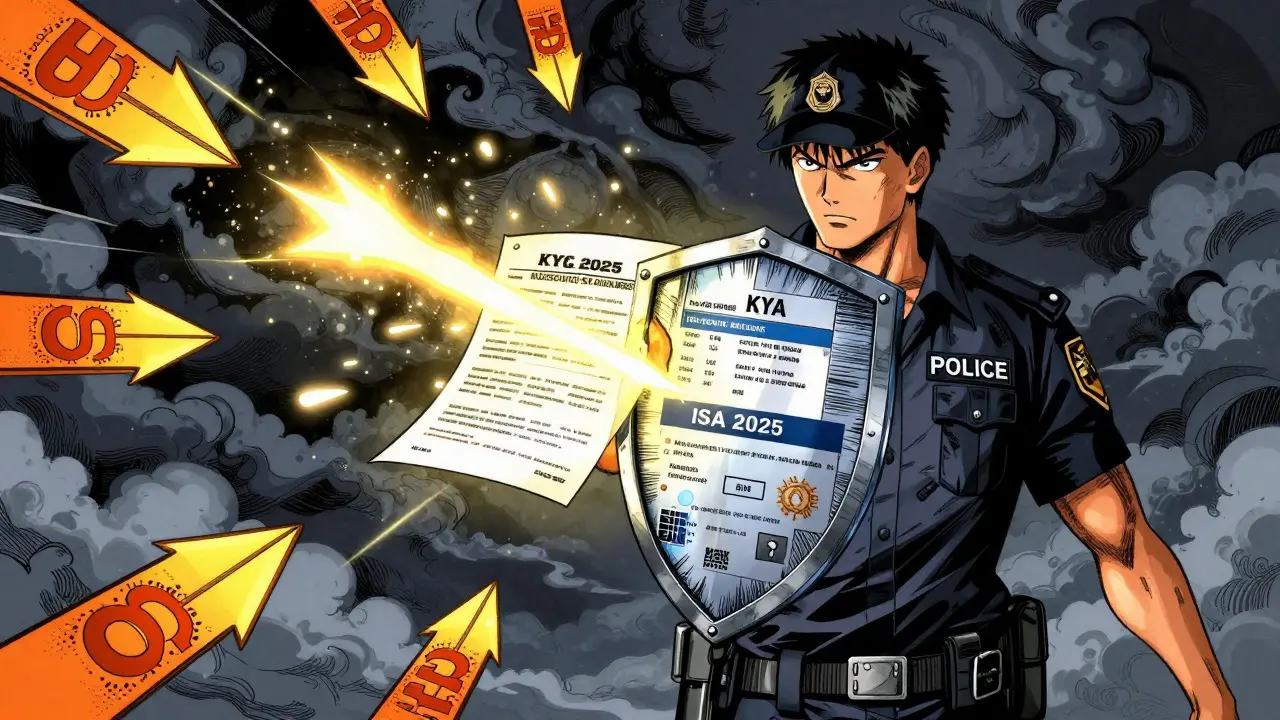
How do you protect yourself? First, know your rights. Ownership is legal. Trading is legal. Fraud is illegal. Carry a printed copy of the ISA 2025 summary or have it saved on your phone. If stopped, remain calm. Ask for their badge numbers. Record the interaction if safe to do so. Most importantly, ensure your KYC documents are up to date on your exchange. If you can prove your identity and source of funds, you have a strong defense against arbitrary detention.
Taxation: The New Cost of Doing Business
Freedom comes with a price tag. As of late 2025, the SEC confirmed that taxation frameworks for cryptocurrency transactions are being developed. This means the days of anonymous, tax-free gains are ending. The government sees significant revenue potential in Nigeria’s $400 million+ digital market.
While specific rates weren’t fully detailed in the initial rollout, expect capital gains taxes on profits from selling crypto. Income earned from staking or yield farming may also be taxable. The key here is record-keeping. Start tracking every buy, sell, and swap. Use tools that integrate with your exchange to generate tax reports. Ignoring this won’t make the debt disappear; it will just add penalties later when the Federal Inland Revenue Service (FIRS) tightens its grip on digital assets.
NFTs and Forex: What’s Included?
The ISA 2025 didn’t just cover Bitcoin and Ethereum. It expanded oversight to include Non-Fungible Tokens (NFTs) and online forex trading platforms. Here’s the distinction: artistic NFTs-digital art, collectibles-are largely unaffected. But if an NFT represents an investment contract or fractional ownership in an asset, the SEC considers it a security. That means the platform selling it needs a license.
Similarly, online forex brokers targeting Nigerians now fall under scrutiny. Many of these platforms operated in a gray area before. Now, they must register or face shutdown. For traders, this is good news. It weeds out the fake brokers promising guaranteed returns. Stick to platforms listed on the SEC’s approved registry to avoid losing your capital to fraudulent operations.
Practical Steps for Safe Trading in 2026
So, what should you do right now? Here is a checklist to stay compliant and safe:
- Choose Licensed Platforms: Prioritize Quidax, Busha, or other SEC-approved exchanges for your primary trading activity. They offer better banking integration and legal protection.
- Complete Full KYC: Don’t skip the verification steps. Upload your BVN (Bank Verification Number), NIN (National Identity Number), and passport photo. This proves you are a legitimate user, not a scammer.
- Separate Accounts: Use a dedicated bank account for crypto-related transactions. Keep your salary and daily spending separate to avoid triggering anti-money laundering alerts.
- Document Everything: Save screenshots of trades, invoices, and correspondence with exchanges. If police harass you, evidence is your best friend.
- Stay Updated: Regulatory details change fast. Follow the official SEC Nigeria Twitter handle and reputable crypto news outlets for updates on tax laws and new licensing rounds.
Nigeria’s journey from banning crypto to embracing it is a testament to the power of adoption. The youth population drove this change, forcing regulators to adapt. While challenges like police harassment and banking friction persist, the direction is clear. The future of finance in Nigeria is digital, regulated, and open to those who play by the rules. By staying informed and using licensed services, you can participate in this revolution without fear.
Is crypto legal in Nigeria in 2026?
Yes. Under the Investments and Securities Act (ISA) 2025, cryptocurrencies are legally recognized as securities. Individuals can own, trade, and invest in crypto assets without fear of federal prosecution, provided they use regulated channels.
Which crypto exchanges are licensed in Nigeria?
As of mid-2026, platforms like Quidax and Busha hold valid licenses from the Securities and Exchange Commission (SEC). Always check the SEC’s official website for the most current list of approved Virtual Asset Service Providers (VASPs).
Can I still use Binance in Nigeria?
Yes, you can access Binance, but it is not locally licensed. This means your bank may block transactions to/from Binance, and you have less legal recourse if the platform faces issues. Using P2P features on Binance is common but carries higher risks of fraud and police scrutiny.
Do I need to pay taxes on crypto profits?
Likely yes. The SEC and FIRS are implementing taxation frameworks for crypto transactions. Profits from trading, staking, or selling crypto are expected to be subject to capital gains or income tax. Keep detailed records to comply with future filing requirements.
Why do police still harass crypto traders?
Local law enforcement often lacks updated training on the new regulations. They associate crypto with fraud due to high-profile scams. Carrying proof of your licensed status and keeping transactions transparent helps mitigate this risk.