
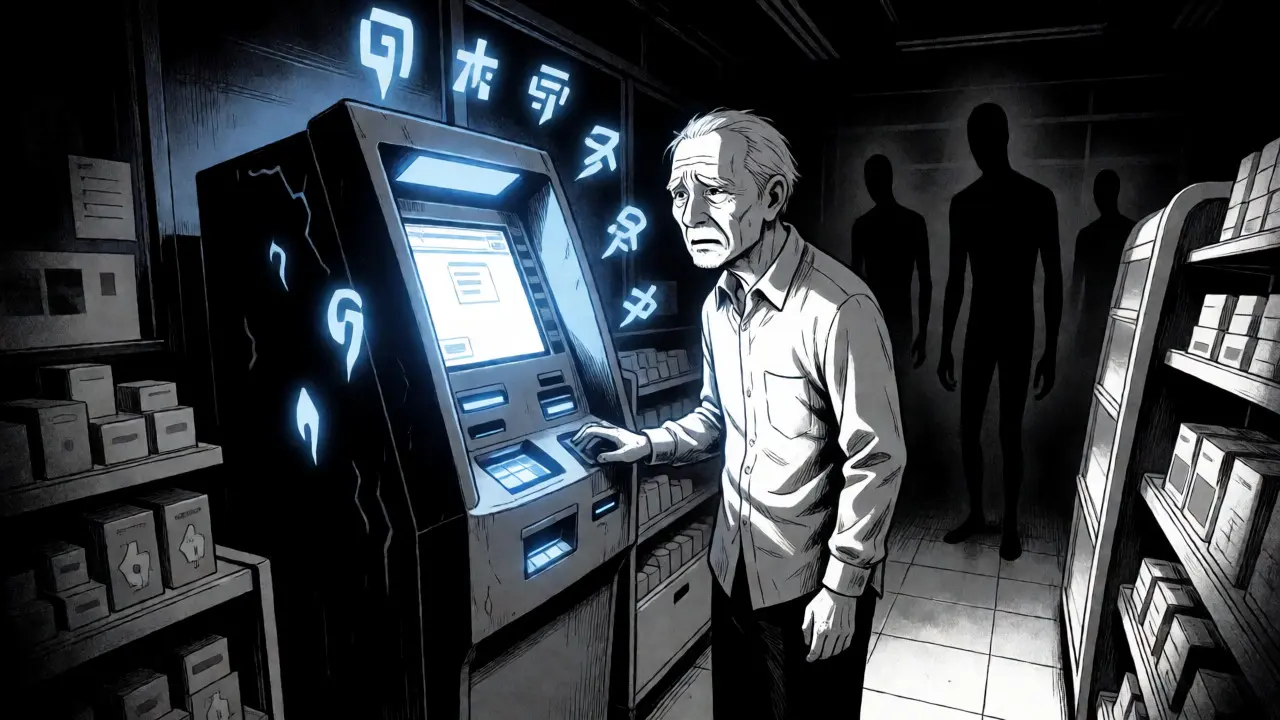
Imagine walking into a convenience store, pulling out a stack of cash, and feeding it into a machine that looks like an oversized vending unit. You expect to walk away with some digital coins in your wallet. Instead, you’ve just handed over your savings to a stranger who vanished three days ago. This isn't a hypothetical horror story; it’s the daily reality for thousands of people using Crypto ATMs. These machines, technically known as convertible virtual currency (CVC) kiosks, have become the preferred playground for scammers, racking up staggering losses.
The numbers are hard to ignore. In 2024 alone, the FBI’s Internet Crime Complaint Center logged nearly 11,000 complaints related to these devices, totaling $246 million in victim losses. That’s not just a statistic; that’s hundreds of thousands of retirement funds, emergency savings, and student loans disappearing into the blockchain void. If you’ve ever considered using one of these kiosks, or if you’re worried about a parent or grandparent doing so, you need to understand why these machines are such a massive risk right now.
Why Crypto ATMs Are a Scammer’s Dream
Traditional banking has layers of safety nets. If someone steals your credit card, you dispute the charge. If you wire money by mistake, sometimes you can recall it. Crypto transactions don’t work that way. Once you hit "send" on a Bitcoin transaction at an ATM, the money is gone. It’s irreversible. Scammers know this, which is why they push victims toward these specific machines.
Unlike traditional ATMs regulated under strict federal banking laws, many crypto kiosks operate in a regulatory gray zone. They are often classified as Money Services Businesses (MSBs), but enforcement is spotty. Many operators skip basic checks like verifying who is actually standing in front of the screen. This lack of oversight creates a perfect storm: high anonymity, instant settlement, and zero recourse for the user.
| Feature | Traditional Bank ATM | Crypto ATM |
|---|---|---|
| Regulation | Strict Federal Oversight (FDIC/Fed) | Fragmented State/Federal (FinCEN/BSA) |
| Transaction Reversibility | High (Disputes possible) | None (Immutable) |
| Identity Verification | Mandatory & Rigorous | Often Minimal or Skippable |
| Primary Risk | Card Skimming | Social Engineering Fraud |
The Senior Citizen Target Demographic
If you think crypto scams only target tech-savvy millennials, look again. Data shows that more than two-thirds of crypto ATM fraud victims in 2024 were over the age of 60. Why? Because scammers use social engineering tactics that play on fear and urgency-tactics that resonate deeply with older generations who may be less familiar with digital payment norms.
Think of the classic "grandparent scam." A caller pretends to be a grandchild in trouble, needing bail money immediately. Or perhaps it’s an IRS agent claiming back taxes are due, threatening arrest unless paid via gift cards or crypto. The scammer directs the victim to the nearest crypto ATM because it feels official and tangible. You hand over cash, scan a QR code, and boom-the money is sent to the scammer’s wallet. By the time the family realizes what happened, the money is often laundered through mixers, making recovery nearly impossible.
AARP executives have noted that lawmakers across the political spectrum are finally catching on. In state after state, there is bipartisan support for rules that balance innovation with consumer safety. But until those laws are fully enforced everywhere, seniors remain the most vulnerable group.
Technical Vulnerabilities: It’s Not Just Social Engineering
While human error plays a huge role, the machines themselves aren’t always secure. Security researchers from IOActive discovered critical vulnerabilities in popular models like the Lamassu Douro Bitcoin ATM. Issues labeled CVE-2024-0674 allowed attackers to gain root access to the machine simply by placing a malicious file in a specific folder during an update process.
What does this mean for you? It means the hardware itself can be compromised. An attacker could potentially install malware that intercepts your private keys or manipulates the displayed exchange rate. While most current scams rely on tricking the user rather than hacking the machine, these technical flaws highlight that the infrastructure supporting crypto ATMs is still maturing-and sometimes lagging behind security standards.
The Regulatory Crackdown: Arizona Leads the Way
Governments are starting to fight back. Arizona, home to roughly 600 crypto ATMs, became a testing ground for new regulations after residents lost $177 million to crypto fraud in 2024. The state introduced the Cryptocurrency Kiosk License Fraud Prevention law, which imposes strict limits:
- Daily Transaction Limits: New customers are capped at $2,000 per day. Existing customers can go up to $10,500.
- Mandatory Warnings: Operators must display clear warnings on screens that users must acknowledge before completing a transaction.
- Refund Mechanisms: If a new customer reports fraud within 30 days, operators must issue full refunds, including fees.
This approach acknowledges that while we can’t stop technology, we can slow down the flow of money enough to allow for intervention. FinCEN, the U.S. Treasury department responsible for combating money laundering, issued a formal notice in August 2025 warning financial institutions about these risks. They provided "red flag indicators" to help banks spot suspicious activity linked to CVC kiosks.
How to Spot a Crypto ATM Scam
You don’t need to be a cybersecurity expert to avoid these traps. Most scams follow a predictable script. If any of these red flags appear, walk away from the machine immediately:
- Urgency: Does the person asking for payment insist you act *right now*? Legitimate businesses rarely demand instant, irreversible payment.
- Unusual Payment Method: Is a utility company, landlord, or government agency asking for Bitcoin instead of check or bank transfer? That’s a major warning sign.
- Third-Party Instruction: Are you being told exactly where to go and what to do by phone? Scammers often stay on the line, coaching the victim through the ATM interface.
- No Receipt or Confirmation: Did you get a physical receipt? If not, ask for one. Legitimate operators provide them.
Remember, legitimate crypto investments are usually made through established exchanges with multi-factor authentication, not by shoving cash into a kiosk in a gas station.
What To Do If You’ve Been Scammed
First, breathe. Panic leads to poor decisions. Next, gather every piece of evidence: the transaction ID, photos of the receipt, screenshots of text messages, and details of the call you received. Contact your local police department immediately. While they may not recover the funds, a police report is crucial for insurance claims or potential civil action against the operator.
Then, contact the crypto ATM operator directly. Some companies have voluntary refund policies for first-time users or obvious scams. Finally, report the incident to the FTC and the FBI’s IC3 database. Your report helps build the data set that drives future legislation.
Are all crypto ATMs scams?
No, the machines themselves are legitimate tools for buying and selling cryptocurrency. However, they are frequently used as the final step in a scam orchestrated by third parties. The danger lies in how they are exploited by fraudsters, not necessarily in the hardware itself.
Can I get my money back if I send crypto to a scammer?
Generally, no. Cryptocurrency transactions are immutable, meaning once confirmed on the blockchain, they cannot be reversed. Recovery is only possible if the scammer agrees to return the funds voluntarily or if you win a lawsuit against them, which is rare and difficult.
Why do scammers prefer crypto ATMs over bank transfers?
Scammers prefer crypto ATMs because transactions are fast, anonymous, and irreversible. Unlike bank wires, which can sometimes be recalled, or credit cards, which offer chargeback protection, crypto payments give the scammer immediate control of the funds with little chance of reversal.
Which states have the strictest crypto ATM regulations?
Arizona currently has some of the most comprehensive laws, including daily transaction limits and mandatory refund windows for new customers. Other states like California and Texas are also reviewing stricter guidelines, but enforcement varies significantly by jurisdiction.
Is it safe to use a crypto ATM for legitimate purchases?
It can be, provided you are initiating the transaction yourself and not being coached by a third party. Always verify the recipient's address carefully and start with a small test transaction if you are unfamiliar with the platform or vendor.