

Missing out on a crypto opportunity feels like watching a train leave the station without you. That’s exactly what happens when you hear about an CRDT airdrop but don’t know where to start. Whether it’s called a "giveaway," "airdrop," or "token distribution," the goal is the same: getting free tokens into your wallet. But here’s the catch-most people lose money trying to get them because they fall for scams.
The term CRDT (Conflict-free Replicated Data Type) is actually a computer science concept used in distributed systems to ensure data consistency across multiple servers. In the crypto world, however, projects often borrow technical-sounding names for their tokens. If you’re seeing “CRDT” in relation to a token giveaway, it’s likely a specific project using that acronym, not the general database technology. This distinction matters because it changes how you verify if the offer is real.
What Is a Crypto Airdrop Anyway?
An crypto airdrop is a marketing strategy where blockchain projects distribute free tokens to wallet addresses to build community and decentralize ownership. Think of it as sampling food at a grocery store. The store wants you to try the product so you’ll buy more later. Projects want you to hold their token so you become part of their ecosystem.
There are several types of airdrops you might encounter:
- Bounty Airdrops: You complete tasks like following social media accounts, joining Telegram groups, or sharing posts.
- Holder Airdrops: You receive tokens simply for holding another cryptocurrency (like Ethereum or Solana) at a specific snapshot time.
- Retroactive Airdrops: You get rewarded for using a protocol before it launched its own token.
- Exclusive Airdrops: Reserved for early team members, developers, or highly active community contributors.
If the CRDT project is running a legitimate campaign, it will likely fall into one of these categories. Most modern giveaways require some action from you-they rarely just hand out tokens for nothing anymore.
How to Identify a Legitimate CRDT Campaign
Scammers love copying popular project names. Before you connect your wallet or share any personal info, you need to verify three things:
- Official Channels Only: Check the project’s official website and verified social media accounts (Twitter/X, Discord, Telegram). Look for blue checkmarks or links from trusted aggregators like CoinMarketCap or CoinGecko.
- Smart Contract Verification: Real tokens have audited smart contracts. You can find these on block explorers like Etherscan or Solscan. If the contract isn’t verified, walk away.
- Community Presence: A real project has an active community. Check their Discord server-are there real people discussing features, or just bots spamming links?
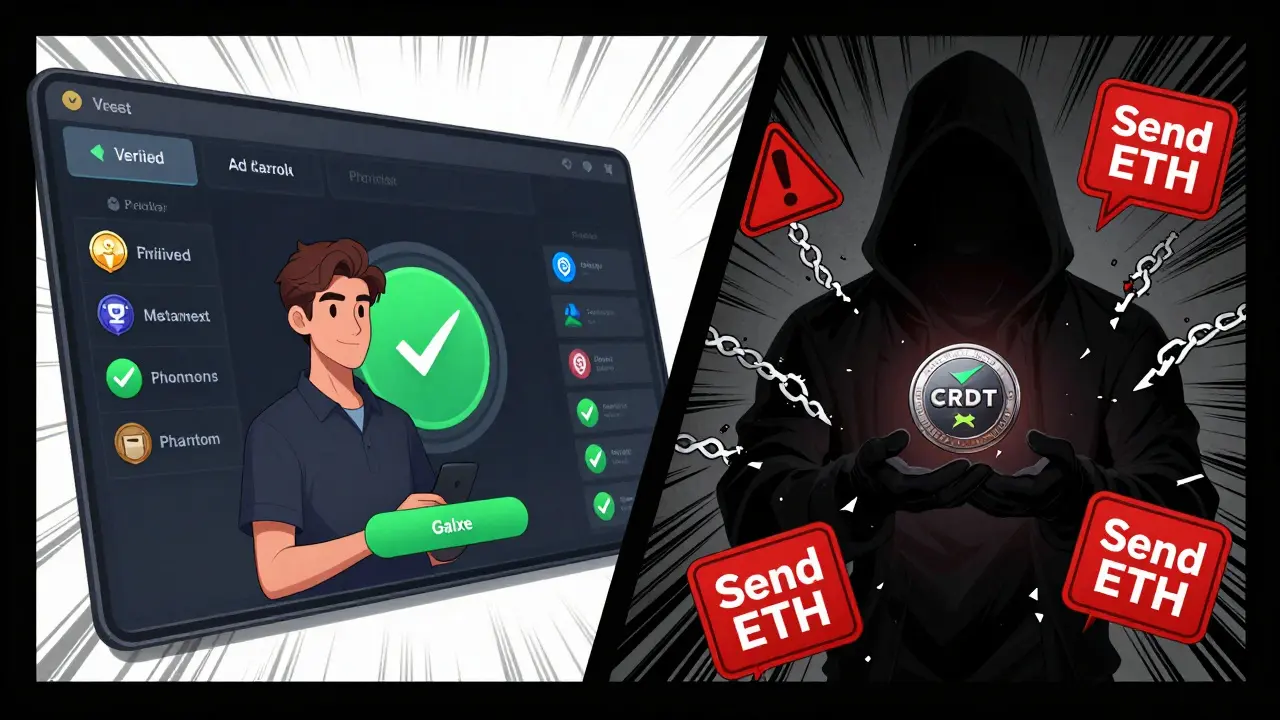
Never trust random DMs. No legitimate project will message you first saying, “Hey, send me 0.1 ETH to unlock your CRDT airdrop.” That’s always a scam.
Step-by-Step: How to Participate Safely
If you’ve confirmed the CRDT giveaway is real, follow this process to protect yourself while claiming rewards:
1. Set Up a Dedicated Wallet
Don’t use your main wallet where you keep your life savings. Create a separate MetaMask or Phantom wallet specifically for airdrops. Fund it with only the amount needed for gas fees (transaction costs). If something goes wrong, you limit your losses.
2. Complete Required Tasks
Most campaigns use platforms like Galxe, QuestN, or Zealy to track participation. These platforms let you prove you followed Twitter, joined Discord, or bridged assets. Follow the instructions exactly. Screenshots may be required for manual verification.
3. Wait for Snapshot Distribution
Airdrops aren’t instant. After the campaign ends, the team takes a “snapshot” of eligible wallets. Then, they distribute tokens via a claim portal. This can take days or weeks. Patience is key.
4. Claim Tokens Carefully
When the claim page opens, double-check the URL. Scammers create fake sites that look identical. Copy the link directly from the official announcement post. Connect your dedicated wallet and approve the transaction. Always read the approval amount-if it asks for unlimited spending access, reject it.
Red Flags to Watch For
Even experienced investors get tricked. Here are the biggest warning signs that a CRDT giveaway is fake:
- “Send Crypto to Receive More”: Any request to send funds upfront is a scam. Legitimate airdrops cost only gas fees.
- Urgency Tactics: Phrases like “Claim within 1 hour or lose everything” are designed to make you act without thinking.
- Unverified Contracts: If the token address isn’t listed on major trackers, it’s likely malicious.
- Poor Grammar & Design: Official announcements are professionally written. Typos and broken links suggest a rush job by scammers.
If anything feels off, pause. Take a screenshot, report it to the community, and move on. Your security is worth more than free tokens.
Why Do Projects Run Airdrops?
You might wonder why companies give away money. It’s not charity-it’s growth hacking. By distributing tokens widely, projects achieve three goals:
- Decentralization: More holders mean less control by insiders. This makes the network more resilient.
- Liquidity: When thousands of people hold a token, trading volume increases. Higher liquidity attracts bigger investors.
- Community Building: People who earn tokens feel invested in the project’s success. They promote it organically.
For users, this means potential upside if the token gains value. But remember-many airdropped tokens drop in price immediately after listing. Don’t expect overnight riches.

Tax Implications of Airdrops
In many countries, including New Zealand and the US, receiving an airdrop is considered taxable income. The fair market value of the tokens at the time you claim them becomes your cost basis. Selling them later triggers capital gains tax.
Keep records of:
- Date and time of claim
- Number of tokens received
- USD value at claim time
- Transaction hash
Consult a local tax professional. Rules change frequently, and mistakes can lead to audits.
| Type | Effort Required | Risk Level | Typical Reward Size |
|---|---|---|---|
| Bounty | High (tasks) | Medium | Small-Medium |
| Holder | Low (hold asset) | Low | Medium-Large |
| Retroactive | None (past usage) | Very Low | Large |
| Exclusive | Very High (contribution) | Low | Variable |
Common Mistakes That Cost Users Money
I’ve seen too many good people lose funds due to simple errors. Avoid these pitfalls:
- Using Main Wallets: As mentioned, always isolate airdrop activities. One bad contract interaction can drain your entire balance.
- Ignoring Gas Fees: On networks like Ethereum, claiming small amounts of tokens can cost more in gas than the tokens are worth. Calculate ROI first.
- Falling for Fake Countdown Timers: Websites often add fake urgency timers. Ignore them. Legitimate claims stay open for reasonable periods.
- Not Revoking Permissions: After interacting with dApps, revoke token approvals using tools like Revoke.cash. Leftover permissions can be exploited later.
Security isn’t optional. Treat every click as if it could expose your private keys.
Is the CRDT airdrop legit?
Without specific official announcements from a recognized project named CRDT, it’s impossible to confirm legitimacy. Always verify through official channels like the project’s website and verified social media. If no such project exists, it’s likely a scam using a confusing name.
Do I need to pay to claim an airdrop?
No. Legitimate airdrops only require gas fees for transactions. Never send cryptocurrency to receive tokens. Any request for upfront payment is a scam.
What should I do if I accidentally connected my wallet to a fake site?
Immediately disconnect the wallet, revoke all token approvals using Revoke.cash, and transfer remaining funds to a new wallet. Change passwords and enable two-factor authentication on all related accounts.
Are airdrops taxable?
Yes, in most jurisdictions, airdrops are taxed as income at the fair market value when claimed. Keep detailed records of dates, values, and transaction hashes for tax reporting.
How do I find legitimate airdrops?
Follow reputable crypto news sources, join official Discord servers of promising projects, and use trusted aggregators like Airdrop.io or CoinMarketCap’s airdrop section. Never rely on unsolicited messages.