
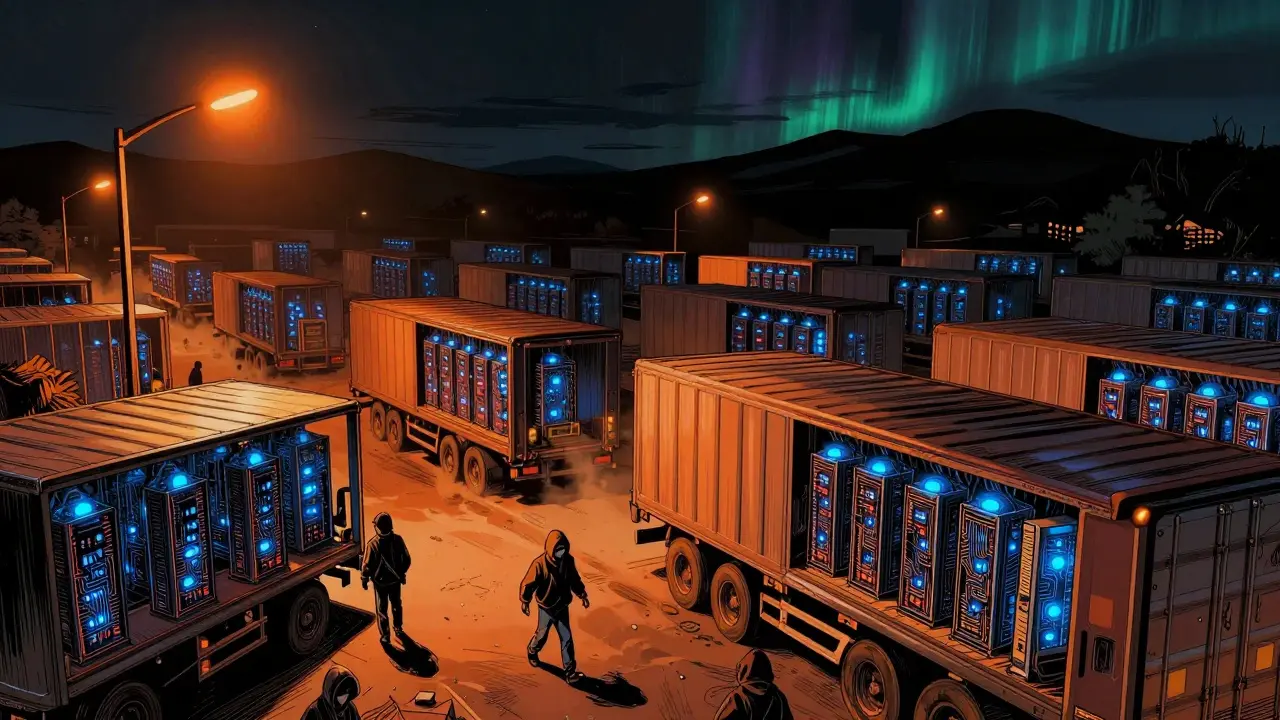
When China shut down Bitcoin mining in 2021, the world didn’t just lose a lot of hashpower - it watched an entire industry pick up and move overnight. Over 75% of the world’s Bitcoin mining was happening inside China just a year before. By mid-2021, that number had collapsed. Miners didn’t fade away. They packed up their rigs, loaded them onto trucks and planes, and scattered across the globe. The question isn’t whether they left - it’s where they went.
Why China had to go
China didn’t just crack down on crypto trading. It went after mining - the physical, energy-hungry heart of Bitcoin. In 2021, provinces like Inner Mongolia, Sichuan, and Xinjiang banned mining operations. Then came the central government’s final order: shut it all down. No warnings. No grace period. Just a hard stop. Why? Because Bitcoin mining guzzles electricity. In provinces like Inner Mongolia, where coal-fired power plants dominated, mining was eating up more energy than entire cities. The government was already trying to cut carbon emissions and meet climate targets. Bitcoin miners, with their rows of ASIC machines running 24/7, became a target. Unlike traders who could hide behind apps, miners operated in warehouses, barns, and repurposed factories - easy to find, easy to shut down. The move wasn’t just about energy. It was about control. China wanted financial systems under its thumb. Bitcoin, with its decentralized, borderless nature, didn’t fit. So they removed it - lock, stock, and mining rigs.Kazakhstan: The unexpected winner
Kazakhstan didn’t even make the top ten mining countries before 2021. By October 2021, it was #2. How? It had the one thing miners needed most: cheap, abundant power. Kazakhstan’s grid runs mostly on coal and natural gas. Its power plants were already built. Its grid was underused. When Chinese miners started arriving, they didn’t need new power lines. They just plugged in. Mining farms popped up overnight - in former Soviet-era warehouses, near coal mines, and along major highways. The government didn’t ban it. They welcomed it. Taxes on electricity for miners were low. Import duties on ASIC rigs were waived. Within months, Kazakhstan’s share of global Bitcoin mining jumped from 1.4% to over 8%. For a while, it even outpaced Russia and Iran. But it wasn’t perfect. The sudden spike in demand overloaded local grids. In late 2022, parts of Kazakhstan had rolling blackouts. Miners were asked to cut back during peak hours. Some left. Others stayed - because even with occasional outages, power was still cheaper than anywhere else in Europe or North America.Texas: The U.S. mining hub
While Kazakhstan took the volume, Texas took the spotlight. Why Texas? Three things: wind, deregulation, and attitude. Texas has its own power grid - ERCOT - and it doesn’t answer to federal rules. That meant no bans. No red tape. Just open access. Miners didn’t need permits to build a 100-megawatt facility. They just bought land, signed a power contract, and started mining. The state’s energy mix is surprisingly green. Over 22% of Texas’s electricity comes from wind and solar. Miners didn’t just want cheap power - they wanted flexible power. When the wind blows hard at night, prices drop. Miners turn on their rigs. When demand spikes during the day, they turn off. This helps stabilize the grid. Texas utilities actually like miners for this reason. By 2025, Texas hosted roughly half of all U.S. Bitcoin mining capacity - about 2.6 gigawatts. That’s more than the entire mining power of Germany or Canada. Companies like Riot Platforms, Marathon Digital, and Bitfarms built massive campuses in places like Fort Worth, Abilene, and Rockdale. Some facilities are powered entirely by stranded wind energy - electricity that would’ve gone to waste.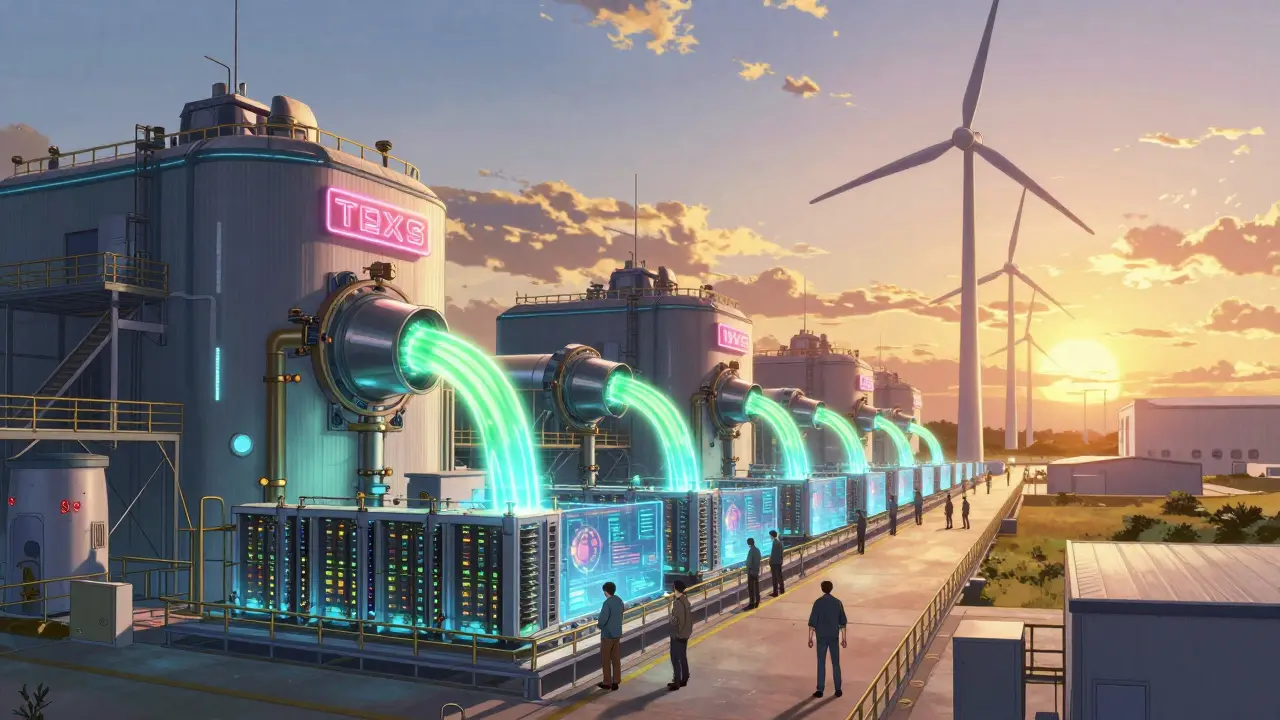
Other key destinations
Not everyone went to Kazakhstan or Texas. Some miners headed east. Russia became a quiet second-tier player. It had the power, the cold climate (good for cooling rigs), and a government that turned a blind eye. But sanctions and banking restrictions made it harder to move money. Many miners found it too risky. The U.S. Midwest - especially in states like Georgia, Oklahoma, and Pennsylvania - saw smaller but steady growth. These areas had cheap natural gas and underused substations. They didn’t have the fame of Texas, but they got the job done. Even Iran got a boost. With U.S. sanctions limiting its oil exports, Iran turned to mining as a way to monetize its excess electricity. The government even subsidized mining rigs. But the internet was slow, and the power was unstable. Many miners left after a year. And then there were the outliers - countries like Canada, Sweden, and even Paraguay. These places had cheap hydroelectric power and strong legal frameworks. They didn’t get massive waves of miners, but they got steady, long-term investment.The tech that made it possible
This wasn’t just a relocation. It was a logistical miracle. Bitcoin mining rigs are heavy. Each ASIC miner weighs over 30 pounds. A typical farm has thousands of them. Moving them across borders required custom shipping, customs clearance, and power-ready facilities. But here’s the key: these rigs are modular. You don’t need to rebuild them. You just unplug them, load them onto trucks, drive them to a new location, plug them into a power line, and connect them to the internet. That’s it. No software install. No configuration. Just power and network. This portability is what made the exodus possible. A miner in Sichuan could pack up on Monday and be running again in Kazakhstan by Friday. That speed - and simplicity - is unique to crypto mining. No other industry could move this fast.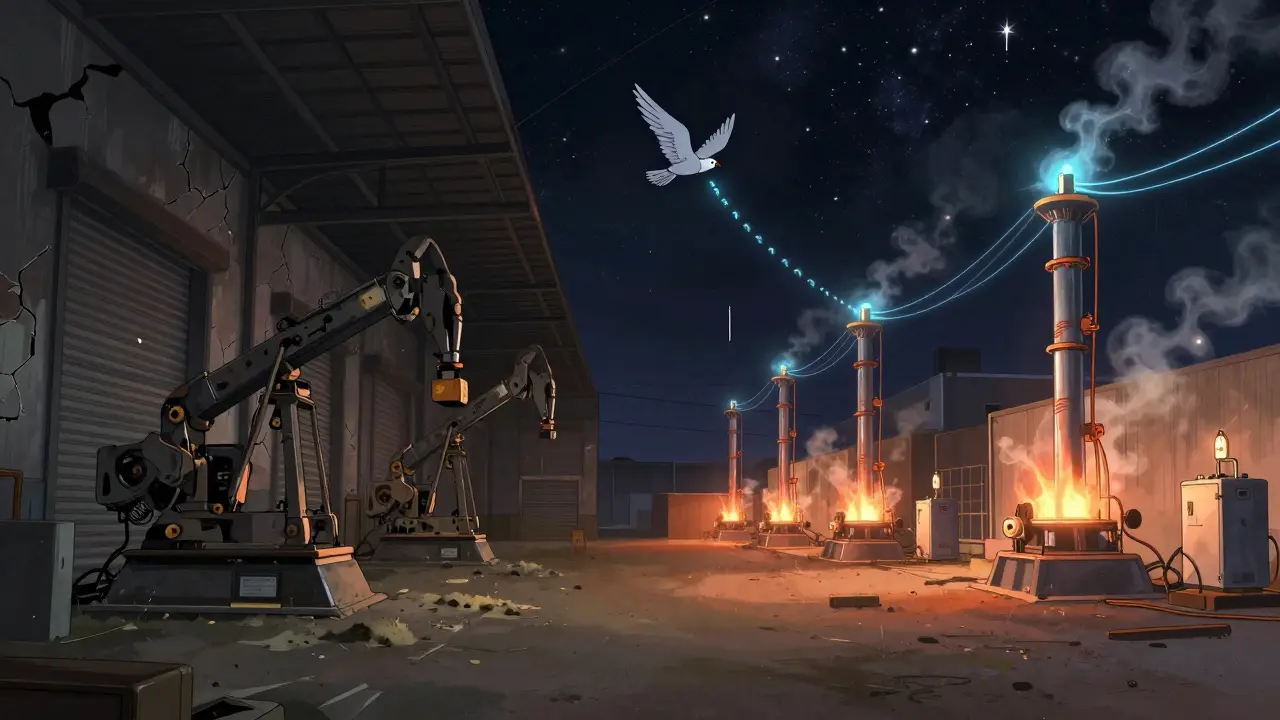
What happened to Bitcoin’s network?
When China shut down, the Bitcoin network lost over 50% of its hashpower in weeks. Miners panicked. Prices dropped. Some thought Bitcoin was dead. But the network didn’t collapse. It adapted. The difficulty adjustment - Bitcoin’s self-regulating mechanism - kicked in. Every two weeks, the network automatically lowers the mining difficulty to match the lost power. Within 60 days, miners in Kazakhstan and Texas had brought the network back to full strength. And here’s the twist: Bitcoin is now stronger than ever. Before 2021, over 75% of mining was concentrated in one country. Now, it’s spread across six continents. That makes Bitcoin more resilient. If one region has a blackout, a policy change, or a war, the network keeps going. The exodus didn’t weaken Bitcoin. It made it more decentralized. And that’s exactly what Bitcoin was designed for.The long-term impact
Five years later, the Chinese mining exodus still shapes the crypto world. Kazakhstan’s mining boom slowed after 2023, as the government started taxing electricity more heavily. Some miners moved to Uzbekistan or Azerbaijan. But the infrastructure remains. The power lines are there. The expertise is there. It’s still a key player. Texas? It’s only getting bigger. New power plants are being built just to serve mining farms. Some utilities now offer special mining tariffs - lower rates for miners who can reduce usage during peak hours. Meanwhile, China hasn’t restarted mining. The ban is still in place. Some miners have tried to sneak back in - using hidden rigs in rural areas - but the risk is too high. The government watches. The cameras are everywhere. The real legacy? Miners learned they don’t need a government to thrive. They just need power, internet, and a little space. And now, they’ve proven they can go anywhere.Did all Chinese miners leave the country?
Most did - but not all. A small number of miners stayed behind, operating underground or in remote areas where enforcement was weak. However, these operations are risky, unstable, and constantly under threat of shutdown. The vast majority of mining capacity that once existed in China has been permanently relocated.
Why didn’t miners go to other Asian countries like India or Vietnam?
India and Vietnam both have strict crypto regulations. India has banned banks from supporting crypto businesses, and Vietnam has cracked down on mining operations multiple times since 2021. Miners need legal stability to operate at scale. Without clear rules or power access, these countries weren’t viable options - even if they had cheap labor or population.
Is mining still profitable in Kazakhstan today?
It’s still profitable, but less so than in 2021. Kazakhstan raised electricity prices for industrial users in 2023, cutting into profit margins. Many miners have since moved to countries with even lower rates - like Georgia, Paraguay, or parts of the U.S. Midwest. However, Kazakhstan still has the infrastructure, so it remains a major hub.
How much of Bitcoin mining is now in the U.S.?
As of early 2026, the United States accounts for about 38% of global Bitcoin mining power - the largest share of any single country. Texas alone makes up roughly half of that. This is up from just 5% in 2020. The U.S. has overtaken China and Kazakhstan in total mining capacity.
Could China ever restart mining?
It’s unlikely. The Chinese government has made it clear that cryptocurrency mining is incompatible with its financial and energy policies. Even if Bitcoin’s price skyrockets, the political will to reverse the ban doesn’t exist. Miners who left in 2021 have no reason to return - and new miners won’t risk it.
20 Responses
Holy crap, this is wild. I never realized how much of Bitcoin's resilience came from just being able to move rigs like legos. One day you're in Inner Mongolia, next day you're in Abilene, Texas, plugging into a wind farm. No paperwork, no bureaucracy. Just power and internet. That's the real magic of crypto. And yeah, the grid stability thing? Texas utilities are basically begging miners to show up. It's beautiful.
The notion that China's ban somehow weakened Bitcoin is not merely misguided-it is laughably naive. The very essence of decentralisation is tested by adversity. What we witnessed was not an exodus, but an evolution. The global redistribution of hashpower has rendered the network more robust than ever. To suggest otherwise is to misunderstand the fundamental architecture of peer-to-peer systems.
I appreciate the depth here. But let’s not romanticize Texas. Yes, wind power is great, but the real reason miners flocked there is because ERCOT doesn’t care who you are or what you do. No environmental reviews. No community hearings. Just plug in and go. That’s not innovation-that’s regulatory arbitrage.
China banned mining because they know Bitcoin is the people's money. The elite fear this. They control the banks, the currency, the lies. But Bitcoin? It's truth. It's freedom. They tried to kill it... but now it's everywhere. 🌍⚡🔥
This is so cool to see how something so technical ended up creating this beautiful, unintended global network. It's like nature finding a way through concrete. Miners didn't just relocate-they rebuilt the backbone of a new financial system. And honestly? That's kind of inspiring.
Kazakhstan? Please. They had blackouts because they were too greedy to upgrade infrastructure. Texas didn’t 'get lucky'-they outmaneuvered every other jurisdiction by being the only place with zero regulation and a power grid that actually works. The rest are just temporary stopgaps.
You call this decentralization? It’s just a new oligarchy. Texas and Kazakhstan now hold the keys. The miners didn’t flee China-they fled to new landlords. This isn’t freedom. It’s relocation.
Let’s be real. The whole 'Bitcoin is decentralized now' narrative is a fantasy. The top 3 mining pools still control 60% of hashpower. The exodus didn’t change power dynamics-it just moved them to different zip codes. And don’t get me started on how many of those 'green' Texas farms are secretly running on coal. 🤡
I love how this story shows that crypto doesn’t need governments-it just needs electricity. And honestly, that’s the most powerful idea here. Miners didn’t ask for permission. They just found power and went to work. Simple. Brilliant.
The real win here is that mining became modular. It’s like the internet of hardware. You don’t need to build a factory-you just ship boxes. That’s why this could never happen with oil, or chips, or anything else. Bitcoin mining is the only industry that can relocate faster than a hurricane.
I grew up in rural Oklahoma. Saw our local substation get upgraded last year. Turns out, it was all for a new mining farm. Local kids are now working as technicians. No one talked about crypto before. Now the whole town’s buzzing. Weird how tech can quietly reshape a place.
You all speak as if this was a triumph of libertarian ideals. But let me remind you: the Chinese state did not ban mining because of 'control'-it banned it because it recognized that decentralized systems inherently undermine centralized monetary sovereignty. This isn’t about energy-it’s about power. And now, the West has taken the baton. The game hasn’t changed. The players just got new uniforms.
so like... texas is just letting miners use up all the power? and no one cares? weird.
The narrative of 'decentralization' is a marketing fairy tale. What we witnessed was a capital reallocation event-where capital, not ideology, dictated migration. The miners didn’t flee oppression-they chased arbitrage. And now, the same oligarchs who controlled mining in Sichuan are running the same rigs in Rockdale. The blockchain didn’t change. The bank account did.
I’ve been following this since 2021. The fact that the network didn’t crash, that difficulty adjusted, and that miners just… rebuilt-it’s one of the most impressive engineering feats in recent history. Nobody planned this. It just happened. And now Bitcoin’s stronger because of it.
It’s important to remember that this wasn’t just about profit. Many miners left China because they believed in Bitcoin’s future. They risked everything-homes, savings, relationships-to keep the network alive. That’s not just business. That’s conviction.
Everyone’s acting like this was a victory for freedom. But let’s be honest-the U.S. didn’t welcome miners because they love decentralization. They welcomed them because they saw a chance to monetize stranded energy and create new tax revenue streams. The government doesn’t care about Bitcoin. They care about the electricity bill. And the miners? They’re just the latest energy commodity. This isn’t liberation. It’s commodification.
I’ve seen this movie before. Remember when all the offshore gambling sites moved to Curacao? Then they moved to Malta? Then they moved to the Caribbean? Now? They’re gone. The cycle always repeats. Kazakhstan’s boom? It’s already peaking. Texas? The grid’s gonna buckle. The next crisis isn’t coming-it’s already on the way. And nobody’s ready.
I think it’s beautiful how something so technical ended up creating these unexpected connections-between wind farms in West Texas and abandoned warehouses in Kazakhstan. It’s not about money. It’s about people finding a way to make something work, even when the world says no.
So let me get this straight: China shuts down mining, and suddenly the U.S. is the new crypto paradise? Right. Because nothing says 'freedom' like deregulated power grids and corporate mining farms that pay zero environmental penalties. You’re not decentralizing-you’re outsourcing exploitation. Congrats, Texas. You just became the new Inner Mongolia.