

For years, if you were an Algerian trying to buy Bitcoin or Ethereum, you lived in a gray zone. The rules existed on paper, but enforcement was spotty. That ambiguity ended abruptly. What started as vague restrictions in the 2018 Financial Law has evolved into one of the strictest digital asset prohibitions in the world.
If you are looking at the current landscape, you need to understand that Algeria has moved from 'discouraging' crypto to actively criminalizing it. The shift wasn't gradual; it was a hard pivot driven by monetary sovereignty concerns and anti-money laundering pressures. Today, holding crypto isn't just illegal-it’s a prison offense.
The 2018 Financial Law: The First Crack in the Door
To understand where we are now, we have to look back at the 2018 Financial Law, which introduced the first formal ban on cryptocurrency usage in Algeria without clearly defining penalties. Before this legislation, there was no specific law addressing digital assets. Banks ignored them, and users traded quietly.
The 2018 law prohibited the purchase, sale, and use of virtual currencies. However, it had a major flaw: it didn’t specify what happened if you broke the rule. There were no defined fines, no prison sentences, and no clear enforcement mechanism for individual users. This created a paradoxical situation. On one hand, the government said 'no.' On the other hand, because the consequences weren't spelled out, many Algerians continued to use crypto to hedge against inflation and bypass capital controls.
This period was characterized by inconsistent enforcement. Some banks blocked transactions related to known exchanges, while others turned a blind eye. For the average user, this meant operating in a state of constant uncertainty. You knew it was technically forbidden, but you also knew that getting arrested for holding Bitcoin was highly unlikely.
Law No. 25-10: The 2025 Total Ban
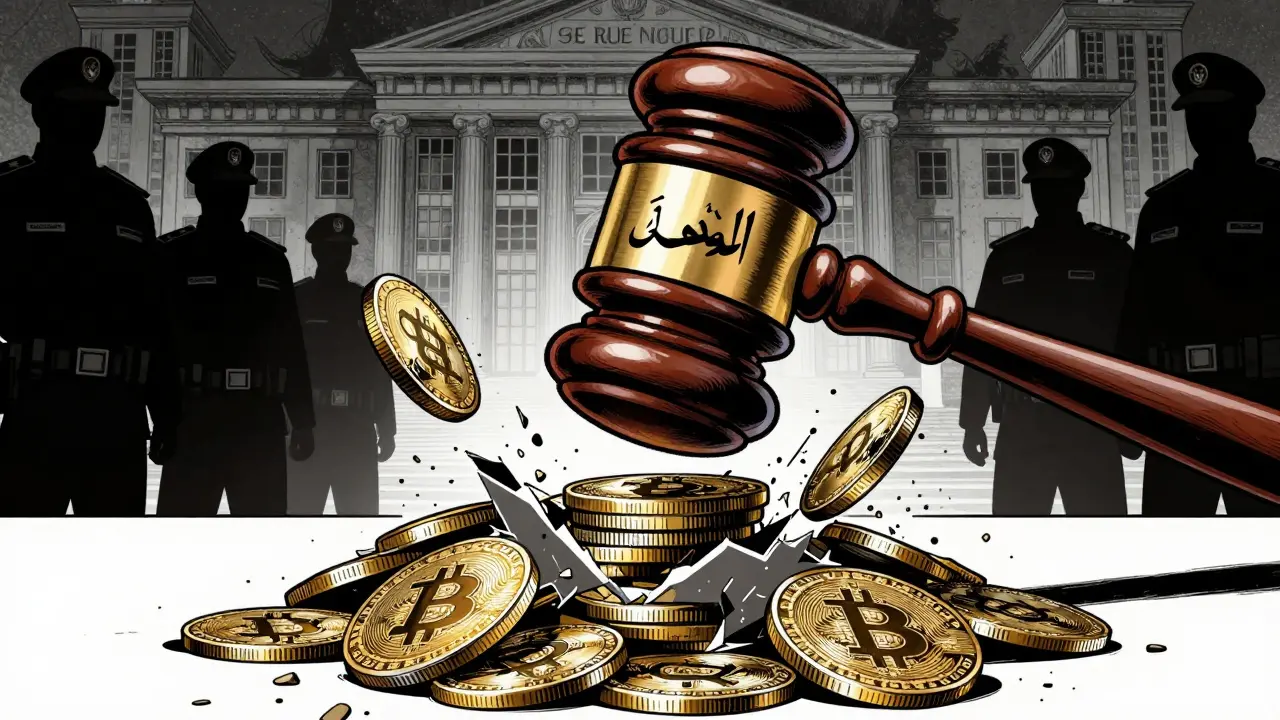
That uncertainty vanished on July 24, 2025. The Algerian government enacted Law No. 25-10, which establishes a comprehensive criminal prohibition on all cryptocurrency activities, including possession, mining, and promotion. Published in the Official Journal, this law was described by local media as a 'thunderbolt' hitting the crypto community. It closed every loophole left open by the 2018 legislation.
Unlike its predecessor, Law No. 25-10 leaves no room for interpretation. It explicitly criminalizes:
- Possession: Simply holding crypto in a wallet is now illegal.
- Transaction: Buying, selling, or exchanging crypto for any currency.
- Mining: Using computational power to validate transactions is banned.
- Promotion: Advertising, content creation, or even discussing crypto investment strategies can lead to charges.
- Issuance: Creating new tokens or coins is strictly prohibited.
This scope is unprecedented. It targets not just traders and miners, but also influencers, educators, and passive holders. If you have a blog post about blockchain technology or a YouTube video explaining how to set up a wallet, you could theoretically face legal action under this framework.
Penalties: The Cost of Breaking the Law
The most significant change with Law No. 25-10 is the introduction of severe criminal penalties. The government wants to send a clear message: the cost of participating in the crypto market outweighs any potential benefit.
| Offense Type | Prison Sentence | Fine Range (USD) |
|---|---|---|
| Possession / Holding | 2 months - 1 year | $1,540 - $7,700 |
| Trading / Exchange Operations | Up to 1 year | Up to $7,700 |
| Mining | 2 months - 1 year | $1,540 - $7,700 |
| Promotion / Advertising | 2 months - 1 year | $1,540 - $7,700 |
Note that these fines are in addition to prison time. The maximum penalty of one year in jail and $7,700 in fines applies across the board, whether you are running a large-scale exchange operation or just holding a small amount of Bitcoin in your phone. This uniformity suggests the government views all crypto activity as equally threatening to financial stability.
Why Did Algeria Choose Such a Hardline Stance?
You might wonder why Algeria went so far when neighboring countries like the UAE and Bahrain are embracing crypto. The answer lies in three main factors: monetary sovereignty, energy consumption, and international pressure.
Monetary Sovereignty: The Algerian Dinar is the sole legal tender. The government fears that widespread crypto adoption could undermine confidence in the national currency. With high inflation rates, citizens often seek alternative stores of value. By banning crypto, the state aims to keep capital within the traditional banking system.
Energy Concerns: Cryptocurrency mining consumes massive amounts of electricity. Algeria provides subsidized energy to its citizens, and authorities worry that miners would exploit this cheap power, straining the national grid. Banning mining protects infrastructure resources for essential services.
AML/CTF Compliance: The Financial Action Task Force (FATF) has been pushing countries globally to tighten regulations on money laundering and terrorist financing. While most nations responded with stricter reporting requirements, Algeria chose elimination. They argue that total prohibition is the most effective way to prevent illicit flows through unregulated channels.
Enforcement: Who Is Watching?
Under the old 2018 rules, enforcement was fragmented. Now, multiple agencies work together to police the ban:
- Bank of Algeria: Monitors the financial system to ensure banks do not facilitate crypto transactions.
- Banking Commission: Oversees regulatory compliance among financial institutions.
- Judicial Authorities: Handle prosecutions and adjudicate cases.
- Security Agencies: Conduct digital monitoring to detect online trading platforms and peer-to-peer exchanges.
This coordinated approach means that simply using a VPN to access a foreign exchange may not be enough to stay hidden. Authorities are increasingly sophisticated in tracking digital footprints, especially when fiat money enters or exits the crypto ecosystem through bank transfers.

How Algeria Compares Globally
Algeria’s position is an outlier. Let’s look at how it stacks up against other regions:
| Region/Country | Regulatory Approach | Key Focus |
|---|---|---|
| Algeria | Total Criminal Ban | Prohibit all interaction |
| European Union | Regulated Integration (MiCA) | Consumer protection & transparency |
| UAE / Bahrain | Proactive Licensing | Attracting fintech innovation |
| United States | Fragmented Regulation | Securities classification & taxation |
| China | Ban with Nuances | Prohibit trading/mining, promote CBDC |
While Europe focuses on integrating crypto into mainstream finance via MiCA, and the Middle East builds hubs for blockchain startups, Algeria isolates itself. Even China, which banned private crypto trading, allows for research and development of blockchain technology and has launched its own central bank digital currency (CBDC). Algeria rejects even this nuance, viewing any form of decentralized finance as a threat.
Impact on Users and the Future Outlook
For the average Algerian, the impact is immediate and severe. Many used crypto to send remittances abroad or save wealth during economic downturns. Now, those options are gone. The black market for P2P trades has likely grown riskier, with higher premiums due to the danger involved.
Looking ahead, maintaining this ban will be challenging. As global commerce increasingly accepts cryptocurrencies, Algerian businesses may find themselves at a disadvantage in cross-border trade. Additionally, the broad scope of the law-criminalizing even educational content-raises questions about practical enforcement. Can a government effectively monitor every social media post or blog comment? Probably not.
However, until there is a legislative reversal, the risk remains real. The dream of borderless finance has hit a solid wall in Algeria. For now, the only safe move is complete avoidance.
Is it legal to hold Bitcoin in Algeria in 2026?
No. Under Law No. 25-10 enacted in July 2025, simply possessing cryptocurrency is a criminal offense punishable by up to one year in prison and fines up to $7,700 USD.
What changed between the 2018 Financial Law and the 2025 ban?
The 2018 Financial Law prohibited crypto usage but lacked specific penalties and enforcement mechanisms, creating a gray area. The 2025 Law No. 25-10 explicitly criminalizes all interactions with crypto, including possession, mining, and promotion, with defined prison sentences and fines.
Can I mine cryptocurrency in Algeria?
No. Mining is explicitly banned under Law No. 25-10. The government cites energy consumption and grid strain as key reasons for prohibiting the use of computational power for validating crypto transactions.
Why did Algeria choose a total ban instead of regulation?
Algeria prioritizes monetary sovereignty, aiming to protect the Algerian Dinar as the sole legal tender. Additionally, concerns over money laundering, terrorist financing, and energy subsidies drove the decision to eliminate crypto rather than regulate it.
Are there any exceptions for blockchain technology?
Currently, no. Unlike some other restrictive jurisdictions, Algeria's law does not distinguish between cryptocurrency and underlying blockchain technology. Promoting or discussing crypto applications can also lead to legal consequences.