
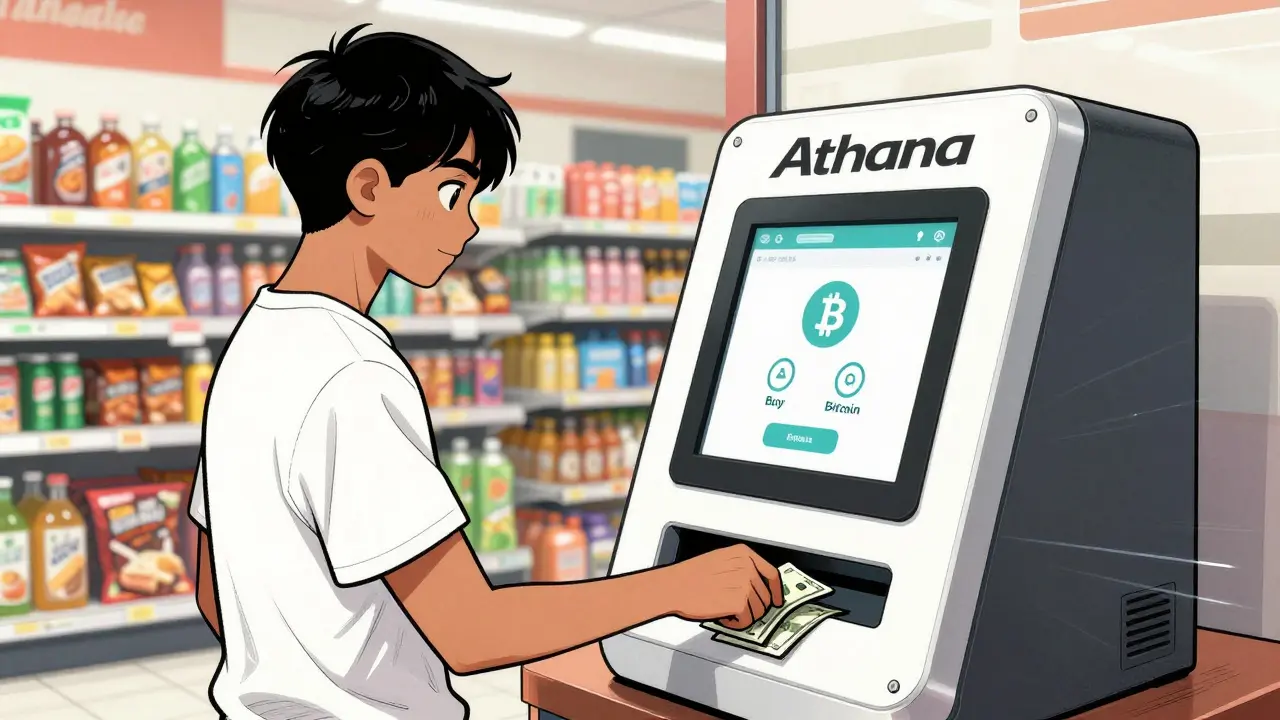
Have you ever walked into a convenience store, handed over cash, and walked out with Bitcoin in your digital wallet? For millions of people, this is no longer a futuristic concept but a daily reality. If you are searching for an ABIT crypto exchange review, you might be expecting a traditional platform like Coinbase or Binance where you log in, trade pairs, and stake assets. You won't find that here. Instead, you will find Athena Bitcoin Global (NASDAQ: ABIT), a company that operates a vast network of physical Bitcoin kiosks designed for one specific job: getting cash into cryptocurrency without holding your funds.
The landscape of crypto access changed dramatically in 2025. After massive security breaches at major centralized exchanges-including Bybit’s $1.5 billion Ethereum theft-trust in online custodians took a hit. In this climate, Athena Bitcoin’s model looks less like a competitor to Coinbase and more like a necessary alternative. But does it actually work for you? Let’s break down how these kiosks operate, what they cost, and whether they are safe enough for your money.
What Is Athena Bitcoin Global (ABIT)?
To understand ABIT, you first need to unlearn what you know about standard crypto exchanges. Athena Bitcoin Global is a specialized cryptocurrency service provider that operates a network of physical kiosks facilitating direct cash-to-bitcoin transactions without holding customer assets. Unlike a bank or an exchange that acts as a middleman storing your coins, Athena functions purely as a gateway. You buy Bitcoin, and it goes directly to your personal wallet address. They never touch it.
This distinction is crucial. Founded to address the barrier of entry for the unbanked and those wary of online hacks, the company has expanded rapidly. As of late 2025, their network spans 34 U.S. states, Puerto Rico, and three Latin American countries. They have served approximately 1 million customers since inception. The core philosophy, emphasized by CEO Matias Goldenhörn during Customer Appreciation Month 2025, is user control from the moment of purchase. If you value privacy and self-custody above all else, this model aligns perfectly with your goals.
How the Kiosk Transaction Process Works
Using an Athena Bitcoin kiosk is intentionally simple. The goal is to onboard users who may have zero technical knowledge. Here is what happens when you approach one of their 2,841 operational locations:
- Initiate Transaction: You select "Buy Bitcoin" on the touchscreen interface. The kiosks offer instructions in multiple languages, including Spanish, addressing a significant portion of their user base.
- Wallet Setup: If you don’t have a wallet, the app guides you through creating one. This is non-custodial, meaning you generate the private keys on your device, not on Athena’s servers.
- Five-Step Attestation: This is the security backbone. You must verify your phone number, email, physical address, government ID (for larger amounts), and transaction purpose. This process prevents social engineering attacks and ensures regulatory compliance.
- Cash Insertion: You insert your bills. The machine counts them and displays the equivalent Bitcoin amount based on the current market rate plus fees.
- Confirmation: Once confirmed, the Bitcoin is sent immediately to your wallet address. You can leave the store with your asset already in your possession.
The entire process typically takes 5 to 10 minutes for first-time users. Compare this to the 20-30 minutes often required for identity verification (KYC) and funding on centralized exchanges, and the speed advantage becomes clear. However, there are limits. Daily transaction caps are enforced, currently set at 1 BTC per customer, to manage risk and comply with anti-money laundering regulations.
Fees and Pricing Structure
Let’s talk about the elephant in the room: cost. Convenience usually comes with a premium, and Athena Bitcoin is no exception. According to their Q3 2025 financial disclosures, the pricing structure breaks down as follows:
- Cash Transactions at Kiosks: Fees average between 8% and 10%. This is significantly higher than the 0.1% to 0.5% trading fees you might see on platforms like Kraken or Binance.
- Credit/Debit Card Purchases: Launched in October 2025, this feature allows secure online and in-app purchases. Fees are slightly lower, ranging from 7% to 9%, but still include card processing costs.
Is it expensive? Yes. Should you use it to buy $100,000 worth of Bitcoin? Absolutely not. The fees would eat up nearly $10,000 of your capital. However, for small, regular purchases-like adding $50 or $100 a week to your stash-the fee is manageable. It is comparable to other kiosk networks like CoinFlip or Bitcoin Depot. The value proposition isn’t low cost; it’s accessibility and immediate ownership.
| Feature | Athena Bitcoin (Kiosks) | Centralized Exchanges (e.g., Coinbase) | Peer-to-Peer (P2P) |
|---|---|---|---|
| Custody Model | Non-Custodial (You hold keys) | Custodial (Exchange holds keys) | Varies (Often Escrow) |
| Average Fees | 8% - 10% | 0.1% - 1.5% | 1% - 3% |
| Primary Risk | Physical location security / Slippage | Hacks / Insolvency | Counterparty fraud |
| User Base | Unbanked, Cash-heavy users | Digital natives, Traders | Privacy-focused, Advanced users |
| Onboarding Time | 5-10 minutes | 20-30 minutes + KYC wait | Variable |
Security: Non-Custodial vs. Centralized Risks
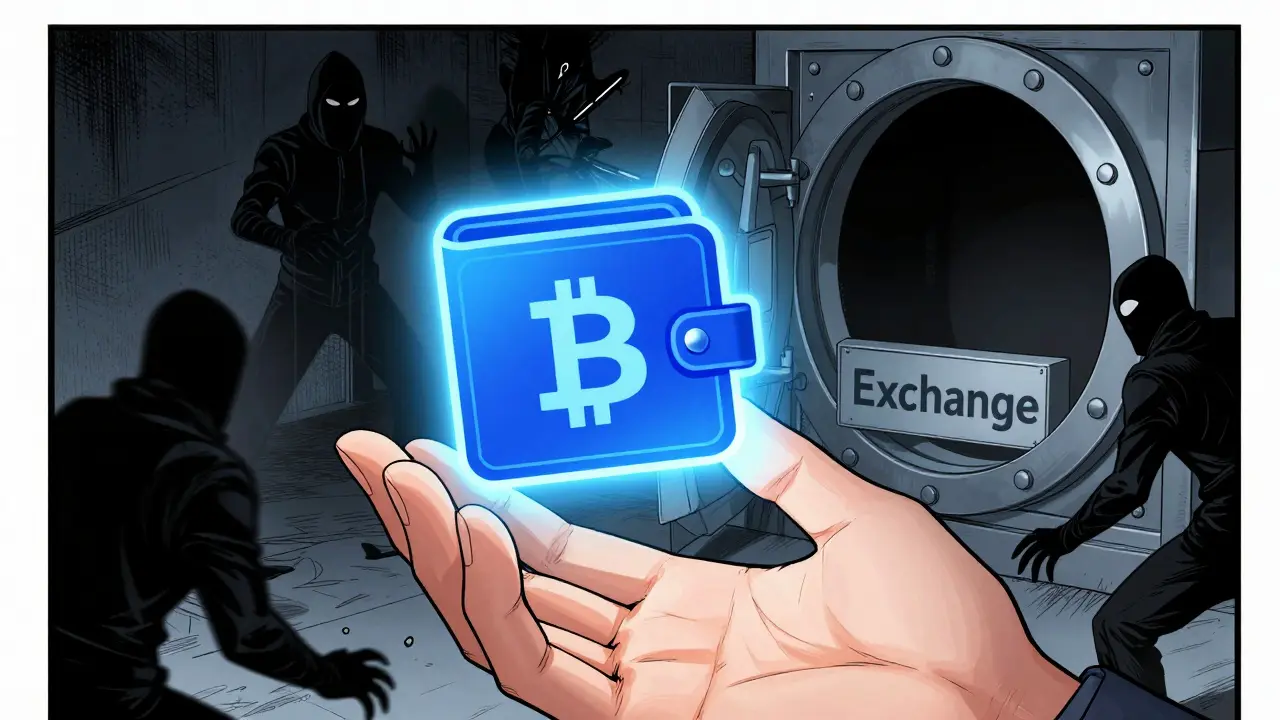
Security is the most debated aspect of any crypto service. In 2025, the industry saw $1.63 billion in losses across 39 exchange-related incidents, with 80% targeting hot wallets. Dr. Elena Rodriguez, a cybersecurity professor at MIT, noted in a September 2025 interview that Athena’s avoidance of fund custody eliminates the single largest attack vector in the industry. Since they never hold your Bitcoin, hackers cannot steal it from Athena’s servers.
However, shifting away from digital custody introduces different risks. Security researcher Alex Mikhelson pointed out in late 2025 that the lack of cold storage creates vulnerabilities around transaction confirmation times. During periods of high market volatility, users have reported price slippage exceeding 5% because the blockchain was congested while the kiosk processed the sale. There were three documented incidents in Q3 2025 where users claimed significant losses due to this timing mismatch.
To mitigate physical risks, Athena implements strict protocols:
- Velocity Controls: Algorithms detect unusual patterns that could indicate coercion or theft.
- Strategic Placement: Kiosks are located in secure retail environments with visible cameras, deterring criminal activity.
- PCI Compliance: With the addition of card payments, they now adhere to Payment Card Industry Data Security Standards, protecting your financial data.
Industry analyst Michael Grunstein of Delphi Digital highlighted that this model represents an important security alternative for onboarding the next 100 million users, especially as state-sponsored hackers increasingly target exchange onboarding processes.
User Experience and Accessibility
Who is actually using these kiosks? The data reveals a distinct demographic. According to a September 2025 internal survey, 63% of Athena Bitcoin users report having no traditional banking relationship. This contrasts sharply with centralized exchanges, where only 14% of users are unbanked. The primary user base consists of individuals aged 25-44 (58%), with 47% having household incomes under $50,000. Additionally, 33% identify as Hispanic/Latino, reflecting the company’s focus on underserved communities.
User feedback on Trustpilot shows a 3.8/5 rating from over 1,200 reviews. Positive comments frequently cite "ease of use for first-time buyers" and "clear instructions." A typical positive review from October 2025 reads: "As someone with no bank account, this kiosk at my local bodega was my only way to buy Bitcoin-completed my first $100 transaction in 7 minutes."
Negative reviews, making up 27% of the total, primarily complain about transaction fees (42% of complaints) and location availability (31%). Rural areas remain a challenge, with only 12% of kiosks located in communities under 50,000 population. If you live in a rural area, you might struggle to find a nearby unit, though their mobile app’s "kiosk locator" helps navigate real-time availability.
Market Position and Future Outlook
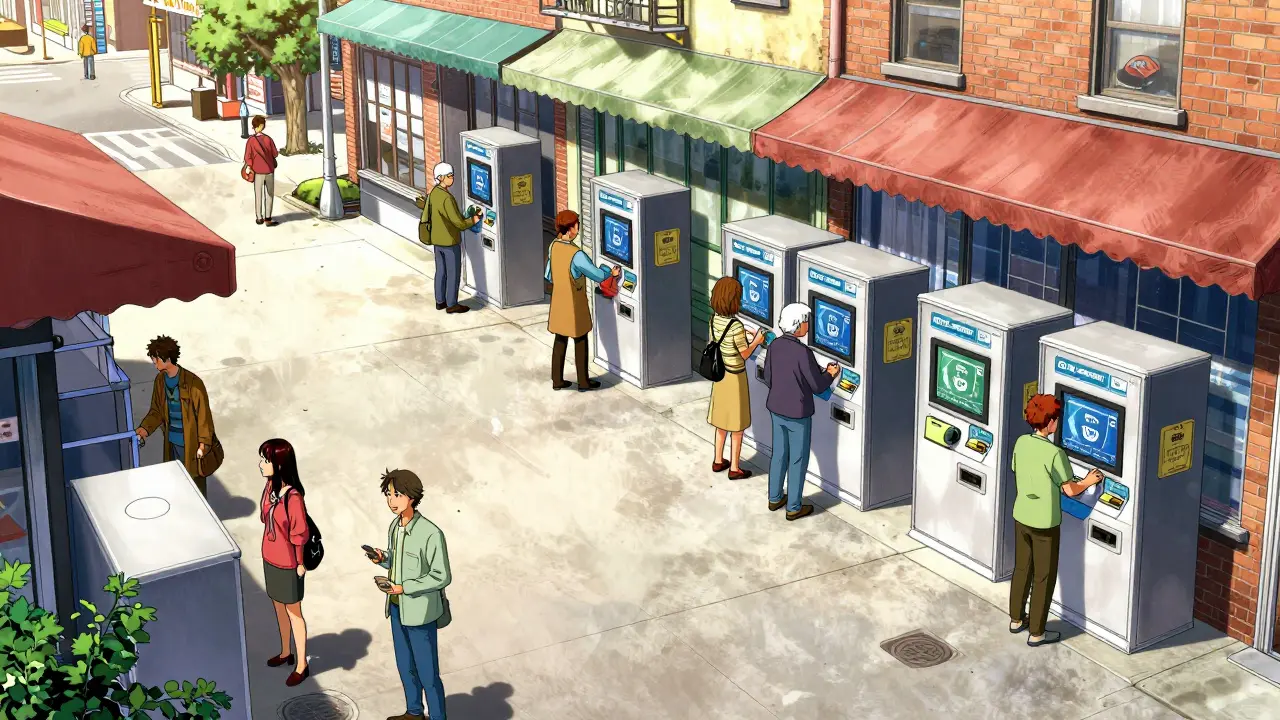
Athena Bitcoin commands approximately 18% of the U.S. Bitcoin kiosk market, trailing CoinFlip (32%) but leading Bitcoin Depot (24%). The physical cryptocurrency access sector is growing fast, expanding 37% year-over-year to reach $4.2 billion in annual transaction volume. Gartner’s October 2025 report predicts that physical kiosk networks will onboard 35% of new cryptocurrency users by 2027, driven by security concerns following high-profile exchange breaches.
Looking ahead, Athena plans to expand to 50 U.S. states by Q2 2026 and increase its kiosk count to 4,500. They are also developing biometric verification for their attestation process, targeting implementation by Q1 2026. Their partnership with the Retail ATM Industry Association (RAGA) signals a strategic move to leverage existing ATM regulatory frameworks, potentially smoothing the path for future expansion.
Verdict: Who Should Use ABIT?
Athena Bitcoin Global is not for everyone. If you are an active trader looking to swap ETH for SOL or earn yield through staking, stick with a centralized exchange or a decentralized protocol. The fees and limited functionality make it impractical for sophisticated strategies.
However, if you fall into one of these categories, ABIT is an excellent choice:
- The Unbanked: You don’t have a checking account or credit card but want exposure to Bitcoin.
- The Privacy-Conscious: You want to avoid handing your funds over to a corporate custodian after the 2025 hack wave.
- The Small Investor: You prefer dollar-cost averaging with small, regular cash amounts ($50-$200) rather than large lump sums.
- The Tech-Skeptical: You find complex exchange interfaces intimidating and prefer a guided, physical interaction.
In a world where digital trust is eroding, Athena Bitcoin offers a tangible, secure bridge into the crypto economy. Just remember to check the current Bitcoin price before you walk in, so you aren’t surprised by the spread.
Is Athena Bitcoin (ABIT) a safe place to buy crypto?
Yes, it is considered safe because it is non-custodial. They do not hold your Bitcoin, which eliminates the risk of exchange hacks. However, you should be aware of potential price slippage during high volatility and ensure you are using a secure personal wallet.
What are the fees for buying Bitcoin at an ABIT kiosk?
Fees for cash transactions at kiosks average between 8% and 10%. Credit and debit card purchases via their app or newer kiosks range from 7% to 9%. These fees are higher than online exchanges but reflect the convenience and physical infrastructure costs.
Do I need a bank account to use Athena Bitcoin?
No. One of the main advantages of ABIT is that it serves the unbanked population. You can buy Bitcoin using cash directly at the kiosk without linking a bank account or credit card.
Where are ABIT kiosks located?
As of late 2025, kiosks are available in 34 U.S. states, Puerto Rico, and three Latin American countries. They are typically found in convenience stores, grocery stores, and check-cashing businesses. You can use their mobile app's locator to find the nearest operational unit.
Can I sell Bitcoin back for cash at an ABIT kiosk?
Currently, Athena Bitcoin kiosks are primarily designed for buying Bitcoin with cash. Selling features vary by location and regulatory approval in specific states. Always check the kiosk interface for "Sell" options before visiting, as functionality is focused on onboarding new buyers.
14 Responses
I have been analyzing the financial disclosures for Athena Bitcoin Global quite extensively, and I find the fee structure to be absolutely unacceptable for any serious investor. The fact that they charge between 8% and 10% for cash transactions is predatory behavior disguised as accessibility. While the article claims this serves the unbanked, it essentially exploits those who lack financial literacy or access to traditional banking systems. You are paying a premium for convenience that you do not need if you simply set up a basic bank account. The non-custodial aspect is a nice marketing spin, but it does not justify the exorbitant costs involved in every single transaction.
nah its fine
The philosophical implication of physical currency transitioning into digital scarcity is fascinating 🤔 We are witnessing the death of trust in institutions and the birth of trust in code. Yet, we rely on these kiosks which are merely intermediaries in a new form. Is it truly decentralized when the gateway is controlled by a NASDAQ-listed entity? One must question the nature of freedom when it comes with an 8% tax 📉 The irony is palpable. We seek liberation from banks only to pay more to a corporation that owns the door to our liberation. It is a paradox wrapped in a touchscreen interface. Perhaps the real value is not in the Bitcoin itself, but in the ritual of the exchange. Or maybe we are just being played. Who can say? 🎭
they are tracking you through your phone number and email verification process. think about it. they claim privacy but they collect your government ID and address. this is a surveillance state tool disguised as crypto freedom. the five-step attestation is not for security it is for data harvesting. they sell your information to advertisers and law enforcement agencies. you are not buying bitcoin you are selling your identity. wake up people. the matrix wants you to think you are free while they watch your every move. do not fall for their lies. stay off the grid. use cash for everything else too because even that is being monitored now. the end is near. :)
its a scam. dont buy it. you will lose all your money. i know better than you. stop being stupid.
look i been trading crypto since 2013 and let me tell you something. these kiosks are for noobs who dont know how to use an exchange. if you cant figure out coinbase you shouldnt be touching bitcoin. period. the fees are high because they are taking advantage of dumb people. i use binance and pay like 0.1%. why would i pay 10%? make sense. also the security is fake. if someone steals your wallet seed phrase you are done. kiosk doesnt help you there. learn to secure your own keys or go back to facebook. 🚀📉
i understand both sides here and honestly it is complicated. some people really need this service because they have no bank accounts. it is not fair to judge them for using what is available. however the fees are definitely too high and we should push for better options. maybe regulation could help lower the costs. we need to support each other and find solutions that work for everyone. lets keep the conversation respectful and open. thanks for sharing this info. it helps us all learn. 🙏
the sheer audacity of charging ten percent for a simple transaction is mind-boggling! it is like they are laughing at you while you feed bills into the machine. imagine the look on your face when you see the final amount. pure shock and awe. the whole system is designed to bleed you dry slowly. it is a vampire squid sucking the life out of your savings. brilliant engineering really. i am impressed by the level of deception required to make this seem normal. bravo. 👏
actually the slippage issue mentioned in the article is due to network congestion not the kiosk itself. you need to understand how blockchain works. during high volume times mempool gets backed up and transactions take longer. the price changes in that time. this is basic economics. if you want to avoid slippage you should buy during low volume hours. late night usually works best. also the 1 BTC limit is actually good for security. it prevents large hacks from affecting many users at once. most people here dont understand the tech so they blame the wrong thing. read up on lightning network too.
this is another example of foreign influence trying to disrupt our financial system. american companies should not be facilitating anonymous transactions. we need strict controls. the fact that they operate in latin america is suspicious. they are likely laundering money for cartels. i support strong borders and strong laws against this kind of activity. keep america safe. ban these kiosks immediately. we do not need this chaos.
i love that this exists!! finally a way for my grandma to buy bitcoin without needing a computer 😂 she tried coinbase last year and got so frustrated. this sounds perfect for her. yes the fees are high but peace of mind is worth it. plus she likes going to the store anyway. win win situation! hope they expand to more rural areas soon. my family lives in a small town and they would use it so much. great innovation! ❤️✨
the matrix is real and these kiosks are nodes in the control grid. you think you are free but you are just changing masters. the digital chain is stronger than the gold chain. they want you to believe in numbers on a screen. but what is a number? nothing. just a concept. wake up before the crash. the end times are upon us. prepare your bunker. stockpile canned goods. ignore the news. trust only yourself.
stop lying. the security is weak. anyone can hack a wallet. you are all idiots for trusting this. i told you so.
it is amazing how technology can bridge gaps between people. seeing a community come together around a shared interest in finance is beautiful. we should celebrate progress not criticize it. every step forward matters. let us encourage innovation and support those who dare to try new things. together we can build a better future. thank you for bringing this topic to light. it opens doors for discussion and understanding. 🌟